The Impact of MNCs (Edexcel A Level Business): Revision Note
Exam code: 9BS0

Impact of multinational companies on the local economy
A multinational company (MNC) is a business that is registered in one country but has manufacturing operations/outlets in different countries
Example
Starbucks's headquarters is in Washington, USA, but the company has almost 41,000 stores in more than 80 countries
Factors such as globalisation and deregulation have contributed to the growth of MNCs
MNCs will choose locations based on factors such as cost advantages and access to markets
Example
Nike originates from the USA, but Vietnam, Indonesia and China together manufacture around 96% of its footwear, due to lower production costs
China's individual share has fallen sharply from over 60% a decade ago to just 17% today, as production has shifted toward Vietnam
MNCs offer both advantages and disadvantages with regard to:
Employment, wages and working conditions
The impact on local businesses
The impact on the local community and environment
MNCs and employment, wages and working conditions
MNCs often create jobs in local communities
They may offer more competitive wages than local businesses
They may also offer better working conditions than local businesses
However, MNCs may exploit local workers if employment regulations are weak or not enforced
They tend to establish production facilities in regions where labour costs are low
MNCs may not create jobs for local workers, as they may relocate workers from their own country to work abroad
This practice has been observed among some multinational construction and infrastructure firms operating overseas
MNCs and local businesses
MNCs can help boost the local economy by creating opportunities for local businesses
If the population is benefiting from higher wages, citizens may spend more on local business products
MNCs may utilise the services of local businesses
There may be potential opportunities for joint ventures and partnerships with MNCs that seek to gain knowledge of the local market
Local firms may learn new skills and production methods that allow them to become more efficient
However, MNCs reduce the supply of workers available to local businesses if they offer better pay and working conditions
If MNCs are able to produce at a lower cost and compete with local businesses, those businesses may lose local customers and may need to make redundancies
MNCs, local communities and the environment
Local residents may benefit from job opportunities and growth in the local economy
MNCs often invest in improving infrastructure
Better roads, transportation and access to water and electricity would help the local community as well as the MNC operate more efficiently
They may have to pay taxes and business rates to local councils/authorities
These funds may be reinvested back into the local community
MNCs can establish charitable initiatives that have a positive effect on the local community
However, they may cause damage to local habitats/environments during the production process
Example
Shell has a track record of causing oil pollution in vulnerable communities in Nigeria
MNCs may also leave unsightly production facilities behind once they have extracted all of the resources and left the country
Impact of MNCs on the national economy
Many governments are in favour of MNCs establishing operations in their countries, as there are benefits to the wider economy
The impact of MNCs on national economies
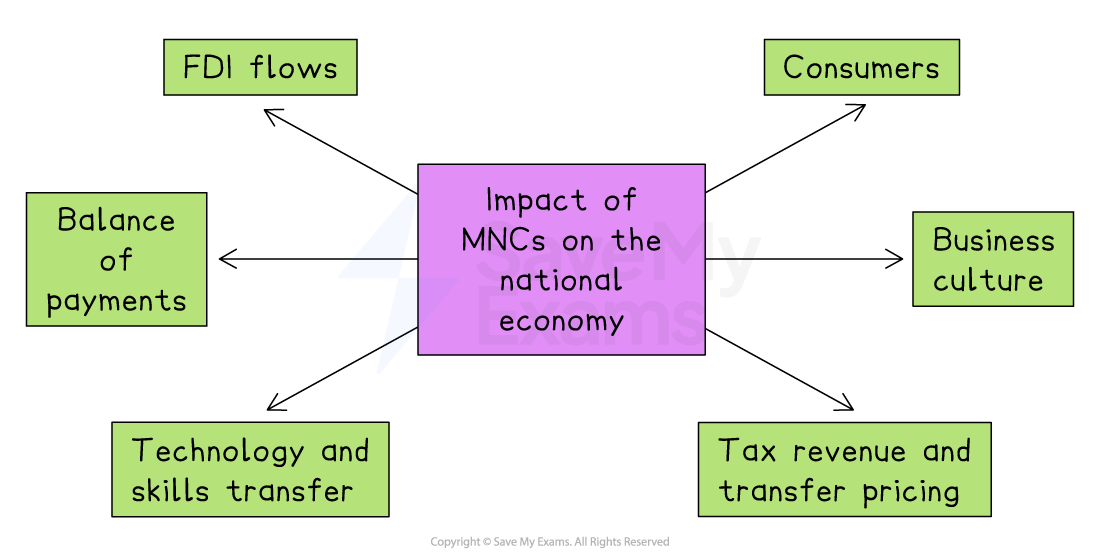
Foreign direct investment flows
There will be an inflow of money into a country if an MNC decides to invest through foreign direct investment (FDI)
This money enriches local firms or citizens who now have more money available to spend in the economy
If this money is reinvested into the local economy, it may help to generate new jobs and boost economic growth
However, the home country's assets are now owned (or partly owned) by foreign businesses
Local firms or individuals who have sold an asset might not reinvest the money into the local economy and instead move it abroad/offshore
Balance of payments
The balance of payments is a statement showing all of the financial transactions between a country and the rest of the world
MNCs can help to improve a country's balance of payments, as the FDI flows into the country will help improve its balance of payments
Any goods and services exported for sale by the MNC will generate further inflows to the country’s balance of payments
This is especially beneficial to a country when the MNC is exporting a rare and valuable raw material, e.g. cobalt
MNCs can also have a negative impact on the balance of payments
If the MNC buys raw materials or equipment abroad (imports), there is a flow of money out of the country
If the MNC sends profits back to its home country, this is also a flow of money out of the country
Technology and skills transfer
MNCs can bring new technologies and skills to local businesses
This will help improve efficiency and productivity, helping domestic businesses to become more competitive in the national and international markets
Consumers
Customers in countries that host MNCs benefit from:
A wider choice of goods and services
Lower prices if MNCs pass their cost advantages on in the form of lower prices
Better quality goods and services
Improved living standards, as people may have higher incomes due to the job creation and the resulting reduction in unemployment
However, in the long run, MNCs can push domestic businesses out of the market, leaving customers with less choice
This may lead to MNCs exploiting customers with higher prices and low-quality products, as customers have limited choice
Business culture
Domestic businesses may be influenced by the business culture of MNCs
Example
In the 1990s, UK businesses adopted the working practices of Japanese businesses such as Nissan
Workplaces became more open, and employers started to copy ideas such as Kaizen and continuous improvement
MNCs may also encourage a culture of entrepreneurship
This can help boost overall economic growth
However, MNCs may demonstrate unethical behaviour and have a company culture of exploitation
Example
Many clothing brands produce cheap clothes in Bangladesh - and many turn a blind eye to the poor working conditions
This encourages local firms to also ignore working conditions
Tax revenue and transfer pricing
There is the potential for the host country to gain significant tax revenue
Governments can use tax revenue paid by MNCs to invest in improving public services and infrastructure
However, MNCs seek to maximise profits and will try to reduce their tax liabilities
Transfer pricing is a method used by MNCs to shift profits from the countries in which they are generated to countries with lower tax rates
This is a method of tax avoidance and means that the businesses will pay less tax in the host country
Examiner Tips and Tricks
In Papers 1 and 3, when assessing the impact of MNCs on the local and national economies, consider the scale of the multinational in comparison to the country in which it is looking to establish itself. For example, if the MNC makes more profit than the GDP of the country in a year, it is likely to have a strong influence on the country.

Unlock more, it's free!
Join the 100,000+ Students that ❤️ Save My Exams
the (exam) results speak for themselves:

Was this revision note helpful?
Build on this topic