Key Factors in Change (Edexcel A Level Business): Revision Note
Exam code: 9BS0

An introduction to change management
Effective change management involves identifying, organising and implementing new methods of working in a business
Several factors will have an impact on how a successful change can be implemented
Factors affecting business change
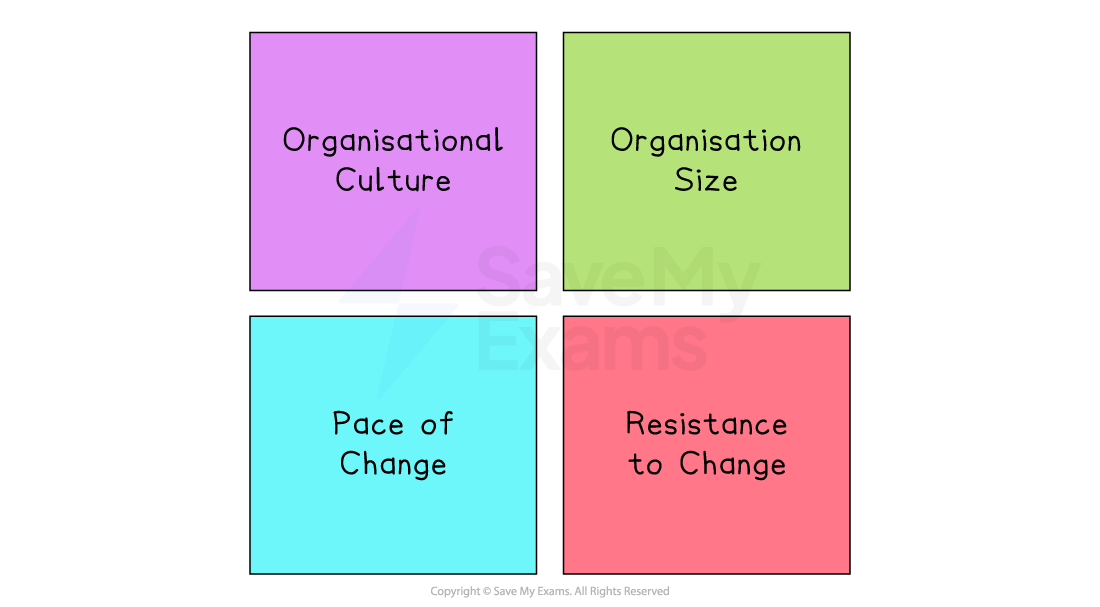
Organisational culture
To successfully implement change, leaders must understand the culture of their organisation (opens in a new tab) and work to align it with the desired change
The way employees and leaders perceive change and their willingness to embrace it can be heavily influenced by the organisational culture within a business
If the culture is one of routine and predictability, employees may be hesitant to embrace new processes and procedures
An innovative and flexible culture may mean that employees are more receptive to change
How effectively change is communicated to employees is related to a business’s culture
In an open culture, communication channels are more likely to be clear, frequent and effective
In a hierarchical culture, communication may be limited, and information may not be easily accessible to all employees
A strong organisational culture can support employee engagement and ownership of change
When employees feel valued and are part of a supportive culture, they are more likely to embrace change and work together to implement it successfully
Organisational culture can affect the adaptability of a business
A culture that values continuous learning and improvement is more likely to adapt quickly to changes in the external environment
A culture that is resistant to change may struggle to adapt to new circumstances
Size of the organisation
The size of a business can affect its ability to implement change
Larger organisations usually have complex structures (opens in a new tab), which can make change more difficult to implement
Communication is often more challenging due to the sheer number of people involved
The larger the organisation, the more difficult it can be to communicate change effectively and ensure that everyone is on the same page
Larger organisations may have complex decision-making processes that can slow down the implementation of change
With more layers of hierarchy, there may be more people involved in decision-making, which can lead to delays
There may be many people who are resistant to change, and it can be more difficult to address their various concerns
Larger businesses often have more resources available to support change initiatives, such as financial resources, technology and experienced staff
Pace of change
It’s important to find a pace for change that is appropriate for the situation and which takes into account the needs and concerns of all stakeholders involved
If the pace of change is too fast:
It can create resistance from overwhelmed workers who feel unprepared and that they don’t have enough time to adjust
It may not be properly thought through or planned, resulting in poor execution
The change may be difficult to communicate effectively to all stakeholders, leading to misunderstandings and confusion
If the pace of change is too slow, it can result in:
A lack of adaptability and innovation
A loss of momentum, leading to delays or even the abandonment of the change
Communication efforts becoming stagnant, leading to disinterest and disengagement
Resistance to change
Businesses attempting to implement change are likely to face resistance from a range of stakeholders
Employees
Employees may worry about how the change will affect their job security or work environment
Employees may not understand why the change is needed or what the expected outcomes are
Employees may be used to doing things a certain way and may be reluctant to learn new skills
Owners
Owners may fear that changing their current processes may cause disruption to their daily operations and affect productivity
Owners may be reluctant to agree to these costs, especially if they involve a personal, financial or time commitment
They may prefer to maintain the status quo rather than take risks that could potentially harm their business
They may not fully understand the benefits of the proposed changes or lack the knowledge or expertise to implement them effectively
Customers
Customers may be hesitant to try something new or unfamiliar
Changing to something new can be uncomfortable or even intimidating
Customers may fear losing something they value
For example, if a new product or service replaces an existing one, customers may worry that the new one won’t be as good as the old one or that they will lose features they like
Sometimes, customers may simply be used to buying certain products or accessing a service in a particular way and don’t want to make the effort to change
Suppliers
Suppliers may be reluctant to change their processes or systems
They may be worried that the change will lead to a decrease in quality or additional costs
They may have invested a significant amount of time, money and resources in their current systems so are hesitant to abandon them
Suppliers may not have the necessary expertise or knowledge to implement new systems or processes
Managing resistance to change
Managing resistance to change requires a thoughtful and strategic approach that takes into account the concerns of key stakeholders
Clear communication is essential when introducing change in a business:
The reasons behind the change and the benefits that the change will bring must be communicated
The change must be communicated in multiple ways, such as emails, meetings, presentations and one-on-one conversations
Involving stakeholders in the change process can help to build buy-in and support for the change
Employees who are involved in the process are more likely to embrace the change and feel a sense of ownership over it
Open dialogue and feedback throughout the process with all key stakeholders is essential
Providing training and support will help employees adapt to the new changes and learn new skills and technologies
Identifying and addressing stakeholder concerns is vital
Realistic expectations about the change should be set
Successes and milestones should be celebrated along the way
Examiner Tips and Tricks
Try to consider the following when answering questions about organisational change:
What is driving the need for change? Internal factors? External factors?
How is the change to be implemented?
What outcome is expected or hoped for as a result of the change?
Which factors will have the greatest impact on the success of the change?
All of these questions should be answered with explicit reference to the scenario provided. Every organisation approaches, implements and experiences change in different ways as a result of the unique set of influencing factors it faces.

Unlock more, it's free!
Join the 100,000+ Students that ❤️ Save My Exams
the (exam) results speak for themselves:

Was this revision note helpful?
Build on this topic