Distribution (Edexcel A Level Business): Revision Note
Exam code: 9BS0

Types of distribution channels
Distribution channels refer to the various intermediaries through which goods/services move from the manufacturer to the end customer
Common distribution channels
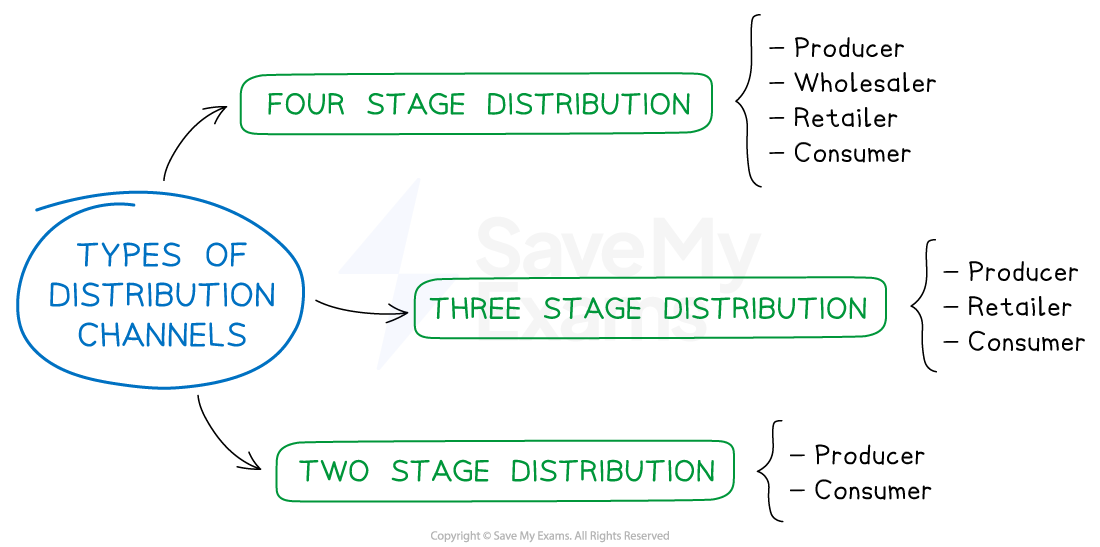
Four-stage distribution channel
A traditional channel consists of four stages: producer, wholesaler, retailer and consumer
This channel is commonly used for products such as groceries, clothing and electronics
For example, The Coca-Cola Company produces the soft drink and then sells it to a wholesaler, which in turn sells it to a retailer
The retailer then sells the soft drink to the end customer
Three-stage distribution channel
The three-stage distribution channel eliminates the wholesaler stage, with the producer selling directly to the retailer
This channel is often used for products with high demand or where the cost of distribution is high
This channel is often used for products with high profit margins, where the manufacturer can afford to sell directly to the retailer and still make a profit
For example, Dell produces laptops and sells them directly to retailers such as Currys, which then sell them to the end customer
Two-stage distribution channel
The two-stage distribution channel eliminates both the wholesaler and retailer stages, with the manufacturer selling directly to the end consumer
This channel is commonly used for products that are sold online or through direct sales channels
For example, Ryanair sells its service (passenger tickets) directly to the end customer on its website
Changes in distribution to reflect social trends
E-commerce is the buying and selling of goods and services over the internet
Changes in distribution have been impacted by social trends such as the growth of e-commerce and the shift from product-based businesses to service-based businesses
By understanding these trends, businesses can adjust their distribution strategies to better meet the needs of their customers and stay competitive in the marketplace
The growth of e-commerce
Online distribution has become increasingly popular due to the convenience and accessibility it offers to consumers
Many businesses now use drop shipping, which allows them to sell products without holding stock
Once the business has sold the products, they are shipped directly from the producer to the customer
This reduces the cost and complexity of distribution, making it easier for businesses to sell online
Amazon is known as a third-party logistics provider
It provides businesses with the infrastructure and online marketplace that allows them to reach a wider audience and increase sales without having to invest in their distribution infrastructure
Many small businesses now generate the bulk of their sales by selling on Amazon
The shift from product-based businesses to service-based businesses
Consumers increasingly value experiences over material possessions
This shift has impacted distribution, as the delivery of services is often quite different from the delivery of physical products
Distribution for service-based businesses may involve delivering services to customers directly, such as through a mobile app or website
This requires a different set of distribution capabilities than traditional product-based distribution
Example
Uber delivers a taxi service through a mobile app
The distribution involves matching drivers with customers in real time
The service is distributed directly to the end consumer without the need for wholesalers or retailers
Case Study
Sprout
Sprout makes healthy granola bars and originally sold them through a four-stage distribution channel, supplying wholesalers who then sold the bars on to supermarkets and other retailers
As Sprout grew, it began supplying larger supermarket chains directly, cutting out the wholesaler and moving to a three-stage channel to increase its profit margin on each bar sold
Sprout then launched its own website, selling bars directly to customers through a two-stage channel and reaching health-conscious shoppers who preferred to order online
To reduce the cost of holding stock, Sprout began using drop shipping for online orders, with bars sent straight from its factory to the customer once an order was placed
Sprout has since launched a monthly subscription box, delivering a personalised selection of snacks each month, reflecting a wider shift from simply selling products to offering an ongoing service
This combination of channels has allowed Sprout to reach supermarket shoppers and online customers alike, while keeping distribution costs under control

Unlock more, it's free!
Join the 100,000+ Students that ❤️ Save My Exams
the (exam) results speak for themselves:

Was this revision note helpful?
Build on this topic