Niche Markets (Edexcel A Level Business): Revision Note
Exam code: 9BS0

Cultural diversity
Cultural diversity recognises the ideas, customs and social behaviour of a particular people or society in different global markets
Businesses need to take into account the different cultural behaviours and customs when operating in overseas markets
Example
In India, beef and pork are not consumed for religious reasons. Fast food outlets have adapted their menus to take this into consideration
In the United Arab Emirates, there are rules around the consumption of alcohol that businesses need to adhere to
Features of global niche markets
Global niche markets are small segments of the global market that are characterised by unique and specific needs and preferences
Groups of customers within these markets are sometimes referred to as subcultures
These groups may be very small within an individual country; however, when combined across the world, the number of customers may be significant
E.g. halal products are produced and prepared according to Islamic laws and regulations
They are in high demand in Muslim-majority countries, and businesses that offer halal products can tap into this market and cater to the specific needs of Muslim consumers
Key features of global niche markets
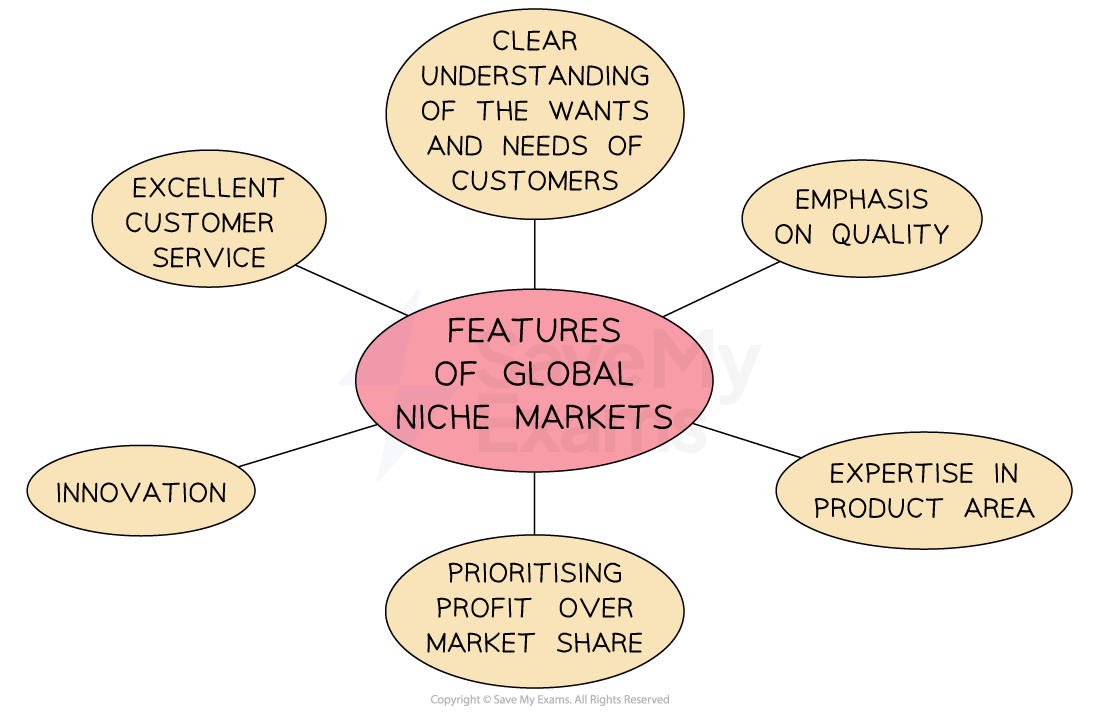
Excellent customer service
As customers are usually paying higher prices for the product/ service, they expect exceptional customer service
Example
Rolex offers extensive in-store consultations and a comprehensive worldwide after-sales servicing network, reinforcing the premium experience customers expect for the price they pay
Innovation
Innovation ensures that products are highly differentiated and maintain a unique selling point (USP) that meets the needs of the target market
Example
Oatly pioneered and popularised oat milk as a distinct product category, helping to create an entirely new niche within the plant-based drinks market
Prioritising profit over market share
Niche markets are lucrative, so businesses can focus on increasing profits that they can reinvest into improving their products/services
Example
Ferrari deliberately limits its annual production below the level of customer demand
In 2025 it kept shipments to around 13,640 cars, a fraction of a mass-market rival like Porsche, prioritising exclusivity and profit margin over sales volume
Expertise in the product area
Having employees who are highly skilled and keeping up to date with the latest developments within the niche market helps to build value for the customers
Example
Brompton Bicycle relies on decades of specialist engineering expertise in folding bike design, a level of technical knowledge that is difficult for mass-market manufacturers to replicate
Emphasis on quality
Businesses need to ensure the quality of their products is exceptional, as they are targeting wealthier customers who pay for high-value products
Example
Le Creuset backs its enamelled cast iron cookware with a lifetime guarantee against faulty workmanship, reflecting the brand's confidence in its premium quality and justifying its high price point
Clear understanding of the wants and needs of customers
The business may have relatively few customers, so it needs to ensure that the needs and wants of these customers are fully understood
Example
Lush Cosmetics builds its entire product range around ethically-conscious, cruelty-free skincare, reflecting a deep understanding of what its specific customer base values most
Adapting the marketing mix to suit global niches
Adapting the marketing mix to suit global niches involves tailoring the 4 Ps of marketing (product, price, place, and promotion) to meet the specific needs and preferences of a particular niche market
Product
One way to adapt the product to suit a global niche market is to modify the features of the product to meet the specific needs of the target audience
Example
Nike launched the Pro Hijab in 2017, developed over 13 months in collaboration with Muslim female athletes such as weightlifter Amna Al Haddad and fencer Ibtihaj Muhammad, adapting its sportswear range to meet the specific needs of Muslim athletes worldwide
Price
Adapting the price to suit a global niche market involves offering a pricing strategy that is attractive to the target audience
Example
UK organic food company Riverford offers competitively priced organic veg box subscriptions to attract mainstream consumers looking for healthier, more sustainable food without paying premium delicatessen prices
Promotion
Adapting the promotion to suit a global niche market involves using marketing communication strategies that resonate with the target audience
Example
Beauty brand Glossier built its business almost entirely through influencer and community-driven marketing, working with micro-influencers and encouraging user-generated content, generating around 8% of sales directly through ambassador activity
Place
Adapting the place to suit a global niche market involves choosing a distribution strategy that is convenient for the target audience
Example
UK gluten-free bakery brand Genius Foods initially built its customer base through specialty and health-food stores before securing listings in every major UK supermarket, alongside online sales, showing how a niche brand's distribution strategy can evolve as demand grows
Examiner Tips and Tricks
When identifying a global niche market in a case study, look for evidence of premium pricing, a narrow and clearly-defined customer group, and specialist expertise - a business selling to "everyone" in a country is unlikely to be operating in a niche, however small that country's market is

Unlock more, it's free!
Join the 100,000+ Students that ❤️ Save My Exams
the (exam) results speak for themselves:

Was this revision note helpful?
Build on this topic