Recruitment, Selection & Training (Edexcel A Level Business): Revision Note
Exam code: 9BS0

The recruitment and selection process
Recruitment is the process of attracting and identifying potential job candidates who are suitable for a particular role
Recruitment activities include job advertising, job fairs, social media outreach and referrals from current employees
The goal of recruitment is to create a pool of qualified candidates who can be considered for the role
Selection is the process of choosing the best candidate
Selection activities often involve reviewing curricula vitae (CVs) and conducting interviews or assessment tasks
The goal of selection is to hire the most suitable candidate for the job
The recruitment and selection process
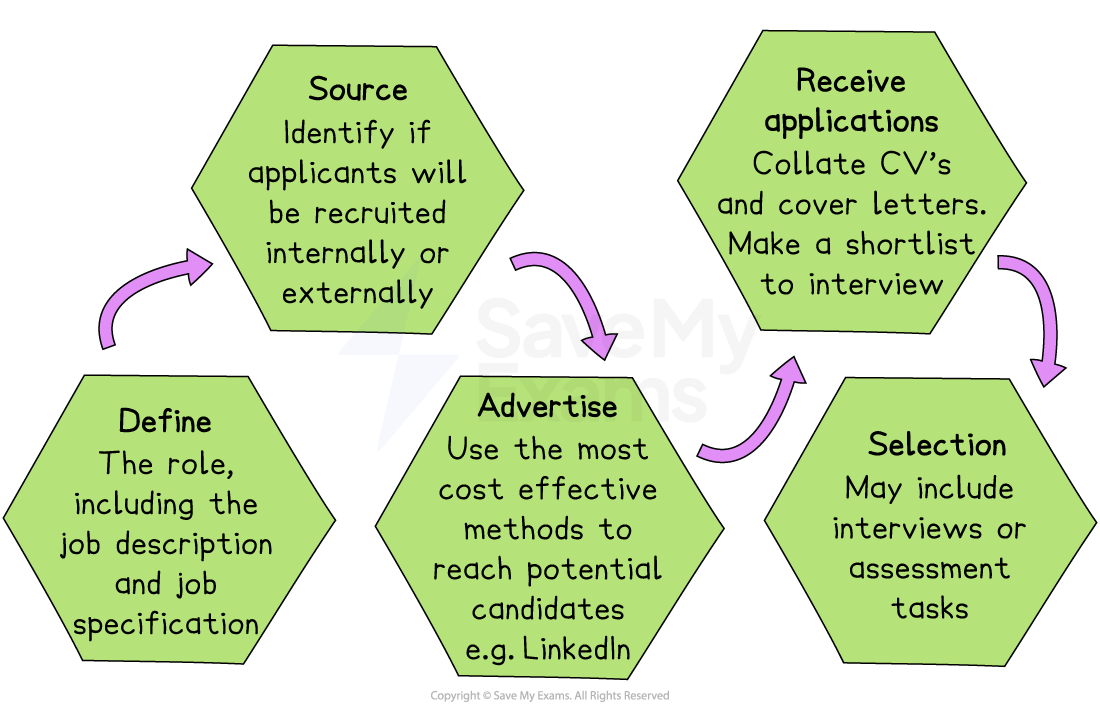
Businesses should determine exactly what is required, and part of that is developing a job description and a person/job specification
A job specification outlines the qualifications, skills, experience and personal qualities required from a candidate for a specific job
E.g. problem solver, good communicator, able to code in Java
A job description outlines the duties, responsibilities and requirements of a particular job
These documents are used throughout the recruitment and selection process
Internal recruitment
Internal recruitment is the process of hiring employees from within the organisation
It can involve the promotion or redeployment of staff to fill a vacant post
Vacancies are advertised internally on staff notice boards, in newsletters or via in-house electronic communications
Advantages and disadvantages of internal recruitment
Advantages |
|
|---|---|
Disadvantages |
|
External recruitment
External recruitment is the process of hiring employees from outside the organisation
External recruitment can bring fresh ideas, experiences and perspectives to the organisation
It overcomes some of the disadvantages of internal recruitment
However, it is often more expensive than internal recruitment
There is also a greater degree of uncertainty, as external candidates are unknown to the business
Comparison of external recruitment methods
Method | Explanation |
|---|---|
Referrals / personal recommendations |
|
Online advertising |
|
Newspaper advertising |
|
Specialist trade publications |
|
Employment agencies |
|
Headhunting |
|
Job centres |
|
Career fairs |
|
Advertising a vacancy
Businesses with a strong social media presence can use these platforms to advertise cost-effectively, e.g. Facebook, LinkedIn, TikTok
Depending on the nature of the business, there may be specialist recruitment portals through which they can advertise
These tend to be relatively expensive but target the right people
E.g. The Times Educational Supplement (TES) is one of the main publications used to recruit teaching staff
Receiving applications
The application stage involves collecting information from potential candidates
A business may have its own application form, which should gather information such as personal details, qualifications and work experience
Applicants may also be asked to submit their CV and a cover letter explaining why they believe they are the right person for the role
Someone within the business must be nominated to manage the application process
This person (possibly together with others) will draw up a shortlist of candidates from the many applications received
The shortlist usually includes three to five candidates who are invited to interview
The selection process
This process varies significantly between organisations
Businesses must decide on the most appropriate method that will help them identify the best candidate
The most commonly used methods include interviews and assessment tasks
Interviews and assessment tasks
Interviews |
|
|---|---|
Assessment tasks |
|
Costs of recruitment, selection and training
Recruitment, training and selection are essential processes for any business to attract, develop and retain a skilled workforce
These processes involve significant costs for businesses, which can impact their overall profitability and competitiveness
Costs of recruitment, selection and training
Recruitment costs
Recruitment costs refer to the expenses incurred in the process of hiring new employees
These include advertising, recruiting, interviewing and screening candidates
High labour turnover rates can significantly increase these costs
When employees leave, the business has to spend money and time recruiting and training new employees to fill the vacant positions
Training costs
Training costs refer to the expenses incurred in the process of providing training to new or existing employees
These include the cost of trainers, training materials and facilities
The effectiveness of training can impact these costs
If the training is not effective, employees may require additional training or take longer to learn new skills, which can increase the cost of training
Selection costs
Selection costs are the expenses incurred in the process of selecting candidates for employment
These include background checks and visa costs
High labour turnover rates can increase selection costs as the business has to spend more regularly
Types of training provided by businesses
Different types of training have their advantages and disadvantages for the business
Types of training
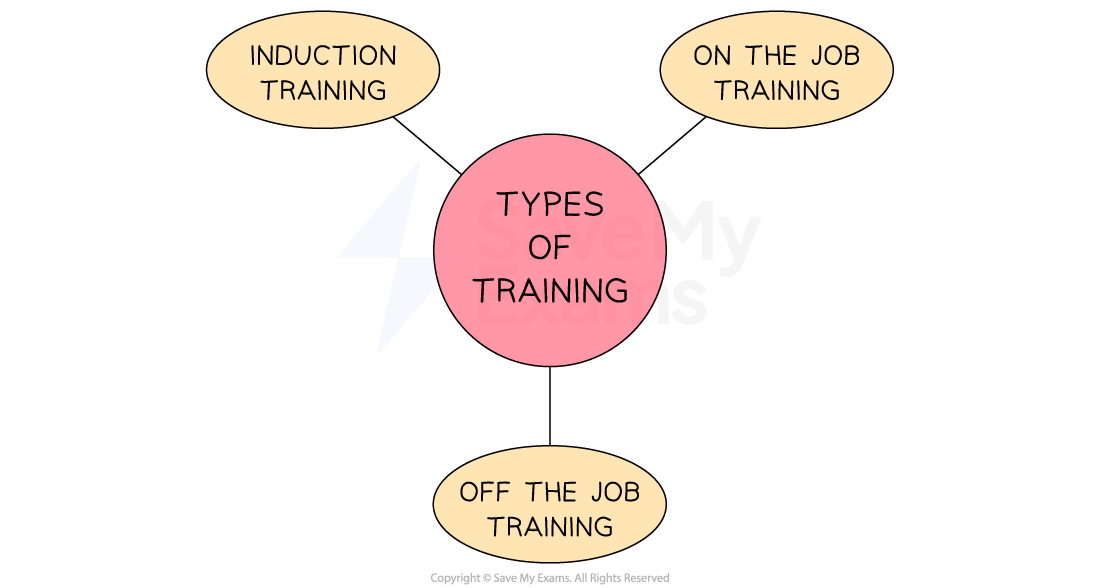
Induction training
Induction training is a type of training that new employees receive when they start working for a company
It introduces them to the company, its culture, policies and procedures, and their job roles and responsibilities
E.g. when a new employee joins Marks & Spencer, they receive induction training that covers customer service, product knowledge, store policies and safety procedures
Advantages |
|
|---|---|
Disadvantages |
|
On-the-job training
A type of training that takes place while employees are working in their job roles
It allows employees to learn new skills and knowledge from colleagues while performing their job duties
E.g. A sous chef at The Ivy Restaurant in York may receive on-the-job training from the chef to learn how to prepare new dishes, use new equipment or improve their cooking techniques
Advantages |
|
|---|---|
Disadvantages |
|
Off-the-job training
A type of training that takes place outside of the workplace
It can be in the form of workshops, seminars, conferences or online courses
E.g. Teachers can attend exam board training days at which they learn how to better teach the syllabus and help their students prepare for their exams
Advantages |
|
|---|---|
Disadvantages |
|

Unlock more, it's free!
Join the 100,000+ Students that ❤️ Save My Exams
the (exam) results speak for themselves:

Was this revision note helpful?
Build on this topic