Interpretation of Financial Statements (Edexcel A Level Business): Revision Note
Exam code: 9BS0

Using the statement of comprehensive income
The statement of comprehensive income is also known as the profit and loss account
It shows the income and expenditure of a business over a period of time - usually a year - and calculates the amount of profit made (see sub-topic 2.3.1)
Example statement of comprehensive income for Head to Toe Wellbeing Ltd
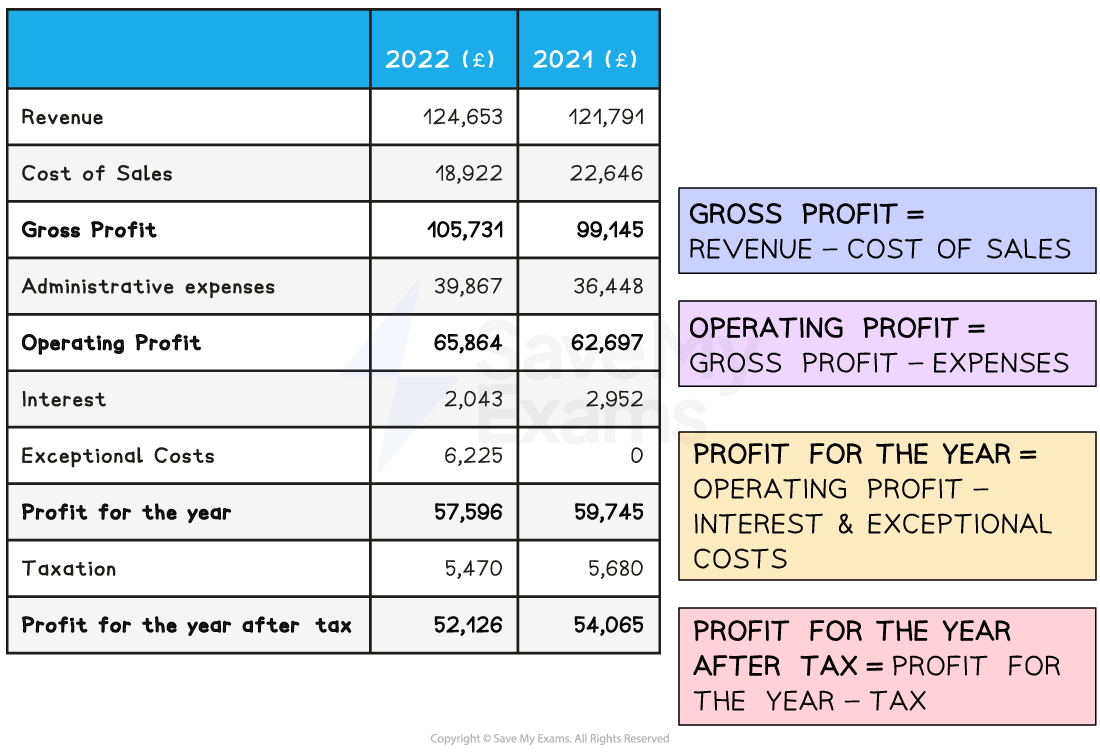
The extract from the statement of comprehensive income for Head to Toe Wellbeing Ltd shows figures for both 2022 and the previous year, allowing comparison over time
The statement begins with revenue, the income from sales, before deducting the cost of sales to calculate gross profit
Operating expenses, such as rent, salaries and marketing costs, are deducted from gross profit to calculate operating profit
Finally, interest and any one-off costs are deducted to calculate profit for the year, the figure that shows how profitable the business has been overall
Because it covers a full trading period, the statement allows stakeholders to see not just whether a business made a profit, but at which stage of its operations that profit was gained or lost
Stakeholder interest in the statement of comprehensive income
The profit and loss account is a very useful source of information for stakeholders to evaluate the performance of a business
Shareholders
Interested in profits earned, business growth and dividend payments
Employees
Interested in profits earned and potential for wage increases and job stability
Managers and directors
Interested in key performance data, such as an improvement in sales revenue and net profit
Suppliers
Interested in the continued success of the company that they are supplying
This information is also used by suppliers to determine the level of trade credit offered to businesses
Government
Used to determine how much tax is payable
Local community
Interested in the stability of the business and what this may mean for jobs in the community
Another interest is to see if the firm is generating enough profit to perhaps approach them for local sponsorship
Using the statement of financial position
The statement of financial position, sometimes called the balance sheet, contains the financial information required to draw conclusions about the liquidity of the business
Liquidity is the ability of a business to meet its short-term commitments (e.g. payments to creditors) with its available assets
A business that cannot pay its bills will usually fail very quickly, even if it is profitable
Managing liquidity is a key way to manage risk in a business and helps a business prepare for the unexpected
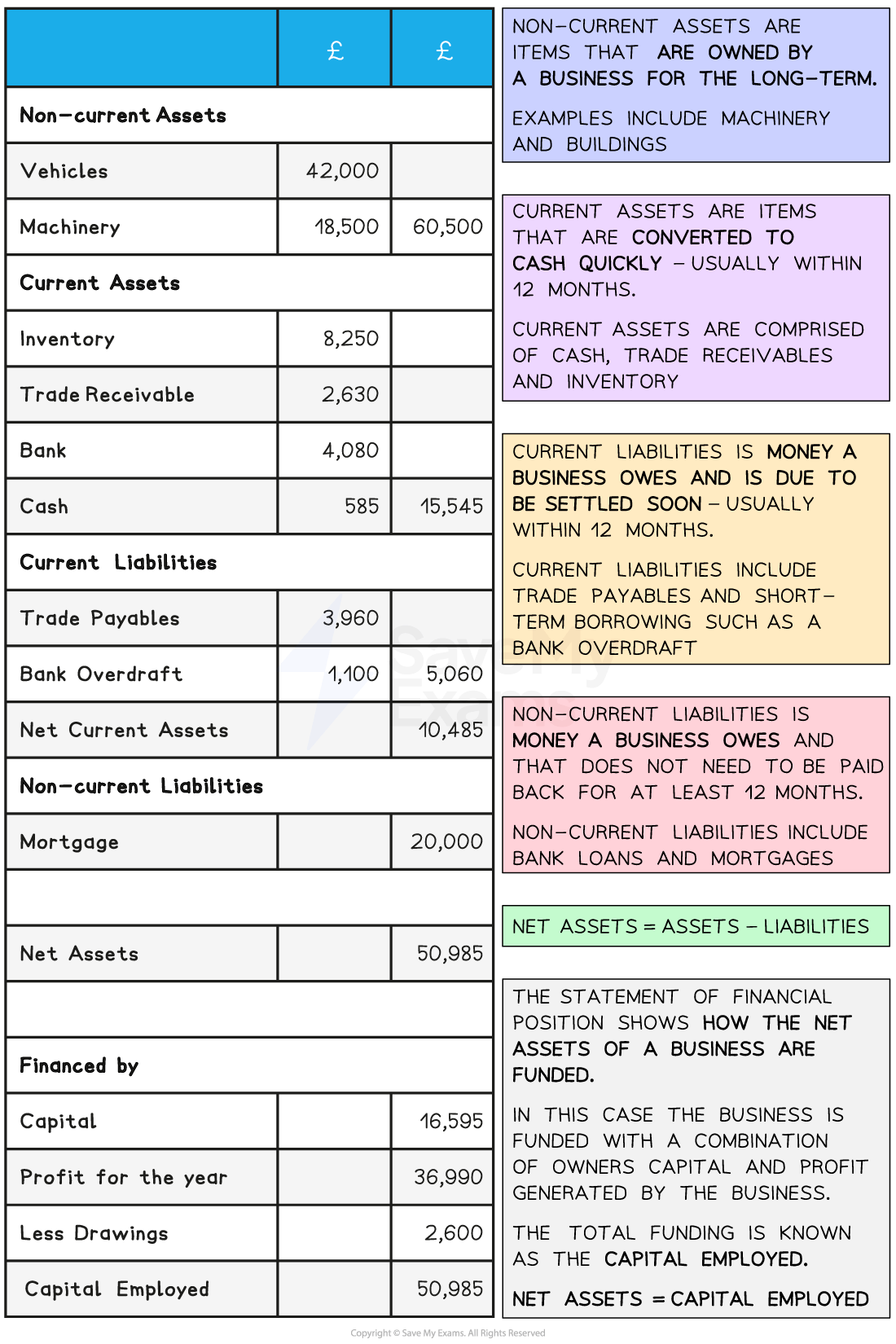
The statement of financial position shows the financial structure of a business at a specific point in time
It identifies a business's assets and liabilities and specifies the capital (money) used to fund the business
The statement of financial position is also known as the balance sheet
Example statement of financial position for Packer Sports Ltd
Stakeholder interest in the statement of financial position
Stakeholders will use the statement of financial position alongside the statement of comprehensive income to perform ratio analysis (opens in a new tab) and compare performance over time or with other businesses
How stakeholders use the statement of financial position
Stakeholder | Interest in the statement of financial position |
|---|---|
Shareholders |
|
Managers and directors |
|
Suppliers and creditors |
|
Employees |
|
Examiner Tips and Tricks
Information found in the profit and loss account and the balance sheet can be used in a range of answers.
For example, if you are answering a question about sources of finance, you might be able to use the capital structure of the business to recommend whether a business should borrow or look at an alternative source.
If a business already relies heavily on borrowing, it may be more sensible to recommend seeking to raise more share capital.

Unlock more, it's free!
Join the 100,000+ Students that ❤️ Save My Exams
the (exam) results speak for themselves:

Was this revision note helpful?
Build on this topic