Leadership (Edexcel A Level Business): Revision Note
Exam code: 9BS0

The distinction between management and leadership
Leadership is about having a vision, sharing that vision with others and providing direction
Management is the day-to-day organisation of the business, its resources and its staffing
Leadership vs management
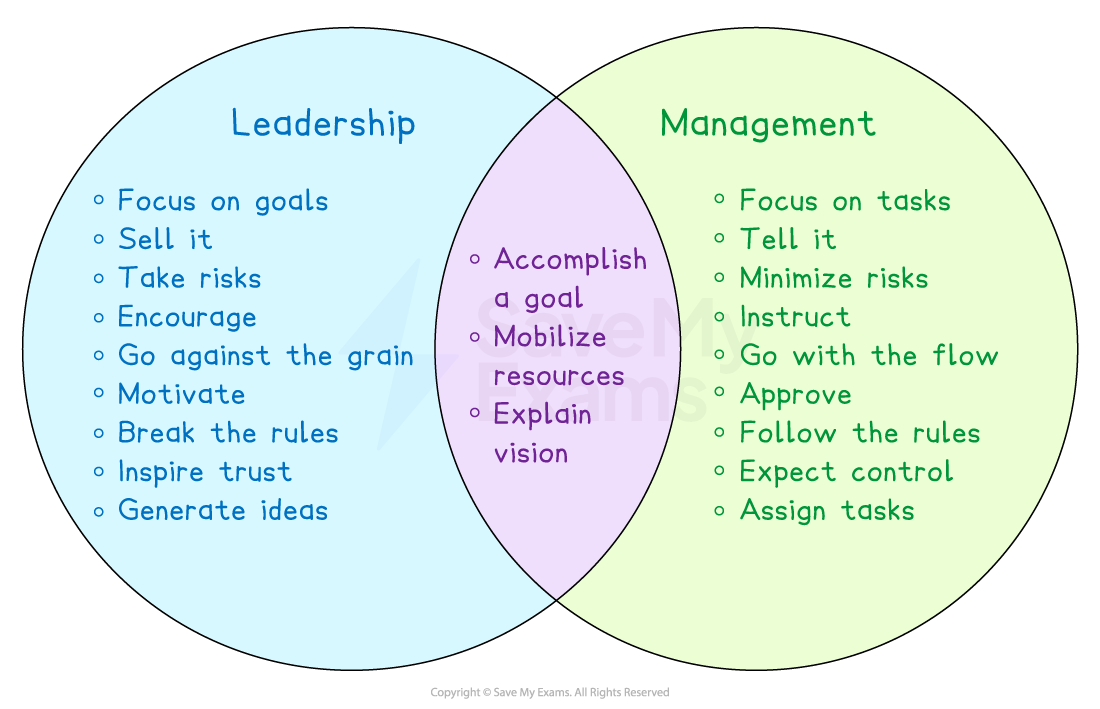
Key differences between leadership and management
Vision vs. execution
Leadership focuses on creating a vision, setting direction and inspiring others to follow
Management focuses on executing plans, organising resources and ensuring tasks are completed on time
Influence vs. control
Leadership focuses on influencing others to achieve a common goal by inspiring and motivating
Management focuses on controlling resources and processes to ensure that objectives are met
People vs. processes
Leadership focuses on people, their needs and their motivation
Management focuses on processes, structures and systems
Long-term vs. short-term
Leadership focuses on the long-term vision and strategy
Management focuses on short-term goals and targets
Creativity vs. efficiency
Leadership encourages creativity and innovation
Management focuses more on efficiency and productivity
Different types of leadership styles
Leadership styles are different approaches to leading and managing a team or business
They reflect the behaviours and attitudes of a leader towards their team members and influence the organisational culture (opens in a new tab), productivity and performance
A successful leader will be able to use a variety of leadership styles, depending on the situation, to achieve the best results for their business
Common leadership styles
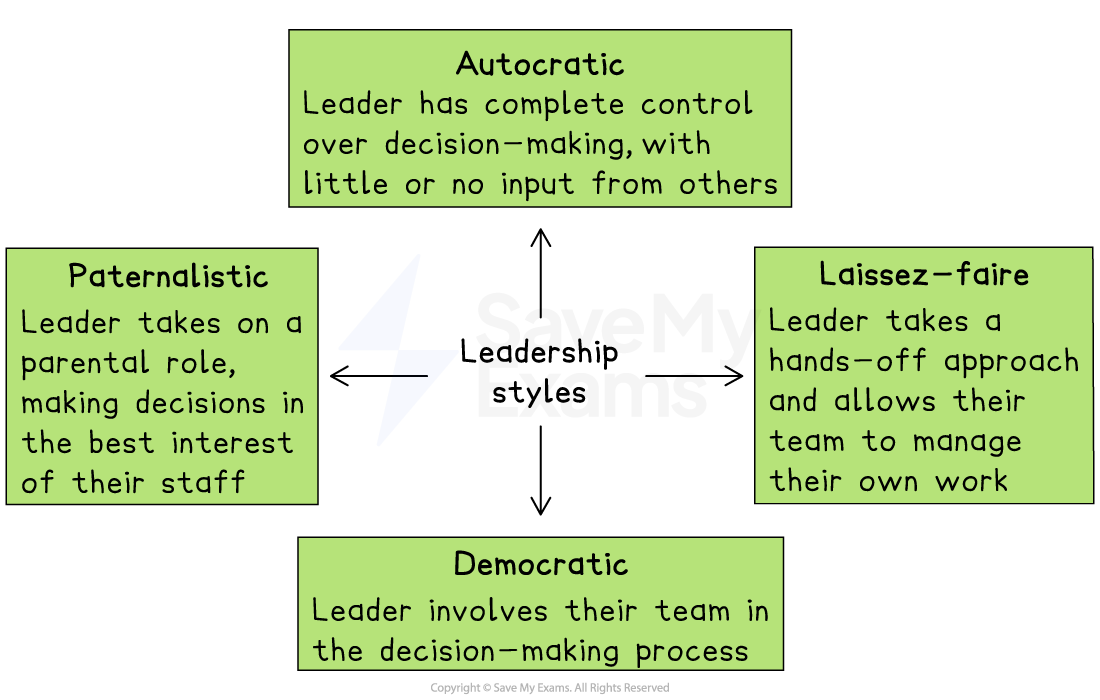
The choice of leadership style is influenced by the business's circumstances as well as the nature and size of the business
Autocratic
This style is more appropriate when there is a need for quick decision-making, such as during a crisis
It may also be more suitable in a small business in which the owner is the primary decision-maker and has complete control over the business
Paternalistic
This style is more appropriate when the staff are uneducated or inexperienced
They require more guidance and support from their leader
It can also be effective when the leader needs to build a strong sense of loyalty from their employees
Democratic
This style is more appropriate when the business needs to encourage creativity, innovation and employee engagement
It is also effective in larger firms in which decisions require input from multiple stakeholders or when there is a need to build consensus
Laissez-faire
This style is more appropriate when the staff are very experienced and require minimal supervision
It is also effective when the leader wants to build a culture of independence and self-motivation
Case Study
Ember

Sam Doyle owns Ember, a small restaurant, and focuses on the long-term vision of building the restaurant's reputation, while a manager runs day-to-day bookings and staffing
On a busy Friday night, Sam takes an autocratic approach in the kitchen, giving quick, clear instructions to keep orders moving safely and on time
With new, inexperienced kitchen staff, Sam uses a more paternalistic style, offering extra guidance and support until they feel confident working alone
When planning a new seasonal menu, Sam leads democratically, asking the whole kitchen team for ideas and building consensus before deciding what to include
With Ember's long-serving head chef, who needs little oversight, Sam adopts a laissez-faire approach, trusting them to manage their own section independently
By adapting the style to each situation rather than relying on just one approach, Sam has kept staff motivated while steadily growing Ember's reputation for good food and a well-run kitchen

Unlock more, it's free!
Join the 100,000+ Students that ❤️ Save My Exams
the (exam) results speak for themselves:

Was this revision note helpful?
Build on this topic