Impact of External Influences (Edexcel A Level Business): Revision Note
Exam code: 9BS0

Understanding PESTLE analysis
PESTLE analysis examines the external factors that are likely to impact the activities and outcomes of a business
PESTLE is an acronym for:
Political
Economic
Social
Technological
Legal
Environmental
PESTLE analysis can support effective decision-making by senior managers who will better understand the complex context within which the business operates
Managers can use the information gathered to understand the potential threats to the business's performance and identify future difficulties so that action can be taken to help avoid and eliminate their effects
PESTLE factors
External factor | Explanation | Examples |
|---|---|---|
Political |
|
|
Economic |
|
|
Social |
|
|
Technological |
|
|
Legal |
|
|
Environmental |
|
|
Examiner Tips and Tricks
When using PESTLE analysis, you must focus on each factor's impact on business activity rather than its origin. The cause is not so important, but the impact of the factor is what needs to be considered.
The changing competitive environment
The structure of the market in which a business operates is likely to change over time
Businesses have to respond to this changing competitive environment
Reasons for changes in market structure
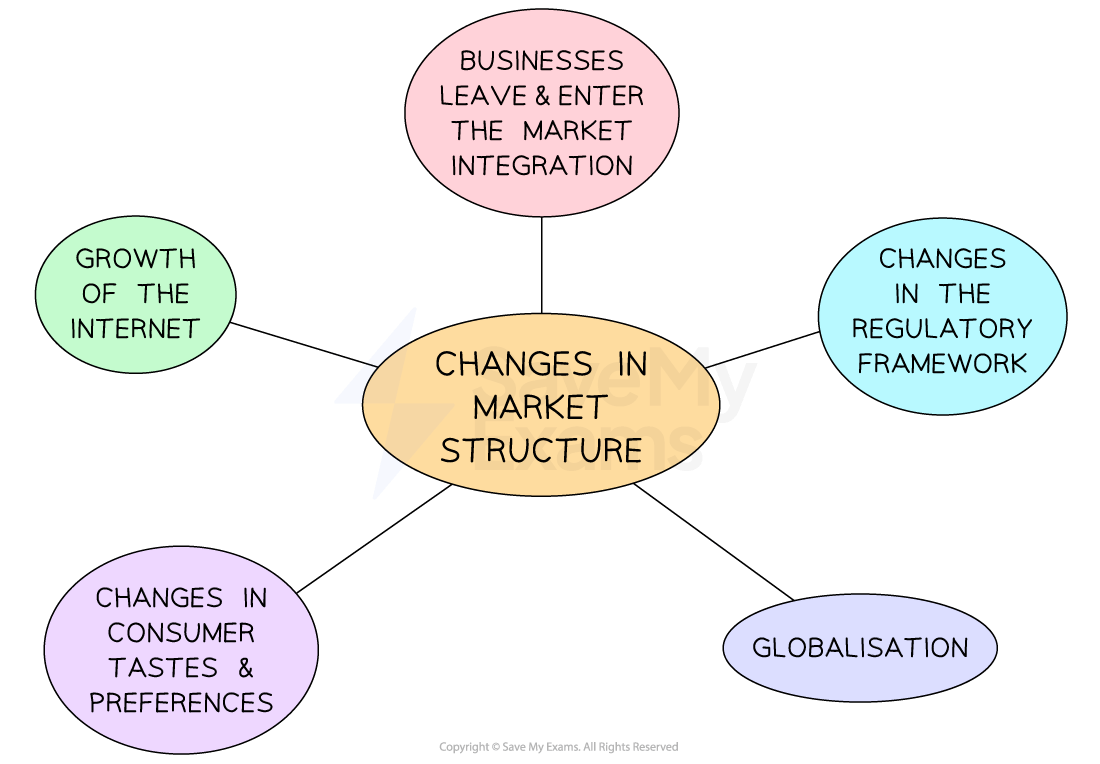
New businesses may enter the market, and existing businesses may leave or integrate with others
For example, until the early 2000s, UK supermarkets were dominated by a small number of giants, including Tesco, Sainsbury's and Asda
The entry of businesses such as Aldi and Lidl has made the market more competitive, while takeovers involving leading brands, such as that of Somerfield by Morrisons in 2004, have had the opposite effect
The legislation (laws) may change, likely leading to fewer barriers to entry for new businesses
For example, until the 1980s, only local councils were permitted to operate local bus services in the UK, and following deregulation, any business with the financial resources to enter the market could run a bus service
The growth of the internet has increased the number of competitors businesses face in the majority of markets
For example, UK booksellers have faced severe price competition largely from the online giant Amazon
Many smaller independent retailers have closed down, as they have been unable to compete
Remaining retailers such as Waterstones have needed to change their operations significantly to survive
Consumer tastes and preferences are changing more rapidly, leading to short product life cycles and a requirement for businesses to innovate to compete
For example, the growth in fast fashion has meant that many clothing retailers must now constantly update their product ranges rather than rely on seasonally focused product selections
Businesses such as Primark and Zara have been particularly successful in meeting customer demand for fast fashion, giving customers the chance to buy the latest fashions in as little as 13 days
Globalisation has increased competition with rivals from around the world
For example, between 1970 and 2010, trade barriers around the world were reduced, and customers were able to buy an increasing number of motor vehicle brands
By 2026, around 15% of all cars sold in the UK were manufactured by Japanese companies
Porter’s Five Forces
Porter’s Five Forces identify the key pressures on an industry that impact the ability of a business to compete with rivals
The Five Forces model
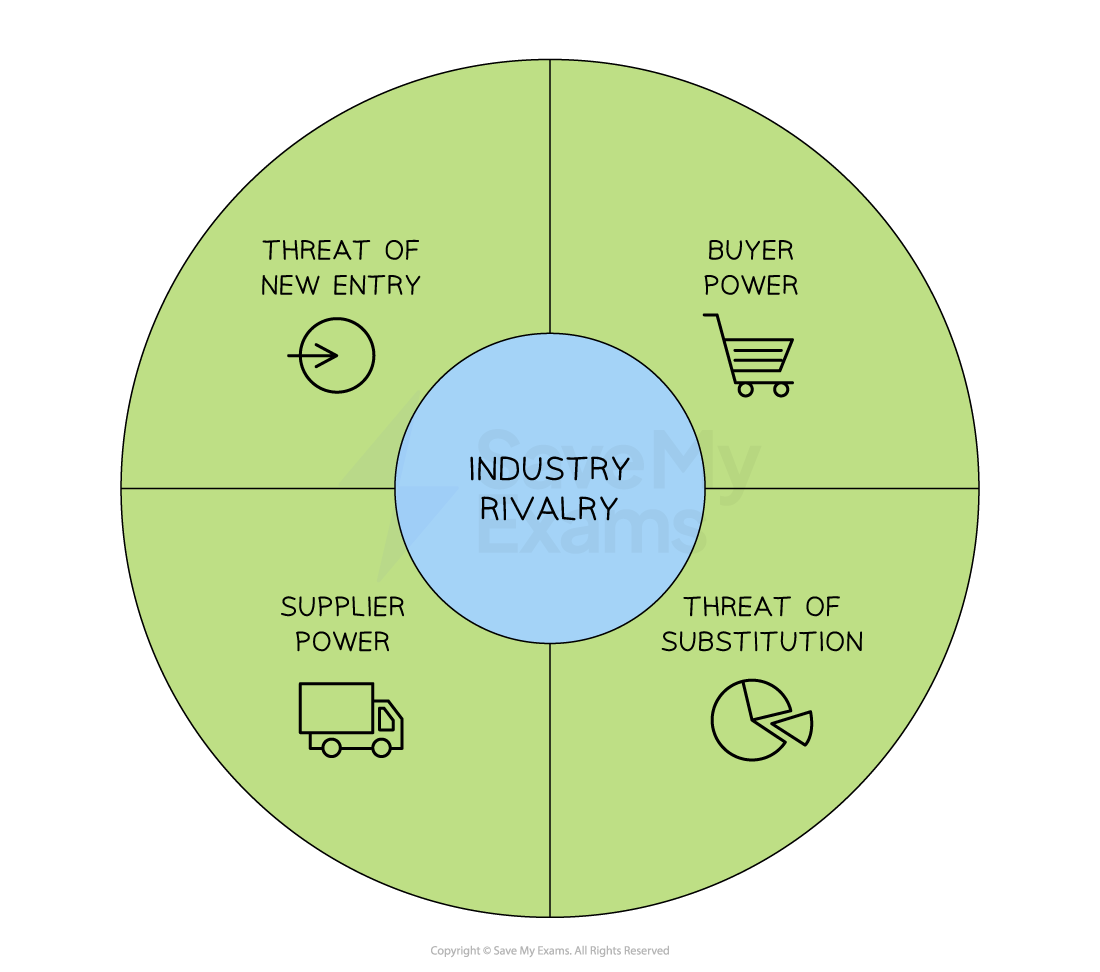
Porter argued that once a business fully understands these pressures in context, it can take strategic decisions to achieve and sustain a competitive advantage
This will then increase the business's chances of success
Explanation of Porter’s Five Forces model
Force | Explanation | Example |
|---|---|---|
Industry rivalry |
|
|
Threat of new entrants |
|
|
Buyer power |
|
|
Supplier power |
|
|
Threat of substitution |
|
|
Case Study
Ashworth and Sons

Ashworth and Sons is a family-run furniture manufacturer in Nottinghamshire, founded three generations ago and known for solid oak dining furniture. For decades, Ashworth and Sons supplied a handful of major UK furniture retailers, who accounted for most of its sales.
In recent years, those retailers have used their size to demand ever-lower prices, squeezing Ashworth and Sons' margins. At the same time, new online-only furniture brands have entered the market with minimal overheads, offering similar styles at lower prices and drawing customers away from traditional showrooms.
Ashworth and Sons also relies on a single specialist supplier for sustainably sourced oak, giving that supplier significant power to set prices. New environmental legislation on timber sourcing has added further costs, while rising interest rates have made customers less willing to spend on furniture purchases.
Facing pressure from powerful buyers, a demanding supplier and new online rivals, the directors have begun exploring direct-to-consumer sales, hoping to reduce their reliance on retailers and better compete with the online rivals disrupting their market
Examiner Tips and Tricks
A common mistake is treating the Five Forces as fixed facts about an industry, rather than forces that change over time - often as a direct result of the PESTLE factors covered earlier on this page. For example, deregulation can lower the threat of new entrants, while a merger between rivals can strengthen buyer power. Explicitly linking a shift in one of the five forces back to a specific PESTLE factor is a strong way to demonstrate genuine analysis

Unlock more, it's free!
Join the 100,000+ Students that ❤️ Save My Exams
the (exam) results speak for themselves:

Was this revision note helpful?
Build on this topic