Protectionism (Edexcel A Level Business): Revision Note
Exam code: 9BS0

What is protectionism?
Protectionism is when a government uses policies to restrict imports and protect domestic industries from foreign competition
Governments may use protectionism to:
Protect domestic jobs and industries from cheaper foreign competition
Support new or "infant" industries until they are able to compete internationally
Protect national security by reducing reliance on foreign suppliers for essential goods
Respond to another country's own trade barriers or unfair trading practices
Common methods of protectionism include tariffs (taxes on imports), import quotas (limits on the quantity of goods that can be imported) and other trade barriers such as subsidies for domestic producers
The current global protectionism situation
Global protectionism has risen sharply since 2025, largely driven by the trade policy of the United States under President Trump
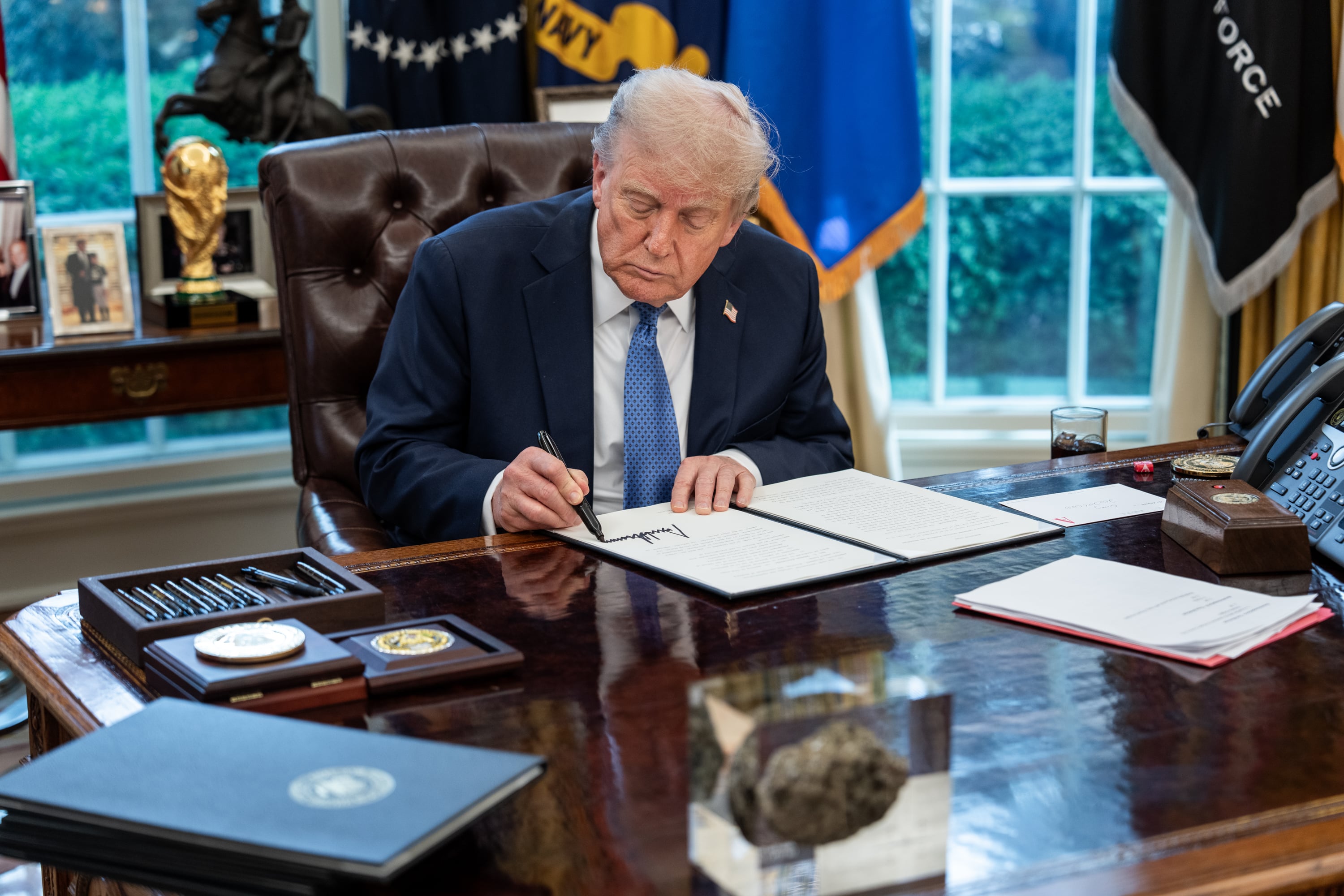
In April 2025, the USA introduced a wide range of new tariffs on imports from most of its trading partners
This prompted retaliation from countries including Canada and China
By 2026, the USA's average tariff rate had reached around 6.6%, its highest level since 1969
This increased costs for the average American household by around $900 a year
Several US tariffs have faced legal challenges in the US courts
However, new tariffs have continued to be introduced even while older ones are contested, creating significant uncertainty for international businesses
New trade agreements reached during 2026 still involve substantial tariffs
For example, EU goods entering the USA face a 15% tariff, while the UK secured lower rates on some goods, such as a 10% cap on furniture
This period of rising protectionism shows how quickly the global trading environment can change
Businesses trading internationally need to closely monitor government trade policy
Tariffs
A tariff is a tax placed on imported goods from other countries
Example
Tennis rackets imported into the UK from China have a tariff of 4.7%
A tariff increases the price of imported goods, which helps to shift demand for that product/service from foreign businesses to domestic businesses
How tariffs work
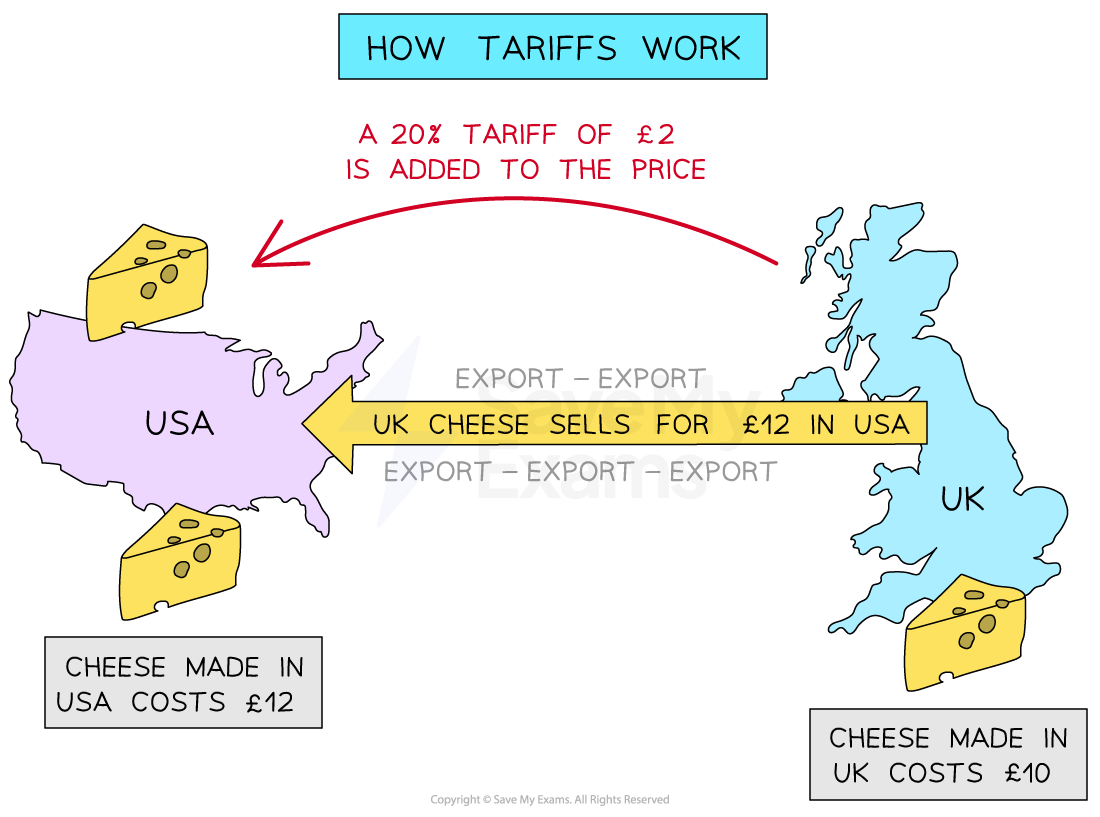
American customers are now more likely to purchase American cheese, as the tariff has made British cheese more expensive
The benefits of tariffs include:
Protects infant industries so they can eventually become more competitive globally
Increases government tax revenue
Reduces dumping by foreign businesses, as they cannot sell below the market price
The disadvantages of tariffs include:
Increases the cost of imported raw materials, which may affect businesses that use these goods for production, leading to higher prices for consumers
Reduces competition for domestic firms, as they may become more inefficient and produce poor-quality products for their customers
Reduces consumer choice, as imports are now more expensive, and some customers will be unable to afford them
Examiner Tips and Tricks
Students are often confused about who pays the tariff. It is not the foreign company but the domestic company that pays the tariff. In our cheese example above, any retailers in the USA who import cheese from Britain have to pay the tariff (import tax) when it crosses the border into the USA. This policy may help cheese manufacturers in the USA, but it harms any other business that imports and sells foreign cheese, as it raises the costs of production.
Import quotas
An import quota is a government-imposed limit on the amount of a particular product allowed into the country
Example
China has set an overall tariff-rate quota on rice imports of approximately 5.32m tonnes per year, which Cambodian exporters compete for alongside suppliers from other countries

Restricting the physical amount of imports means that domestic businesses face less competition and benefit from a higher market share
More of the domestic demand is now met by domestic producers
The benefits of import quotas include:
To meet the extra demand, domestic businesses may need to hire more workers, which reduces unemployment and benefits the wider economy
The higher price for the product may encourage new businesses to start up in the industry
Countries are able to easily change import quotas as market conditions change
Foreign countries view a quota as less confrontational to their business interests than tariffs
These countries' exporters can still sell their goods at the higher price in domestic markets (albeit a limited amount)
The disadvantages of import quotas include:
Quotas limit the supply of a product, and whenever supply is limited, the price of the product rises
They may generate tension in the relationships between trading partners
Domestic firms may become more inefficient over time as the use of quotas reduces the level of competition
Other trade barriers
Legislation
Governments can impose laws to restrict certain imports to protect customers and businesses
Imports may need to meet strict regulations in order to be allowed into a country
Example
There is a UK ban on imported chicken from the USA due to the practice there of using chlorine to wash chicken carcasses
Legislation may help domestic firms to grow, as they have limited competition from businesses abroad
However, it can lead to retaliation from countries facing the legislation
Domestic subsidies
Payments are given to domestic businesses to help lower the costs of production
Example
In the post-Brexit period, the UK government has provided subsidies to its farmers in order to reduce their costs of production
Reduced costs can lead to lower prices, making domestic firms more competitive in international markets, as their exports may be cheaper
Businesses remain competitive, which helps to protect jobs in the industry
However, businesses may become inefficient, as they know their costs are being subsidised
Examiner Tips and Tricks
In Paper 1, you need to be able to evaluate the effects of protectionism on a business. You should also be able to assess the short-term and long-term effects of protectionism on foreign and domestic businesses. Depending on the nature of the business, the effect of protectionism can be immediately felt. It may take some time for other firms to feel the effects. Read the case study carefully to determine the context.

Unlock more, it's free!
Join the 100,000+ Students that ❤️ Save My Exams
the (exam) results speak for themselves:

Was this revision note helpful?
Build on this topic