Mass protest and direct challenge (DP IB History: SL): Revision Note

Summary
Mass protests directly challenged state authority through sustained demonstrations and strikes
Police repression delegitimised the regime and increased public anger
The refusal of the military to fully suppress protests weakened state control
Protests escalated rapidly from local unrest to nationwide mobilisation
These pressures led to the removal of Zine El Abidine Ben Ali on 14 January 2011
Spread of protests
Protests began in Sidi Bouzid on 17 December 2010 following the self-immolation of Mohamed Bouazizi
Initial demonstrations in Sidi Bouzid involved unemployed graduates, local workers, and youth
This indicated that the protest were not limited to a single social group but represented broader socio-economic frustration
Protests spread rapidly to other interior regions such as Kasserine and Thala by early January 2011
Similar conditions of high unemployment, poverty, and underdevelopment existed in these regions
This demonstrated that grievances were structural rather than localised
In Kasserine, clashes between protesters and security forces intensified in early January 2011,
There were reports of multiple deaths due to police use of live ammunition
This further escalated unrest and drew national attention
The spread of protests was facilitated by communication networks, including social media and word of mouth
By mid-January 2011, protests had reached the capital, Tunis, marking a critical shift from regional unrest to nationwide mobilisation
This directly threatened the political centre of the regime
This rapid national spread overwhelmed the capacity of security forces to contain protests
As protests grew in scale and coordination, they became increasingly difficult to control
This directly contributed to the weakening of regime authority
This led to the eventual removal of Zine El Abidine Ben Ali on 14 January 2011
Examiner Tips and Tricks
Always link local protest - regional spread - national crisis, as this shows progression and analysis rather than description
Use named places (Sidi Bouzid, Kasserine, Tunis) to show precise knowledge and strengthen your answer
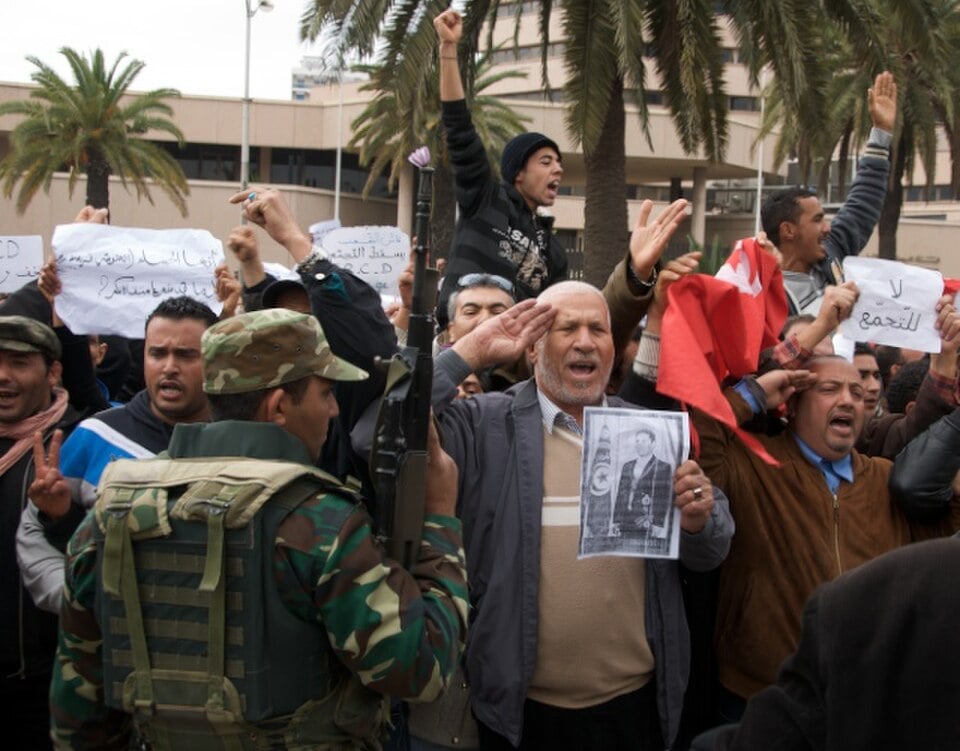
Police repression
Security forces under Zine El Abidine Ben Ali responded to protests with escalating force
This included the use of tear gas, mass arrests, and live ammunition
This demonstrated the regime’s reliance on coercion to maintain control
Many of the people targeted were unarmed civilians, including young protesters and bystanders, highlighting the disproportionate nature of state violence
Reports by Human Rights Watch documented the use of excessive and indiscriminate force
The report included evidence of shootings aimed at upper bodies, which suggested an intention to kill rather than disperse crowds
Rather than deterring protest, police violence intensified public anger and outrage
As repression increased, participation in protests expanded, as more individuals were motivated by anger, solidarity, and a desire for justice
This process delegitimised the regime by eroding public trust and demonstrating that authority was maintained through violence rather than consent
Case Study
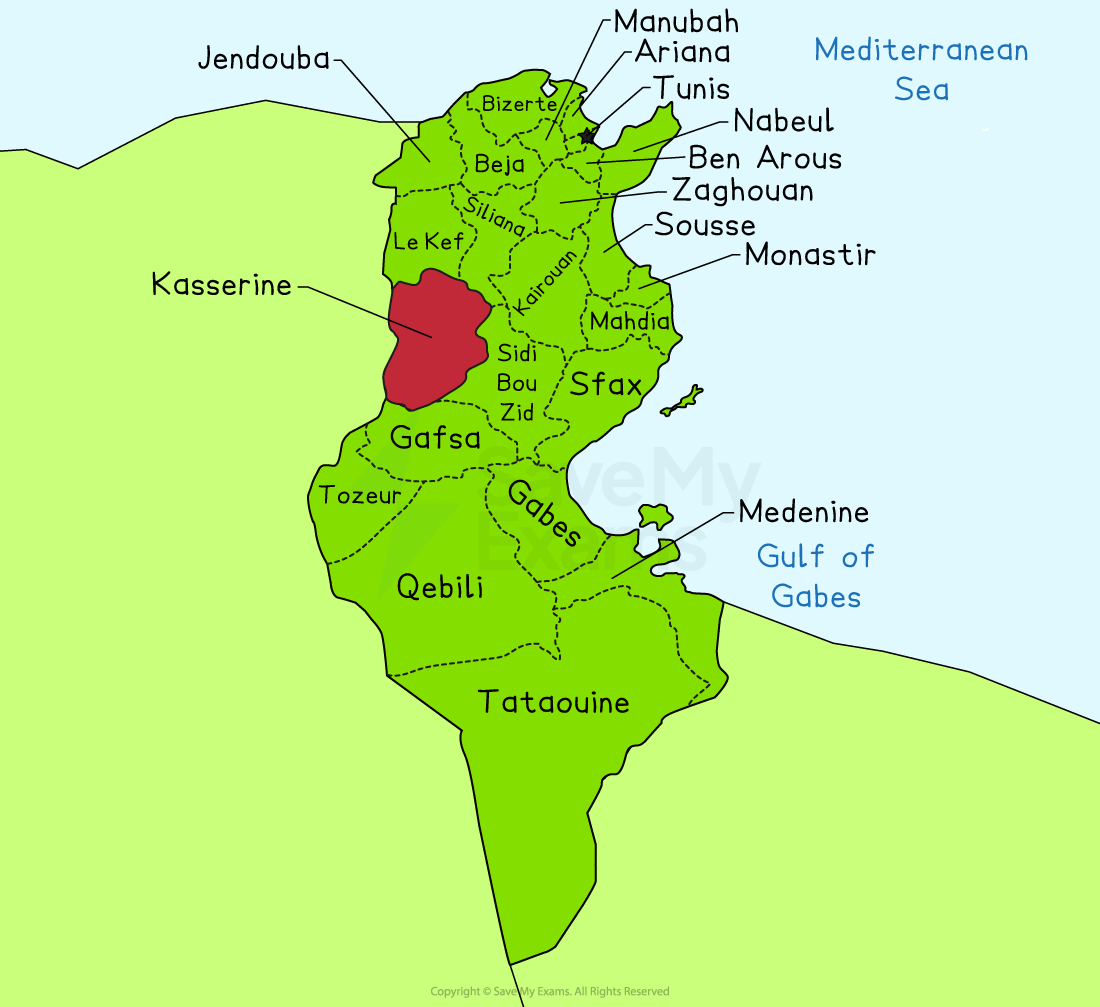
Kasserine, January 2011
Kasserine is located in Western Tunisia
In January 2011, protests in Kasserine escalated following the killing of demonstrators by security forces
Estimates suggest around 20 people were killed in the region
These events became a national symbol of state brutality and played a key role in spreading protests to other regions
Role of the military
The Tunisian military played a decisive role in challenging the authority of Ben Ali
The military refused to fully support the regime’s efforts to suppress protests
In contrast to the police and internal security forces which remained loyal to Ben Ali
The military in Tunisia was relatively small, professional, and historically less involved in domestic repression
This reduced its willingness to act violently against civilians
During the escalation of protests in January 2011, the army was deployed to maintain order in key areas, including Tunis, but did not engage in widespread violent repression
Rachid Ammar, the army chief of staff, "reportedly refused" direct orders to fire on protesters
This represented a critical moment in the weakening of regime control
Without the support of the military, repression could not be effectively sustained
The contrast between the actions of the military and the police further exposed divisions within the state
This increased participation in protests, as protesters were less fearful of violent suppression
As protests intensified and the regime lost control
Ben Ali fled Tunisia on 14 January 2011, with the lack of military support playing a key role in this outcome
Examiner Tips and Tricks
For top marks link military refusal - loss of coercive power - regime collapse, as this shows strong analytical understanding
Use the name Rachid Ammar for precise evidence and higher-level answers

Unlock more, it's free!
Join the 100,000+ Students that ❤️ Save My Exams
the (exam) results speak for themselves:

Was this revision note helpful?
