The Water Cycle (Edexcel GCSE Combined Science: Biology): Revision Note
Exam code: 1SC0

The Water Cycle
Water molecules move between various locations – such as rivers, oceans and the atmosphere – by specific processes
This is possible because water changes state at a relatively low temperature

The water cycle
Water enters the atmosphere as water vapour in one of two processes
Energy from the Sun heats the Earth’s surface and water evaporates from oceans, rivers and lakes
Transpiration from plants releases water vapour into the air
The warmer air of the lower atmosphere rises, taking the water vapour with it
The moist air cools down as it rises
Water vapour condenses back into liquid water, forming clouds
Water returns to earth in the form of precipitation
As the water droplets in the cloud get bigger and heavier, they begin to fall as rain, snow and sleet
This is called precipitation
The importance of the water cycle
All life on earth depends upon water for a variety of reasons, this includes photosynthesis
The water cycle, therefore, is a fundamental process for all living things as it distributes fresh water globally providing us with clean water for drinking
Dealing with drought
In some areas, drought may become an issue as it means that populations living in those areas would not have access to the potable water they require
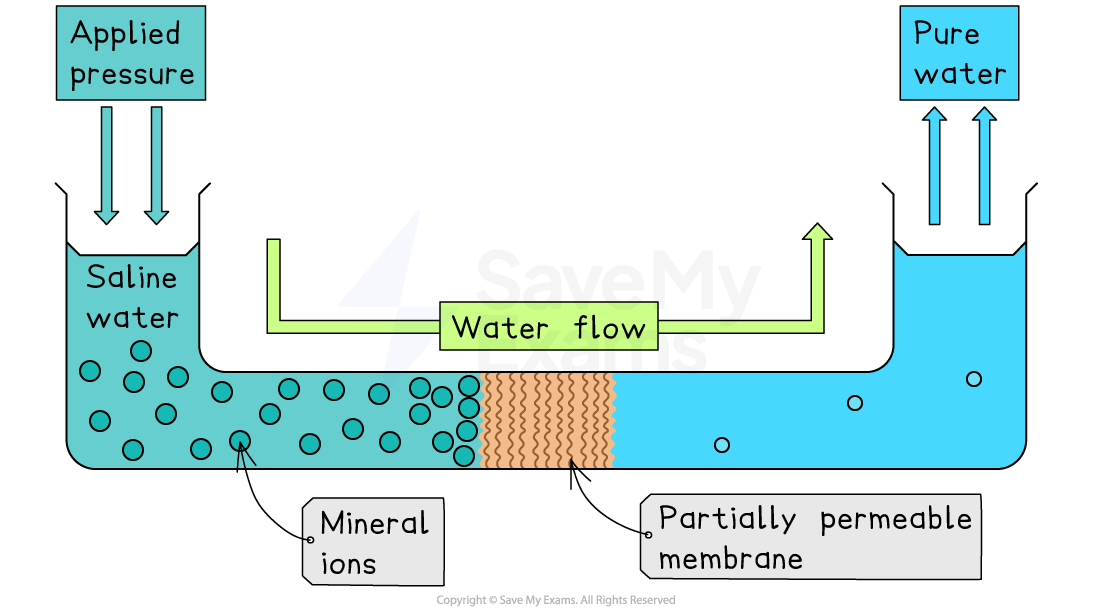
One way to manage this is through desalination of salty water such as sea water
Desalination means removing the excess mineral ions (salts) from the water to make it drinkable
There are several ways of removing these salts
Distillation - saline water is boiled, the water vapour is funnelled through a tube before it is condensed and the pure water is collected
Reverse osmosis - saline water is forced at high pressure through a partially permeable membrane which filters out all the mineral ions leaving pure water

Unlock more, it's free!
Join the 100,000+ Students that ❤️ Save My Exams
the (exam) results speak for themselves:

Was this revision note helpful?
Build on this topic