Diploid vs Haploid (Edexcel IGCSE Science (Double Award): Biology): Revision Note
Exam code: 4SD0

Diploid vs Haploid
A diploid cell is a cell that contains two complete sets of chromosomes (2n)
These chromosomes contain the DNA necessary for protein synthesis and cell function
Nearly all cells in the human body are diploid with 23 pairs (46) of chromosomes in their nucleus
Haploid cells contain one complete set of chromosomes (n)
In other words they have half the number of chromosomes compared to diploid cells
Humans have haploid cells that contain 23 chromosomes in their nucleus (no pairs)
These haploid cells are called gametes and they are involved in sexual reproduction
For humans they are the female egg and the male sperm
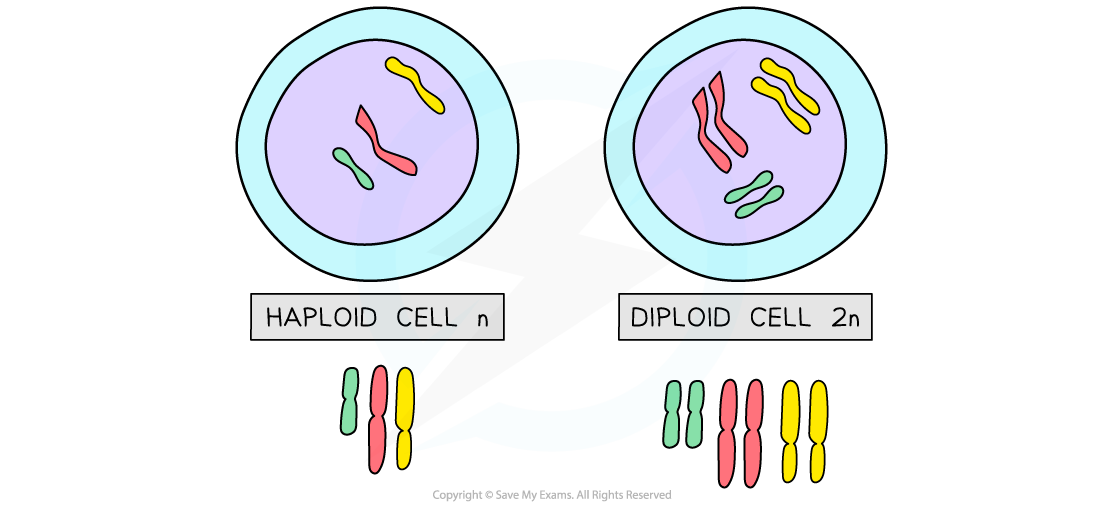
Haploid and diploid cells.

Unlock more, it's free!
Join the 100,000+ Students that ❤️ Save My Exams
the (exam) results speak for themselves:

Was this revision note helpful?
Build on this topic