Colour of Complexes (Cambridge (CIE) A Level Chemistry): Exam Questions

Exam code: 9701

45 mins4 questions
1a
1 mark

The d-orbitals of a transition element are involved in the formation of complexes.

Explain what is meant by the term degenerate orbitals.

1b
3 marks

Fig. 1.1 shows the shape of the dxy orbital.

dxy orbital showing four lobes arranged between the x and y axes

Fig. 1.1

The dxz orbital has a similar shape but the lobes are between the x-axis and z-axis and the dyz orbital has a similar shape but the lobes are between the y-axis and z-axis.

i) State the difference in the spatial alignment of a dxy orbital compared to a dx2-y2 orbital.

[1]

ii) Sketch the shape of a dz2 orbital on the axes provided in Fig. 1.2.
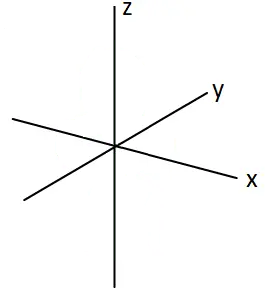
Three-dimensional coordinate axes diagram showing x, y and z axes intersecting at the origin, with z vertical, x horizontal and y slanting between them

Fig. 1.2

[2]

1c
1 mark

State what causes the d-orbitals in a transition element ion to become non-degenerate.

1d
2 marks

The splitting of degenerate d-orbitals gives two sets of non-degenerate d-orbitals at different energy levels.

Complete Table 1.1 to show which d-orbitals have higher energy and which have lower energy in octahedral and tetrahedral complexes.

Table 1.1

Higher energy

Lower energy

Octahedral

Tetrahedral

1a
1 mark

Define the term transition element.

1b
3 marks

Ammonia, NH3, acts as a monodentate ligand in many transition element complexes.

i) Define the term monodentate ligand.

[2]

ii) Aqueous silver ions, Ag+ (aq), react with aqueous ammonia, NH3 (aq), to form a linear complex.

State the formula of this complex. Include its charge.

[1]

1c
5 marks

There are two isomeric complex ions with the formula [Cr(NH3)4Cl2]+. One is green and the other is violet.

i) State the type of stereoisomerism shown by these two complex ions.

[1]

ii) Explain why these complex ions are coloured, and why their colours are different.

[4]

1d
2 marks

Ethane-1,2-diamine, H2NCH2CH2NH2, is represented as en. Nickel forms the complex ion [Ni(en)3]2+, in which it is surrounded octahedrally by six nitrogen atoms.

Draw three-dimensional diagrams to show the two stereoisomers of [Ni(en)3]2+.

Blank three-dimensional octahedral framework for drawing the two stereoisomers of [Ni(en)3]2+
1e
3 marks

Ethane-1,2-diamine is a useful reagent in organic chemistry.

i) Explain why ethane-1,2-diamine acts as a Brønsted–Lowry base.

[2]

ii) Construct an equation for the reaction of ethane-1,2-diamine with an excess of hydrochloric acid.

[1]

1f
3 marks

Under certain conditions, ethane-1,2-diamine reacts with ethanedioic acid, HOOCCOOH, to form polymer Z.

i) Draw the structure of polymer Z, showing two repeat units.

[2]

ii) State the type of polymerisation that occurs during this reaction.

[1]

2a
2 marks

This question is about the geometry and colours of transition element complexes.

Explain why transition elements have variable oxidation states but Group 1 elements do not.

2b
4 marks

Transition element compounds are often coloured. For example, [Cr(H2O)6]3+ is green.

Explain why transition element complexes are coloured.

2c
3 marks

Zinc and cobalt ions react with water to form the complexes [Zn(H2O)4]2+ and [Co(H2O)6]2+.

i) Explain why water is able to act as a ligand in forming these complexes.

[2]

ii) State the geometry of the [Co(H2O)6]2+ complex ion.

[1]

2d
2 marks

Explain why solutions containing [Zn(H2O)4]2+ are colourless.

3a
5 marks

i) Explain why aqueous nickel(II) ions, Ni2+(aq), are green.

[4]

ii) Explain why aqueous scandium(III) ions, Sc3+(aq), are colourless.

[1]

3b
3 marks

Explain why the addition of an excess of aqueous ammonia to aqueous copper(II) ions causes a change in the colour of the solution.

3c
2 marks

The [Fe(CN)6]4- complex ion contains iron and cyanide ligands.

i) Deduce the oxidation state of iron in [Fe(CN)6]4-. Show your working.

[1]

ii) Draw the arrangement of electrons in the 3d and 4s subshells of the iron ion in [Fe(CN)6]4-, using arrow-in-box notation.

[1]