14 marks
Outline the process of liquefaction.
Was this exam question helpful?
Exam code: 7037
Outline the process of liquefaction.
Was this exam question helpful?
What are the characteristics of tsunamis?
[1]
They have a short wavelength and high amplitude. They travel at low speed, at around 30 km/h. They decrease in height as they approach land.
They have a long wavelength and low amplitude. They travel at high speeds, sometimes over 700 km/h. Shallow water and the funnelling effect of bays dramatically increases height.
They have a short wavelength and consist of a series of waves. They strike land in quick succession with heights sometimes exceeding 20 metres.
Strong winds whip up large waves which lead to very powerful waves. The funnelling effect of bays creates super-sized waves.
Was this exam question helpful?
Outline the physical characteristics of earthquakes that determine their impact as hazards.
Was this exam question helpful?
Outline the global distribution of earthquakes.
Was this exam question helpful?
Outline how the size of an earthquake is measured.
Was this exam question helpful?
To what extent do you agree that seismic events will always generate more widespread and severe impacts than volcanic events?
Was this exam question helpful?
Assess the importance of factors in globalisation in supporting the response to major seismic hazards.
Was this exam question helpful?
Figure 10
Information about the 2010 earthquake in Haiti

Figure 10 shows information about the 2010 earthquake in Haiti.
Using Figure 10 and your own knowledge, assess the challenges in managing an event such as this.
Was this exam question helpful?
‘Seismic activity offshore will always present a greater threat to people than seismic activity on land.’
To what extent do you agree with this view?
Was this exam question helpful?
Figure 10 is in the insert. Figure 10 shows information about areas at risk following a seismic event based upon underlying geology in Waikato District and the surrounding area, New Zealand.
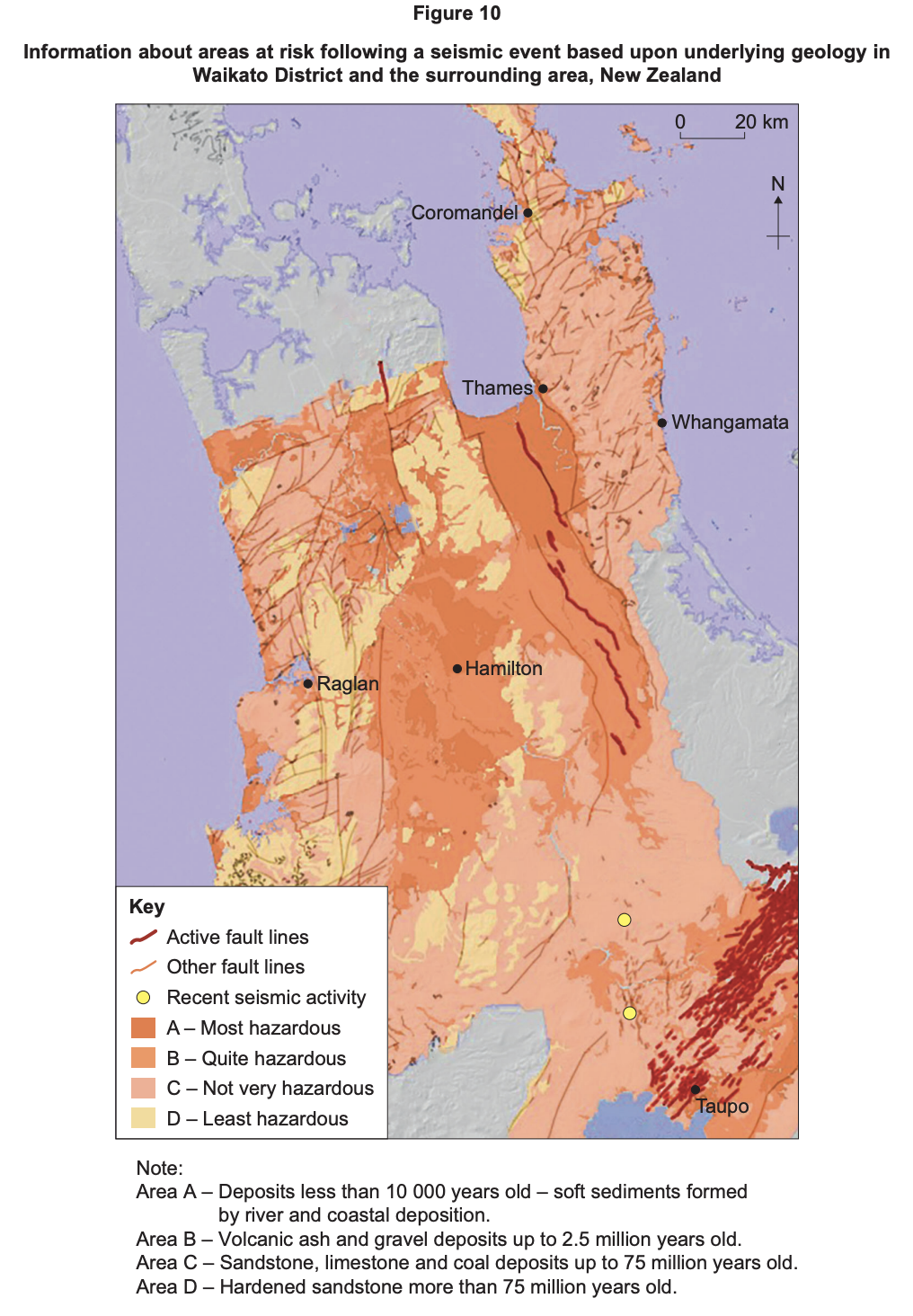
Using Figure 10 and your own knowledge, discuss likely approaches to seismic hazard management in this area.
Was this exam question helpful?
'The level of development is the most important factor in determining the impact of an earthquake.'
To what extent do you agree?
Was this exam question helpful?
Assess the importance of the secondary effects of earthquakes in determining their overall impact.
Was this exam question helpful?
'Earthquakes cannot be predicted, so reducing their impact depends entirely on preparation.'
To what extent do you agree?
Was this exam question helpful?