Geometry of Complex Addition, Subtraction & Conjugation (Cambridge (CIE) A Level Maths: Pure 3): Revision Note
Exam code: 9709

Geometry of complex addition, subtraction & conjugation
How do I sketch complex addition on an Argand diagram?
The addition of complex numbers can be shown by the addition of corresponding column vectors
If and , then
This can be written as
An alternative is to write as , adding the respective real and imaginary parts separately
A complex number can be represented by the position vector
How do I sketch complex subtraction on an Argand diagram?
As with addition we can use knowledge of vectors to represent subtraction of complex numbers
If and , then
This can be written as
An alternative is to write as , subtracting the respective real and imaginary parts separately
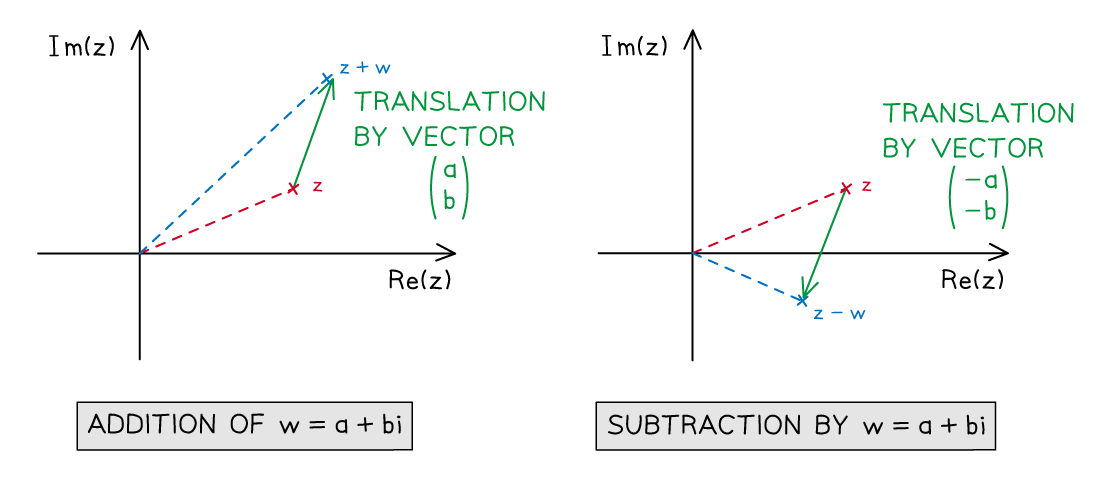
Which geometric transformations represent complex addition and subtraction?
Let w be a given complex number with real part a and imaginary part b
Let z be any complex number represented on an Argand diagram
Adding w to z results in z being translated by vector
Subtracting w from z results in z being translated by vector
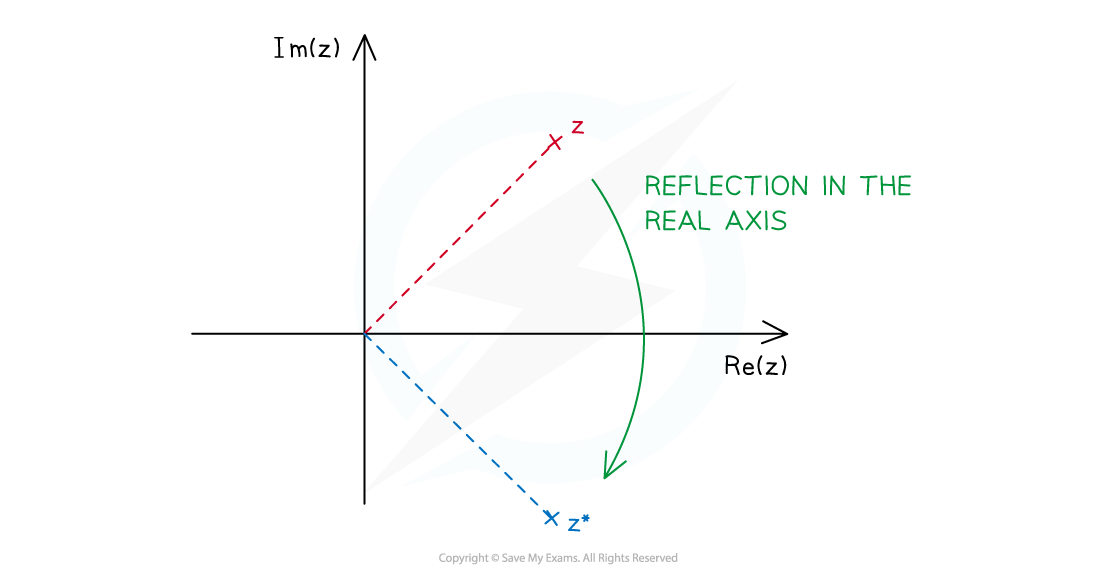
What geometric transformation represents complex conjugation?
If we plot complex conjugate pairs on an Argand diagram, we notice the points are reflections of each other in the real axis
Let z be any complex number represented on an Argand diagram
Complex conjugating z results in z being reflected in the real axis
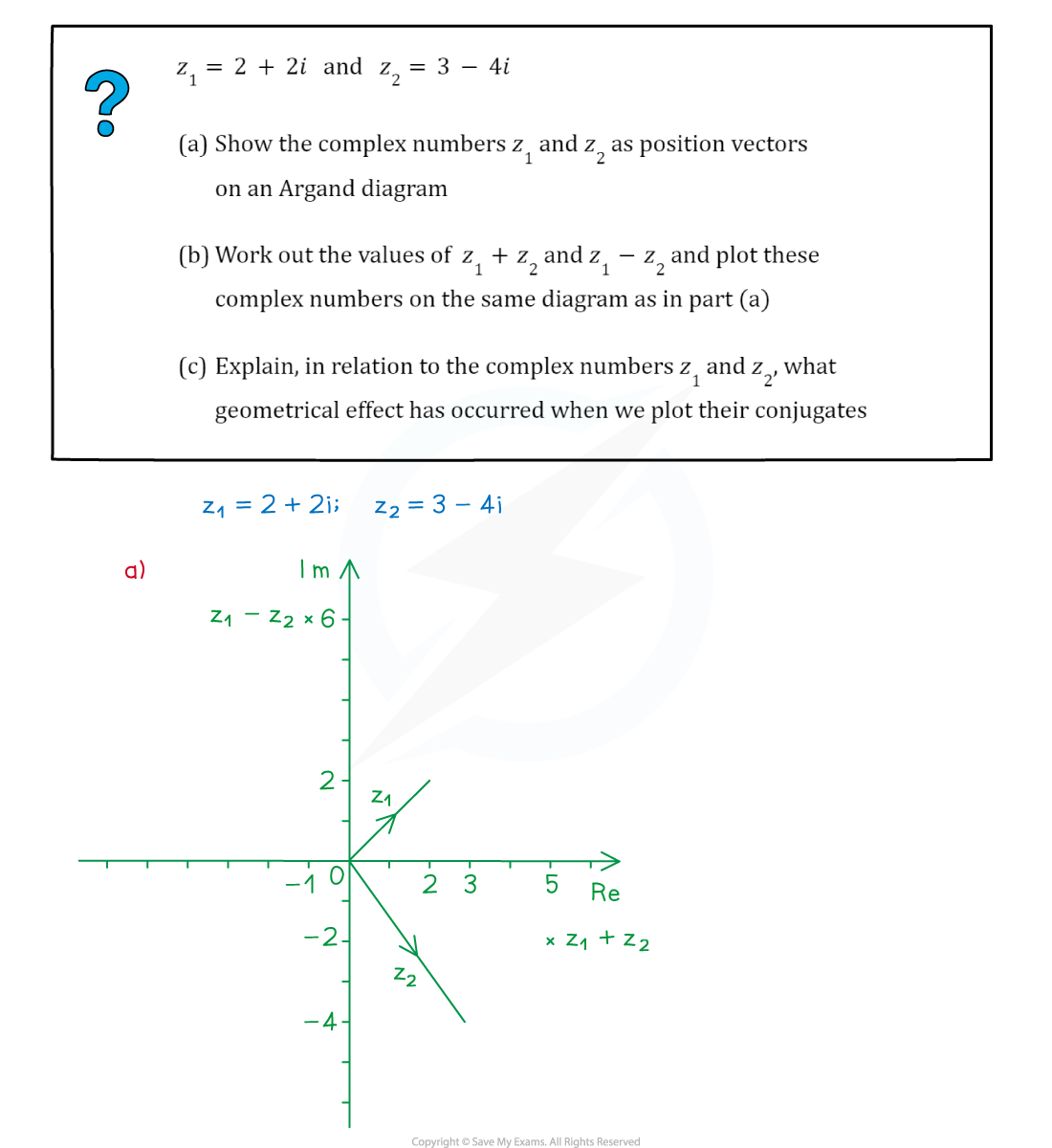
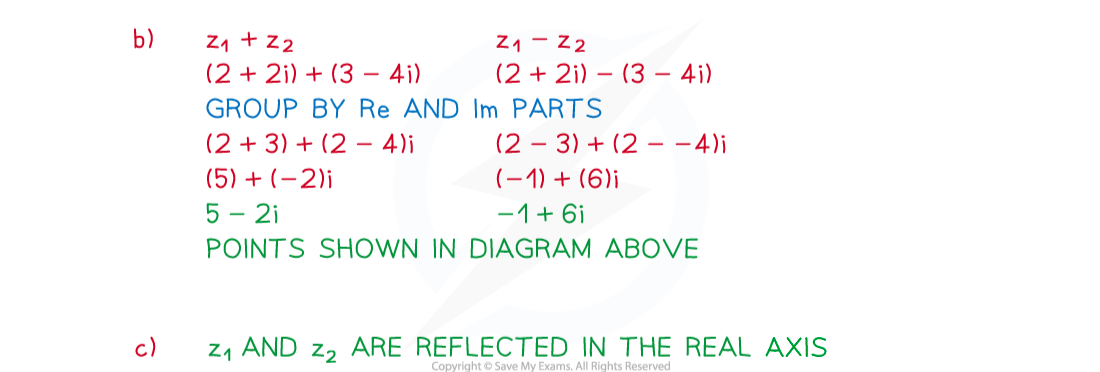
Worked Example
Examiner Tips and Tricks
Read questions carefully; is it asking to plot the complex number as a point or as a vector?
Be extra careful when representing subtraction geometrically, remember that the solution will be a translation of the shorter diagonal of the parallelogram made up by the two vectors.

Unlock more, it's free!
Join the 100,000+ Students that ❤️ Save My Exams
the (exam) results speak for themselves:

Was this revision note helpful?
Build on this topic