For a guitar to make a sound, the strings need to vibrate, or move up and down or back and forth, in a motion that can be modeled by a periodic function.
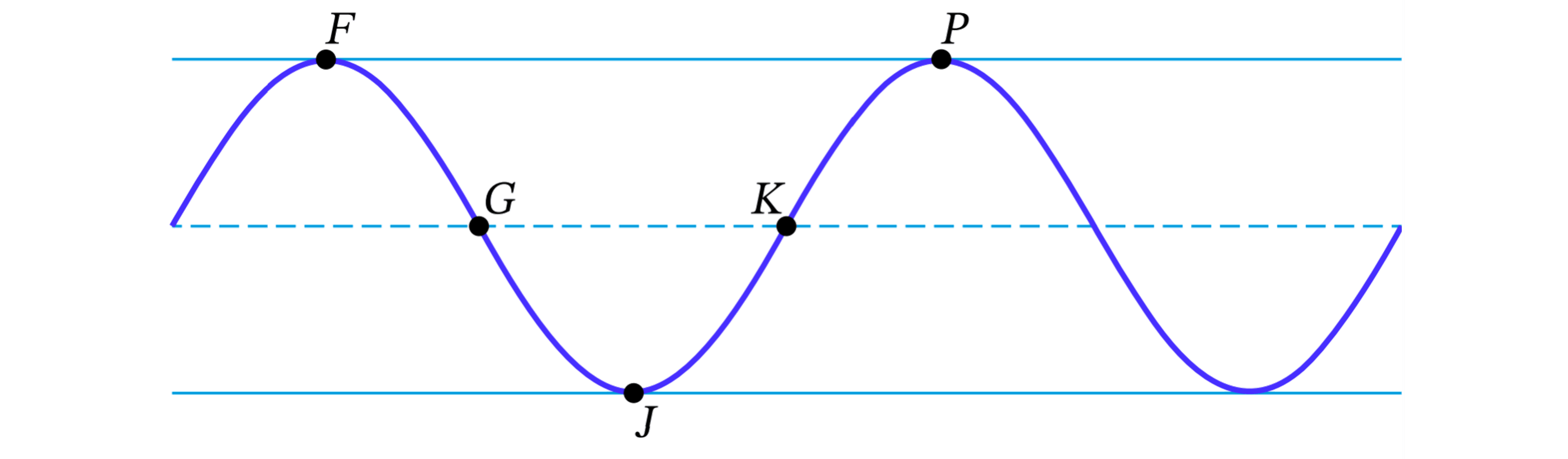
At time seconds, point on one vibrating guitar string starts at its highest position, 2 millimeters above its resting position. Then it passes through its resting position and moves to its lowest position, 2 millimeters below the resting position. Point then passes through its resting position and returns to 2 millimeters above the resting position. This motion occurs 200 times in 1 second.
The sinusoidal function models how far point is from its resting position, in millimeters, as a function of time , in seconds. A positive value of indicates the point is above the resting position; a negative value of indicates the point is below the resting position.
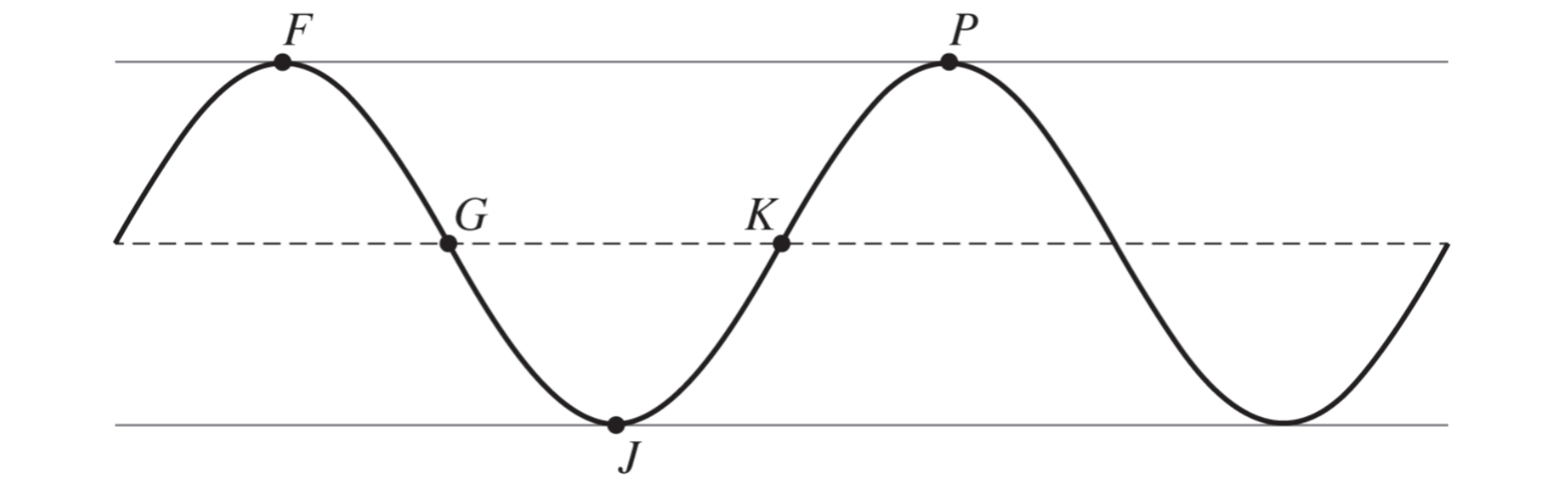
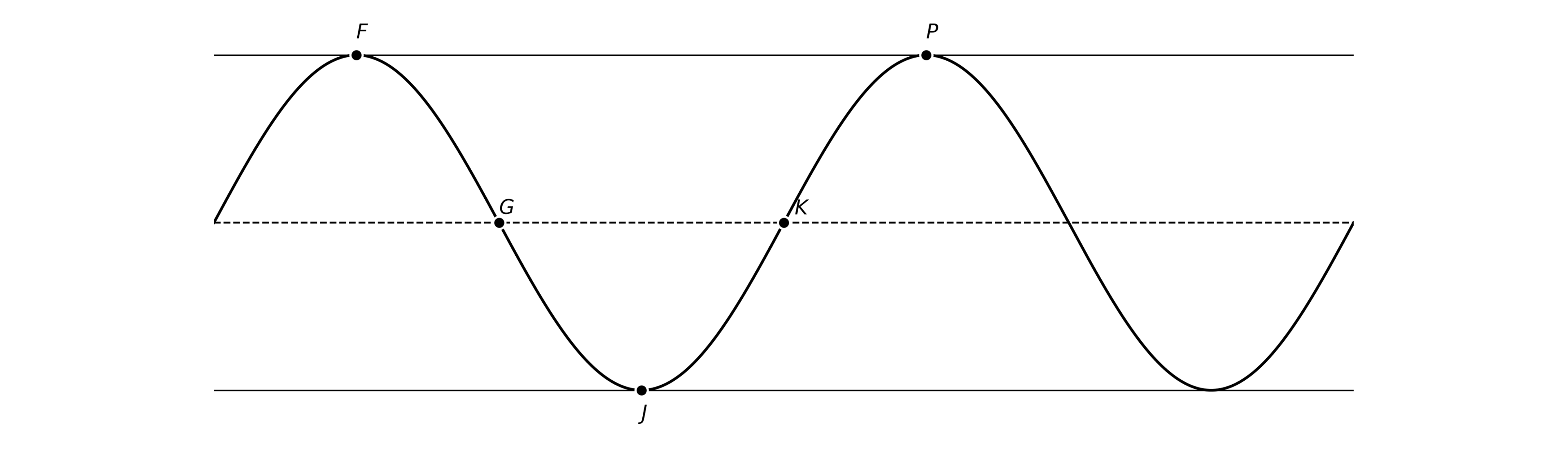
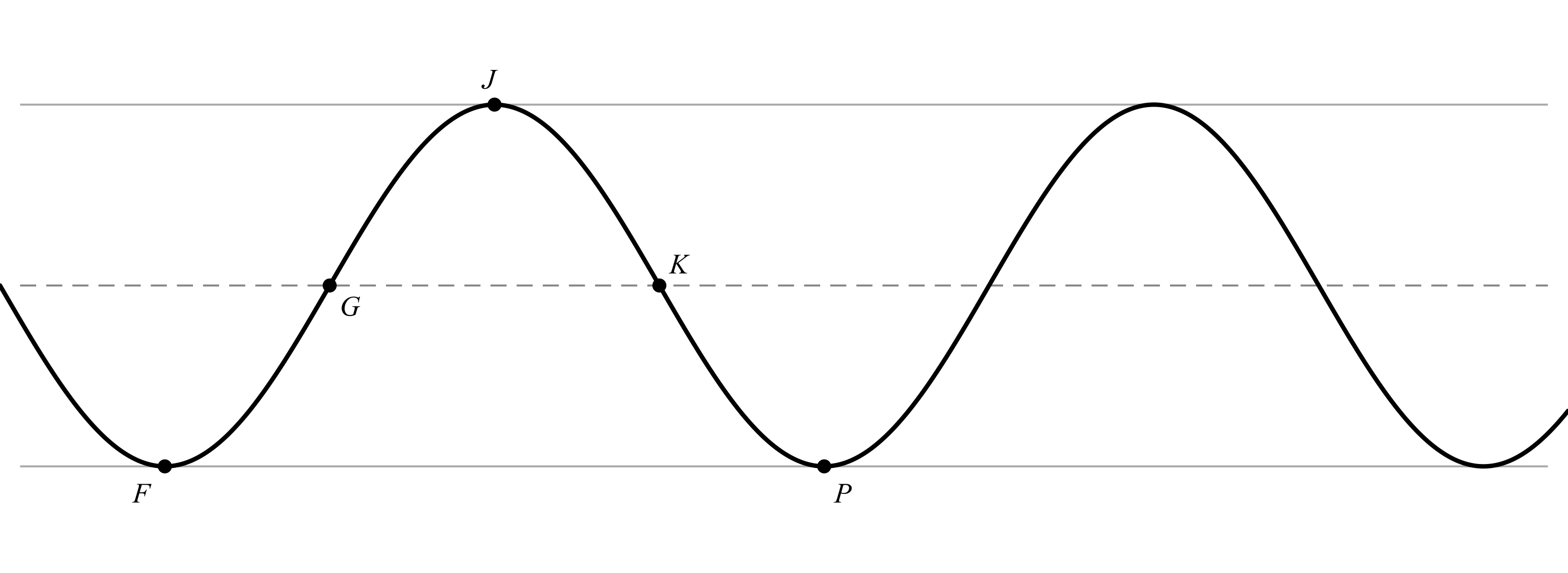
The graph of and its dashed midline for two full cycles is shown. Five points, , , , , and , are labeled on the graph. No scale is indicated, and no axes are presented. Determine possible coordinates for the five points: , , , , and .
The function can be written in the form . Find values of constants , , , and .
Was this exam question helpful?