14 marks
Outline the impact of temperature variation on weathering processes in hot deserts.
Was this exam question helpful?
Exam code: 7037
Outline the impact of temperature variation on weathering processes in hot deserts.
Was this exam question helpful?
Outline sources of energy in hot desert environments.
Was this exam question helpful?
Outline the role of atmospheric processes in causing aridity in desert regions.
Was this exam question helpful?
Explain how two processes of mechanical weathering operate in hot desert environments.
Was this exam question helpful?
Outline weathering processes in hot deserts.
Was this exam question helpful?
Explain how aeolian processes contribute to the formation of contrasting landforms in hot desert environments.
Was this exam question helpful?
Figures 4a, 4b and 4c are in the insert, and show information about a town in Egypt (El-Sheikh El-Shazli) which is prone to desert flash flooding. Figure 4a shows the location of El-Sheikh El-Shazli relative to a number of wadis in the area shown on a satellite image. Figure 4b shows sketch maps of the town and area flooded before and after increased urbanisation. Figure 4c is a photograph of the town looking towards the hills in Figure 4b.
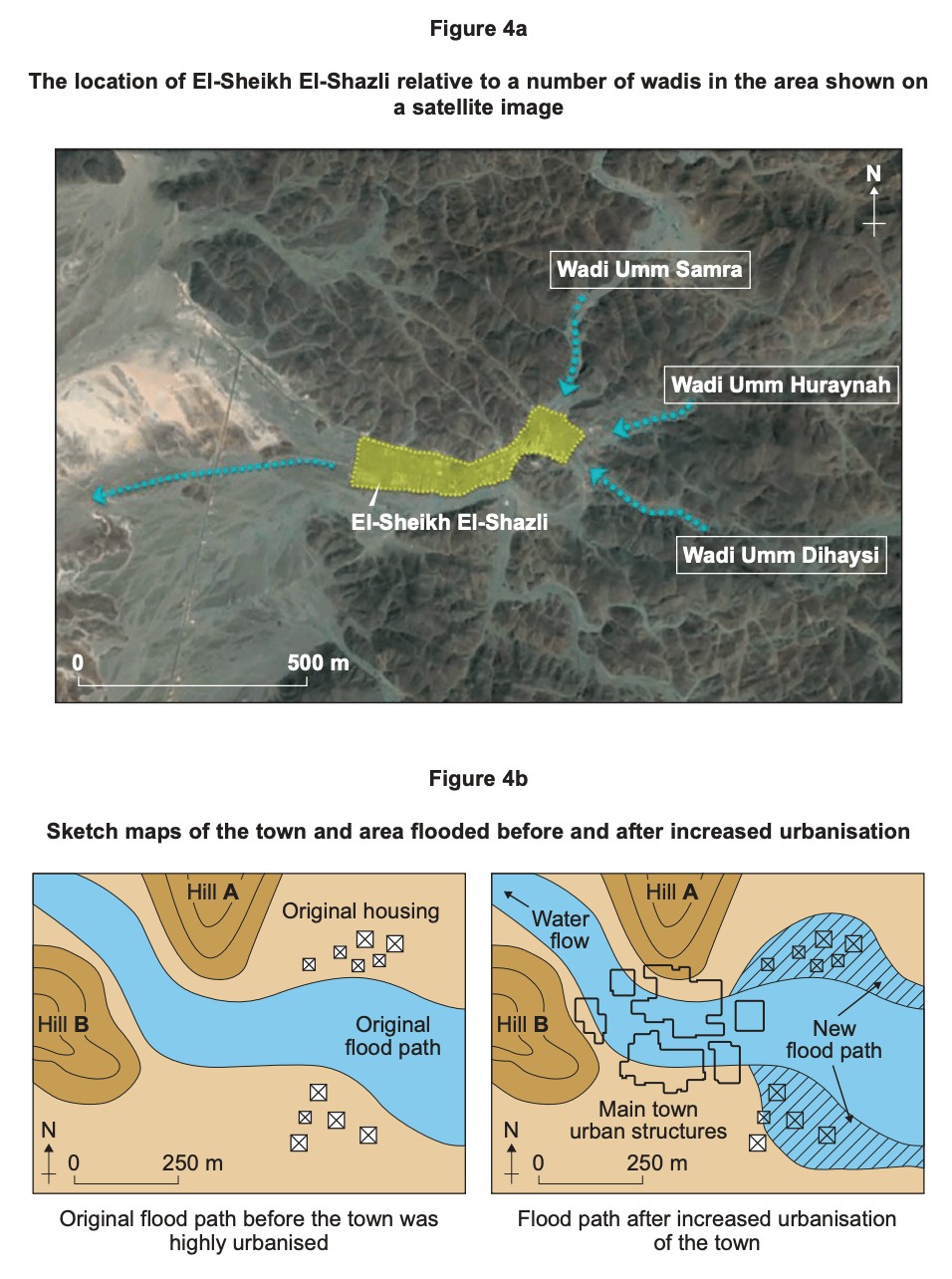
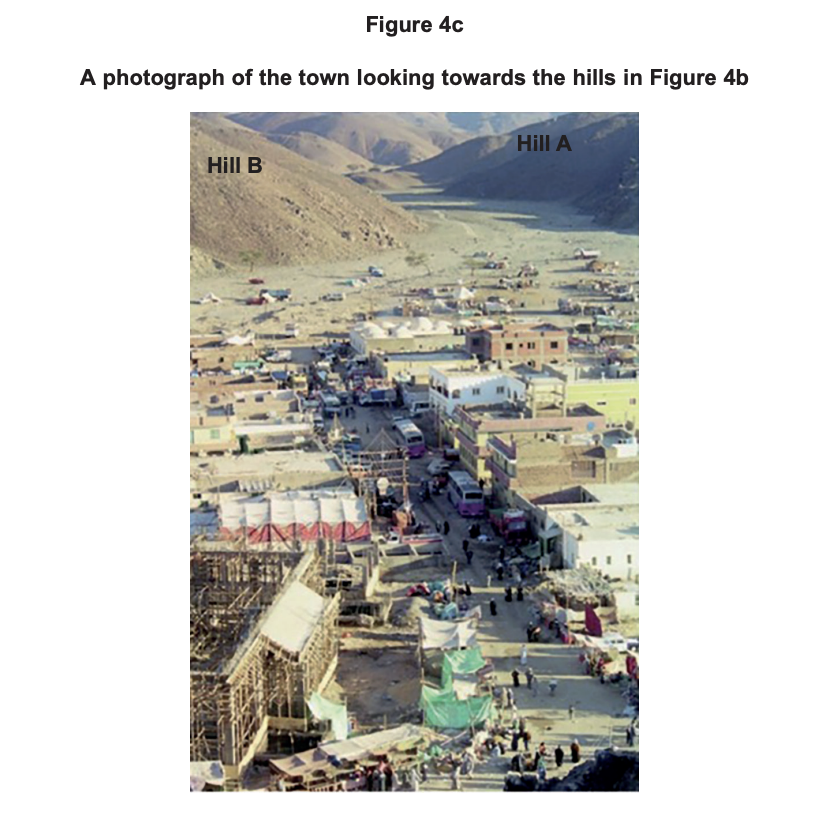
Using Figures 4a, 4b, 4c and your own knowledge, assess the relative importance of physical and human factors contributing to the flash flooding events in this area.
Was this exam question helpful?
Study Figure 1, which shows ground-surface temperature and air temperature over a 24-hour period at a site in the central Sahara in June.
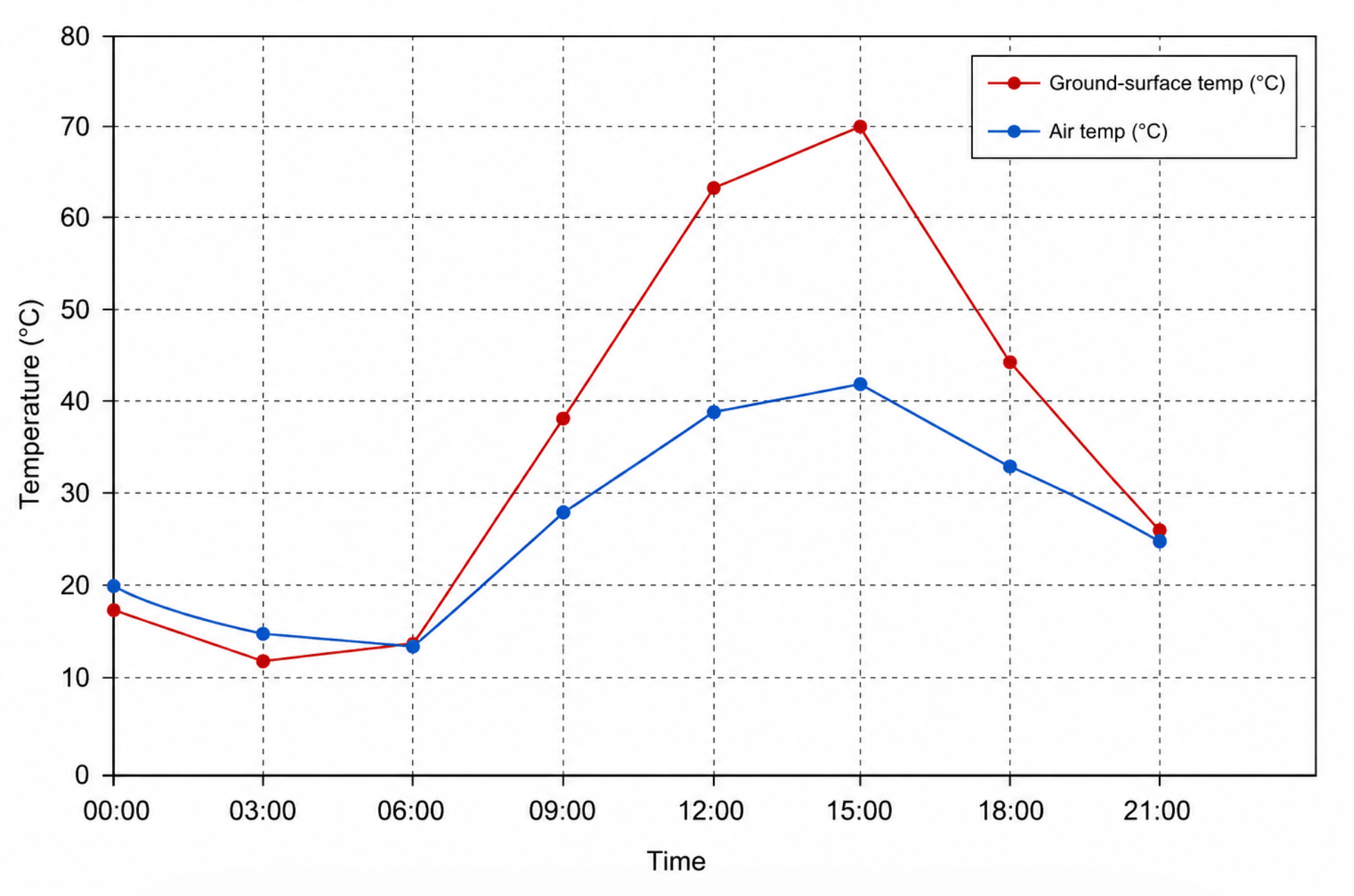
Using Figure 1, analyse the variations in ground-surface and air temperature shown.
Was this exam question helpful?
Study Figure 2, which shows weathered granite in a hot desert environment.
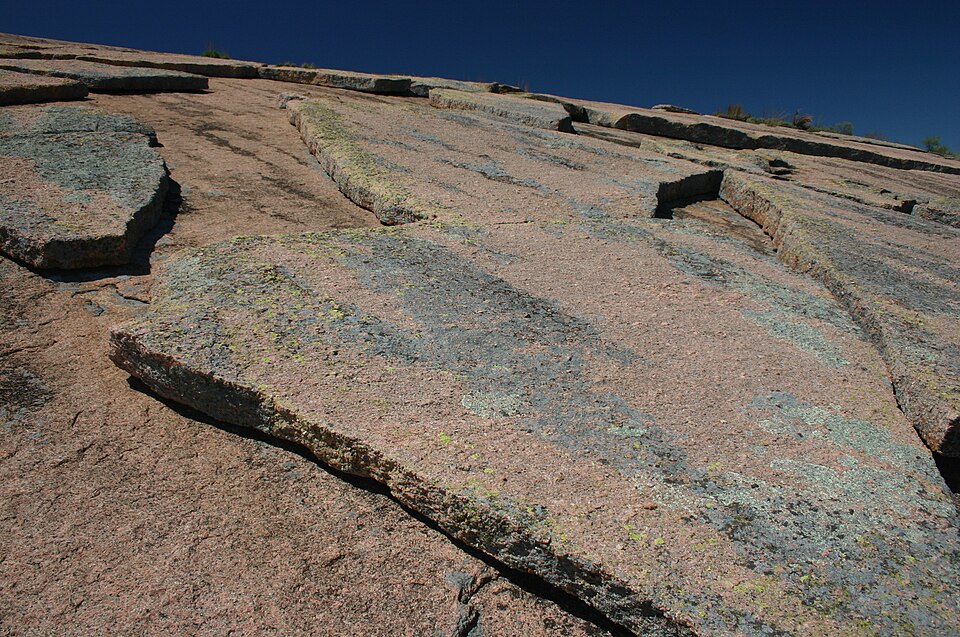
Using Figure 2 and your own knowledge, assess the importance of mechanical weathering in the operation of hot desert systems.
Was this exam question helpful?
Study Figure 3, which shows the rate of sand transport at different wind velocities for two grain sizes in a hot desert.
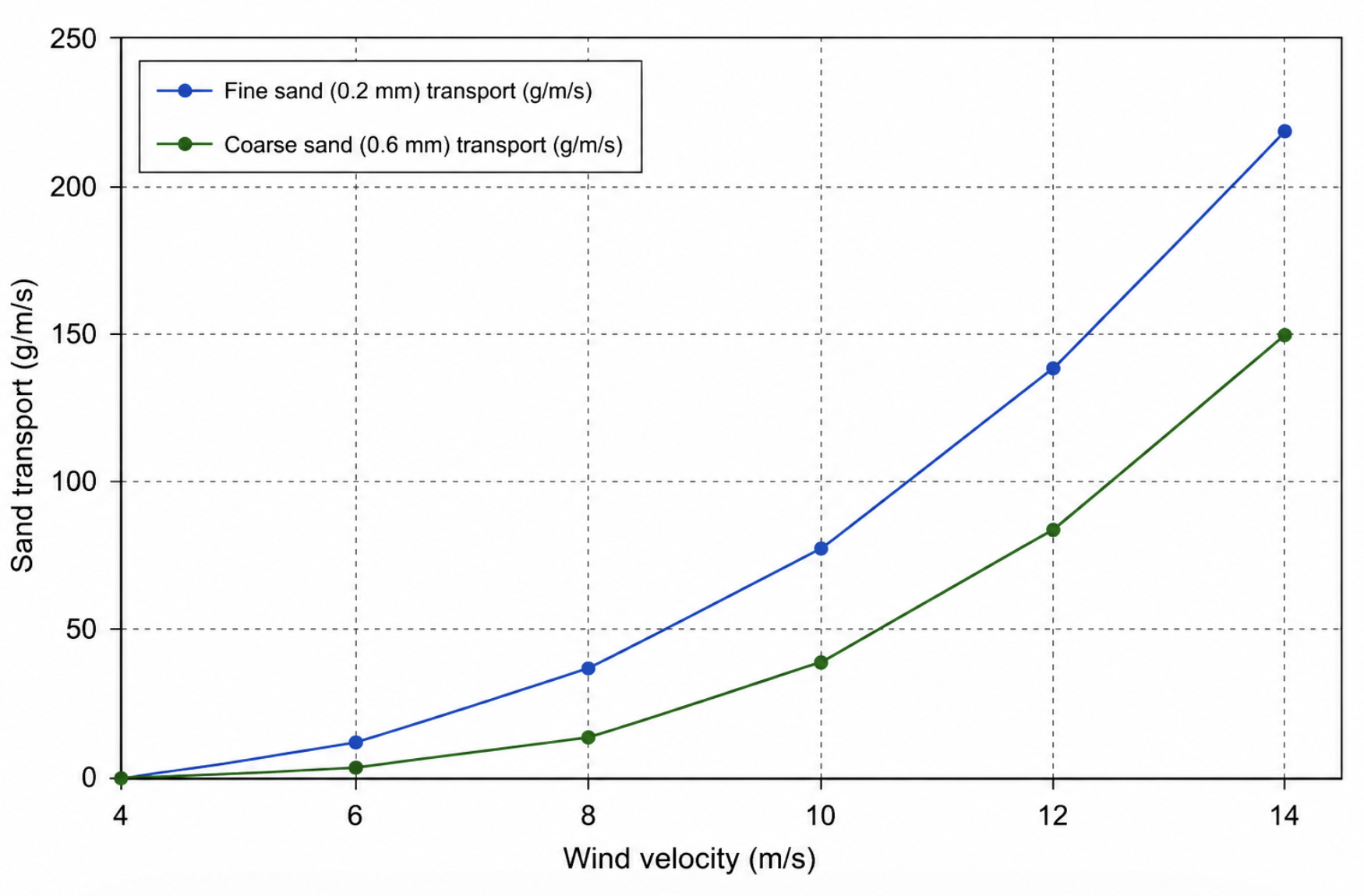
Using Figure 3, analyse the relationship between wind velocity and the rate of sand transport shown.
Was this exam question helpful?
With reference to a hot desert that you have studied, assess the relative importance of different sources of energy in landscape development.
Was this exam question helpful?
'Aeolian processes are more important than fluvial processes in shaping hot desert landscapes.'
To what extent do you agree?
Was this exam question helpful?
Assess the extent to which inputs of energy, rather than the availability of sediment, control the operation of hot desert systems.
Was this exam question helpful?