Albert Speer & the Wartime Economy (AQA A Level History: Component 2: Depth study): Revision Note
Exam code: 7042

Summary
The Second World War began before the German economy was fully prepared, and this led to shortages
The appointment of Albert Speer led to huge increases in production by Germany's armaments factories
This was due to making them more efficient but also by using vast amounts of foreign labour
Some were paid volunteers but, after the invasion of the USSR in 1941, many were prisoners of war
Like concentration camp inmates, they were used as slave labour by the Nazis
Germany's factories and its ability to make weapons were targeted by Allied air forces
This led to the destruction of many factories and a reduction in the amount of armaments produced by Germany
The wartime economy and the work of Speer
Although the German economy had been preparing for war since the introduction of the Four-Year Plan in 1936, the war had begun before Hitler expected
Hitler did not believe that Britain and France would go to war over his invasion of Poland
Instead, he thought hostilities would begin when he invaded the Soviet Union, which he planned to do in 1941
This meant that in 1939, Germany's factories were not capable of producing armaments in the numbers required for its armed forces
Pre-Speer weaknesses of the economy
Hermann Göering had been put in charge of the Four-Year Plan and had proven he did not have the skills or experience to do the job
He failed to build effective relationships with either industrial or military leaders
His personal competition with rival departments such as the Economic Ministry and the Ministry for Armaments and Munitions led to worse outcomes for the German economy
Hitler also did not believe it would be necessary to restructure the entire German economy for a 'Total War'
He believed that Germany's blitzkrieg would lead to rapid victories and short wars
After the initial victories against Poland and France, this proved to be incorrect
Regional leaders, known as Gauleiters, were being accused of damaging the economy through corruption and building personal empires
The production of several different models of tanks, trucks, aircraft and weapons led to accusations of complicated and inefficient supply chains
When Fritz Todt, the Minister for Armaments and Munitions, died in a plane crash in February 1942, Hitler replaced him with Albert Speer
Albert Speer
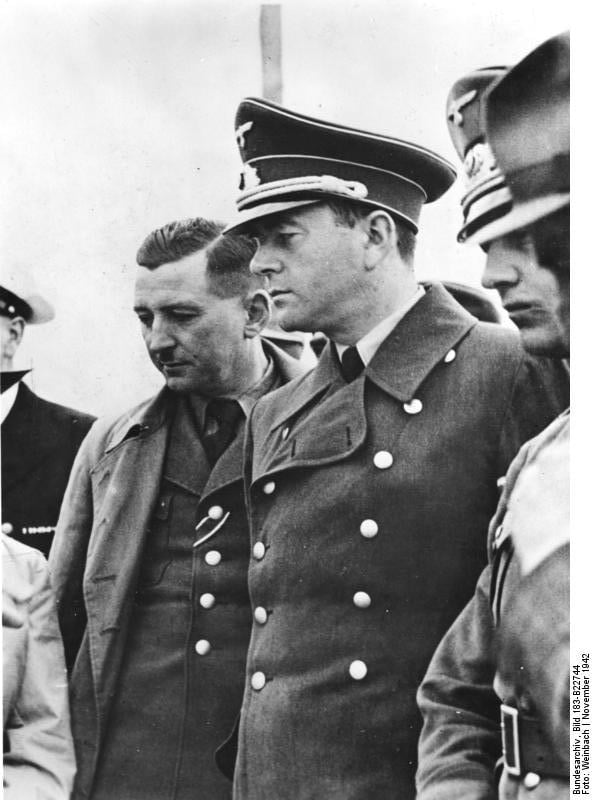
Speer was appointed Minister for Armaments and Munitions by Hitler in February 1942
He then set up the Central Planning Agency, which coordinated the production of armaments much more efficiently and coherently
This included:
Concentrating production in fewer, larger factories
Ending projects that did not directly contribute to the production of armaments
Widespread introduction of mass production techniques
Producing standardised products to be used across the army, navy and air force
Centrally allocating workers to factories and preventing the armed forces from conscripting key skilled workers
Utilising prisoners of war as unpaid slave labour
I am grateful that Party member Dr Todt, in January, personally ordered the complete stoppage of work on his Reichsautobahnen as well as released all specialists and German Workers for the railroad construction in the East and his prisoners of war for the armament industry. I therefore proposed to the Führer at the end of December that all my labour force, including specialists, be released for mass employment in the East.
Subsequently, the remaining prisoners of war, about 10,000, were put at the disposal of the armaments industry by me.An extract from a speech given by Albert Speer to government officials on 24th February 1942
The impact of Speer's policies have been described as miraculous
Between 1941 and 1943:
Tank production increased by 250%
Aircraft production increased by 200%
The productivity of individual munition workers increased by 60%
Overall, German war production trebled
The mobilisation of the labour force and prisoners of war
The outbreak of war led to an increase in demand for armaments but also led to many armaments workers being conscripted to join the armed forces
However, the Nazi government did not immediately begin to conscript people to work in the armaments factories
Germany's defeat at the Battle of Stalingrad at the start of 1943 led the Nazis to reevaluate their production policies
Believing that a drawn-out war was now very likely, Goebbels called on the German people to support a 'Total War'
All businesses that produced goods unrelated to winning the war were closed down
All women aged 17-45 and all men aged 16-65 had to register for work
Many of these were conscripted to work in armaments factories
Foreign labour and prisoners of war
In the early years of the war, foreign volunteers from conquered countries such as France, Belgium and the Netherlands were recruited to work in Germany's factories
In October 1941, following the invasion of the USSR, Hitler announced that Soviet prisoners of war could be used as slave labour
This led to 7 million foreign workers living in Germany and a further 7 million workers labouring in factories in German-occupied countries by 1944
Workers from countries in the west, such as France, were paid wages similar to their German counterparts
Workers from the east, such as Poland, were paid around half as much
Prisoners of war and concentration camp inmates were used as slave labour and were not paid
They were housed in appalling conditions, and many died from disease and exhaustion
By the end of the war, foreign labourers made up 25% of Germany's workforce
In 1944, 7 times as many weapons were manufactured as in 1942, 51/~ times as many armoured vehicles, and 6 times as much ammunition. The number of workers in these branches was increased by only 30 per cent. This success was not brought about through a greater exploitation of labour but rather through the abolition of obsolete methods of production and through an improved system of controlling the production of armament.
An extract from the testimony of Albert Speer at the Nuremberg trials on 20th June 1946
The impact of Allied bombing
The air forces of Britain and the United States deliberately targeted Germany's industrial production
By bombing both day and night, they hoped to disrupt the supply of armaments and damage the morale of the German people
It was undoubtedly successful and led to factories being out of action and having to be rebuilt
Germany's Ministry of Armaments and Munitions estimated that Allied bombing had resulted in 35% fewer tanks, 42% fewer lorries and 31% fewer aircraft being built in January 1945
The Allied bombing campaign intensified in 1945, leading to even greater disruption to production
How effectively was the German war economy managed?
At the beginning of the war, the German economy was not very effectively managed
Poor management and planning led to shortages and inefficiencies
The appointment of Speer and the creation of the Central Planning Agency led to enormous improvements in production
The use of foreign labour, both volunteers and prisoners of war, as slave labour helped to maintain Germany's output as more men joined the military
These policies and initiatives by Speer were not enough to overcome the enormous damage and disruption caused by the Allied bombing campaign
Examiner Tips and Tricks
When answering any questions about the wartime economy keep your answer inside 1939–1945. The June 2018 examiner report specifically penalised weaker scripts for drifting back to Schacht's New Plan and the Depression — stay focused on the wartime economy.
Quote precise figures where you can: tank production +250%, aircraft production +200% (1941–43); up to 7 million foreign workers in Germany by 1944. Specific, correctly-recalled statistics are what separates top-band answers.

Unlock more, it's free!
Join the 100,000+ Students that ❤️ Save My Exams
the (exam) results speak for themselves:

Was this revision note helpful?
