Weimar Culture & Society, 1924–1928 (AQA A Level History: Component 2: Depth study): Revision Note
Exam code: 7042

Summary
The years between 1924 and 1928 were years of significant cultural change in Germany
Germany, and Berlin in particular, became one of the world's leading centres of art, architecture, theatre and film
The period also saw improvements to living conditions for many Germans
The economic boom led to business owners making more money
The wages of industrial working people increased
Pensions were introduced for war widows and the injured
Women in cities experienced new employment and social opportunities
However, not everybody benefited economically during this time
There was also a backlash against the new culture from some parts of German society, which condemned it as 'degenerate', a term the Nazis would later use to justify banning it
Social welfare reforms
The Weimar government wanted to keep the working classes happy to prevent the spread of Communism
The KPD's success in the Reichstag would threaten the success of German business
Communism was against owning private property or businesses. Any businesses that did operate would not be allowed to make a profit
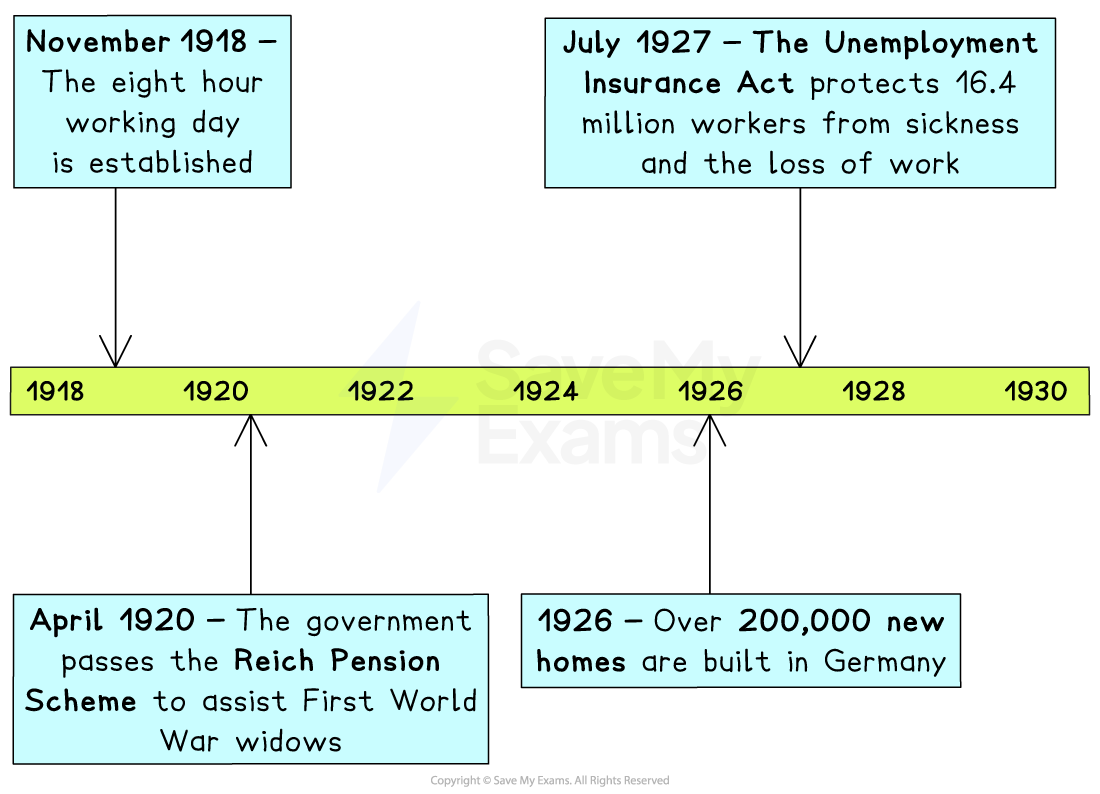
Therefore, the government introduced a series of reforms to improve working conditions:
They lowered the hours in a working week from 50 in 1925 to 46 in 1927
Workers’ ‘real’ wages rose 25% from 1925 to 1928
This measurement considers the cost of living and inflation to calculate the actual value of a worker's wages
Unemployment increased as a result of industrial rationalisation
In 1924, 4% of the working population was unemployed
By 1926, this had increased to about 18% (3 million)
The government passed the Unemployment Insurance Act in 1927
This money funded insurance that covered unemployment and sickness
16.4 million workers had 3% of their wages diverted to the government
If an insured German did not have a job or was unable to work due to poor health, the scheme paid them 60 Reichsmarks per week
The economic recovery and government legislation meant that, by 1928, the number of people unemployed had fallen to roughly 2%
The introduction of pensions
The First World War had a devastating impact on the German people
Two million German soldiers died between 1914 and 1918, and four million more were wounded
This created a large number of war widows
By 1920, there were an estimated 400,000 war widows in Germany
The widows struggled to provide for themselves and their families
In 1920, the government decided to help war widows recover from the devastating impacts of the war
They passed the Reich Pension Law
Over 1.3 million people (widows and ex-soldiers) received a war-related pension
Weimar culture: Art, architecture and music
Art
Expressionism in Weimar Germany used grotesque or exaggerated figures in violent scenes
This aimed to make the audience uncomfortable
In doing so, the artist hoped people would begin to question the society in which they lived
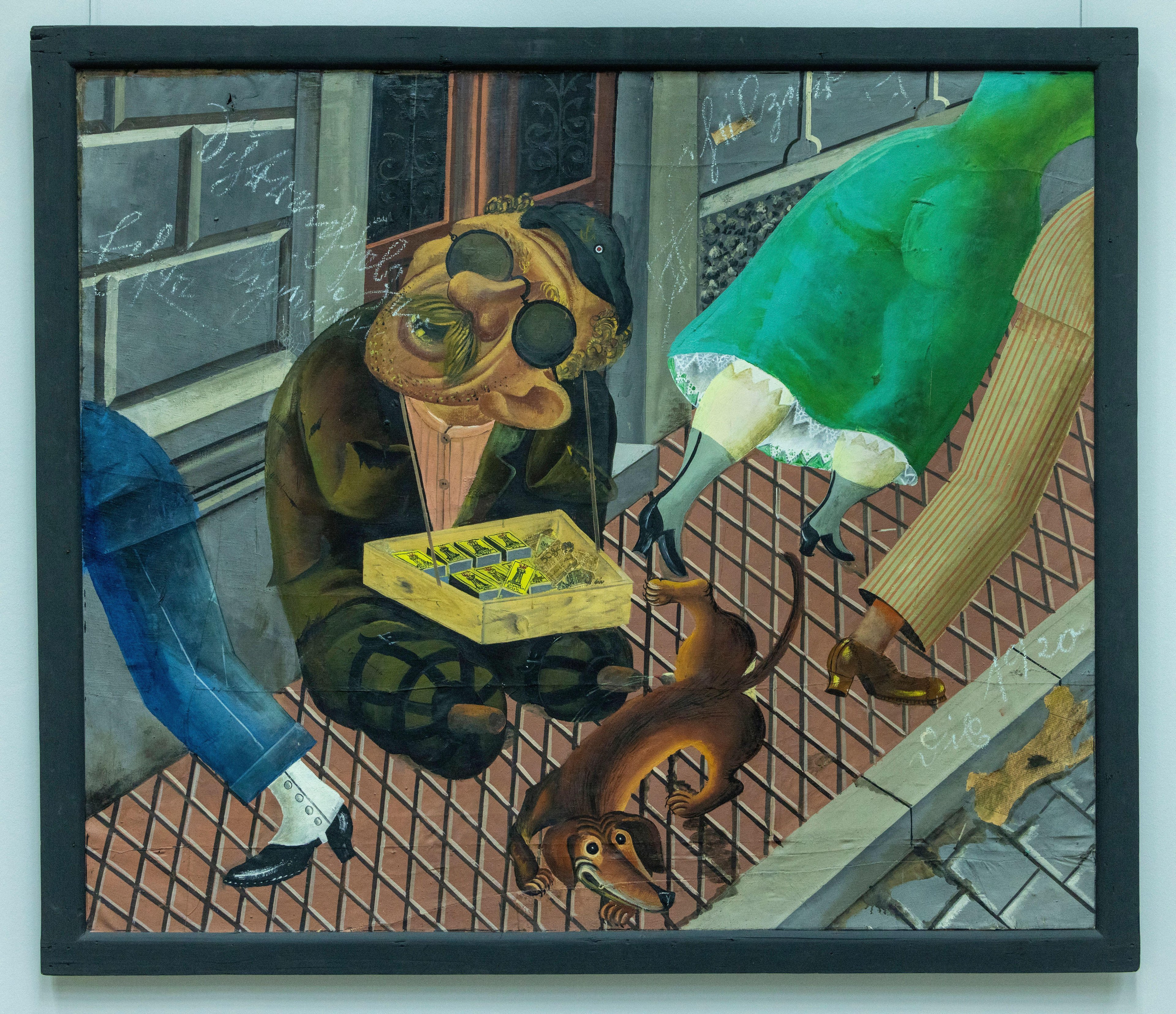
Otto Dix was a famous New Objectivist artist in Weimar Germany
One of his paintings highlighted the issues war veterans had once they returned to Germany
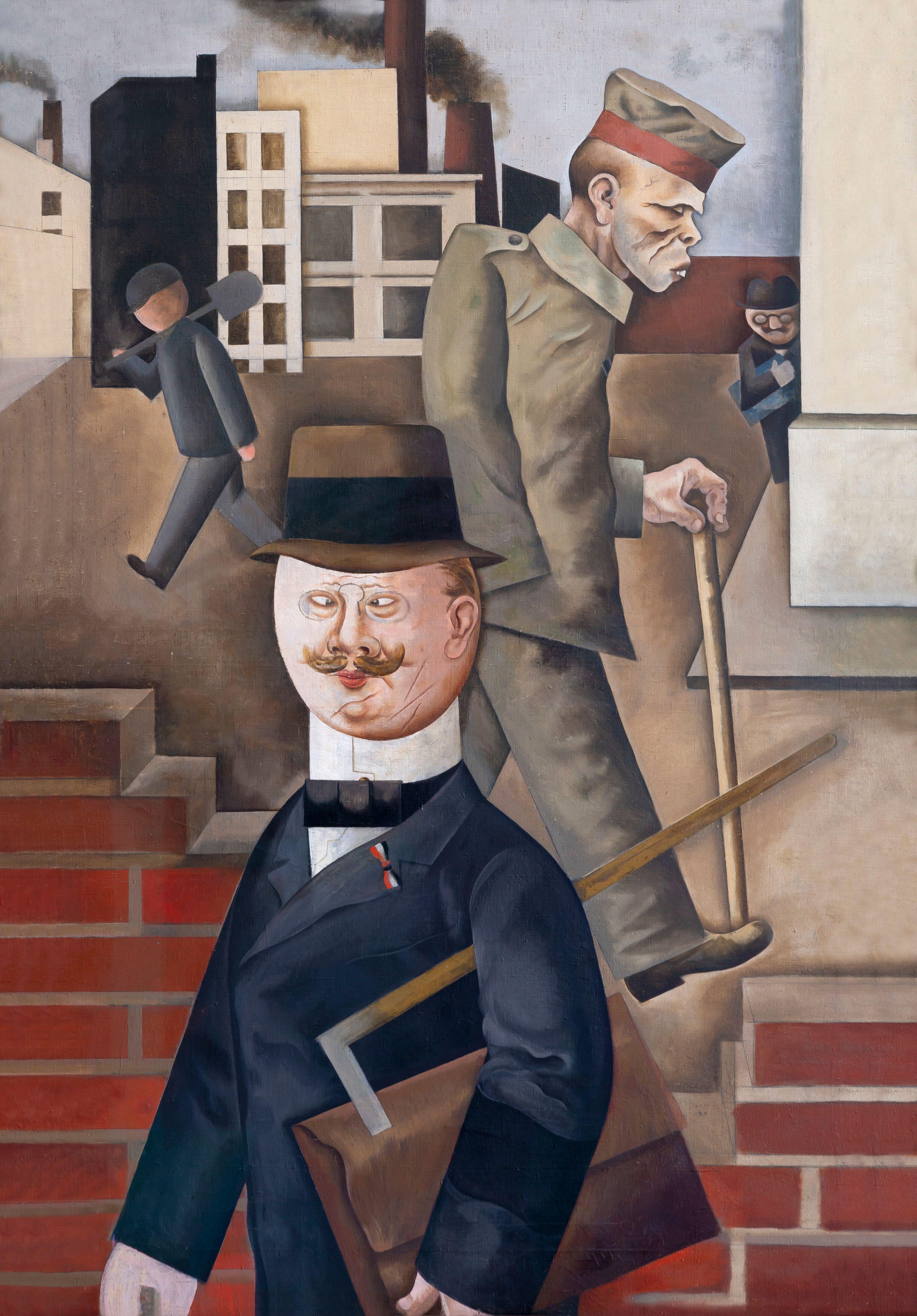
George Grosz, like Dix a New Objectivist artist, painted 'Grey Day' (1921) to represent the boredom of day-to-day life
Weimar Art horrified the conservative upper classes and the extreme right-wing
Traditionally, the more educated upper classes controlled and produced Germany’s cultural output
In the Weimar Republic, the upper classes no longer monopolised this power
The meanings of the artworks were unclear. The pictures had many interpretations
These pieces could have undermined the authority of the upper class
Many artists had strong left-wing beliefs
This challenged the traditional ways of life valued by the right
Architecture
Bauhaus architecture
In 1919, a new form of design called ‘Bauhaus’ emerged
Walter Gropius founded the movement in Weimar Germany in 1919
He aimed to create a unified style that connected all types of art forms
The Bauhaus design school existed in three German cities between 1919 and 1933: Weimar, Berlin and Dessau
Lecturers at Bauhaus College included the artist Paul Klee and the sculptor Oskar Schlemmer
‘Bauhaus’ architecture uses geometric shapes to create practical buildings
The movement saw the beauty of technology and the use of familiar materials in different ways
For example, they designed chairs made out of tubes used to make bicycle frames
Expressionist architecture
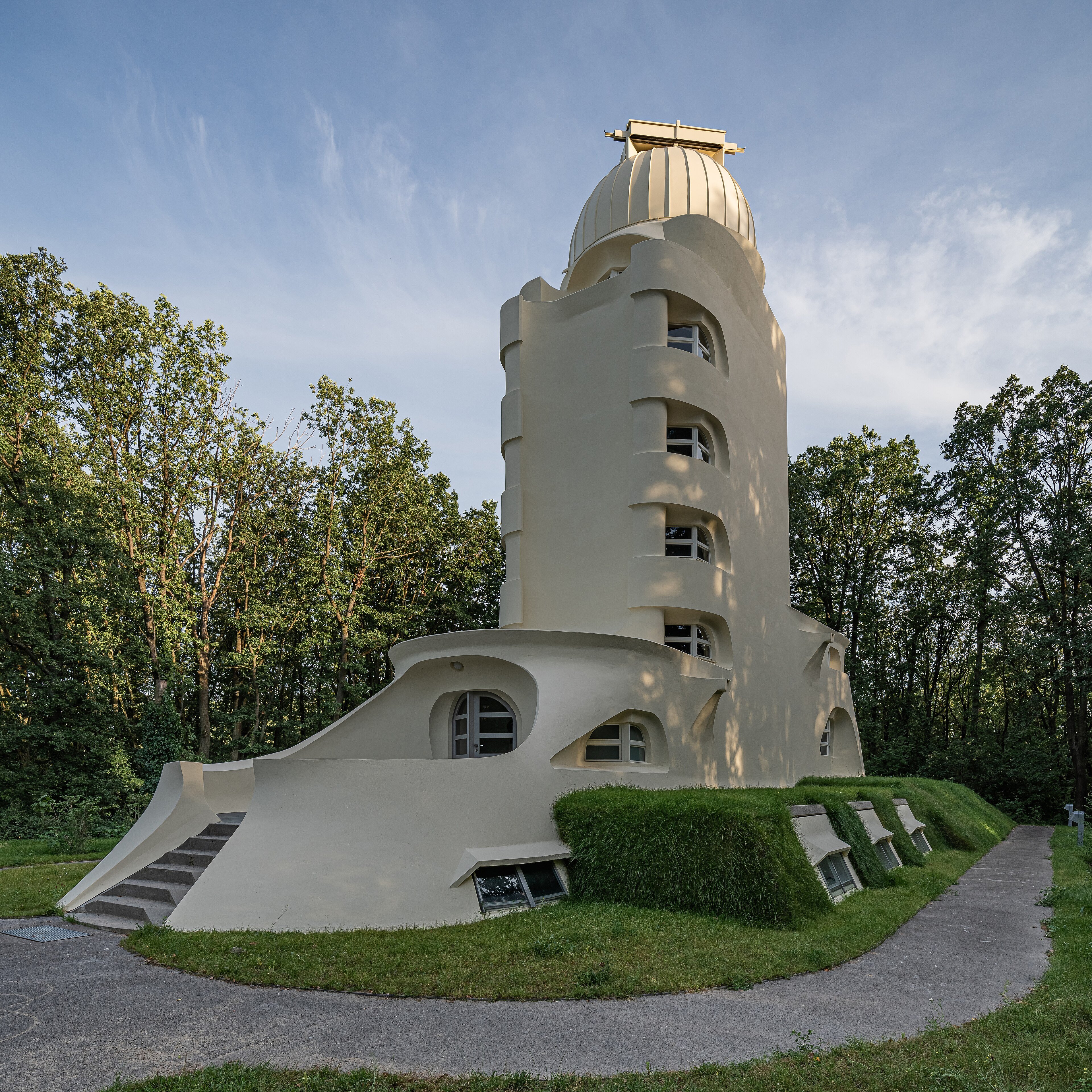
There was also expressionist architecture, a style characterised by the work of architects such as Erich Mendelsohn
He designed the Einstein Tower, an observatory in Potsdam, to look like a rocket
Music
German cities, especially Berlin, developed an exciting nightclub scene at this time
They embraced new forms of music from America, such as jazz and swing
Cabarets became extremely popular and often featured nudity and adult themes
Classical composers broke away from what they saw as the constrictions of traditional music
Hindemith and Schoenberg were viewed as progressive composers who were taking music in entirely new directions
Hindemith pioneered Gebrauchsmusik which was music written for practical, everyday use
Theatre, literature and film
Theatre
A new wave of highly political experimental theatre grew out of Weimar Germany
The playwright Bertolt Brecht worked with composer Kurt Weill
They created plays that were left-wing, anti-war, anti-nationalist and anti-capitalist
Brecht and Weill exemplified Zeittheater (theatre of the times) which was drama which engaged with political and social issues
"Yet Berlin’s best offerings during these years were the theatre performances; and they were the chief topic of many conversations. During the winters no week passed without my going at least once to the theatre. When at the end of the month my budget was exhausted and I could not afford a seat, it was “standing room.” I doubt that any city has ever had as many theatres playing simultaneously as Berlin did in the 1920s. There were three state theatres, four theatres under the direction of Max Reinhardt, a similar number under Victor Barnowsky, and many other theatres for serious plays and social comedies…
The theatre in Berlin was profoundly exciting not only because it was frequently great art, but also because it was intensely political. It was no longer an expressionist outcry against all social conventions, which it had been immediately after the revolution of 1917, but it was still a manifestation against old traditions, a place for social criticism and for denouncing restrictions of freedom. Not only did modern plays—those by Ernst Toller, Georg Kaiser, and Carl Zuckmayer, the most admired of the young poets—serve these purposes, but so did older plays like Schiller’s Don Carlos and Hauptmann’s Weber. Brilliantly produced and acted, these suddenly seemed to be written for our time and for us. The greatest and most unforgettable production, however, in which art and politics was beautifully combined, was Brecht and Weill’s Threepenny Opera, which played before full houses for years and which I must have seen three or four times. It gave a grim, hopeless picture of a world in which corruption controlled human life and society. Yet it had a fairy-tale ending: the mounted messenger of the king arrives at the last moment, saving the hero from execution."
The recollections of Felix Gilbert, who was a young university student in Berlin in the 1920s.
Literature
The expressionism of Weimar Germany's painters greatly influenced the writers of the time
Novelists such as Thomas Mann focused on the mental state of their characters rather than plot or descriptions of wider society
Film
The popularity of cinema exploded in the 1920s
In the early 1920s, film did not allow the recording of sound
In the cinema, a pianist played the film's musical score in time with the pictures
Films with sound, called 'talkies', became available in 1927. This highlights the new technology available to filmmakers
By 1929, there were roughly 5,000 cinemas across Germany
Germany began to compete with American film production
The expressionist film The Cabinet of Doctor Caligari (1920) was one of the first horror films
The director, Robert Wiene, used a ‘plot twist’ ending which became one of the most influential in cinema history
F. W. Murnau directed the film Nosferatu (1922)
It was one of the world's first vampire films
Many films today use the tension methods Murnau created while filming Nosferatu
Metropolis (1927) was produced by UFA Germany's largest film studio
It cost 5 million Reichsmarks
The budget overrun was funded by loans from MGM and Paramount (American film studios) in the Parufamet deal
Fritz Lang created a modernist science-fiction film that centred on the impact of technology on 20th-century life
It was commercially unsuccessful at the time, but it has influenced many modern-day films, such as Star Wars
Germany produced its first talking film in 1930
The capability to play films with sound was available in 3,800 German cinemas by 1932
"There has perhaps never before been a time so determined as ours in its search for new forms of expression. Fundamental revolutions in painting, sculpture, architecture, and music speak eloquently of the fact that people of today are seeking and finding their own means of lending artistic form to their sentiments. Film has an advantage over all other expressive forms: its freedom from space, time, and place. What makes it richer than the others is the natural expressiveness inherent in its formal means. I maintain that film has barely risen above the first rung on the ladder of its development, and that it will become the more personal, the stronger, and more artistic the sooner it renounces all transmitted or borrowed expressive forms and throws itself into the unlimited possibilities of the purely filmic."
German film director Fritz Lang, writing about the artistic creativity in Germany in 1926.
Living standards and lifestyles
There were positive changes to both living standards and lifestyles for many Germans between 1924 and 1928
Trade unions negotiated better wages and conditions for many workers
Business owners benefited from the economic boom
Women, in particular, had new opportunities for employment in the major cities
This enabled them to enjoy a degree of independence and freedom unknown to previous generations
There was a rise in youth unemployment during the 1920s
There was also widespread concern that young people were becoming more rebellious, and anti-social behaviour was becoming more common
Youth groups had been a feature of life in Germany since the nineteenth century, and continued to be popular in the 1920s
One new development, however, was the creation of youth groups of political parties, including the KPD, the SPD and the Nazis
Not all Germans experienced improvements in their living conditions during this time
Those who lost their savings during the hyperinflation crisis continued to suffer
Farmers and farm labourers continued to suffer financially because of low prices
How 'Golden' was the cultural life of Weimar Germany?
Some see this period as Weimar's 'Golden' years, when Germany was at the centre of the cultural world
They argue that the explosion in creativity during this period affected all areas of the arts and society
Others believe its influence has been exaggerated and that neither the cultural nor the economic developments were enjoyed or celebrated by all Germans
They argue that the changes upset and alarmed many sections of German society, who attempted to reverse the changes
Examiner Tips and Tricks
Questions on this period ask you to engage with a specific idea - 'liberal and tolerant', or 'conservative and traditional' - not to list artistic movements. Examiners note that many students did not know how to engage with the focus. Always link a cultural change to the backlash it triggered in conservative and rural Germany.

Unlock more, it's free!
Join the 100,000+ Students that ❤️ Save My Exams
the (exam) results speak for themselves:

Was this revision note helpful?
