The Major Governments, 1990-1997 (AQA A Level History: Component 2: Depth study): Revision Note
Exam code: 7042

Summary
John Major became Prime Minister in November 1990 and won the 1992 general election
The Conservatives had a majority of 21
They also secured the largest popular vote ever cast for one party at a British general election
Black Wednesday, on the 16 September 1992, forced Britain out of the Exchange Rate Mechanism (ERM)
It badly damaged the Conservatives' reputation for economic competence
Political sleaze became a constant problem
Sex scandals and corruption allegations kept appearing in the press
The Back to Basics campaign of 1993 made accusations of hypocrisy more damaging
Europe divided the Conservative Party
The Maastricht rebellion exposed deep internal divisions
Eight MPs temporarily lost the whip
Major faced a leadership contest in 1995
Major made important progress in Northern Ireland
The Downing Street Declaration was agreed in 1993
Republican and loyalist ceasefires followed in 1994
The key question asks whether Major governed effectively in difficult circumstances or whether his government lost authority through failures of its own making
John Major as leader
John Major in office (1990–1997)
John Major became Prime Minister in November 1990, after winning the Conservative leadership contest that followed Thatcher's resignation
He was 47 years old
He had been an MP for only 11 years
Major abolished the poll tax, replacing it with the Council Tax
The change was announced in 1991, with Council Tax taking effect in 1993
This removed one of the government's most damaging domestic problems
Major then won the April 1992 general election
The Conservatives returned to office with a majority of only 21
This meant there was little room for rebellion within his own party
Major's governments continued privatisation, but several policies proved deeply unpopular
In October 1992, plans to close 31 coal pits caused public outrage, and the remaining mines were privatised in 1994
The Railways Act 1993 split British Rail into separate track and train companies, and critics saw the sell-off as botched
Major's leadership style
Consensual
He built agreement in Cabinet rather than imposing a line
Ministers were allowed to argue positions openly, in sharp contrast to Thatcher's approach
Once the party divided over Europe, the same quality was read as indecision
Approachable
He presented himself as an ordinary man, rather than a conviction politician
He had left school at 16 and worked his way up, which set him apart from most Conservative leaders
His soapbox campaigning in 1992 drew respect even from opponents
Focused on public services
The Citizen's Charter of 1991 was his own initiative
It set published standards for public services, giving users the right to complain and seek redress
Elements such as the Cones Hotline made the whole programme easy to mock
Persistent
He stayed with difficult negotiations over long periods
The Northern Ireland talks ran from 1993 to the end of his premiership
The same persistence kept him in office through repeated leadership speculation
Major's strengths and weaknesses
Strengths |
|
|---|---|
Weaknesses |
|
“Mr Kinnock argued that Mr Major was able to defuse the row over the poll tax, which she [Thatcher] would not have been able to do, and was above all able to present himself as the candidate for change. After eleven years of Mrs Thatcher the country was longing for new leadership and Mr Major was able to capitalise on that feeling”
John Sergeant, former BBC chief political correspondent, written in 2005, reflecting on the 1992 general election
Approach: The source is useful because it records Neil Kinnock’s own explanation of why Major proved difficult for Labour to defeat. Kinnock believed that Major had defused the poll tax issue and presented himself as a credible change from Thatcher
However, Sergeant was writing more than a decade later. It is therefore strongest as evidence of how Labour later understood its defeat, rather than as direct evidence of what voters themselves thought in 1992
Examiner Tips and Tricks
Do not treat Major simply as a weaker Thatcher. Several of the qualities that helped him in 1990–1992, especially his willingness to listen, compromise and appear less confrontational, later became liabilities when the Conservative Party divided
Economic developments and 'Black Wednesday', 1992
The economy Major inherited
Major became Prime Minister in November 1990 as the economy was moving into recession
Manufacturing output was falling, interest rates remained high and house prices were dropping
Unemployment rose from around 1.6 million in 1990 to almost 3 million by early 1993
Falling house prices created negative equity
Some homeowners owed more on their mortgages than their properties were worth
Repossessions also rose sharply
Unlike the recession of the early 1980s, this downturn hit southern England as well and many traditional Conservative voters
The recession also restricted Major's ability to reduce public spending
Higher unemployment increased the cost of benefits
Government borrowing also rose as tax revenues fell
The 1992 general election
Major delayed the election until the 9 April 1992, close to the end of the parliamentary term
Opinion polls had suggested either a Labour victory or a hung parliament
Major's soapbox campaigning helped reinforce his image as an approachable leader
Doubts about Labour and Neil Kinnock also worked in the Conservatives' favour
The Conservatives won a fourth consecutive election
They secured 336 seats with a majority of 21
More than 14 million people voted Conservative
The largest number of votes ever received by one party at a British general election
Despite the impressive result, the majority of 21 left little room for rebellion within the Conservative Party
Black Wednesday, 16 September 1992
Britain had joined the Exchange Rate Mechanism (ERM) in October 1990
Sterling was required to remain close to a central rate of 2.95 German marks to the pound
The aim was to use a stable exchange rate to help control inflation
By September 1992, sterling was under intense pressure
Investors believed the pound was overvalued
They sold sterling in large quantities, expecting the government would eventually have to devalue it
On the 16 September, the government tried to defend the pound
Chancellor Norman Lamont raised interest rates from 10% to 12%
He then announced a further rise to 15%
Neither measure restored confidence
The Bank of England also bought large quantities of sterling using its reserves
That evening, Lamont announced that Britain was suspending its membership of the ERM
The proposed rise of 15% never took effect
Treasury papers released in 2005 estimated the eventual cost of the intervention at around £3.3 billion
Consequences
Economic
Leaving the ERM was not an economic disaster
Sterling fell in value, making British exports more competitive
Interest rates could also be reduced without having to defend the pound's ERM value
The economy recovered during the following years
Unemployment began to fall
Inflation remained low, and economic growth returned
House prices began to recover, and consumer spending increased
Britain also started to benefit from financial deregulation and more flexible working practices introduced during the Thatcher years
Political
Politically, Black Wednesday was far more damaging
The Conservatives had built a reputation for economic competence since 1979
That reputation was badly damaged in a single day
Labour moved ahead in the opinion polls and remained there until the 1997 election
Voters did not give Major's government much credit when the economy later recovered
Tax rises in the 1993 Budgets, including VAT on domestic fuel, broke the spirit of the Conservatives' 1992 campaign against Labour's taxes and further damaged trust
The episode also weakened Major personally
His government appeared unable to control events
The narrow Commons majority made the loss of political authority even more serious
The Private Finance Initiative (PFI), 1992
In 1992, Chancellor Norman Lamont introduced the Private Finance Initiative (PFI)
Private companies paid to build and run public projects such as hospitals, schools and roads
The government then paid those companies back over long contracts, often lasting 25–30 years
PFI suited a government under financial pressure
Borrowing was rising during the recession, so PFI allowed new building without large upfront public spending
It also kept much of the cost off the government's accounts in the short term
However, PFI was criticised
Projects often cost taxpayers far more over the life of a contract than direct government funding would have
Critics saw it as another short-term fix rather than a solution to Britain's economic problems
PFI outlasted the Conservatives
New Labour greatly expanded its use after 1997, an example of the new consensus on the role of the private sector
“The Government listens too much to the pollsters and the party managers. As a result, there is too much short-termism, too much reacting to events, and not enough shaping of events. We give the impression of being in office but not in power”
Norman Lamont, former Chancellor of the Exchequer, resignation speech to the House of Commons, June 1993
Approach: Norman Lamont had been Chancellor during Black Wednesday. This extract comes from his resignation speech in June 1993, after Major removed him from the Treasury
The source is useful because Lamont attacks the government’s wider style of leadership, arguing that it reacted to events rather than shaping them. Coming from the Chancellor who had presided over Black Wednesday, that criticism shows how far relations at the top of the government had deteriorated
However, Lamont had just been dismissed and had a clear reason to shift responsibility away from himself. His criticism should therefore be tested against both his own role in economic policy and the recovery that followed Britain’s departure from the ERM
Examiner Tips and Tricks
The key distinction is between economic impact and political impact. Black Wednesday damaged the government far more than it damaged the economy. Leaving the ERM actually made recovery easier, but the Conservatives never recovered their reputation for economic competence
Political sleaze, scandals and satire
Back to Basics, 1993
Major used his Conservative Party Conference speech on the 8 October 1993 to call for a return to what he described as traditional values
He referred to neighbourliness, decency, courtesy, self-discipline, and respect for the law
He intended the message to apply to areas such as schools, crime and public service
The press increasingly interpreted Back to Basics as a campaign about personal morality
Later scandals involving Conservative MPs were, therefore, often reported against the standards Major had set out
“The old values, neighbourliness, decency, courtesy, they’re still alive, they’re still the best of Britain. ... It is time to return to those old core values, time to get back to basics, to self-discipline and respect for the law, to consideration for others, to accepting a responsibility for yourself and your family”
John Major, Prime Minister, speech to the Conservative Party conference, Blackpool, 8 October 1993
Approach: The source is useful for showing the values Major wanted his government to be associated with. His language stresses responsibility, public behaviour and traditional standards
However, the speech does not set out a detailed moral code for Conservative MPs. The later association between Back to Basics and sexual morality was shaped partly by how the press interpreted the campaign
Sleaze or scandal?
The press used "sleaze" as a catch-all term, but it helps to separate two kinds of problem
Sleaze refers to financial or political misconduct: politicians misusing their position, taking money or misleading Parliament
Scandal refers to personal or sexual misconduct that became public
The two were damaging in different ways
Sleaze raised questions about honesty and the abuse of power in government
Scandal exposed hypocrisy, because it clashed with Major's Back to Basics message
Examiner Tips and Tricks
Examiners have noted that some students confuse sleaze and scandal. Keep them separate in your answer: sleaze (money, lobbying, misleading Parliament) damaged trust in the government's honesty, while sex scandals mainly made Back to Basics look hypocritical. Then judge which did more damage to Major
Sex scandals and corruption
A series of personal scandals and corruption allegations kept Conservative conduct in the headlines during Major's premiership
The cases ranged from ministers' private lives to allegations involving money, lobbying, and ministerial accountability
Case | Specific Evidence | What Followed |
|---|---|---|
David Mellor |
|
|
Tim Yeo |
|
|
Cash for Questions |
|
|
Neil Hamilton |
|
|
Scott Inquiry |
|
|
Jonathan Aitken |
|
|
Some scandals continued to affect the Conservatives into the 1997 election campaign
The cash-for-questions affair remained particularly important
The Nolan Committee
In October 1994, after the cash-for-questions allegations, Major set up the Committee on Standards in Public Life, chaired by Lord Nolan
Its first report (1995) set out the Seven Principles of Public Life
Selflessness, integrity, objectivity, accountability, openness, honesty and leadership
Its recommendations led to tighter rules for MPs
A Parliamentary Commissioner for Standards was appointed to investigate complaints
MPs had to declare more detail about their outside interests and earnings
The committee showed that Major was prepared to act on sleaze
However, its hearings and reports kept the issue in the news, and it could not undo the damage already done to the Conservatives
Satire and the image of Major
Major and his government became regular targets of political satire
Spitting Image portrayed Major as grey and dull
Steve Bell, cartoonist for The Guardian, frequently drew him wearing his underpants outside his trousers
Private Eye ran "The Secret Diary of John Major, aged 47¾", a parody of Sue Townsend's Adrian Mole books
Smaller government initiatives also became targets
The Cones Hotline allowed motorists to report apparently unnecessary motorway cones
It was widely mocked and became associated with the idea that the government was concentrating on minor issues
Major was often more popular personally than the Conservative Party
However, the image of him as cautious, ordinary or ineffective became increasingly familiar in the media
Examiner Tips and Tricks
Use Back to Basics carefully. Major did not launch a detailed campaign to regulate MPs’ private lives. What matters is that the language of values gave the press a standard against which later scandals could be compared
Conservative divisions over Europe
The Maastricht Treaty and the opt-outs
Major negotiated the Maastricht Treaty in December 1991, with Britain signing it in February 1992
The Treaty aimed to develop closer political and economic cooperation between the members of the European Community
Major secured British opt-outs
Britain did not have to join the planned single European currency
Britain also opted out of the Social Chapter, which covered areas such as workers' employment rights
Major presented the opt-outs as a way of protecting British interests while remaining involved in European cooperation
However, Conservative Eurosceptics still opposed the treaty
Their concern was not simply individual parts of Maastricht
Many objected to the wider movement towards greater European integration
The parliamentary battle, 1992–1993
Major's small Commons majority made Maastricht difficult to ratify
After the 1992 general election, the government had a majority of only 21
This meant a relatively small group of Conservative rebels could threaten the government's ability to win votes
Eurosceptic criticism became stronger during 1992
Denmark rejected Maastricht in a referendum in June 1992
Britain's exit from the ERM on Black Wednesday in September 1992 also encouraged criticism of closer European integration
Maastricht, therefore, became a test of party discipline and government authority
On the 22 July 1993, a Labour amendment on the Social Chapter was defeated only by the Speaker's casting vote, and the government then lost its own Social Chapter motion by 324 votes to 316
Major responded by turning the issue into a vote of confidence
The government won the following day
Maastricht was eventually ratified
The episode showed that Major could still force legislation through Parliament
However, he increasingly had to rely on confidence votes and pressure on his own MPs to do so
“In February 1992, Britain had signed the Maastricht Treaty which now had to be ratified by individual member states. ... We did not have a referendum but instead Britain was among those states which left ratification to Parliament and months of painful debate, uncertain votes and party infighting ensued”
Ann Widdecombe, Conservative MP and a minister in Major's government from 1990 to 1997, from her memoir Strictly Ann, published in 2013
Approach: Ann Widdecombe was a Conservative MP who was a junior minister in Major's government at the time. This account comes from her memoir Strictly Ann, published in 2013, around twenty years after the Maastricht debates
The source is useful because Widdecombe describes how difficult the ratification process became, referring to months of parliamentary debate, uncertain votes and party conflict.
However, she was writing retrospectively and had been a Conservative politician involved in the period. Her account may therefore be influenced by later knowledge of how damaging the European divisions became for the party.
Discipline and revolt
Europe continued to weaken Conservative Party discipline after Maastricht had been ratified
In November 1994, eight Conservative MPs abstained the vote on the European Communities (Finance) Bill
Major had made the vote a confidence issue
The eight MPs therefore had the Conservative whip withdrawn
A ninth MP gave up the whip in protest
The dispute was particularly serious because of Major's small parliamentary majority
For several months the government no longer had a reliable working majority
Divisions also existed at cabinet level
In July 1993, Major was secretly recorded referring to three Eurosceptic Cabinet ministers as "bastards"
This revealed the extent of tension between Major and senior Conservatives over Europe
Thatcher's shadow
Thatcher remained a powerful presence in the Conservative Party after 1990
Many MPs and party members stayed loyal to her and saw Major's approach to Europe as a move away from her views
She became an increasingly open critic of Major's European policy
She entered the House of Lords in 1992 as Baroness Thatcher
She opposed the Maastricht Treaty and supported calls for a referendum on it
Her memoirs, The Downing Street Years (1993), were read as criticism of the direction the party had taken since her fall
Her opposition gave Eurosceptic rebels a figurehead
Rebels could present their opposition as loyalty to Thatcherism rather than disloyalty to the party
This made it harder for Major to impose discipline with a majority of only 21
'Put up or shut up', 1995
Continued divisions over Europe contributed to doubts about Major's leadership
In June 1995, Major resigned as Conservative leader and stood for re-election
This forced critics either to challenge him directly or support him
John Redwood, a leading Eurosceptic who had resigned as Welsh Secretary, stood against him, backed by Eurosceptics and die-hard Thatcherites
Major won by 218 votes to 89
There were also eight abstentions and twelve spoilt ballots
The results strengthened Major's position as leader but did not remove the underlying division
Redwood still attracted support from a substantial minority of Conservative MPs
Eurosceptic criticism continued afterwards
Major's 'wait and see' policy on joining the single currency satisfied neither Eurosceptics nor pro-Europeans
Pressure outside the Conservative Party
Opposition to further European integration also produced new political organisations
Businessman James Goldsmith founded the Referendum Party in 1994
It called for a national referendum on Britain's relationship with Europe
The Referendum Party contested the 1997 general election
It did not win any seats
However, it competed for some of the same voters as the Conservatives
Examiner Tips and Tricks
Do not treat Conservative opposition to Maastricht as simply opposition to Major’s opt-outs. The opt-outs were concessions Major had already secured. Many Eurosceptics opposed the direction of European integration itself
The approach to Northern Ireland
Opening a route to negotiation
Violence continued in the early 1990s on both sides of the conflict
The IRA continued to target mainland Britain
This included a mortar attack on 10 Downing Street in February 1991
The Warrington bombing in March 1993 killed two children
Loyalist paramilitaries also continued retaliatory killings in Northern Ireland
Despite this violence, Major's government began exploring whether a political settlement was possible
From 1993, the government received secret indications that Sinn Féin might be willing to negotiate
Major developed a close working relationship with the Irish Taoiseach, Albert Reynolds
US President Bill Clinton also encouraged Sinn Féin to move away from armed struggle
Major was in a useful political position to pursue talks
As a Conservative prime minister, he could reassure some unionists that their position within the United Kingdom would not simply be abandoned
At the same time, cooperation with the Irish government created a route towards talks with Republicans
The Downing Street Declaration, 1993
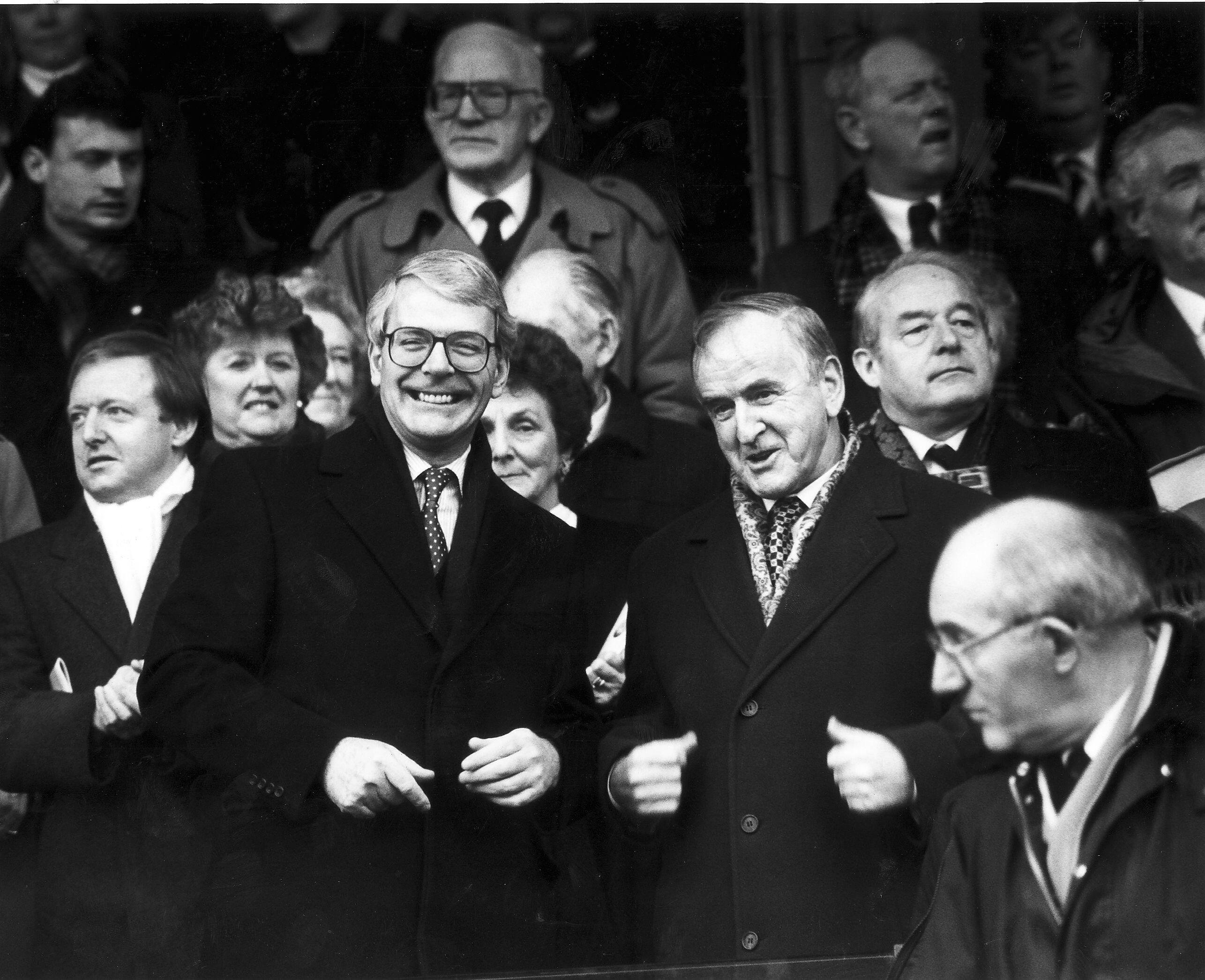
Major and Reynolds issued the Downing Street Declaration on the 15th December 1993
Britain stated that it had no selfish strategic or economic interest in Northern Ireland
Any change to Northern Ireland's constitutional position would require the consent of a majority of its people
Political parties that committed themselves to exclusively peaceful methods could eventually take part in talks
The Declaration therefore set out two important principles:
Northern Ireland's future would depend on consent
Political negotiations were open to groups prepared to reject violence
“It is an opportunity for peace, but it cannot be guaranteed by the two Governments; I do not guarantee it. It lies there to be taken up if the people who can deliver peace will take it up. It is not a certainty, but it is an opportunity”
John Major, Prime Minister. House of Commons, answering questions on the joint declaration, 15th December 1993
Approach: Major made this statement in the House of Commons on 15th December 1993, immediately after the declaration was announced
The source is useful because it shows how Major presented the agreement publicly. He describes it as an opportunity for peace, but avoids claiming that success was guaranteed.
As an official government statement, it is designed to defend the declaration and build support for it. However, Major’s cautious language is important because it shows that the government recognised how uncertain the process remained.
Unionist concerns
The Declaration did not receive universal support
Some unionists feared that it weakened Northern Ireland's position within the United Kingdom
The Democratic Unionist Party (DUP) treated the possibility of talks with Sinn Féin as a betrayal
The Ulster Unionist Party (UUP) suspended judgement but wanted clearer reassurance about the principle of consent
Major, therefore, had to balance two competing pressures:
keeping open a route to Republican participation
reassuring unionists that Northern Ireland's status could not change without majority support
“Can the Prime Minister tell us what loyal Ulster has done wrong to have this further betrayal visited on it? ... Their consent was neither asked for nor given for this declaration. It seems that their consent will be required only for the final act of separation”
Peter Robinson, Democratic Unionist Party MP for Belfast East, House of Commons, responding to the Prime Minister’s statement, 15th December 1993
Approach: Peter Robinson was a DUP MP for Belfast East. He made this statement in the Commons on the same day as Major’s announcement.
The source is useful because it shows how strongly some unionists opposed the declaration. Robinson focuses on the fact that unionists had not been consulted and presents the agreement as a possible step towards separation from the United Kingdom.
His position is clearly partisan, but that does not make the source less useful. It shows the political difficulty Major faced: a declaration presented by the government as an opportunity for peace could be interpreted by unionists as a threat to their position.
Ceasefires and continuing problems
The declaration helped create conditions in which the armed groups could move towards ceasefires
The IRA announced a ceasefire in August 1994
Loyalist paramilitaries followed in October 1994
The government then lifted the broadcasting ban on Sinn Féin, and the military presence was reduced
However, agreement over how formal talks should begin remained difficult
Unionists wanted Republican weapons surrendered before negotiations
Republicans resisted disarming before talks had started
The breakdown of the IRA ceasefire showed how fragile the process still was
In February 1996, the IRA ended its ceasefire with the Canary Wharf bombing
It also bombed Manchester city centre in June 1996
Even so, contact and negotiation continued
Major left behind a set of principles, channels of communication, and relationships that the next government could build on
These developments later contributed to the peace process that produced the Good Friday Agreement in 1998
Examiner Tips and Tricks
The two 1993 sources work particularly well together. Major presents the declaration as a cautious opportunity for peace, while Robinson sees the same agreement as a possible betrayal of unionists. That contrast shows why progress was difficult even when both governments supported negotiation
How well did Major govern, 1990–1997?
The question weighs a record of real achievement against a government that lost authority over its own party and its own reputation
Some key evidence for each side is detailed below
Evidence of real achievement
Major won the 1992 general election against expectations
The Conservatives secured more than 14 million votes, the largest popular vote ever won by one party at a British general election
He removed one of the most damaging problems inherited from Thatcher
The poll tax was abolished and replaced by Council Tax
Major made important progress in Northern Ireland
He worked with Albert Reynolds to produce the Downing Street Declaration in 1993
The IRA ceasefire of August 1994 was followed by a loyalist ceasefire in October
Although no final settlement was reached, his government helped to create the basis for later negotiations
He secured concessions at Maastricht
Britain gained opt-outs from the planned single European currency and the Social Chapter
These allowed Britain to remain involved in European cooperation without accepting every part of the treaty
The economy improved significantly after 1992
Leaving the ERM allowed interest rates to fall
By 1997 inflation was low, unemployment was falling, and employment growth had returned
Major also introduced the Citizen's Charter in 1991
It set published standards for public services and gave users clearer ways to complain and seek redress
Major gained a reputation as a respected statesman abroad
Britain contributed to the NATO-led intervention in Bosnia, and Major attended the signing of the Dayton Agreement in Paris in December 1995
Despite repeated political difficulties, Major remained Prime Minister for more than six years
He survived the 1995 leadership challenge despite a very small Commons majority
Evidence that Major lost authority and reputation
Black Wednesday badly damaged the Conservatives' reputation for economic competence
Britain withdrew from the ERM on the 16 September 1992
Although the economy later recovered, Labour moved ahead in the opinion polls and remained there until 1997
Major struggled to control Conservative divisions over Europe
Maastricht repeatedly produced backbench rebellions
European votes sometimes had to be turned into confidence votes to ensure government support
Party discipline became increasingly difficult to maintain
Eight Conservative MPs had the whip withdrawn in 1994 after abstaining on a European budget vote that the government had made a matter of confidence
Major then resigned the party leadership and stood for re-election in 1995 to force his critics to challenge him directly
A series of scandals damaged the government's public image
Back to Basics became closely associated with allegations of hypocrisy after sex scandals involving Conservative MPs
The cash-for-questions affair, the Scott Inquiry and other controversies kept questions about Conservative conduct in the news
The Conservatives became associated with underfunded public services
By 1997, schools, hospitals and transport were widely seen as suffering from under-investment
Political satire also reinforced an image of weak leadership
Spitting Image, Private Eye and newspaper cartoons repeatedly portrayed Major as dull or lacking authority
The BSE crisis added to the image of a government that could not control events
In March 1996, ministers admitted a possible link between BSE ("mad cow disease") and a fatal human illness, and the European Union then banned British beef exports
The government suffered a heavy defeat in the 1997 general election
After eighteen years of Conservative government, Labour won a landslide victory
The defeat reflected the extent to which Conservative support and authority had declined by the end of Major's premiership
Examiner Tips and Tricks
Decide what you are judging Major against. If you judge him against the circumstances he faced, the small majority of 21, deep European divisions and an inherited recession make his survival and some of his achievements more significant
A strong essay will therefore separate government achievement from political authority. Major could achieve important things while still losing control of his party and damaging the Conservatives’ reputation

Unlock more, it's free!
Join the 100,000+ Students that ❤️ Save My Exams
the (exam) results speak for themselves:

Was this revision note helpful?
