Conservative Dominance, 1951-1964 (AQA A Level History: Component 2: Depth study): Revision Note
Exam code: 7042

Summary
The Conservatives won three elections in a row (1951, 1955 and 1959) with rising majorities, holding power for 13 years under four prime ministers
They governed from the centre and kept the post-war consensus: the welfare state, full employment and a mixed economy
Rising affluence, a mass house-building programme and the end of rationing kept the party popular
Labour was weakened by the split between Bevanites and the Gaitskellites over nationalisation and nuclear weapons
Conservative control faded after 1959, as economic problems, the 1962 "Night of the Long Knives" (when Macmillan sacked a third of his Cabinet) and the 1963 Profumo Affair took their toll
The key question is whether Conservative rule in 1951–1964 reflected genuine political dominance or the temporary weakness of a divided Labour opposition
The Conservative return to power, 1951
How did the Conservatives win in 1951?
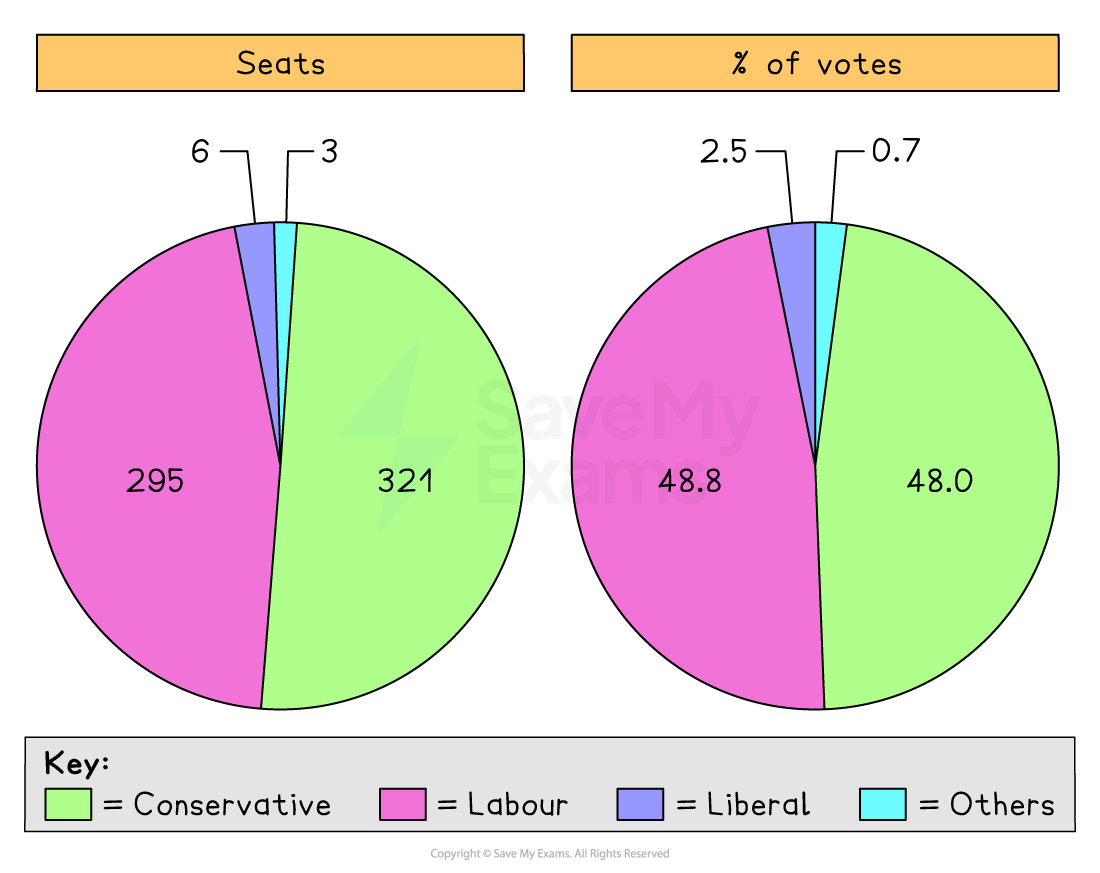
The Conservatives returned to power in the October 1951 general election
They won 321 seats to Labour's 295
This gave them a working majority of 17 seats
The first-past-the-post (FPTP) system worked against Labour
Labour actually polled more votes than the Conservatives
However, the FPTP system converted these votes into fewer seats
This was partly due to Labour gaining large majorities in safe industrial seats
The collapse of the Liberal vote helped the Conservatives win in key marginal seats
Labour was tired after six years in office
The 1945–51 governments had faced austerity, rationing and the 1949 devaluation
The 1951 resignations of Aneurin (Nye) Bevan and Harold Wilson exposed splits that ran through the decade
Examiner Tips and Tricks
It is tempting to call the 1951 general election a landslide victory, but the Conservatives won on fewer votes than Labour. Treat it as a result produced by the electoral system, not a surge in support.
Conservative leaders: Churchill, Eden, Macmillan and Home
Four prime ministers led the Conservatives across this period
They each shaped the party's image differently
Winston Churchill (1951–1955)
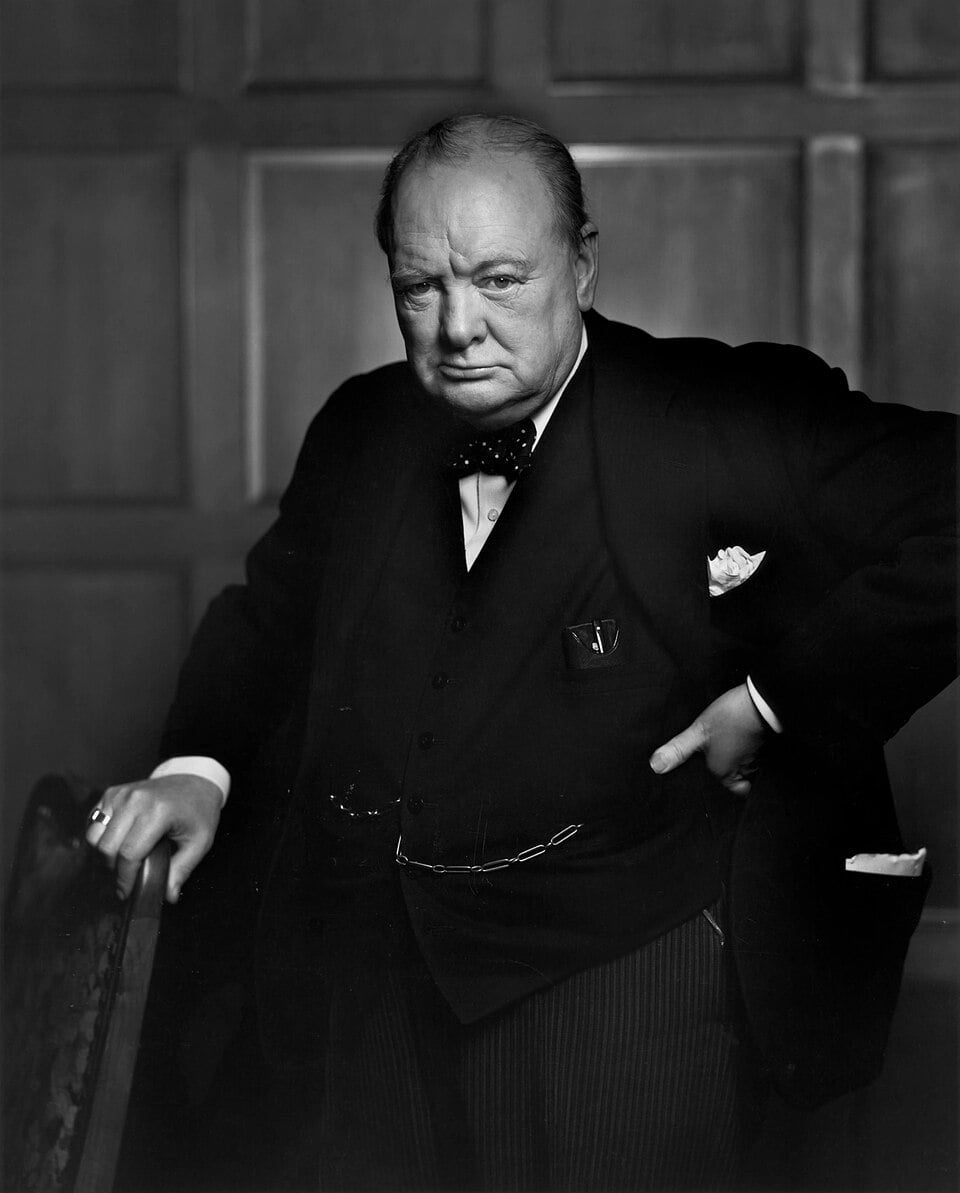
Concentrated on foreign affairs
He pushed for summit talks with the USSR after Stalin's death in 1953
Left domestic policy to ministers, including Macmillan's house-building drive
Strengths |
|
|---|---|
Weaknesses |
|
Anthony Eden (1955–1957)
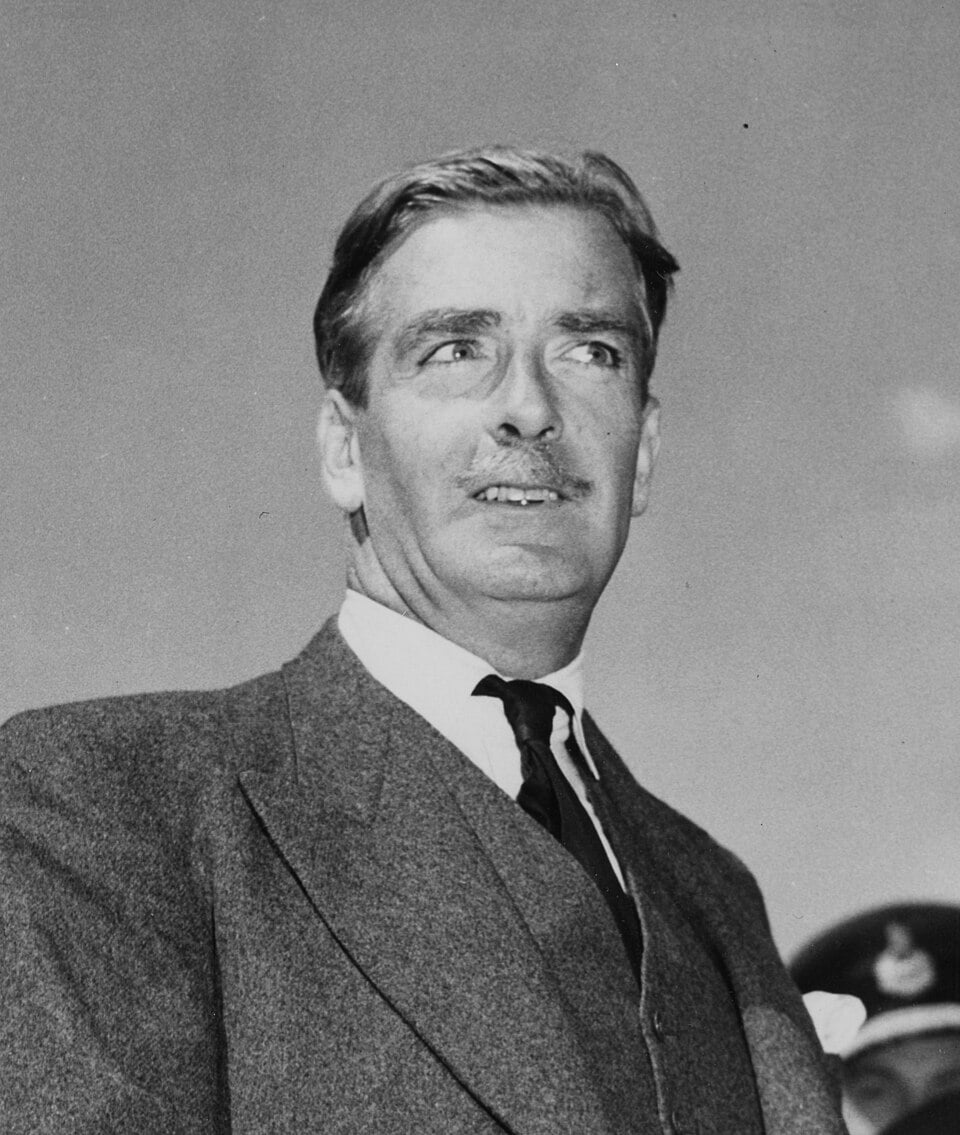
Won the 1955 general election soon after succeeding Churchill
His premiership was dominated and then ended by the 1956 Suez Crisis
Strengths |
|
|---|---|
Weaknesses |
|
Harold Macmillan (1957–1963)
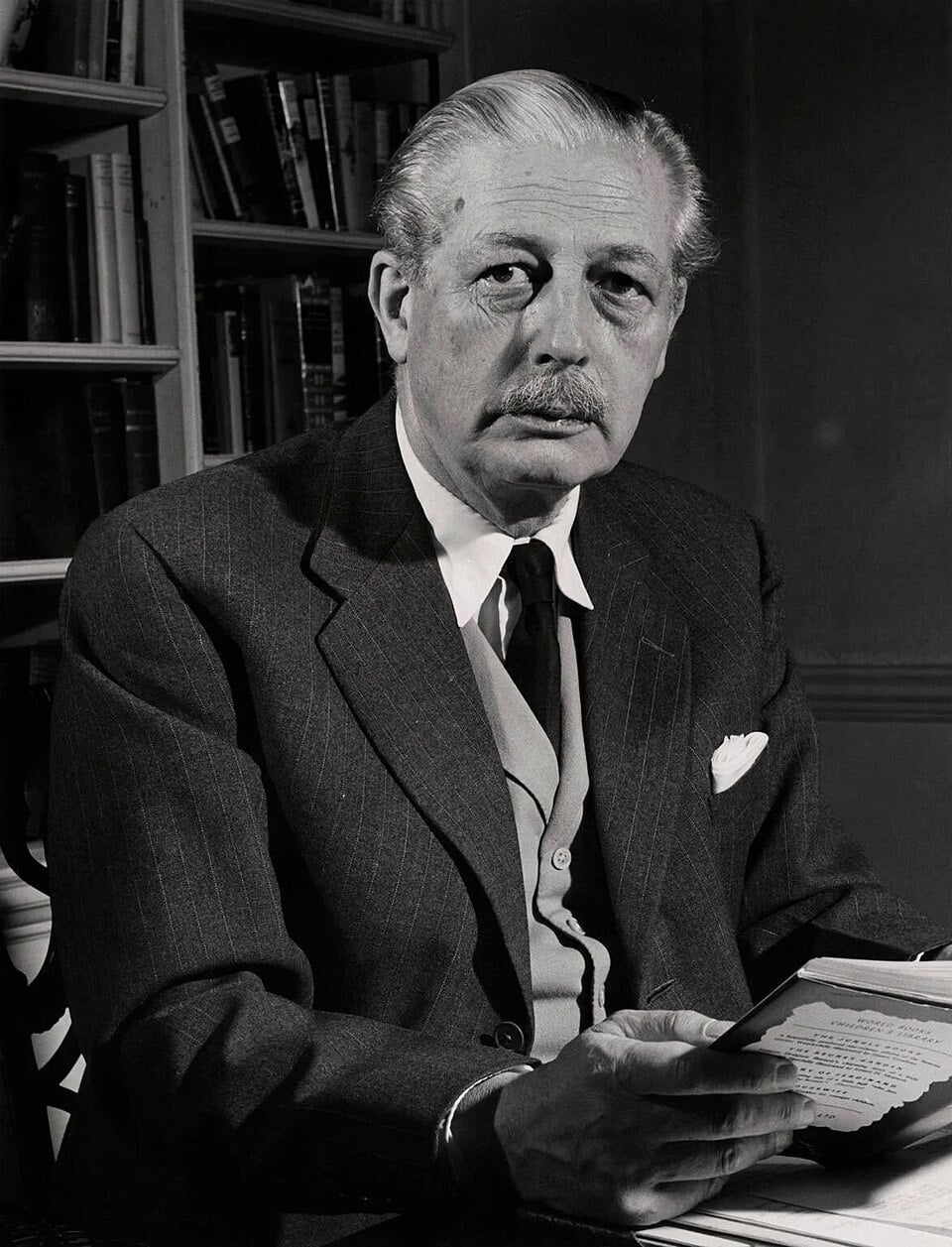
Rebuilt the party's standing after Suez and won the 1959 election on rising affluence
Accepted decolonisation in the 1960 'Wind of Change' speech
He opened the first bid to join the European Economic Community (EEC)
Strengths |
|
|---|---|
Weaknesses |
|
Alec Douglas-Home (1963–1964)
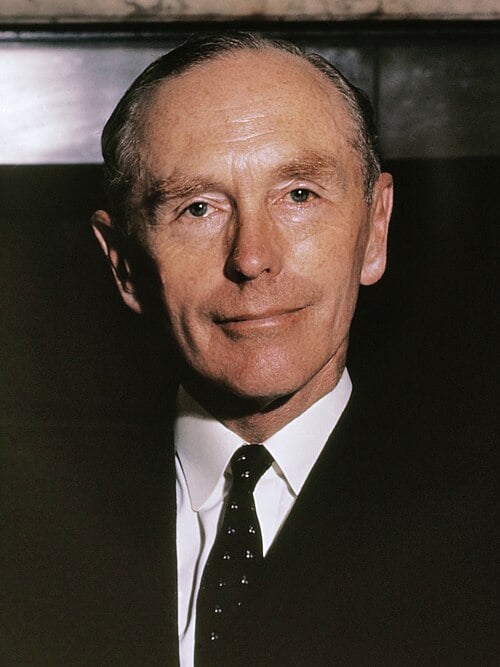
Chosen as a compromise successor to Macmillan in 1963 without a party leadership election
Led the Conservatives to a narrow defeat by Harold Wilson's Labour in 1964
Strengths |
|
|---|---|
Weaknesses |
|
Examiner Tips and Tricks
For each prime minister, connect what they did in office to the strengths and weaknesses beside it. Weigh the strengths that kept the Conservatives in power against the weaknesses that later cost them. Macmillan is the pivot: the modern, reassuring image that built the party's dominance had faded by 1963.
Conservative domestic policies
Governing from the centre ground
The Conservatives accepted the main features of the post-war consensus
They kept the National Health Service (NHS), the welfare state and full employment
This overlap with Labour policy became known as Butskellism, after R.A. Butler and Hugh Gaitskell
They reversed only a small part of Labour's programme
Iron, steel and road haulage were returned to private ownership (denationalisation)
Housing and living standards
House-building was one of the party's main domestic policies
Macmillan, as Housing Minister, passed the target of 300,000 new homes a year
Everyday restrictions lifted
Rationing, introduced during the Second World War, was finally ended in 1954
The Rent Act (1957) freed many rents from wartime controls
Growing prosperity fed into Conservative support
Wages, home ownership and consumer goods all rose
Education
The Conservatives kept Labour's school settlement
Some of the first purpose-built comprehensive schools, such as Kidbrooke (1954), opened under the Conservatives
They continued the tripartite system set up by the Butler Act (1944)
This divided state pupils between grammar, technical and secondary modern schools
Social reforms
The governments passed a series of practical social reforms
The Clean Air Act of 1956 followed the deadly London smog
The Homicide Act (1957) limited the death penalty to certain murders
The Factories Act (1959) improved workplace safety
The Wolfenden Report (1957) recommended decriminalising homosexuality
The government did not act on it; homosexuality was partly decriminalised in 1967
"The British economy is sounder today than at any time since the First World War ... We have provided over two million new homes and almost two million new school places ... we have now stabilised the cost of living while maintaining full employment. Life's better with the Conservatives"
The Conservative Party's manifesto at the 1959 general election
Approach: This was the Conservative Party’s manifesto for the 1959 general election. It was written to persuade voters that Conservative government had brought economic security and improved living standards
The source is useful for showing how the party presented its record, especially through claims about the economy, new homes, school places and the cost of living. However, it was a campaign document, so its claims should be checked against economic figures and evidence about living standards
Examiner Tips and Tricks
A party manifesto is strong evidence of how the Conservatives wanted their record to be seen, but weak evidence of whether the country was really better off, because the party chose which statistics to publish. In the source question, explain what makes it valuable (it reveals the government's self-image and priorities) rather than dismissing it as biased
Internal Labour divisions: Bevanites and Gaitskellites
A party split in two
Labour spent the 1950s divided between a left and a right wing
The Bevanites, led by Nye Bevan, sat on the left
The Gaitskellites, led by Hugh Gaitskell, sat on the right
When Attlee retired in 1955, Gaitskell defeated Bevan for the party leadership
This deepened the feud between the two wings
Certain issues divided the Labour Party along these lines
Issue one: Prescription charges
Bevanites (left)
Insisted that treatment remain free for everyone using the NHS
Gaitskellites (right)
Believed charges should be introduced as a way of easing pressure on public finances
Outcome
Opened a rift in Attlee's government in 1951, when Bevan resigned over Gaitskell's charges, which grew into the Bevan–Gaitskell feud
Issue two: Clause IV (public ownership)
Clause IV was the section of the Labour Party's constitution (1918) that committed the party to public ownership of industry
Bevanites (left)
Committed fully to the nationalisation of major industries
Gaitskellites (right)
Saw nationalisation as one tool to be used selectively, not a goal in itself
Outcome
Trade unions feared Labour would abandon public ownership altogether
At the 1959 conference, Gaitskell attempted to amend the clause
He was blocked by opposition from the left
Issue three: Nuclear weapons
Bevanites (left)
Many on the left wanted Britain to give up its nuclear weapons unilaterally
Bevan himself broke with them in 1957, warning that unilateralism would send a Labour foreign secretary "naked into the conference chamber"
Many joined the Campaign for Nuclear Disarmament (CND)
Gaitskellites (right)
Rejected giving up nuclear weapons
Outcome
At the 1960 Labour Party Conference, trade union votes passed a motion supporting unilateral nuclear disarmament
Frank Cousins, leader of the Transport and General Workers' Union (TGWU), led union support for unilateralism
This was reversed at the Labour Party Conference in 1961 by Gaitskell
Why did this matter to the Conservatives?
A divided opposition made the Conservatives look stable by comparison
Labour's public infighting weakened its challenge in the 1955 and 1959 elections
Examiner Tips and Tricks
Do not treat Labour's problems in isolation. The clearest way to explain Conservative dominance is to link it to Labour's weakness: while the Conservatives held together, Labour argued with itself in public.
Reasons for the Conservatives' fall from power, 1964
By 1964, the Conservatives had held power for 13 years
The general election of 1964 was close, but Labour won with a majority of four seats
Several linked pressures explain the result
Appearing "out of touch"
The party's image aged badly
Douglas-Home, an aristocrat chosen without a party leadership election, seemed out of touch with voters
A satire boom mocked the governing class; examples include the television show That Was The Week That Was and the magazine Private Eye
This was part of the wider decline of deference
Various scandals
Scandals damaged people's trust in the government
The 1963 Profumo Affair was the most damaging
Spy scandals added to the sense of crisis, including the conviction of the Soviet spy George Blake in 1961 and of the Admiralty clerk John Vassall in 1962
"There was no impropriety whatsoever in my acquaintanceship with Miss Keeler"
From the personal statement by John Profumo, Secretary of State for War, to the House of Commons, 22nd March 1963
Approach: Profumo made this statement to the House of Commons on 22nd March 1963, while denying an improper relationship with Christine Keeler
The source is useful for showing how a senior minister publicly responded when the scandal first emerged. However, his denial was later shown to be false, so it is not reliable evidence about the relationship itself. Its main value is in showing how the Establishment initially tried to contain the affair
"The Prime Minister is painfully aware of the damage the Profumo affair has done to the standing of his government ... It is however regrettable that the original statement made by Mr Profumo to the House proved to be untrue. Mr Profumo has accepted responsibility and resigned."
From the Cabinet minutes of the 13th June 1963, released in 1994
Approach: These confidential Cabinet minutes were written on 13th June 1963, after Profumo had admitted that his earlier statement was untrue. As a private government record, they were not written to influence the public
The source is useful for showing how ministers discussed the affair within government. However, the minutes focus on the political damage and Profumo's resignation, and reveal little about the wider damage to public trust. They should therefore be compared with public and press reactions
Labour uniting
Labour became a stronger opponent
The deaths of Bevan in 1960 and Gaitskell in 1963 ended the personal feud that had split the party
Harold Wilson emerged as a unifying leader with a modern, classless image
Failures of the Conservatives
Other problems built up under Macmillan
The 1962 "Night of the Long Knives", in which a third of the Cabinet were sacked, was widely seen as a sign of weakness
Macmillan resigned due to ill health in 1963
The appointment of Douglas-Home divided the Conservative Party
Britain faced growing economic problems, including stop-go policies and pressure on the balance of payments
Wider social changes, including the growth of youth culture and increased immigration, created new political challenges
Examiner Tips and Tricks
Group the reasons into clear themes, such as image, scandal, Labour's recovery and the government's own failures.
How far did the Conservatives dominate politics, 1951–1964?
A question along these lines weighs the strength of Conservative control against the signs that it was limited or short-lived
Evidence that you could use for each side is outlined below
The Conservatives dominated
They won three general elections in a row with rising majorities: 17 seats in 1951, 60 in 1955 and 100 in 1959
They held office for 13 unbroken years under four leaders
Strong leadership kept the party popular
Rising affluence and house-building were linked to Conservative rule
Labour's public divisions left little effective opposition
Conservative dominance was limited or fragile
In 1951, they won fewer votes than Labour and took power on a small majority
Election margins depended heavily on Labour's weakness rather than Conservative strength
Suez, the 1962 "Night of the Long Knives" and the 1963 Profumo Affair damaged the government
The decline of deference turned opinion against the Establishment
Labour revived under Wilson and won in 1964, ending Conservative rule
Examiner Tips and Tricks
Make sure you cover both sides of the argument in essay questions before reaching an overall judgement. Avoid describing each side separately without evaluating their relative importance.

Unlock more, it's free!
Join the 100,000+ Students that ❤️ Save My Exams
the (exam) results speak for themselves:

Was this revision note helpful?
