A Multicultural Britain, 1997-2007 (AQA A Level History: Component 2: Depth study): Revision Note
Exam code: 7042

Summary
New Labour kept the trade union laws of the 1980s, but workers gained new rights
These included the national minimum wage from 1999 and rights from the EU Social Chapter
Women made gains in both Parliament and the workplace
120 women MPs were elected in 1997
A gender pay gap still remained
Policies for young people aimed to tackle social exclusion
At the same time, concern about youth crime encouraged the wider use of anti-social behaviour orders ASBOs
Britain became more ethnically diverse
EU enlargement in 2004 brought large numbers of workers from Central and Eastern Europe
Laws widened equal rights, but multiculturalism also became more contested
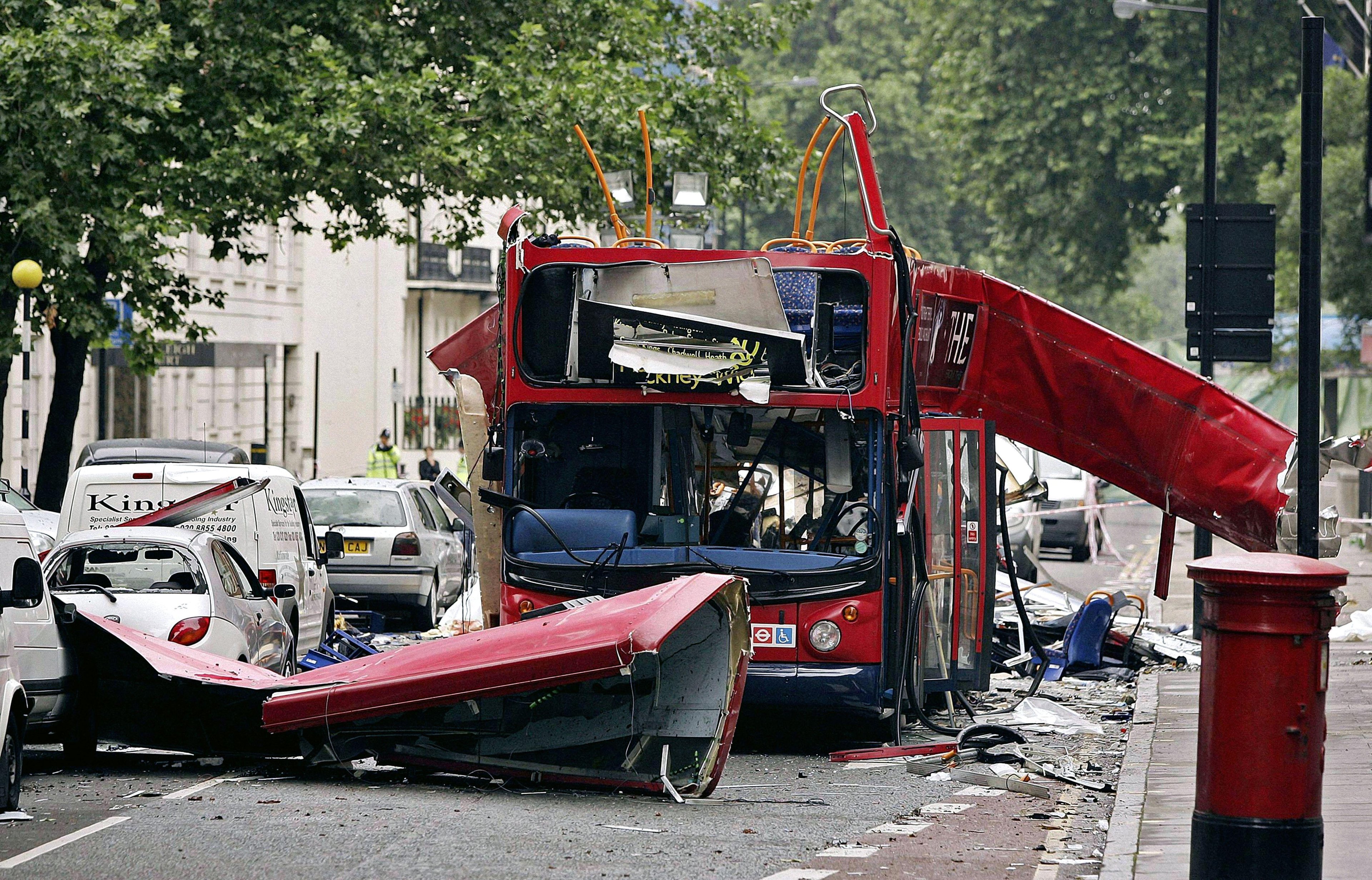
The 2001 riots, 7/7 bombings and growing concern about immigration fuelled debate about integration
The key question asks whether Britain by 2007 had become a broadly settled multicultural society, or whether integration and tolerance still remained uneven and incomplete
Workers, women and youth
Changes between 1997 and 2007 affected different groups at different speeds
Workers gained new legal rights
Women made gains in public life and employment
New Labour targeted young people through education, welfare and crime policies
Workers
Labour's relationship with the trade unions continued to loosen after 1997
Union membership fell from about 31% of employees in 1997 to 28% in 2007
The government kept the main Conservative trade union laws of the 1980s, including restrictions on strike ballots
Labour still introduced new rights for workers
The national minimum wage began on 1 April 1999 at £3.60 an hour for adults
The Low Pay Commission recommended the rate each year
Britain signed the EU Social Chapter in 1997
This brought rights such as unpaid parental leave, and Britain also accepted EU rules on paid holidays
Britain kept its opt-out from the 48-hour working week
The Employment Relations Act (1999) gave unions a legal right to recognition where most workers wanted it
Welfare-to-work policies aimed to make employment more worthwhile
The New Deal offered training, work placements or subsidised jobs
Tax credits increased the incomes of low-paid working families
Relations with the unions could still be difficult
In 2004, the RMT rail union was expelled from the Labour Party after some branches supported other left-wing parties
The Warwick Agreement of July 2004 set priorities between Labour and the unions before the 2005 election
“As ever, before the TUC speech, I’m not short of advice. The difference this year is that I agree with it. All have told me not to lose touch with the concerns of the hard-working families it’s our and my duty to represent. So I come here to advocate social partnership not belittle it. And above all to demonstrate that our and my priority is and always will be the quality of life of Britain’s hard-working families, who struggle with the modern burden of work and family life, and don’t ask for or expect miracles just a fair chance to make the most of life for them and their children. Over the weekend I got out the first speech I ever made to a Labour Party conference as Employment spokesman back in 1990. I said: a Labour government would introduce a minimum wage; a legal right to union recognition; sign the social chapter; improve maternity leave; introduce paid holidays; end blacklisting; and remove the power of automatic dismissal for those lawfully on strike. We have done every one of those things”
Tony Blair, Prime Minister, speech to the Trades Union Congress, Brighton on the 13 September 2004
Approach: Blair was speaking to the Trades Union Congress in September 2004, shortly before the next general election
The source is useful because he lists the employment reforms New Labour wanted trade unionists to recognise, including the minimum wage, union recognition, the Social Chapter and improved employment rights
As Blair was speaking directly to a trade union audience, he had a clear reason to stress what Labour had delivered for workers. His claims should be balanced against what the government chose not to reverse, especially the trade union laws of the 1980s
Women
Women's representation in Parliament rose sharply in 1997
120 women MPs were elected, including 101 Labour MPs
Labour had planned to use all-women shortlists in half of its most winnable seats
The press often referred to the new Labour women MPs as "Blair's Babes"
Women also gained greater representation in senior public office
Margaret Beckett became the first woman Foreign Secretary in 2006
Family and childcare policies particularly benefited women
By 2004, all three- and four-year-olds were entitled to 12.5 hours a week of free nursery education
The Pensions Act (2007) introduced credits for years spent caring, from 2010
Progress at work was slower
The share of FTSE 100 companies with no women on the board fell from 36% in 1999 to 24% in 2007
In 2007, women working full time earned around 87% of men's hourly pay
Women still carried most of the burden of household and childcare
Youth
New Labour targeted young people at risk of social exclusion
The Social Exclusion Unit coordinated policy from 1997
Sure Start centres supported families with young children in poorer areas
Education Maintenance Allowances helped students from low-income families stay in education after 16
The scheme operated nationally from 2004
The Connexions service gave teenagers advice about education, training and work
Blair also pledged in 1999 to end child poverty within 20 years
Child poverty fell by around 17% by 2004-05
This was short of the interim target of a 25% reduction
Concern about youth crime remained strong
ASBOs were available from 1999
Around 4 in 10 ASBOs went to 10-17-year-olds
By the end of 2007, 9.4% of 16-18-year-olds in England were not in education, employment or training (NEETs)
Examiner Tips and Tricks
Do not treat workers, women and young people as if they experienced the same level of change. A stronger answer compares the speed and depth of change
The growth of a multicultural society
A multicultural society is one in which different ethnic, cultural and religious communities live alongside each other with equal rights and respect
Each community keeps its own identity while sharing a common citizenship
A more diverse population
Britain was already ethnically diverse by 1997
The 2001 census found that 7.9% of the UK population came from a non-white ethnic group
Around 1.6 million people described their religion as Muslim
Diversity increased further during the decade
Official estimates suggest the non-white share of England's population rose from 9.2% in 2001 to 11.8% in 2007
Minority ethnic communities were especially concentrated in London and cities such as Birmingham, Bradford and Leicester
New patterns of migration
People came to Britain for a wide range of reasons
Skilled workers filled labour shortages
Overseas students came to British universities
Families joined relatives already living in Britain
Asylum seekers fled war and persecution, including conflicts in Afghanistan, Iraq and the Balkans
EU enlargement on the 1st May 2004 had a major impact
Britain, Ireland and Sweden were the only existing EU members to open their labour markets immediately to workers from the eight new A8 countries
The Home Office had expected migration of around 5,000 to 13,000 people a year
Around 715,000 people registered under the Worker Registration Scheme between May 2004 and September 2007
Many worked in farming, food processing, building and hospitality
Some settled in rural areas with little previous experience of large-scale immigration
Many later returned home, so registrations do not show how many stayed permanently
Government policy
Labour tried to combine managed migration with integration and citizenship
The Nationality, Immigration and Asylum Act (2002):
tightened parts of the asylum system
introduced citizenship ceremonies, first held in 2004
brought in English-language requirements for new citizens
The Life in the UK test was introduced in November 2005
It tested knowledge of British life and institutions as part of the citizenship process
Race equality also became a more important part of government policy
The Macpherson Report (1999), the inquiry into the racist murder of Stephen Lawrence in 1993, concluded that the Metropolitan Police were institutionally racist
The Race Relations (Amendment) Act (2000) required public bodies, including the police, to promote racial equality
From 1998, Muslim and other faith schools could join the state sector on the same basis as Christian and Jewish schools
“Part 1 deals with the issue, which I hope is not as contentious as people have tried to make it, of those who obtain refugee status and then seek naturalisation and want to be integrated into our community. It gives effect to all the measures that I announced on 7 February relating to the acquisition of the English language, the ability to understand our systems of governance and our social processes, a revised and modernised oath and a ceremony in which people will be welcomed into our country for naturalisation”
David Blunkett, Home Secretary, speech opening the second reading debate on the Nationality, Immigration and Asylum Bill, 24 April 2002
Approach: The source is useful because it shows what Labour wanted integration to involve: learning English, understanding British institutions and taking part in citizenship ceremonies
As the minister promoting the bill, Blunkett was presenting the policy in its most positive terms, so the source is strongest for showing government aims rather than outcomes
“We must take a system that the Home Secretary has correctly described as chaotic, it was not in perfect working order in 1997, but it has got substantially worse, and turn it into an orderly system that achieves the two results that he and I share the desire to achieve. Those are the rapid, effective admission of refugees fleeing dreadful persecution and the equally rapid and effective removal of those seeking to use this as opposed to other, legitimate means to enter the country, getting round rather than facing the immigration rules”
Oliver Letwin, Shadow Home Secretary, reply in the same debate, 24 April 2002
Approach: The source is useful because he accepted the broad aim of creating a fairer immigration system but criticised how badly the existing system was working
Read together, the two sources show that government and opposition agreed on some of the aims of reform, while disagreeing over whether Labour was managing immigration effectively
Examiner Tips and Tricks
Judge the value of each source in turn: Blunkett for the government's aims, Letwin for the opposition's criticism of how the system worked. AQA does not require you to compare sources, but noting that they share some aims can sharpen your judgement of each
Social attitudes and diversity
Greater tolerance and visibility
Diversity became more visible in public life
Paul Boateng became the first black Cabinet minister in 2002
Events such as the Notting Hill Carnival attracted very large crowds
TV comedy such as Goodness Gracious Me and The Kumars at No. 42, and music such as grime, brought minority culture into the mainstream
London's successful bid for the 2012 Olympics in 2005 presented the city's diversity as a strength
Holocaust Memorial Day was first held in January 2001
Legal rights also widened
The age of consent was equalised at 16 in 2000
Section 28 was repealed in England and Wales in 2003
The Gender Recognition Act (2004) allowed transgender people to change their legal gender
Civil partnerships began in December 2005
The Equality Act (2006) created the Equality and Human Rights Commission, which replaced bodies such as the Commission for Racial Equality in 2007
Tensions and concerns
Some institutions were criticised for failing to reflect Britain's diversity
In 2001, BBC director-general Greg Dyke described the corporation as "hideously white"
Riots in Oldham, Burnley and Bradford in 2001 exposed serious divisions in some northern towns
The Cantle Report later described communities as living "parallel lives"
It called for greater community cohesion
Support for the far right also grew in some areas
By 2006, the British National Party (BNP) had won around 50 council seats
This included 12 seats in Barking and Dagenham
The 7th July 2005 bombings raised new questions about integration
Three of the four bombers were British-born
The 2003 invasion of Iraq had alienated many British Muslims, and the ringleader, Mohammad Sidique Khan, blamed British foreign policy in a video released in September 2005
The Racial and Religious Hatred Act (2006) made it an offence to stir up hatred against people because of their religion
In September 2005, Trevor Phillips, chair of the Commission for Racial Equality (CRE), warned that Britain was "sleepwalking to segregation"
Immigration and public debate
Immigration became a much more important political issue
The share of voters naming race or immigration as a top issue rose from under 5% in 1999 to over 40% by late 2007
Some newspapers and pressure groups warned that immigration was putting pressure on housing and public services
MigrationWatch UK was founded in 2001
Economists often argued that migration also brought benefits
Migrants helped fill labour shortages
Many made a net contribution to the economy
Public opinion in 2005
An Ipsos MORI poll for the BBC was carried out in August 2005, one month after the 7/7 bombings
It surveyed 1,004 adults in Great Britain, including 204 Muslims
The results showed both agreement and difference
Statement | All Adults | Muslims |
|---|---|---|
Multiculturalism makes Britain a better place to live | 62% | 82% |
People who come to Britain should take on British values and traditions | 58% | 28% |
Multiculturalism has been a mistake and should be abandoned | 32% | 26% |
Proud when British sports teams do well | 90% | 88% |
Most people in both groups supported multiculturalism and shared pride in British sport
The biggest difference was over whether newcomers should adopt British values and traditions
Examiner Tips and Tricks
Do not use the 2001 riots or 7/7 bombings as proof that multiculturalism had failed. They show that serious tensions remained, but they need to be weighed against evidence of greater legal equality, visible diversity and public support for multiculturalism
Treat opinion polls like any other source. Check when the poll was taken, who was asked and what the wording was. This poll came only a month after 7/7, so the timing may have affected the answers
Use reforms such as civil partnership and the Gender Recognition Act only as background on wider tolerance. The 2023 examiner report criticised multiculturalism answers that drifted into women's rights or the LGBTQ movement, so keep your focus on ethnic and religious diversity and integration
How far had Britain become a multicultural society by 2007?
This question asks whether multiculturalism had become a settled feature of British society, or whether important divisions and limits remained
Some key evidence for each side is outlined below
Evidence that Britain had become a multicultural society
Britain was more ethnically diverse than it had been in 1997
Migration had increased and diversity was spreading beyond the largest cities
Equal rights had widened
The law offered greater protection against discrimination based on race and religion, including the Race Relations (Amendment) Act (2000) and the Racial and Religious Hatred Act (2006)
Minority groups were more visible in politics, public life, sport and the media
Public opinion suggested that multiculturalism had become widely accepted
Most people in the 2005 poll said that multiculturalism made Britain a better place to live
Large-scale migration from Central and Eastern Europe after 2004 was absorbed into many parts of the labour market
Evidence that multiculturalism remained limited
Some communities still lived largely separate lives
The 2001 riots and Cantle Report exposed serious problems of segregation
The 7/7 bombings raised new concerns about integration and British identity
Racism had not disappeared
The Macpherson Inquiry had exposed institutional racism in the police
Some major institutions still lacked diversity
Immigration became a much more divisive political issue
Support for the BNP also increased in some areas
Diversity was uneven across the country
Many rural areas and smaller towns had relatively few minority residents
“I want to say one thing specifically to the world today. This was not a terrorist attack against the mighty and the powerful. It was not aimed at presidents or prime ministers. It was aimed at ordinary, working-class Londoners, black and white, Muslim and Christian, Hindu and Jew, young and old. It was an indiscriminate attempt to slaughter, irrespective of any considerations for age, for class, for religion, or whatever. That isn’t an ideology, it isn’t even a perverted faith, it is just an indiscriminate attempt at mass murder and we know what the objective is. They seek to divide Londoners. They seek to turn Londoners against each other. I said yesterday to the International Olympic Committee, that the city of London is the greatest in the world, because everybody lives side by side in harmony. Londoners will not be divided by this cowardly attack. They will stand together in solidarity alongside those who have been injured and those who have been bereaved and that is why I’m proud to be the mayor of that city”
Ken Livingstone, Mayor of London, statement delivered by video link from Singapore on the day of the London bombings, the day after London won the 2012 Olympic bid, 7 July 2005
Approach: The source is useful because it shows how the leader of one of Britain’s most diverse cities publicly defended multicultural London, stressing that people of different backgrounds lived and worked together
Its timing also matters. Livingstone was speaking during a national crisis and wanted to prevent division, so the speech is strongest as evidence of the message political leaders wanted to promote, rather than proof that community relations were harmonious everywhere
Examiner Tips and Tricks
For a “how far?” question, decide what you mean by multicultural society before you judge it
You could test:
diversity: how mixed the population had become
equality: how far legal rights had widened
integration: how far different communities actually lived together
Britain scores differently on each. That gives you a stronger judgement than simply listing evidence for and against multiculturalism

Unlock more, it's free!
Join the 100,000+ Students that ❤️ Save My Exams
the (exam) results speak for themselves:

Was this revision note helpful?
