Thatcher & the Conservative Governments, 1979-1987 (AQA A Level History: Component 2: Depth study): Revision Note
Exam code: 7042

Summary
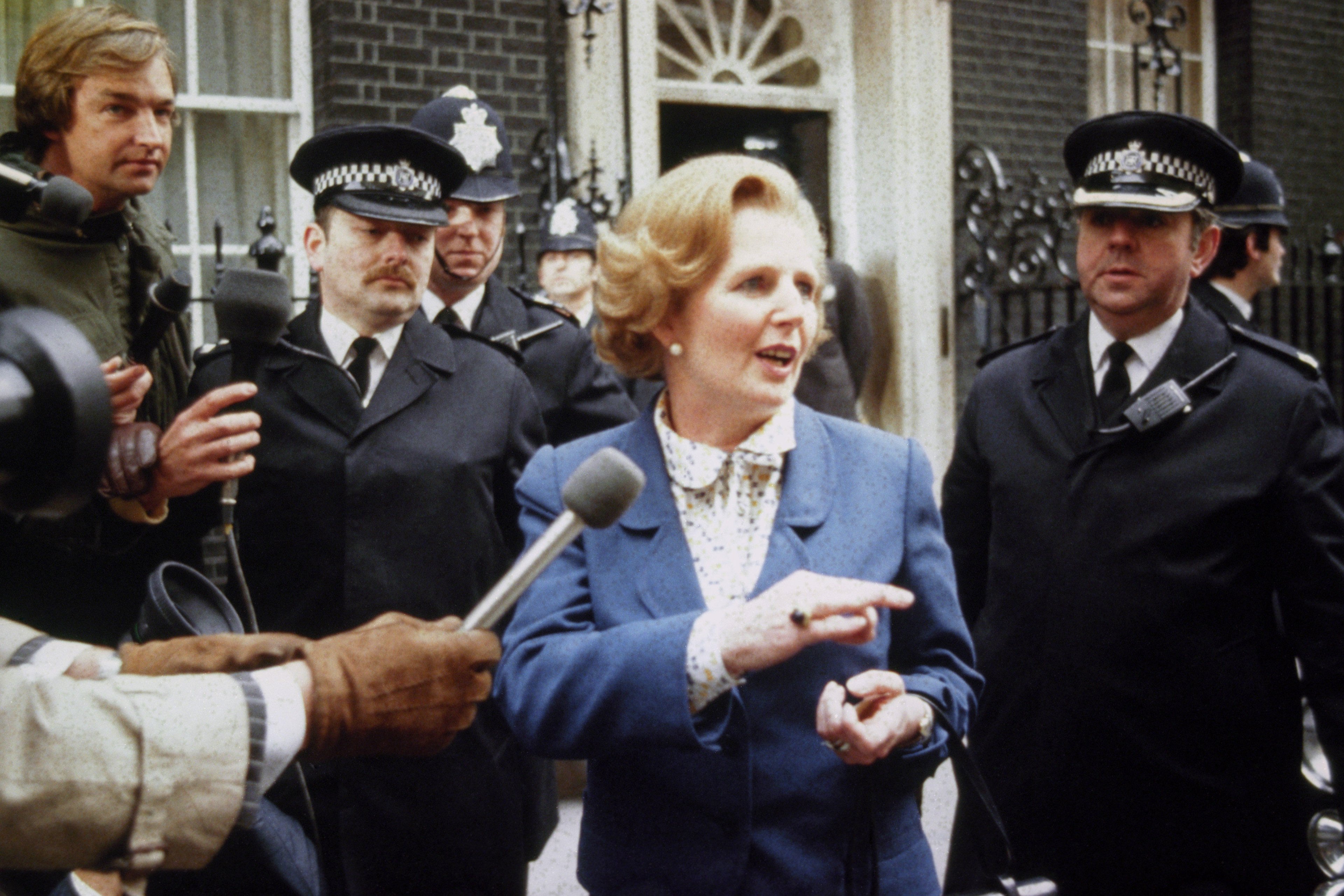
Margaret Thatcher won three general elections in a row, in 1979, 1983 and 1987, becoming the first prime minister since 1820 to do so
Thatcherism combined free-market economics, ideas from the New Right, social conservatism and a firm approach to law and order
The Conservative Party was divided between the 'Wets' and the 'Dries'
'Wets' were more willing to keep parts of the post-war consensus
'Dries' supported a more radical economic break with it
Thatcher's position was weak in 1981 but recovered after the Falklands War, improving economic conditions and the growing influence of her supporters inside the Cabinet
Her government still faced serious challenges, including Michael Heseltine's resignation over Westland in 1986 and continuing conflict in Northern Ireland over the hunger strikes, the Brighton bombing and the Anglo-Irish Agreement
The key question is whether the government by 1987 was genuinely dominant or whether its strength rested on a divided opposition and an electoral system that magnified its majorities
Margaret Thatcher: character and ideology
How Thatcher reached the top
Margaret Thatcher became Conservative leader in February 1975
She defeated Edward Heath, after the Conservatives had lost the two general elections of 1974
Thatcher was unusual within the traditional Conservative leadership
She was the daughter of a grocer from Grantham
She studied chemistry at Oxford before becoming a barrister
She was the first woman to lead a major British political party
Under Heath, she served as Secretary of State for Education and Science between 1970 and 1974
Thatcher rejected much of the post-war consensus
She believed it had contributed to Britain's long-term economic decline
She was particularly critical of Heath's U-turn of 1972
His government had abandoned parts of its free-market programme during the recession
Thatcher later used this as an example of the need to hold firmly to a chosen policy
A conviction politician
Thatcher described herself as a 'conviction politician', rather than a pragmatist
She believed politicians should act according to firm principles
At the 1980 Conservative Party Conference, she rejected demands to change economic course during the recession
She famously told critics: "You turn if you want to. The lady's not for turning"
The remark was also aimed at Conservatives who wanted a return to Heath-style policies
Her political beliefs were influenced by her upbringing
She valued:
self-reliance
thrift
hard work
individual responsibility
Her father, Alfred Roberts, was a grocer, local councillor and Methodist lay preacher
"Compassion isn’t determined by how much you get together demonstrations in the street… It’s determined by how much you are prepared to do yourself. Of course we have basic social services, we will continue to have those, but equally compassion depends upon what you and I, as an individual, are prepared to do. I remember my father telling me that at a very early age"
Adapted from Margaret Thatcher speaking in an interview on London Weekend Television in January 1983
Approach: Thatcher gave this television interview in January 1983, while she was prime minister and preparing for a general election later that year. She argues that compassion should not be measured only by how much government provides, but also by what individuals are prepared to do for themselves
The source is useful for showing how Thatcher explained ideas such as self-reliance and individual responsibility to a mass audience. However, she was presenting her own political values shortly before an election, so it shows how she wanted Thatcherism to be understood rather than whether those policies worked in practice
Thatcherism and the New Right
Thatcherism drew heavily on ideas associated with the New Right
The New Right was a network of economists, academics and think tanks that challenged Keynesian economics
Important influences included:
Milton Friedman
Friedrich von Hayek
Both were associated with free-market economics
Conservative think tanks helped spread these ideas
The Centre for Policy Studies was founded by Keith Joseph in 1974
The Adam Smith Institute followed in 1977
The New Right also attracted people who had previously been on the left
These included economist Peter Jay and former New Statesman editor Paul Johnson
Thatcherites argued that economic decline was linked to a wider decline in personal responsibility
They supported the free market because they believed people should take responsibility for their own choices
They also stressed:
the family
law and order
personal discipline
Thatcher was not herself a political theorist
She relied on figures such as Keith Joseph and Enoch Powell to help develop and shape these ideas
Social conservatism
Thatcherism was not only about economics
Thatcher criticised many of the social changes associated with the 1960s
She placed importance on:
family responsibility
order
duty
respect for authority
Thatcherites often argued that rising crime and disorder reflected a decline in individual responsibility
This helped link support for free-market economics with a tougher approach to law and order
Examiner Tips and Tricks
Do not treat Thatcherism as a fully formed ideology that appeared in 1979. It developed from a mixture of New Right economic ideas, social conservatism, and Thatcher's own political instincts
Thatcher's ministers: 'Wets' and 'Dries'
The split inside the Conservative Party
The division was mainly about economic policy
It also became linked to disagreements over Thatcher's leadership style
Wets
Thatcher used the term 'Wet' for Conservatives who disagreed with her economic policies
Many Wets were One-Nation Conservatives
They wanted to protect important parts of the post-war consensus
Dries
Thatcher's supporters were known as 'Dries'
They backed monetarism
They supported tighter control of the money supply and a stronger break with the post-war consensus
Issue | 'Wets' | 'Dries' |
|---|---|---|
Economic Policy |
|
|
Post-war Consensus |
|
|
Leading Figures |
|
|
Position by 1983 |
|
|
The first Cabinet, 1979
Thatcher's first Cabinet was not completely Thatcherite
She was not yet strong enough to remove many senior Conservatives associated with Heath
Willie Whitelaw became Home Secretary
He also served as Thatcher's deputy and acted as a steadying influence
Thatcher placed trusted supporters in key economic posts
Geoffrey Howe became Chancellor of the Exchequer
Keith Joseph became Industry Secretary
John Biffen and Nigel Lawson were also given economic roles
Jim Prior was the main exception
He became Employment Secretary
He was a leading 'Wet', disagreeing with Thatcher over trade union reform
Shifting the balance, 1981–1983
The dispute with Jim Prior showed the growing divide inside the Cabinet
Thatcherites wanted faster action against trade union power
Prior preferred negotiation and slower reform
In 1981, Prior was moved to the Northern Ireland office
The move was widely seen as a demotion
He was replaced at Employment by Norman Tebbit
Thatcher gradually promoted more of her own supporters
Wets, such as Prior, were increasingly moved away from the main economic posts
Victory in the 1983 general election strengthened Thatcher's control
Most remaining Wets were pushed to the margins
Nigel Lawson became the new Chancellor
Geoffrey Howe moved to the Foreign Office
By 1983, Thatcher was leading a Cabinet that was much more supportive of her political and economic aims
"'The Tory Party does not like brains', Willie Whitelaw once remarked to an aide as he walked down the committee room corridor of the House of Commons. Then he paused, shaking his head sadly, 'Thank God I don't have any!' One of the great shocks delivered to the Conservative Party by Thatcher and her people was that they did like brains. Thatcher herself was not an intellectual, but she respected intellect and looked for it in her people"
John Ranelagh worked for the Conservative Research Department during the 1970s. He wrote this account in Thatcher’s People, published in 1991, several years after Thatcher had left office
Approach: The source is useful for showing how tensions between Thatcherites and traditional Conservatives were remembered by someone who had worked inside the party. His account also suggests that Thatcher valued intellectual arguments even though she was not herself a political theorist
However, Ranelagh wrote with hindsight and presents the divisions through memorable personal stories. It is therefore more useful for attitudes and relationships inside the Conservative Party than for measuring how widespread the split actually was
Examiner Tips and Tricks
Use the reshuffles as evidence of Thatcher's growing control. 1981 and 1983 are useful turning points: before 1981 she still had to accommodate senior Wets, while after 1983 the Cabinet was much more clearly shaped around her supporters
Support and opposition
Where did Thatcher's support come from?
The Conservative Party became more supportive of Thatcher over time
After the 1983 election, this became increasingly clear
More senior posts were held by ministers who supported her economic approach
Most of the national press supported the Conservatives at each election
The Sun and the Daily Mail backed the party in 1979, 1983 and 1987, and The Times did so in 1983 and 1987 (it was not published during the 1979 campaign)
Businesses generally welcomed:
lower taxes
weaker trade unions
deregulation
Thatcher also attracted some voters who had not traditionally supported the Conservatives
Skilled working-class voters in the Midlands and the south were attracted by tax cuts
The sale of council houses also widened Conservative support
Opposition inside the government
Opposition came first from the Wets
They objected to the government's economic strategy
Their criticism became especially strong during the recession of 1980–1981
The 1981 Budget became a major test of Thatcher's authority
Taxes were increased during a recession to reduce government borrowing
364 economists signed a letter to The Times attacking the policy
Thatcher refused to change direction
This strengthened her reputation as a conviction politician
Thatcher gradually removed or sidelined many of her critics
Ministers who opposed her economic policy lost influence
After 1983, the Cabinet contained more committed Thatcherites
Not all opposition was ideological
John Biffen and Norman Tebbit later fell out of favour despite supporting Thatcherism
Personal disagreement and leadership style could, therefore, create opposition as well as policy differences
"It's been quite a year and although the economic clouds should begin to lift slowly, we both know that the most severe political struggles, both within and outside our own party, lie ahead. I want to say some things in this letter which you would not allow me to say to you directly. The longer I serve you, the greater is my regard and respect. You have been a giant amongst pygmies... The plain truth is, you have been the inspiration of the Government and the Conservative Party"
Ian Gow was Thatcher’s parliamentary private secretary from 1979 to 1983. He wrote this private letter to Thatcher on 29th December 1981, during a difficult period for the government
Approach: The source is useful, as Gow was a loyal supporter writing privately rather than for the public. He admits that Thatcher faced serious political problems, while still praising her leadership. This makes it useful for showing both the pressure she was under in 1981 and the loyalty she still commanded among close supporters
However, Gow was personally devoted to Thatcher, so his praise of her leadership should not be treated as a neutral judgement
The Westland affair, 1986
The most serious Cabinet challenge to Thatcher's authority came from Michael Heseltine
The dispute concerned the future of the helicopter company Westland
Heseltine supported a European solution
Thatcher backed an American-linked alternative
In January 1986, Heseltine walked out of a Cabinet meeting
He resigned as Defence Secretary
He claimed that Thatcher had prevented proper Cabinet discussion
The affair became a wider argument about Thatcher's leadership style
Some Conservative MPs believed she was becoming too dominant
It raised questions about how far Cabinet government still operated normally
Heseltine later became the focus of Conservative opposition to Thatcher
His later challenge to her leadership came in 1990
Opposition beyond Westminster
Opposition also came from groups outside Parliament, including from:
trade unions
some Church of England bishops
Labour-run local councils
protest movements
These groups challenged different parts of Thatcher's policies, including:
industrial relations
unemployment
public spending
social policy
Examiner Tips and Tricks
Do not confuse support with complete agreement. Thatcher became increasingly dominant inside the Conservative Party, but she still faced criticism from Wets, Cabinet colleagues and groups outside Parliament
Electoral success, 1979-1987
The 1979 election
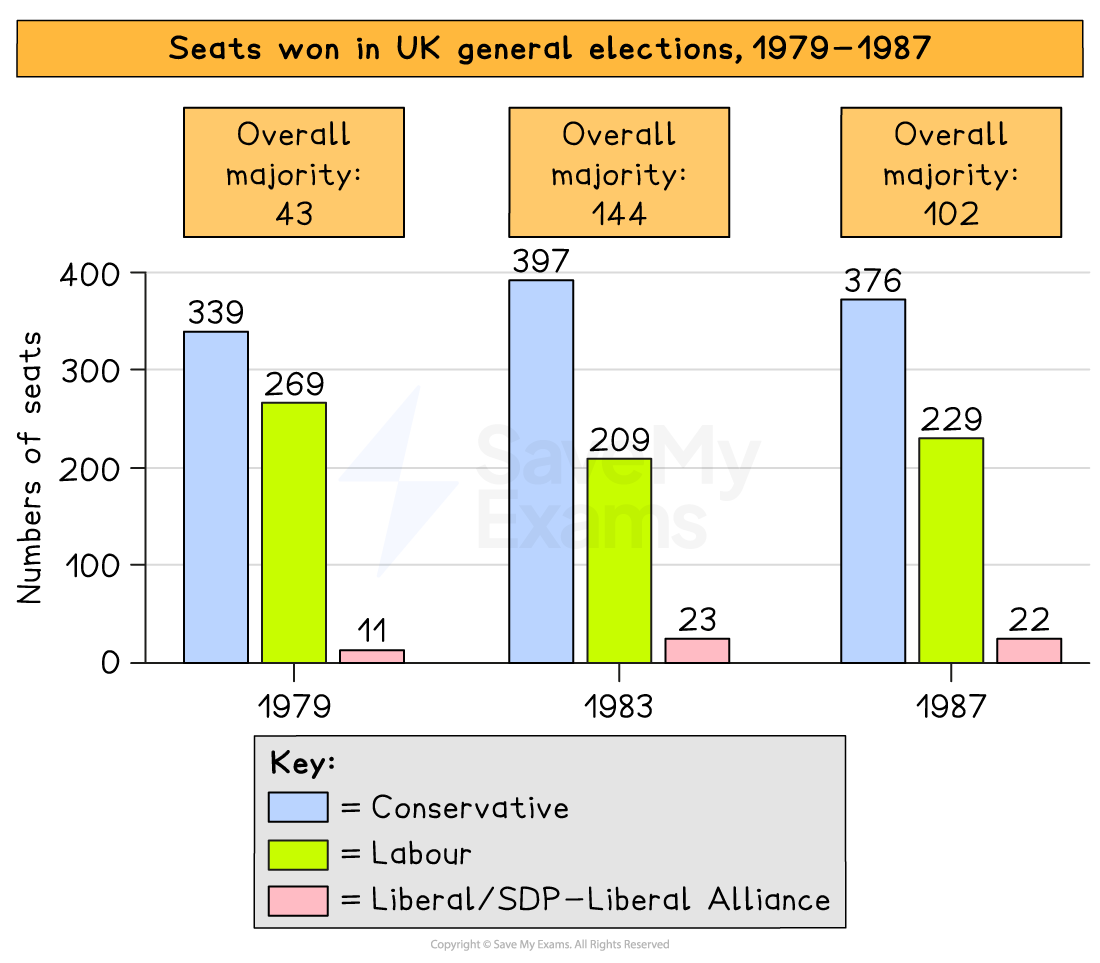
The Conservatives won 339 seats, giving them an overall majority of 43
They won 43.9% of the vote
Labour won 36.9%
Turnout was 76%
The Conservatives benefited from the problems of the previous Labour government
The Winter of Discontent had damaged Labour's reputation
Rising unemployment and industrial unrest also shaped the campaign
The 1983 election
The Conservatives won 397 seats
Their overall majority rose to 144, the largest since 1945
The size of the victory was striking, as Conservative support had actually fallen
Their vote share dropped from 43.9% in 1979 to 42.4%
Labour suffered its worst result since 1918
It won only 209 seats
It received only 27.6% of the vote
The SDP–Liberal Alliance (the Social Democratic Party and the Liberals) won 25.4% of the vote
It finished only just behind Labour in vote share
However, it won only 23 seats
Why the Conservatives won so decisively
Thatcher's political position had changed sharply since 1981
At the beginning of 1982, she had been one of the most unpopular prime ministers on record
Victory in the Falklands War strengthened her reputation for firm leadership
The economy had begun to recover
Inflation was falling
This helped the government argue that its economic policies were beginning to work
The opposition vote was badly divided
Labour and the Alliance competed for many of the same anti-Conservative voters
Labour itself was in a weak position
Michael Foot was widely regarded as a weak leader
Labour fought the election on policies including unilateral nuclear disarmament and withdrawal from the European Economic Community (EEC)
The first-past-the-post (FPTP) electoral system increased the scale of the Conservative majority
The Alliance received only 2.2 percentage points less of the vote than Labour
Yet, it won 186 fewer seats
"It is no exaggeration to say that the outcome of the Falklands War transformed the British political scene. In fact, the Conservative Party had begun to recover its position in the opinion polls before the conflict as people began to realise that economic recovery was underway. But the so-called 'Falklands factor' was real enough. People saw the connection between the resolution we had shown in economic policy and that demonstrated in the handling of the Falklands crisis. I found people were starting to appreciate what had been achieved"
Margaret Thatcher reflecting on the 1983 election in her memoirs, The Downing Street Years (1993)
Approach: Thatcher wrote this account in her memoirs, published in 1993, ten years after the 1983 election. She argues that Conservative support had already begun to recover before the Falklands War because voters were starting to see an economic recovery
The source is useful for showing how Thatcher later explained her electoral success. However, her own reputation is part of the argument. She has a reason to present the Falklands as only one factor and to give greater importance to the success of her economic policies. Her account should therefore be compared with contemporary opinion polls and economic evidence
The 1987 election
The Conservatives won 376 seats, giving them an overall majority of 102
They received 42.2% of the vote
Labour received 30.8%
The Alliance received 22.6%
Thatcher became the first prime minister since 1820 to win three general elections in succession
The Conservatives campaigned on their record in office:
the economy was growing
taxes were lower
defence remained an important issue
Economic conditions had improved
Unemployment had fallen below 3 million for the first time since 1982
Inflation remained at around 4%, its lowest level since the 1960s
The opposition remained divided
Neil Kinnock had improved Labour's organisation and discipline since 1983
Labour increased its vote share, but remained well behind the Conservatives
The Alliance fell from 25.4% in 1983 to 22.6%
Relations between David Steel and David Owen had also become strained
FPTP again increased the Conservative advantage
A vote share of 42.2% produced another large Commons majority
Examiner Tips and Tricks
Separate two questions: why were the Conservatives popular enough to win? and why were their Commons majorities so large? Economic recovery, leadership and press support help explain Conservative strength. The divided opposition and first-past-the-post help explain the size of the majorities
Northern Ireland & the 'Troubles'
Thatcher's approach
Thatcher took a strongly unionist approach
She treated the conflict mainly as a security problem rather than a political dispute
In public, she refused to negotiate with terrorist organisations
Private contacts with republicans still continued
Messages were passed through intermediaries and go-betweens
In 1982, Jim Prior's "rolling devolution" plan set up a new Northern Ireland Assembly, but nationalists boycotted it and it was dissolved in 1986
The hunger strikes, 1980–1981
Republican prisoners in the Maze Prison, near Belfast, demanded Special Category Status
This would mean being treated as political prisoners, rather than ordinary criminals
Earlier protests had begun during the 1970s
Hunger strikes began in 1980
Bobby Sands led a second hunger strike in 1981
While on hunger strike, he was elected MP for Fermanagh and South Tyrone
He died a few weeks later, aged 27
Nine more hunger strikers died before the protest ended in October 1981
Thatcher refused to restore Special Category Status
She argued that giving in would recognise republican prisoners as political rather than criminal
She presented the end of the strikes as a defeat for the IRA
The hunger strikes also strengthened republican support
Sands became a martyr figure for many republicans
Sinn Féin increasingly saw elections as another way to pursue its aims
This approach became known as the 'ballot box and the Armalite'
Gerry Adams became president of Sinn Féin in 1983
He was elected MP for West Belfast in the same year
He refused to take his seat at Westminster
The Brighton bombing, 1984
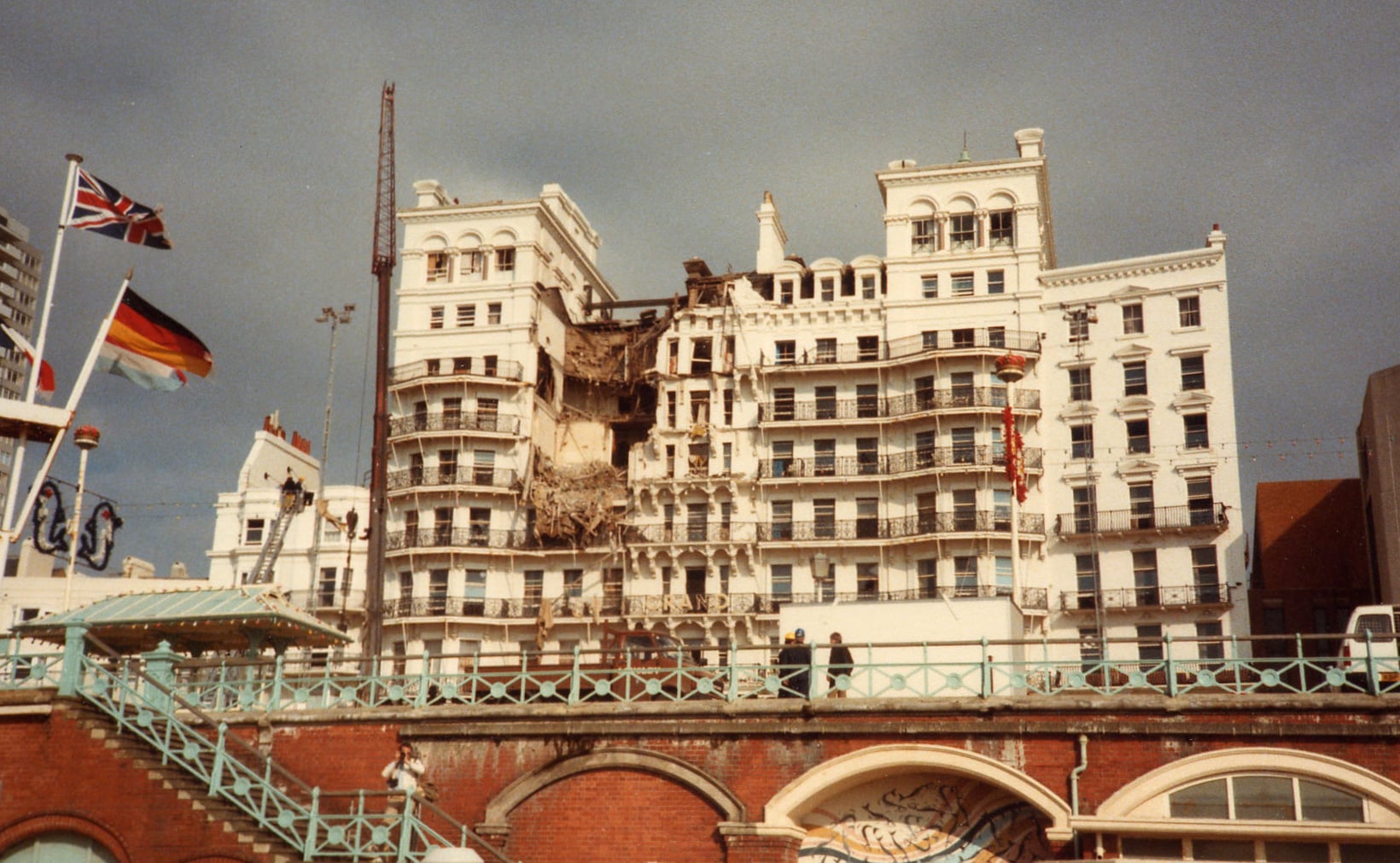
The IRA bombed the Grand Hotel in Brighton during the Conservative Party Conference in October 1984
Thatcher escaped unharmed
Five people were killed
Thatcher insisted that the conference continue the following morning
Her response strengthened her image of refusing to give in to terrorism
The bombing hardened Thatcher's public position
However, contacts with the Irish government continued behind the scenes
The Anglo-Irish Agreement, 1985
Talks between London and Dublin led to the Anglo-Irish Agreement
It was signed at Hillsborough Castle in November 1985
The Agreement increased cooperation between the United Kingdom and the Republic of Ireland
It created regular intergovernmental consultation
The Irish government gained a consultative role in Northern Ireland
It did not receive executive power
It also aimed to improve security cooperation
The Agreement tried to strengthen moderate nationalism
The Social Democratic and Labour Party (SDLP) and the Alliance Party supported it
Opposition remained strong
Republicans rejected it, as it confirmed that Northern Ireland remained part of the United Kingdom
Unionists and loyalists opposed the Irish government having any role in Northern Irish affairs
Up to 200,000 people attended an anti-Agreement rally in Belfast addressed by Ian Paisley
The loyalist paramilitary group Ulster Resistance was formed in 1986
“The Unionist community, firmly loyal to the Crown and to the United Kingdom, represent a proud tradition of devotion to the Union which everyone in these islands should respect, and which this agreement does respect. They have a right to feel secure about Northern Ireland’s position as part of the United Kingdom. ... The agreement does not affect the status of Northern Ireland within the United Kingdom. It does not set us on some imagined slippery slope to Irish unity, and it is nonsense to claim that it might”
Margaret Thatcher, Prime Minister. Speech moving the motion approving the Anglo-Irish Agreement, House of Commons, 26th November 1985
Approach: Thatcher made this speech in the House of Commons on 26th November 1985, while asking MPs to approve the Anglo-Irish Agreement. She stressed that the Agreement did not change Northern Ireland’s position within the United Kingdom
The source is useful for showing how Thatcher tried to reassure unionists about the Agreement. However, she was defending a controversial policy in Parliament, so it should be compared with the strong unionist reaction to see whether those reassurances were accepted
“Our fellow countrymen from Northern Ireland will perceive, and will not be wrong in perceiving, that the agreement would never have been signed unless there had been a prolonged campaign of violence. The agreement will be perceived as having been won as a result of violence. ... I disagree profoundly with the new policy on which the Government have embarked. I fear that this change of policy will prolong and not diminish Ulster’s agony”
Ian Gow, who had resigned as Minister of State at the Treasury on 15th November 1985 and was a former parliamentary private secretary to Thatcher. Resignation speech, House of Commons, 26th November 1985
Approach: Ian Gow was a Conservative minister and former Parliamentary Private Secretary to Thatcher. He gave this resignation speech in the House of Commons on 26th November 1985 because he opposed the Anglo-Irish Agreement
The source is useful because Gow had previously been one of Thatcher’s closest supporters. His resignation shows that opposition to the Agreement came from inside the Conservative Party as well as from Northern Irish unionists. However, it reflects the views of a committed unionist critic rather than the wider Conservative Party
Where did things stand by 1987?
Violence continued after the Agreement
The Special Air Service (SAS) killed eight IRA members at Loughgall in May 1987
An IRA bomb at a Remembrance Day service in Enniskillen in November 1987 killed 11 people
The Agreement survived
However, it had not ended republican violence
Unionist opposition also remained strong
It did create a lasting framework for cooperation between Britain and the Republic of Ireland
This became important in later attempts to reach a political settlement
Examiner Tips and Tricks
Treat the hunger strikes and the Anglo-Irish Agreement differently. Thatcher refused to compromise over prisoner status in 1981, but by 1985 she was willing to increase cooperation with the Irish government. That contrast is useful when assessing how consistent her approach really was
How dominant was Thatcher's government by 1987?
This question weighs the scale of Thatcher's victories against the signs that her position was less secure than the majorities suggest
Some key evidence for each side is outlined below
Thatcher's government was dominant
The Conservatives won three general elections in a row
They had majorities of 43 in 1979, 144 in 1983 and 102 in 1987
Thatcher became the first prime minister since 1820 to win three successive general elections
By 1983, the Cabinet was much more Thatcherite
Most of the Wets had been removed, demoted or pushed to the margins
Senior posts were increasingly held by ministers who supported her economic strategy
Thatcher survived serious internal disputes
Michael Heseltine resigned over Westland in 1986
The government remained in office and Thatcher retained control
Thatcherism became strongly identified with the government
Her name became attached to a wider political outlook
Few prime ministers had such a clear personal association with their government's direction
The Conservatives received strong backing from much of the national press across the entire period
Economic conditions had improved by 1987
Inflation was at its lowest level since the 1960s
Unemployment had begun to fall
Thatcher had also shown that she would not reverse course under pressure
Her refusal to change the 1981 Budget became associated with the recovery that followed
Thatcher's government's dominance was limited
Conservative support did not rise across the period
The party won 43.9% of the vote in 1979
This fell to 42.4% in 1983 and 42.2% in 1987
No Conservative government in this period won the support of a majority of those who voted
The electoral system increased the size of Conservative majorities
In 1983, the Alliance finished only 2.2 percentage points behind Labour
It still won 186 fewer seats
The division of the opposition vote therefore helped turn the Conservatives' largest share of the vote (less than half) into large Commons majorities
Conservative support was uneven across Britain
Labour remained much stronger in Scotland, Wales and the northern cities
Thatcher's support was concentrated more heavily in southern England and the Midlands
Thatcher's position had been much weaker earlier in the decade
In 1981, her government was deeply unpopular
The Falklands War played an important part in the political recovery that followed
Cabinet opposition did not disappear
Westland demonstrated that a senior minister was willing to resign publicly over Thatcher's leadership
Northern Ireland also showed the limits of government control
The Anglo-Irish Agreement was opposed by both unionists and republicans
Violence continued despite the Agreement
"I didn't like her politics. I always regarded Margaret Thatcher as a one-man demolition squad. She was a destroyer. However, it was clear that if we on the left had had the same degree of intellectual rigour about our ideas as she had about hers, however much I didn't like most of them, we wouldn't have suffered so badly. I fought against elements of her agenda, including some of her economic liberalisation agenda, but there's no question that she was one of the great prime ministers of our century. She was forceful because of her character, not her intellect"
Paddy Ashdown, the Liberal Democrat leader from 1988, recollecting Thatcher's career in The Guardian (2013)
Approach: Paddy Ashdown was a Liberal Democrat politician who became party leader in 1988. He wrote these recollections after Thatcher’s period in office and describes her as politically powerful because of her determination and strength of character
The source is useful because the praise comes from a political opponent rather than a Conservative supporter. However, Ashdown was writing with hindsight, after Thatcher’s dominance had already become part of her political reputation. It is therefore stronger for showing how her leadership was remembered than for measuring how secure her position actually was at the time
Examiner Tips and Tricks
A useful distinction is between dominance inside the Conservative Party and dominance across Britain. By 1987, Thatcher had far greater control over her Cabinet and party, but national support remained uneven

Unlock more, it's free!
Join the 100,000+ Students that ❤️ Save My Exams
the (exam) results speak for themselves:

Was this revision note helpful?
