Wilson's Leadership & Economic Policy, 1964-1970 (AQA A Level History: Component 2: Depth study): Revision Note
Exam code: 7042

Summary
Labour under Harold Wilson won the 1964 election after 13 years of Conservative rule
It then increased its majority to 96 seats in 1966
Wilson presented himself as a moderniser
He promised to rebuild Britain through the "white heat" of science and technology
Labour inherited a large balance of payments deficit
It tried to modernise the economy through planning rather than returning to the old "stop-go" cycle
The Department of Economic Affairs and the National Plan aimed to increase economic growth
However, both had collapsed by 1967
Repeated sterling crises forced Wilson to devalue the pound in November 1967
Roy Jenkins then used deflationary policies to restore a balance of payments surplus
The main question is whether Wilson's economic record was a qualified success, or whether it was defined by missed targets, policy failure and forced retreat
Harold Wilson: ideology and leadership
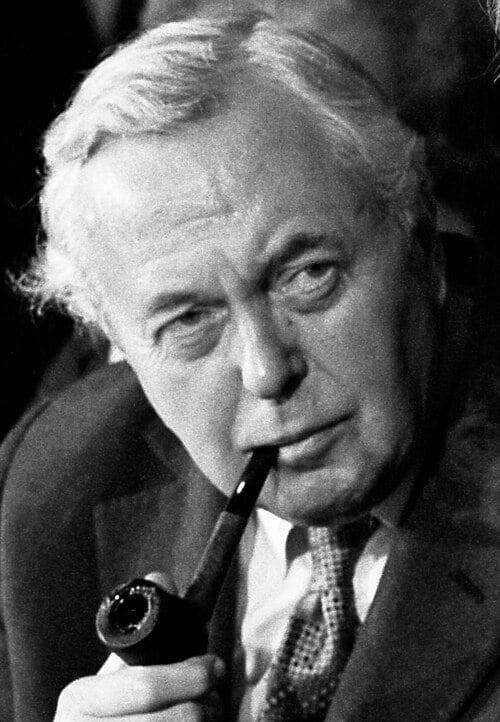
Ideology and image
Wilson presented himself as a classless moderniser, in contrast to his Conservative predecessors
As the first prime minister educated at a state secondary school, he appeared less tied to the traditional elite
His pipe, Yorkshire accent and relaxed television manner helped create a down-to-earth image
His position within Labour was difficult to define
Earlier in his career, Wilson had been associated with the Bevanite left
He resigned from Clement Attlee's government in 1951 over NHS charges for false teeth and spectacles
He later served under Gaitskell and challenged him for the leadership from the left in 1960
However, his support for the nuclear deterrent and for the trade union leadership also linked him to the party's right
The "white heat of technology" became the central theme of his political message
Science, technology and economic planning would modernise a country held back by low productivity
Labour was presented as the party of the future
Thirteen years of Conservative rule were dismissed as "wasted years"
"I want to speak to you today about a new Britain ... In two decades, the scientists have made more progress than in the past two thousand years ... They have made it possible to end the dark ages of poverty. Yet Britain lags behind, lacking the will or the plan which can bring this future within the reach of all."
Adapted from Harold Wilson, Leader of the Opposition, Campaign speech, Birmingham Town Hall, January 1964
Approach: Wilson gave this campaign speech at Birmingham Town Hall in January 1964, while he was Leader of the Opposition. He presented Labour as the party that could use science and technology to modernise Britain and reduce poverty
The source is useful for showing Labour’s message before the 1964 general election. However, it was designed to win support, so it presents Britain’s problems in a way that strengthens Labour’s case. It should also be compared with what Wilson’s governments later achieved
Wilson's leadership in office
Labour won the 1964 election with a majority of four seats
An early election in 1966 increased the majority to 96 seats
Government depended on both the formal Cabinet and a close circle of personal advisers
Much of Wilson's time was spent managing divisions within the Labour Party
Strengths |
|
|---|---|
Weaknesses |
|
Examiner Tips and Tricks
Wilson’s “white heat” speech is strong evidence for the image Labour wanted to create. It reveals the party’s priorities and self-presentation, but it does not prove that Britain was successfully modernised.
When assessing Wilson’s leadership, link each personal quality to its effect on government. His tactical skill helped manage Labour’s divisions, while his concern about rivals could distract attention from policy.
Labour's economic policies and problems
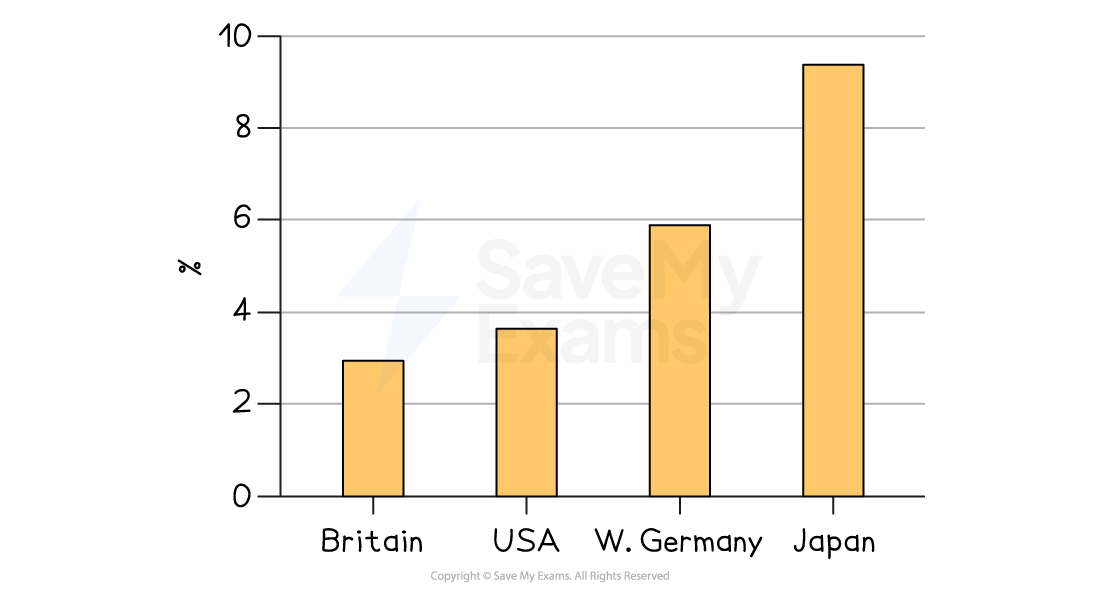
Labour came to power promising to end the "stop-go" cycle
It aimed to raise economic growth through planning instead
The problems Labour inherited
Britain had fallen behind competitors such as West Germany
Post-war affluence had not been matched by:
high productivity
strong economic growth
The "stop-go" cycle had created repeated economic crises
Short periods of growth led to:
inflation
rising imports
balance of payments deficits
pressure on the pound
Labour was warned on taking office that the deficit could reach about £800 million
The usual responses were deflation and devaluation
Wilson wanted to avoid both
He feared that devaluation would damage confidence in Labour's economic management
Planning instead of "stop-go"
Wilson believed economic planning could modernise Britain
The government wanted steady growth rather than short bursts followed by cuts
The Department of Economic Affairs (DEA) was created in 1964
It was led by George Brown
Its role was to:
set economic growth targets
coordinate government economic policy
create regional economic planning councils
Planning relied on cooperation between government, employers and trade unions
The aim was to increase investment, productivity and industrial efficiency
This approach became known as "corporatism"
The National Plan, 1965
The National Plan of 1965 set ambitious targets for the economy
It aimed to increase output by 25% by 1970
It aimed to:
increase exports
improve productivity
modernise British industry
The plan assumed that government, businesses and trade unions would work together
Employers were expected to invest and modernise
Trade unions were expected to limit wage demands
The targets soon became unrealistic
Economic growth remained weak
Sterling crises forced the government to focus on short-term financial problems instead
Controlling wages and prices
The government tried to control rising wages and prices
The National Board for Prices and Incomes was created in 1965
It aimed to restrain pay and price increases
The government also tried to move workers into manufacturing
The Selective Employment Tax of 1966 taxed employers in service industries
The aim was to encourage employment in manufacturing and exports
These policies had limited success
Employers and trade unions did not always cooperate
Productivity remained low
Britain continued to struggle against fast-growing competitors
Why the planning approach failed
The DEA came into conflict with the Treasury
George Brown wanted to prioritise growth and modernisation
The Treasury focused on:
defending the pound
controlling inflation
reducing the balance of payments deficit
The Treasury's priorities became more important during sterling crises
The government returned to spending cuts and higher interest rates
Those were similar to the "stop" policies Labour had promised to replace
In July 1966, a sterling crisis led to a six-month freeze on wages and prices
Spending cuts, higher taxes and tighter hire purchase controls followed
The freeze effectively ended the National Plan's growth targets
George Brown was moved to the Foreign Office in 1966
The DEA then lost its influence
The National Plan had been abandoned by 1967
Planning failed to solve Britain's external economic problems
The balance of payments deficit persisted
£382 million in 1964
£301 million in 1967
However, Labour did maintain comparatively low unemployment
Unemployment stayed low by later standards, although it rose above 500,000 (about 2.5%) after 1967
Examiner Tips and Tricks
Separate the problems Labour inherited from the choices it made. Low productivity, weak growth and the balance of payments deficit existed before 1964. However, Wilson chose to defend the pound and repeatedly prioritised short-term stability over the National Plan.
The devaluation of the pound, 1967
In 1967, repeated pressure on sterling made the pound increasingly difficult to defend
Labour was eventually forced to accept the devaluation it had tried to avoid
The road to devaluation
Labour had resisted devaluation since taking office in 1964
Wilson feared it would damage confidence in:
the pound
Labour's economic management
The government instead relied on loans from the International Monetary Fund (IMF) and foreign central banks, spending cuts and higher interest rates
A series of shocks in 1967 made the pound impossible to defend
War in the Middle East disrupted oil supplies
A national dock strike reduced exports
Confidence in sterling continued to fall
The government devalued the pound in November 1967
The exchange rate changed from $2.80 to $2.40
More precisely, the pound lost 14.3% of its value against the dollar
Devaluation was followed by deflationary measures
Defence spending was cut
Interest rates were raised
Hire purchase restrictions were tightened
These measures echoed the "stop-go" policies Labour had promised to replace
What was devaluation meant to achieve?
British exports became cheaper for overseas buyers
This was intended to increase demand for British goods
Higher exports could improve the balance of payments
Imports became more expensive
Consumers and businesses were encouraged to buy British goods instead
However, dearer imports also increased the risk of rising prices
Devaluation could not solve Britain's problems on its own
British firms still needed to:
increase productivity
meet overseas demand
compete successfully in world markets
"Tonight we must face the new situation. First, what this means. From now on the pound abroad is worth 14% or so less in terms of other currencies. This does not mean, of course, that the pound here in Britain, in your pocket or purse or in your bank, has been devalued. What it does mean is that we shall now be able to sell more goods abroad on a competitive basis. This is a tremendous opportunity for all our exporters, and for many who have not yet started to sell their goods overseas. But it will also mean that the goods we buy from abroad will be dearer and so for many of these goods it will be cheaper to buy British."
Harold Wilson, Prime Minister, BBC broadcast to the nation, 19th November 1967 immediately after the devaluation.
Approach: Its purpose was to reassure the public and defend a decision his government had previously tried to avoid. The phrase “the pound here in Britain…has [not] been devalued” separates the pound’s international value from the money people held at home, but it downplays the likely effect of more expensive imports on prices and living costs. Wilson also stresses the benefits for exporters and British goods, presenting devaluation as an opportunity rather than a sign of economic failure. The source is therefore valuable for showing the government’s public justification, but it should be compared with evidence about inflation, imports and the balance of payments.
The political cost
Devaluation damaged Labour's reputation for economic competence
Wilson's statement was widely mocked
Prices rose despite his attempt to reassure the public
Chancellor James Callaghan resigned soon afterwards
Roy Jenkins replaced him as Chancellor
Britain's second attempt to join the European Economic Community (EEC) was rejected only days later
This added to the impression of economic and political failure
Devaluation was particularly damaging as Wilson had resisted it for three years
The eventual decision appeared to be a forced retreat
It weakened the government's claim that planning had replaced "stop-go"
Roy Jenkins and economic recovery
Roy Jenkins, the new Chancellor, gave priority to restoring the balance of payments
Taxes were increased
Government spending was reduced
Demand within Britain was restricted
These policies helped create a major economic turnaround
By 1969, Britain was moving into a substantial balance of payments surplus
However, the recovery came at a cost
Economic growth was restrained
Taxation increased
Labour had returned to the deflationary methods it had once criticised
Jenkins' achievement provides an important qualification
Devaluation was a political humiliation
However, it helped create the conditions for an improvement in exports and the balance of payments
Examiner Tips and Tricks
Treat devaluation as both an economic and a political event. Wilson’s broadcast is valuable because it shows how the government tried to reassure the public and present devaluation positively. Its purpose and audience explain why it plays down the risks.
For a balanced judgement, compare Labour’s damaged reputation with the later balance of payments recovery under Jenkins. Devaluation was a sign of failed short-term management, but it also contributed to an eventual improvement in Britain’s external finances.
Other domestic policies
Beyond economic management, Labour tried to fulfil Wilson's promise to modernise Britain through science, technology, changes to government and social reform
The "white heat" in practice
A new Ministry of Technology was created in 1964
It aimed to connect:
science
industry
government
The wider goal was to increase productivity and modernise British industry
The ministry supported work in new technologies
These included:
computers
electronics
machine tools
The government encouraged industrial modernisation
It wanted firms to become larger and more efficient
Modern technology was presented as the answer to Britain's low productivity
Major technology projects

Large and ambitious projects continued
The Concorde partnership with France became a symbol of "white heat"
Such projects demonstrated advanced British science and engineering
They also supported Wilson's claim that Labour represented the future
However, they were expensive
Their economic benefits were slow to appear
Financial crises placed pressure on long-term investment
The contrast between ambition and results was important
Projects such as Concorde raised Britain's international profile
They did not provide a quick solution to wider industrial decline
Reforming government
Labour also changed the machinery of government
The office of Parliamentary Commissioner (Ombudsman) was created in 1967
The Ombudsman investigated complaints against government departments
This gave members of the public a new way to challenge poor administration
New ministries reflected Wilson's belief in expert government
However, new departments sometimes created rivalry and confusion rather than a more effective government
Housing and welfare
Labour promised to raise house building to 500,000 homes a year by 1970
Completions peaked in 1968, but the target was abandoned after devaluation
The Rent Act (1965) introduced "fair rents" set by independent rent officers
It also restored security of tenure to many private tenants
Prescription charges were abolished in 1965
They were reintroduced in 1968 as part of the spending cuts that followed devaluation
Regional policy tried to bring jobs to areas of high unemployment
The Regional Employment Premium (1967) subsidised manufacturing jobs in the development areas
The limits of modernisation
Economic pressure restricted what Labour could achieve
Sterling crises repeatedly led to spending cuts
Less money was available for long-term projects
Britain's underlying problems remained
Productivity increased too slowly
Economic growth remained below the government's ambitions
Wilson's greatest success may have been changing the language of government
Science and technology became central political priorities
However, the promised transformation of the economy was not fully delivered
Examiner Tips and Tricks
Keep this section in proportion. The technology programme matters mainly as a test of Wilson’s promise to modernise Britain. Link the Ministry of Technology and Concorde back to the “white heat” message rather than assessing each project in isolation.
A useful judgement is that Labour gave science and technology a more important place in government, but economic pressure limited the results. The modern image was often stronger than the practical transformation.
How successful was Wilson's economic record, 1964-1970?
This question weighs the government's achievements against its failures and forced retreats
Some key evidence for each side is outlined below
The case that Wilson's economic record was successful
Roy Jenkins restored a balance of payments surplus by 1969
This marked a major improvement after years of deficits and sterling crises
The economy began to grow again
Unemployment remained relatively low
Labour continued its modernising programme
The Ministry of Technology promoted science and industry
Projects such as Concorde supported Wilson's aim of creating a more modern economy
By 1970, Labour believed the economy had recovered enough to support an election victory
The case that the record fell short
Labour's main planning policies failed
The National Plan and the DEA had both collapsed within three years
The government was forced to devalue the pound in 1967
This was seen as a major political setback after Wilson had fought hard to avoid it
Repeated sterling crises pushed Labour back towards deflation
Spending cuts and higher interest rates repeated the "stop-go" methods Labour had criticised
Inflation remained a serious problem
Prices rose by about 6% in 1970, while wage increases reached around 12%
Labour's modernisation programme produced mixed results
Some major projects advanced; however, productivity and growth remained below the government's ambitions
Examiner Tips and Tricks
For an essay, weigh both sides before reaching a clear judgement. Do not simply describe the two lists.
The strongest comparison is between:
the forced devaluation of 1967
the balance of payments surplus achieved by 1969
This helps show whether short-term recovery outweighed the failure of Labour’s wider planning programme.

Unlock more, it's free!
Join the 100,000+ Students that ❤️ Save My Exams
the (exam) results speak for themselves:

Was this revision note helpful?