Foreign Affairs, 1987-1997 (AQA A Level History: Component 2: Depth study): Revision Note
Exam code: 7042

Summary
The Single European Act (1986) committed the European Community to completing a single market by 1993
Thatcher later used her Bruges Speech of September 1988 to reject a more federal Europe
The Maastricht Treaty, signed in February 1992, created the European Union
Britain secured opt-outs from the single currency and the Social Chapter
Britain favoured a wider rather than deeper Union
It backed enlargement from 12 to 15 members in 1995
At the same time, Conservative resistance to further political integration increased
Britain remained involved in international intervention
British troops served in Bosnia as UN peacekeepers from 1992
Britain later joined NATO airstrikes in 1995, before the Dayton Agreement ended the war
Britain continued to work closely with the United States as the Cold War ended
It also sent around 45,000 troops to the coalition that liberated Kuwait in 1991
The key question asks whether Britain's world role shifted decisively between 1987 and 1997, or whether its main international commitments broadly remained the same
The Single European Act and the Maastricht Treaty
The impact of the Single European Act
The Single European Act (SEA) came into force on 1 July 1987
It committed the European Community to completing a single market by 1 January 1993
Goods, services, capital and people would be able to move between member states without internal barriers
British governments strongly supported the economic aims of the single market
Greater access to European markets suited Britain's increasingly open and service-based economy
Thatcher, therefore, supported European cooperation where she believed it strengthened free trade
However, the SEA also increased pressure for deeper European integration
It extended qualified majority voting to most single-market laws, so Britain could now be outvoted in areas where it had previously held a veto
The Delors Report of 1989 argued that the single market would work more effectively alongside a single currency
This helped move the debate beyond economic cooperation towards economic and monetary union
Britain joined the Exchange Rate Mechanism (ERM) in October 1990 but was forced out on Black Wednesday, the 16th September 1992, which strengthened Conservative Euroscepticism
Thatcher's alternative vision, Bruges, 1988
Thatcher opposed the idea that economic cooperation should lead to a more centralised Europe
In her Bruges Speech on 20 September 1988, she argued that Europe should remain a partnership of sovereign states
She rejected the idea of decisions becoming increasingly centralised in Brussels
Her position differed from that of Jacques Delors, President of the European Commission
Delors supported closer political and economic integration
Thatcher accepted cooperation between European states but opposed the development of a federal Europe
The speech, therefore, exposed an important distinction in Thatcher's European policy
She supported the single market
But she resisted the political integration that she believed might follow from it
"I want to see us work more closely on the things we can do better together than alone. Europe is stronger when we do so, whether it be in trade, in defence, or in our relations with the rest of the world. But working more closely together does not require power to be centralised in Brussels or decisions to be taken by an appointed bureaucracy"
Margaret Thatcher, speech to the College of Europe, Bruges, 20 September 1988
Approach: Thatcher delivered the Bruges speech in September 1988 to a European audience, setting out her preferred direction for the Community.
The source is useful because it shows that Thatcher was not rejecting European cooperation altogether. She supports countries working together, but objects to greater centralisation and bureaucracy.
As a public political speech, it was intended to persuade. It is therefore strongest as evidence of the position Thatcher wanted to defend publicly, rather than proof of how the Community itself was developing.
The Maastricht Treaty, 1992
John Major negotiated the Treaty on European Union at Maastricht in December 1991, with Britain signing it on the 7 February 1992
The treaty created the European Union, with the European Community as one of its three 'pillars'
It extended cooperation beyond the single market into areas including foreign policy, security and justice
It also set out a route towards economic and monetary union, including a future single currency
Major secured important protections for Britain
Britain gained an opt-out from the single currency
It was not required to enter the final stage of monetary union
Britain also opted out of the Social Chapter
Major argued that its employment protections could increase costs for British businesses
Britain also influenced the wording and structure of the treaty
The principle of subsidiarity was included
The word "federal" was removed from the final treaty text
Foreign policy and home affairs remained largely under cooperation between national governments rather than direct control by the European Commission
Maastricht therefore represented both greater integration and British resistance to parts of that integration
Major accepted a stronger European Union
At the same time, the opt-outs limited Britain's commitment to some of its most important developments
At home, ratification split the Conservative Party, and Major only secured it in July 1993 by turning a Commons vote into a vote of confidence
“RESOLVED to mark a new stage in the process of European integration undertaken with the establishment of the European Communities, ... RESOLVED to achieve the strengthening and the convergence of their economies and to establish an economic and monetary union including, in accordance with the provisions of this Treaty, a single and stable currency, ... RESOLVED to implement a common foreign and security policy including the eventual framing of a common defence policy, which might in time lead to a common defence, thereby reinforcing the European identity and its independence in order to promote peace, security and progress in Europe and in the world, ... IN VIEW of further steps to be taken in order to advance European integration HAVE DECIDED to establish a European Union.”
Adapted from the text of the Maastricht Treaty, 1992
Approach: The extract comes from the preamble to the Maastricht Treaty, agreed by all 12 member states in 1992
It is useful because it records the aims governments publicly agreed to, including closer economic, monetary and political cooperation
However, a treaty preamble shows stated intentions rather than outcomes. It cannot show how successfully these aims were implemented or how strongly individual governments supported every part of the agreement
Examiner Tips and Tricks
Keep the two treaties distinct. The Single European Act focused mainly on completing the single market, while Maastricht extended integration into monetary and political cooperation
Date the Bruges Speech correctly to September 1988, after the SEA. Examiners report students placing it in 1987 or earlier, and labelling Thatcher as simply pro- or anti-European. Show that she backed the single market but opposed a federal Europe
Britain's role in the European Union
Supporting a larger European Union
Both Thatcher and Major favoured a wider European Union rather than a more politically integrated one
Britain strongly supported enlargement from 12 to 15 members in January 1995, when Austria, Finland and Sweden joined
Britain also supported eventual membership for the former communist states of Eastern Europe
A larger and more diverse Union was less likely to develop into a tightly integrated federal system
Enlargement therefore suited both Britain's trading interests and its preference for cooperation between sovereign states
Britain also supported the principle of subsidiarity
Decisions should be taken at the lowest effective level rather than automatically being made in Brussels
This fitted Major's aim of limiting further centralisation
Resisting further integration
Britain opposed changes that appeared to strengthen European institutions at the expense of national governments
In 1994, Major blocked the appointment of Belgian Prime Minister Jean-Luc Dehaene as President of the European Commission, as he was regarded as too federalist
At the 1996 Intergovernmental Conference, Britain resisted extending qualified majority voting into further areas
This did not mean Britain wanted to leave the EU
Britain remained a full member throughout the period
British governments continued to support the single market and free trade within Europe
The limits of the Maastricht opt-outs
The Maastricht opt-outs allowed Britain to remain involved while avoiding particular commitments
Britain was not required to join the planned single currency
It also stayed outside the Social Chapter
However, the opt-outs did not satisfy everyone
Other member states increasingly viewed Britain as a member that wanted to avoid some shared commitments
British Eurosceptics were also dissatisfied because many objected to the wider direction of European integration, not just individual treaty measures
The beef ban and non-cooperation, 1996
Britain's relationship with the EU became particularly strained during the bovine spongiform encephalopathy (BSE) crisis
The disease was often referred to in the media as "mad cow disease"
In March 1996, the British government announced a probable link between BSE in cattle and a new form of Creutzfeldt-Jakob disease in humans
The European Commission imposed a worldwide ban on exports of British beef on 27 March 1996
Major responded with a policy of non-cooperation
From 21 May 1996, Britain blocked EU decisions that required unanimity until progress was made on lifting the beef ban
This did not mean Britain withdrew from the Union
It was a tactic intended to put pressure on other member states
The dispute was partly eased at the Florence European Council in June 1996
EU governments agreed on a framework for lifting the ban in stages
However, the wider beef ban was still in place when the Conservatives left office in 1997
“I have to tell the House that, without progress towards lifting the ban, we cannot be expected to continue to co-operate normally on other Community business. I say this with great reluctance, but the European Union operates through good will. If we do not benefit from good will from partners, clearly we cannot reciprocate. ... That is not how I wish to do business in Europe, but I see no alternative. We cannot continue business as usual within Europe when we are faced with the clear disregard by some of our partners of reason, of common sense and of Britain’s national interests.”
John Major, statement to the House of Commons on the EU beef ban, 21 May 1996
Approach: Major made this statement in the House of Commons on 21 May 1996, when announcing the policy of non-cooperation.
The source is useful because it shows how the government justified its approach, presenting the beef ban as unfair to British interests and arguing that normal EU cooperation could not continue without progress.
However, Major was defending a controversial policy to Parliament and his own Conservative backbenchers, so his language should be compared with what the policy actually achieved.
“Does the Prime Minister find any irony in the fact that the Government’s hopes now rest in the operation of the majority voting system, something that they are determined to get rid of, or diminish, in the forthcoming IGC? ... Having listened to the Prime Minister’s statement today, most people will conclude that the Euro-sceptic minority on his Back Benches has taken control of the Government’s foreign policy, and that this has much more to do with appeasing them than restoring confidence in the beef market”
Paddy Ashdown, leader of the Liberal Democrats, responding in the House of Commons on the same day, 21 May 1996
Approach: Ashdown was leader of the Liberal Democrats, replying to Major in the Commons on the same day.
The source is useful because he offers an immediate alternative interpretation, arguing that non-cooperation was driven partly by pressure from Conservative Eurosceptics rather than simply by the beef dispute.
As an opposition leader, Ashdown had an obvious reason to criticise Major, but the source is valuable when paired with Major’s because it shows the political argument surrounding the policy at the time.
Britain's position in Europe by 1997
Britain remained committed to EU membership, the single market and a larger Union
At the same time, successive governments resisted further transfers of power to European institutions
Thatcher challenged the idea of a federal Europe
Major secured opt-outs, defended subsidiarity and opposed some further centralisation
In 1991, Major said he wanted Britain to be "at the very heart of Europe", but his later 'wait and see' policy on the single currency satisfied neither pro-Europeans nor Eurosceptics
Britain's European policy was therefore not simply pro-European or anti-European
The main disagreement concerned how much power the EU should have and where decisions should be made
Examiner Tips and Tricks
For the paired 1996 sources, focus on the disagreement. Major presents non-cooperation as a defence of British interests; Ashdown presents it as a response to Conservative Eurosceptic pressure. Use the wider context of the beef ban and Conservative divisions to test which explanation is better supported.
Interventions in the Balkans
The break-up of Yugoslavia
The collapse of communism destabilised Yugoslavia, where political and ethnic divisions became increasingly difficult to contain
Serbian leader Slobodan Milošević moved away from communism towards an increasingly aggressive Serbian nationalism
Slovenia and Croatia declared independence in 1991, leading to fighting involving Serbia and Croatia
Bosnia and Herzegovina declared independence in 1992, with war beginning there in April
The conflict in Bosnia involved competing ethnic and territorial claims
Bosnian Serb forces, backed by Serbia, carried out ethnic cleansing against the Bosnian Muslim population
Around two million people had been driven from their homes by late 1992
Television images of detention camps and shelled towns increased pressure on European governments to respond
Why Britain initially avoided military intervention
Britain initially favoured peacekeeping and diplomacy rather than large-scale military intervention
The conflict was viewed as a complicated civil war involving several armed groups rather than a straightforward invasion by one state
Ministers were concerned that outside military forces could become trapped in a conflict without a clear solution
Britain therefore worked through international organisations
British troops joined the UN Protection Force (UNPROFOR) from late 1992
The initial British contingent was around 2,400 personnel, based at Vitez in central Bosnia
Their role was mainly humanitarian, including escorting aid convoys and negotiating safe passage
They were not deployed primarily to defeat one side militarily
Britain also supported diplomatic attempts to end the conflict
Major hosted a joint European Community and UN conference in London in August 1992
The Vance-Owen Plan, developed by Cyrus Vance and former British Foreign Secretary Lord Owen, proposed dividing Bosnia into ten provinces
It was never implemented because the Bosnian Serbs rejected it, and the United States would not support it
“There is no single aggressor and no single front line. In Bosnia we are dealing with Serb against Croat, Muslim against Serb, and Croat against Muslim, not just within one country but within districts, towns and villages, within streets and even mixed blocks of flats. A massive armed intervention might suppress the violence for a time, but it would achieve no permanent result. It could not force people to live together in peace; its withdrawal would be the signal for a resumption of the conflict”
Archie Hamilton, Minister of State for the Armed Forces, House of Commons, 16 November 1992
Approach: Hamilton was a Conservative defence minister, speaking in the House of Commons in November 1992 while the government’s limited military role in Bosnia was being criticised.
The source is useful because it explains the government’s argument for restraint. Hamilton presents the conflict as too complex for a simple military solution and warns that intervention might suppress violence without creating a lasting peace.
However, he was defending government policy, so he had a clear reason to justify continued peacekeeping rather than stronger military action.
“We must accept that blame because we have stood by, as a nation, and watched nothing less than the extinction of another nation and its cultural identity, the nation of Bosnia. ... A lot of the blame must rest with the Foreign Office, which has continued to portray this conflict as a civil war and promoted the myth that all sides are equally to blame. ... There have been atrocities committed on all sides, but the systematic atrocities carried out by the Serbians must be recognised.”
Kate Hoey, Labour MP for Vauxhall, House of Commons, 16 November 1992
Approach: Hoey was a Labour backbencher, speaking in the same Commons debate in November 1992.
The source is useful because she challenges the government’s claim that responsibility was evenly shared. She argues that Serbian forces were carrying out systematic atrocities and that Britain had failed to respond strongly enough.
As a backbencher criticising government policy, Hoey had more freedom to attack the official line, but her argument should still be tested against the wider complexity of the conflict.
The limits of UN peacekeeping
Britain's peacekeeping role reduced some immediate suffering but could not bring the war to an end
UN forces could protect aid deliveries and some designated areas
However, their restricted mandate limited their ability to stop attacks by armed forces
International diplomatic pressure also produced limited results
The UN imposed sanctions on Serbia and Montenegro in May 1992
A no-fly zone was declared over Bosnia in October 1992, although it was not initially enforced
Fighting continued until late 1995, while Sarajevo remained under siege
This increasingly exposed the limits of European diplomacy and UN peacekeeping
Why Britain's approach changed in 1995
The Srebrenica Massacre in July 1995 became a major turning point
Bosnian Serb forces overran a UN-declared safe area
More than 8,000 Bosniak men and boys were killed
The town had been protected by a small Dutch UN peacekeeping force that was unable to stop the attack
Srebrenica demonstrated the limits of a purely humanitarian peacekeeping role
UN forces could not guarantee the safety of areas they had formally declared protected
Pressure increased in Britain and the United States for a stronger military response
NATO therefore moved from peacekeeping towards military force
In August and September 1995, NATO launched sustained airstrikes against Bosnian Serb positions
Britain took part as a leading NATO member
The air campaign, combined with Croat and Bosnian ground advances, helped force the Bosnian Serbs into negotiations
The Dayton Agreement, 1995
The Dayton Agreement was reached in November 1995 and formally signed in Paris on the 14th December 1995, with John Major among the Western leaders who witnessed it
Bosnia remained a single state but was divided into two political entities: a Bosniak–Croat federation and a Bosnian Serb republic (Republika Srpska)
A NATO-led force was deployed to enforce the settlement
Britain contributed troops to this force
The settlement showed the greater effectiveness of combining diplomacy with credible military pressure
Earlier European and UN negotiations had failed to stop the conflict
NATO intervention in 1995 helped create the conditions in which a negotiated settlement could be reached
Examiner Tips and Tricks
The strongest way to use Bosnia is to explain why British policy changed. Britain did not simply switch from “doing nothing” to intervention. It moved from humanitarian peacekeeping and diplomacy towards military force when those earlier methods proved unable to stop the violence.
Britain and the end of the Cold War
Thatcher, Reagan and Gorbachev
Thatcher had taken a hard line against the Soviet Union in the early 1980s and worked closely with US President Ronald Reagan
However, she quickly recognised that Mikhail Gorbachev was different from earlier Soviet leaders
She encouraged Reagan to negotiate with him
Britain's role was mainly that of an intermediary, or go-between, linking Washington and Moscow
Thatcher helped convince the United States that Gorbachev was someone it could deal with
The major arms-control negotiations themselves were conducted primarily between Washington and Moscow
Relations between the superpowers improved rapidly after 1987
The Intermediate-Range Nuclear Forces Treaty was signed in December 1987
It removed an entire class of nuclear missiles from Europe
Soviet forces completed their withdrawal from Afghanistan in February 1989
The collapse of communism, 1989–1991
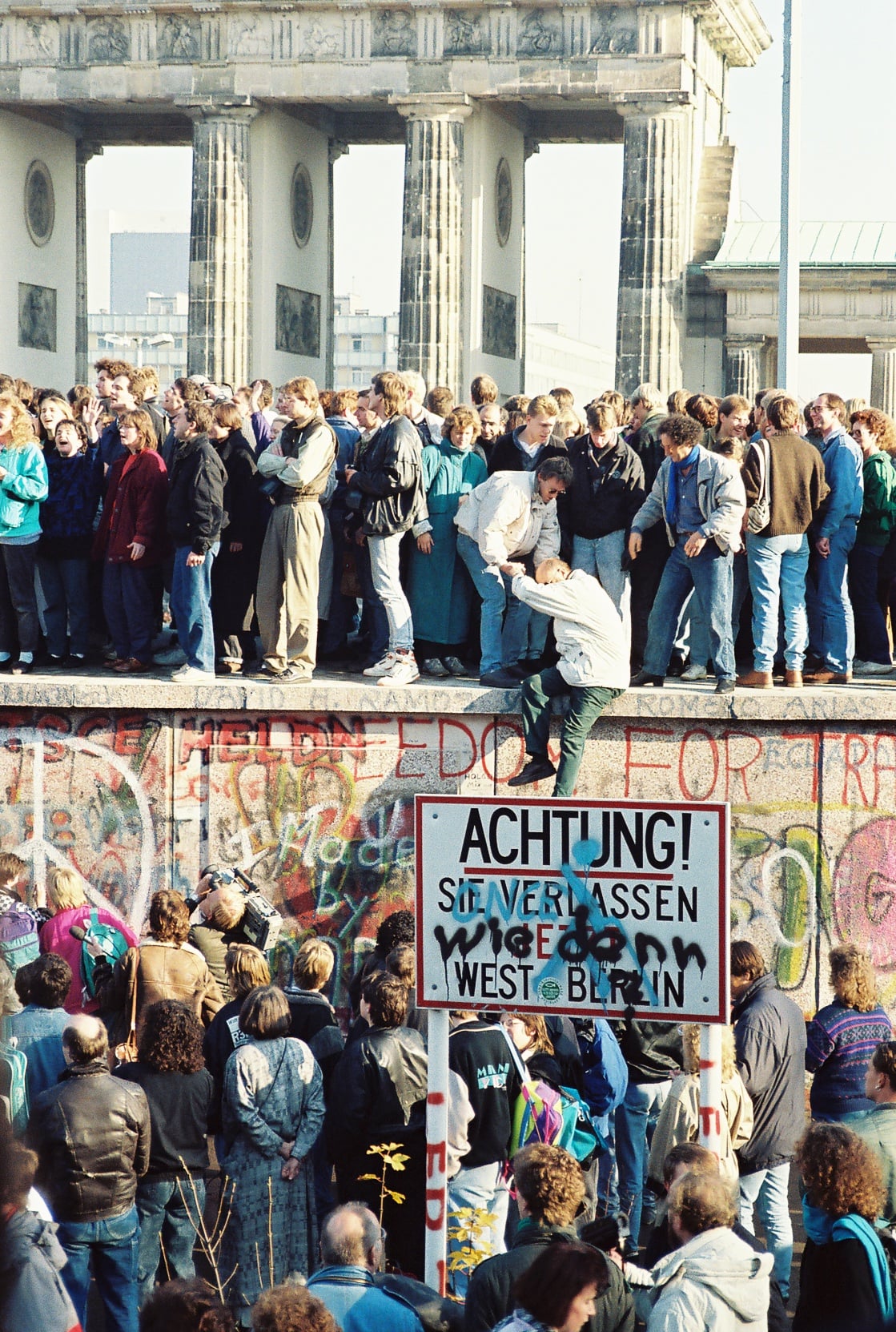
Communist governments across Eastern Europe collapsed during 1989
The Berlin Wall fell in November 1989
Gorbachev did not use Soviet force to prevent political change in Eastern Europe
Thatcher welcomed the collapse of communist influence but had serious concerns about German reunification
She feared that a single, larger Germany could dominate Europe
However, Britain was unable to prevent reunification
The United States and West Germany supported it
Gorbachev did not block it
This showed that while Britain could influence discussion, it could not determine the outcome without the support of the major powers
The Soviet Union formally dissolved in December 1991
Britain supported bringing the former communist states of Eastern Europe into Western political and economic institutions
The Gulf War, 1991
The end of the Cold War also changed the way international crises were handled
Iraq invaded Kuwait in August 1990
The UN Security Council authorised military force to reverse the invasion
Soviet cooperation with the United States at the UN would have been much harder during the earlier Cold War
Britain played a major military role in the coalition
It was the largest European contributor, sending around 45,000 troops
Kuwait was liberated in February 1991 after a short ground campaign
The war showed that Britain could still act as an important military ally of the United States
However, Saddam Hussein remained in power
The conflict therefore did not produce a complete settlement of the wider problem
"America's highest civilian award is the Medal of Freedom. And we are here to present it to one of the greatest leaders of our time. ... Mrs. Thatcher understood the ties that bind our nations, moral and economic, political and spiritual. ... No country could have had a more valiant comrade in arms. We will never forget her courage in helping forge a great coalition against the aggression which brutalized the Gulf. ... Margaret Thatcher helped bring the cold war to an end"
President George H. W. Bush, remarks on presenting the Presidential Medal of Freedom to Margaret Thatcher, the White House, 7 March 1991
Approach: Bush made these remarks in 1991 while presenting Thatcher with the Presidential Medal of Freedom, shortly after she had left office.
The source is useful because it shows how the United States publicly presented Thatcher’s contribution to the end of the Cold War and the Anglo-American alliance.
However, this was a ceremonial tribute, so Bush had a clear reason to praise Thatcher. His claim that she helped “bring the Cold War to an end” should therefore be compared with the much larger role played by Gorbachev, Reagan and developments inside the Soviet bloc.
Britain's influence at the end of the Cold War
Britain remained an important diplomatic and military ally of the United States
Thatcher helped shape American attitudes towards Gorbachev
Britain also played a major role in the Gulf War
However, Britain was not the main power determining the end of the Cold War
Arms control was negotiated primarily by the United States and Soviet Union
Britain could not stop German reunification
Britain's influence therefore depended heavily on its relationship with the United States
It could help shape Western policy
It had much less power to decide the final outcome on its own
Examiner Tips and Tricks
Do not give Thatcher too much credit for ending the Cold War. A stronger argument is that Britain had influence through its relationship with the United States, particularly in helping Reagan take Gorbachev seriously, but the decisive decisions were made in Washington and Moscow.
How far did Britain's world role shift, 1987–1997?
This key question weighs change in Britain's international role against the survival of its main alliances, institutions and military capabilities
Evidence that Britain's role shifted
The end of the Cold War removed the framework that had shaped British foreign policy since 1945
The Soviet threat declined, and Britain no longer had to organise its defence primarily around East-West confrontation
The 1990 Options for Change review cut the armed forces by around a fifth to deliver a 'peace dividend'
Europe became a much more important political issue
Maastricht, the single currency, and the Social Chapter raised questions about how much sovereignty Britain should share
Britain also occupied a distinctive position inside the EU through its opt-outs
Britain increasingly acted through international organisations
The Gulf War operated under a UN mandate
In Bosnia, Britain first served through the UN and later took part in NATO military action
The Balkan Wars also revealed limits to European power
European diplomacy struggled to end the conflict
A settlement became possible only after stronger US and NATO involvement
Evidence that Britain's role remained broadly similar
Britain retained the main features of a major power
It kept a permanent seat on the UN Security Council
It retained an independent nuclear deterrent and a worldwide diplomatic network
The special relationship with the United States remained central
Britain was the largest European contributor to the coalition in the 1991 Gulf War
Anglo-American cooperation remained important in later crises
Britain also remained a leading member of NATO
British aircraft took part in the 1995 Bosnia airstrikes
British troops helped enforce the Dayton settlement
Britain stayed firmly inside the European Union
It supported the single market and enlargement, even while resisting deeper political integration
Britain continued to deploy military forces overseas
Its ability and willingness to intervene abroad had not disappeared with the Cold War
Examiner Tips and Tricks
Decide what you mean by “world role” before you judge how far it changed.
If you measure Britain by its capabilities, continuity is striking: nuclear weapons, NATO membership, the UN Security Council seat and overseas deployments all remained. If you measure Britain by the problems it faced and the organisations it worked through, the change is much greater.
That distinction gives you a much stronger argument than simply choosing 1989 as a turning point and saying everything changed afterwards.

Unlock more, it's free!
Join the 100,000+ Students that ❤️ Save My Exams
the (exam) results speak for themselves:

Was this revision note helpful?
