Foreign Policy: USA, Europe & Empire, 1964-1970 (AQA A Level History: Component 2: Depth study): Revision Note
Exam code: 7042

Summary
Harold Wilson gave the United States moral support over Vietnam but refused to send British troops
Britain's dependence on American financial support for sterling limited how far Wilson could distance himself from Washington
The government kept Britain's nuclear deterrent in place
The government kept Polaris but decided in 1967 not to buy the more advanced Poseidon
Labour agreed to make a second application to join the European Economic Community (EEC) in October 1966
President de Gaulle of France rejected the application in November 1967
Economic pressure and the 1967 devaluation led the government to withdraw British forces from East of Suez by the end of 1971
Economic sanctions also failed to end Rhodesia's illegal declaration of independence
The key question asks whether Britain's world role declined sharply between 1964 and 1970 or whether it was being reshaped around fewer overseas commitments
Relations with the USA and the issue of Vietnam
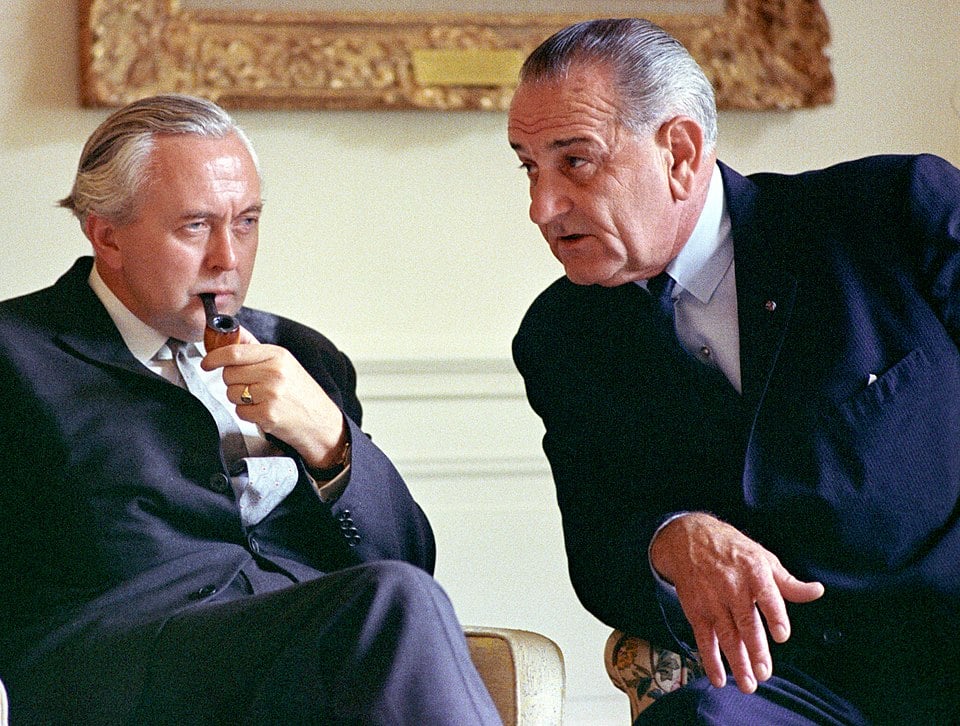
Wilson and the Atlantic Alliance
Wilson was personally pro-American. He strongly supported NATO (the Atlantic Alliance) and Britain's "special relationship" with the United States
The Cold War continued, and Britain wanted the United States to remain committed to the defence of Europe
Wilson made his first visit to the United States as prime minister in December 1964
The relationship mattered more to Britain than it did to the United States
Britain relied on American financial support to protect the value of sterling
This limited how far Wilson could challenge American foreign policy
"In the changed circumstances of the sixties, we seek still a closer relationship based on common purposes and common aims. We have our differences. There are always differences between friends. We are good enough friends to speak frankly to one another, but there will never be anything peevish or spiteful. If we ever have differences, we will look you straight in the eye, and we will expect you to look us straight in the eye, and say what you would expect we can do as friends and only what we can do as friends"
Adapted from Harold Wilson's public speech during his first official visit to the United States as Prime Minister, December 1964
Approach: Wilson gave this speech during an official visit to the United States in December 1964. As prime minister speaking to an American audience, he wanted to present Britain and the United States as close allies
His language about friendship and common aims is useful for showing the importance he placed on the relationship. However, the speech was delivered at the start of his premiership and before later disagreements over Vietnam became more serious. Therefore, compare it with what Wilson later did
Why did Johnson want British troops?
The United States expanded its involvement in Vietnam from 1964
President Lyndon B. Johnson wanted support from American allies to give the war greater international backing
Australia sent troops
Johnson pressed Britain to do the same
Wilson refused to send British forces
He offered diplomatic and moral support instead
This position remained unchanged throughout his government
The pressures pulling Wilson in both directions
Sending troops would have caused serious political problems
The war was deeply unpopular in Britain, especially on the Labour left
Wilson already needed to hold together a divided Labour Party
In June 1966, Michael Foot attacked the government in the Tribune for sharing "the guilt for the continuance of the infamy of Vietnam"
Britain could not easily afford another military commitment
The government was already reducing defence spending
Wilson could not completely break with Washington
Britain needed American help to support sterling and avoid devaluation
Openly condemning the United States could have put that support at risk
The outcome of Wilson's policy
Wilson's eventual position was moral support without military support
Britain backed the United States diplomatically
British troops were not sent to Vietnam
In June 1966, Wilson publicly dissociated Britain from the American bombing of Hanoi and Haiphong
Wilson also tried to broker peace, including talks with Soviet leader Alexei Kosygin in London in February 1967
The approach satisfied neither side
The United States wanted stronger British support
Labour MPs and anti-war campaigners wanted Wilson to condemn the war
Examiner Tips and Tricks
The phrase "moral support without military support" is the best way to summarise Wilson's policy here.
Explain the pressures behind it. Wilson wanted to preserve the alliance with the United States and protect sterling, but he also had to avoid direct involvement in an unpopular war and keep the Labour Party united
Britain's response to world affairs
The Cold War background
The Cold War continued to shape how ministers viewed Britain's international role
Alexander Dubček became leader of Czechoslovakia in January 1968
He introduced reforms that increased freedom of speech and movement
He also attempted to decentralise parts of the economy
In August 1968, Soviet-led Warsaw Pact forces invaded Czechoslovakia and ended the reforms
The invasion strengthened the view that the Soviet Union still posed a threat to Western Europe
Britain condemned the invasion but, like the rest of NATO, took no military action
The Arab–Israeli Six-Day War of June 1967 closed the Suez Canal
This raised the cost of British trade and added to the pressure on sterling before the 1967 devaluation
Keeping the nuclear deterrent
Wilson's government decided to keep Britain's independent nuclear deterrent
There was no serious attempt to abandon it, despite its cost
Britain continued to use American-supplied Polaris missiles
The government agreed to upgrade the system in 1967
This decision disappointed some Labour supporters
Labour had received support from the Campaign for Nuclear Disarmament (CND)
Wilson presented the deterrent as part of Britain's contribution to the North Atlantic Treaty Organisation (NATO), rather than as a separate national policy
Wilson's view of Britain's world role
Wilson argued that Britain should act through collective security
He rejected independent military action of the kind attempted during the Suez Crisis of 1956
He placed Britain's security within Europe and the Atlantic Alliance
He also accepted that Britain could no longer act as a "global policeman"
Britain would reduce some overseas commitments
It would continue to play a role through NATO, Europe and cooperation with its allies
"We cannot succeed unless our people are prepared to accept Britain's new role in the world for the later 1960s and the 1970s. This is not easy. Two years ago, I told this party that never again would Britain engage in any war, other than self-defence, except on the basis of collective security. Our whole defence policy has been based on the rejection of unilateral, go-it-alone, do-it-yourself, military adventures, the rejection equally of Suez imperialism and the delusion of the so-called independent deterrent. We recognise 'that our security lies fundamentally in Europe and must be based on the North Atlantic Alliance'. Even with the strengthening of the industrial base which we are achieving, we can no longer afford the role of world policeman"
Harold Wilson's speech at the Blackpool Labour Party conference, 1968
Approach: Wilson gave his speech at the Labour Party Conference in Blackpool in 1968. He was speaking to Labour members while the defence cuts and the withdrawal from East of Suez were under debate
This source is useful for showing how Wilson explained Britain's reduced global role. He presented the changes as a move towards collective security rather than a complete withdrawal from world affairs. However, as party leader, he also had a reason to defend policies that had been shaped by economic pressure
Examiner Tips and Tricks
Do not treat defence cuts and the nuclear deterrent as contradictory. Wilson reduced Britain's conventional overseas commitments but kept Polaris and Britain's role in NATO. This shows that the government was changing the type of power Britain exercised, rather than giving up all international influence
Relations with Europe
Why Labour initially opposed EEC membership
The Labour government, elected in 1964, was not committed to joining the EEC
In 1962, Hugh Gaitskell opposed the terms of Britain's first application, made in 1961
He warned that membership could lead towards a federal European political union
Much of the Labour Party remained opposed
Michael Foot, Barbara Castle and others on the Labour left viewed the EEC as a capitalist organisation
They feared that membership would restrict a future Labour government's ability to introduce socialist policies
The trade unions largely shared this view
A smaller group supported entry
Roy Jenkins and George Brown were among the leading pro-European ministers
Why did Wilson change his position?
Wilson remained uncertain about joining the EEC
He preferred close links with the United States and the Commonwealth
However, he increasingly accepted the economic arguments: the EEC economies were growing faster than Britain's, and British trade was shifting from the Commonwealth to Europe
By 1966, support for a new application had grown inside the Cabinet
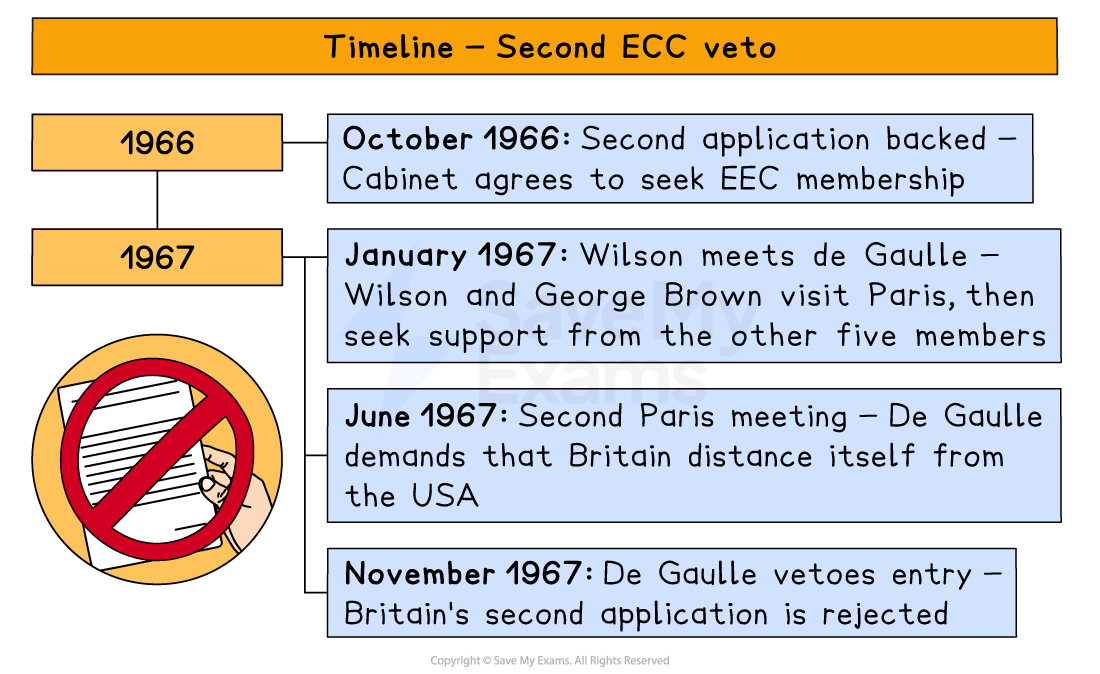
In October 1966, ministers agreed to explore a new application
Wilson tried to avoid further divisions within Labour
The chances of success appeared limited, so opponents on the Labour left did not campaign strongly against the application
The second application and de Gaulle's veto
Wilson and George Brown met French President Charles de Gaulle in Paris in January 1967
They believed the meeting had gone reasonably well
They then visited the other five EEC member states to gather support
Britain formally applied to join the EEC in May 1967, after the House of Commons approved the application by a large majority
A second meeting with de Gaulle in June 1967 was less successful
De Gaulle wanted Britain to weaken its close relationship with the United States
Wilson was unwilling to do this
In November 1967, de Gaulle vetoed Britain's application
Britain had now been rejected for the second time in six years
Britain did not join the EEC until after de Gaulle had left office
Examiner Tips and Tricks
Keep the two applications separate. The Conservatives made the first application in the early 1960s, while Labour made the second application between 1966 and 1967
When explaining the failure of the second application, do not focus only on de Gaulle. Labour's internal divisions, Britain's economic weakness, and Wilson's continued commitment to the United States also shaped the outcome
Decolonisation: 'withdrawal East of Suez' and Rhodesia
Labour inherited a process of decolonisation that had already begun under the Conservatives
The government faced two main issues:
reducing overseas military commitments
dealing with Rhodesia's attempt to gain independence under white minority rule
Continuing decolonisation
Labour continued the decolonisation policy, which began under the Conservatives
By 1964, the "Wind of Change" had brought independence to 18 new Commonwealth states
Northern Rhodesia became Zambia in 1964
Nyasaland became Malawi in 1964
The government wanted to reduce the cost of Britain's remaining overseas commitments
Many politicians and members of the public still believed that Britain should maintain an important world role
This made cuts to Britain's overseas presence politically difficult
Withdrawal from East of Suez
Ministers accepted from 1964 that Britain's overseas military commitments would have to be reduced
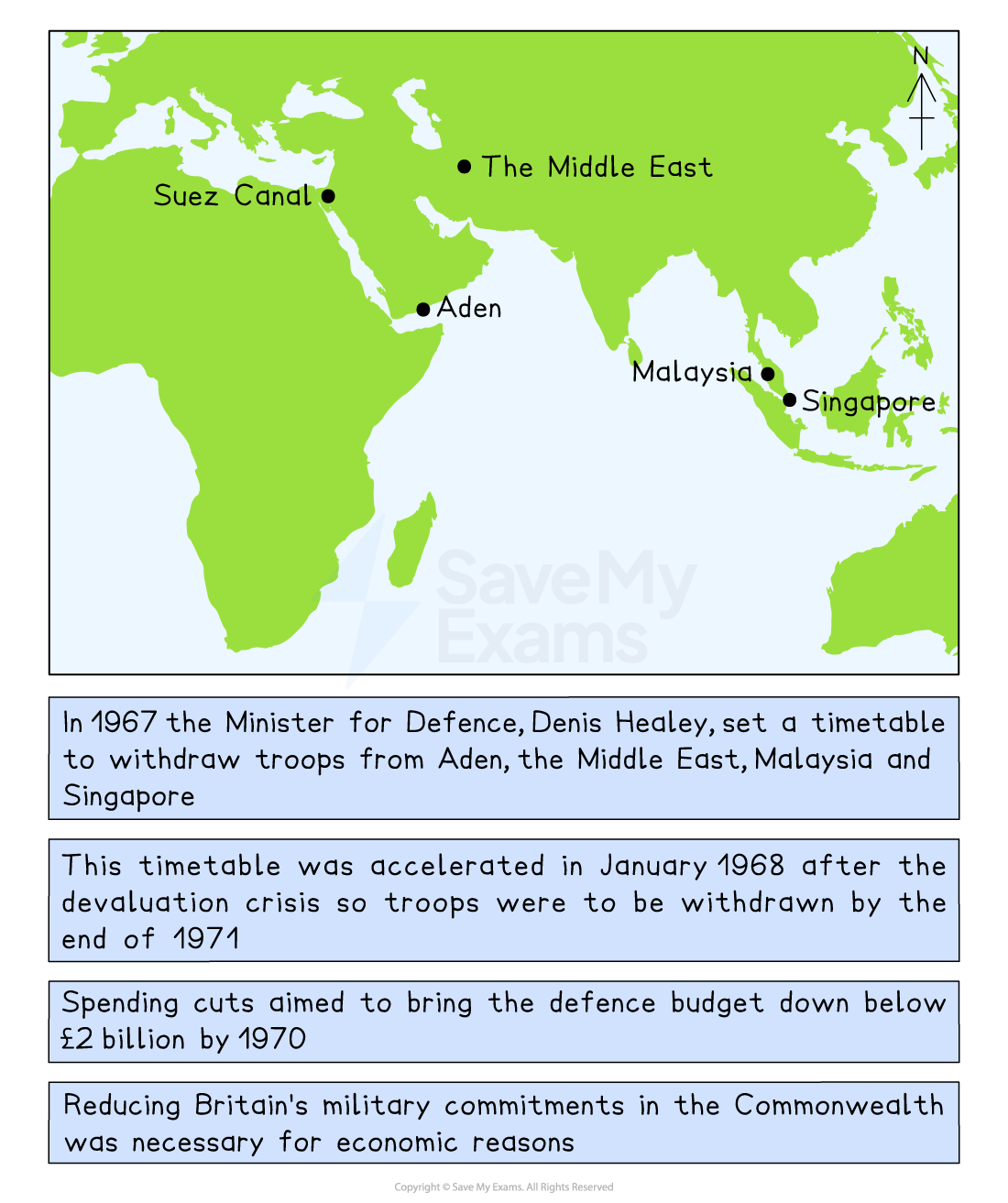
Defence Secretary Denis Healey introduced spending cuts intended to reduce the defence budget to below £2 billion by 1970
The 1967 Defence White Paper set out plans to withdraw troops from Aden, the Middle East, Malaysia, and Singapore
The TSR-2 strike aircraft had already been cancelled in 1965 because of its cost
The devaluation crisis of 1967 led to faster withdrawal
Chancellor Roy Jenkins introduced further spending cuts in January 1968
Troops were now to leave the Persian Gulf, Malaysia and Singapore by the end of 1971
Britain had already withdrawn from Aden in November 1967
The order for American F-111 aircraft, bought to replace the TSR-2 (cancelled in 1965), was abandoned because of its cost
Defence Secretary Denis Healey strongly opposed this cut
The withdrawal ended Britain's permanent military presence across a chain of bases from the Arabian Gulf to Singapore
Rhodesia and the Unilateral Declaration of Independence
Southern Rhodesia remained under white minority rule
The Federation of Rhodesia and Nyasaland broke up in 1963
Britain insisted that Southern Rhodesia must guarantee progress towards majority rule before gaining independence
Prime Minister Ian Smith of Southern Rhodesia rejected these terms
His government issued a unilateral declaration of independence (UDI) in 1965
Political power remained in the hands of the white minority
The UDI challenged the authority of the British government
"It is Britain's insistence on standing by principles in the Rhodesian conflict which has kept the Commonwealth together, the Commonwealth which our opponents were prepared to see destroyed. It is that same insistence on principles which proclaims to the world that in Britain's long and not inglorious history of granting freedom to previously dependent territories, we are determined to see that the last chapter shall not be allowed to tarnish those that have gone before. To those principles we shall adhere ...we shall not be prepared to abandon the principles that have inspired two successive governments in this country, principles which are essential not only to preserve the Commonwealth, on which Britain's standing in the world so much depends, but principles which, in their moral inspiration, represent the very basis of our democracy and everything which this movement stands for"
Adapted from Harold Wilson's speech at the Labour Party Conference in Brighton, 1966
Approach: Wilson was speaking to party members while defending the government's policy on Rhodesia
His repeated use of words such as "principles", "democracy", and "moral inspiration" shows that he presented opposition to white minority rule as a moral issue, not simply as a political dispute. He also linked the policy to Britain's reputation and the unity of the Commonwealth.
However, Wilson had a reason to stress "principle" because sanctions and negotiations had not yet forced Smith to give way. The source is therefore strongest for showing how Wilson justified his policy rather than proving it had been successful
Why sanctions and negotiations failed
Wilson expected the dispute to be settled quickly
He hoped that oil sanctions or negotiations would produce an agreement
Economic sanctions failed
Rhodesia received supplies through the Portuguese colony of Mozambique
Major oil companies often ignored the sanctions
South Africa continued to trade with Rhodesia
Two rounds of talks also failed
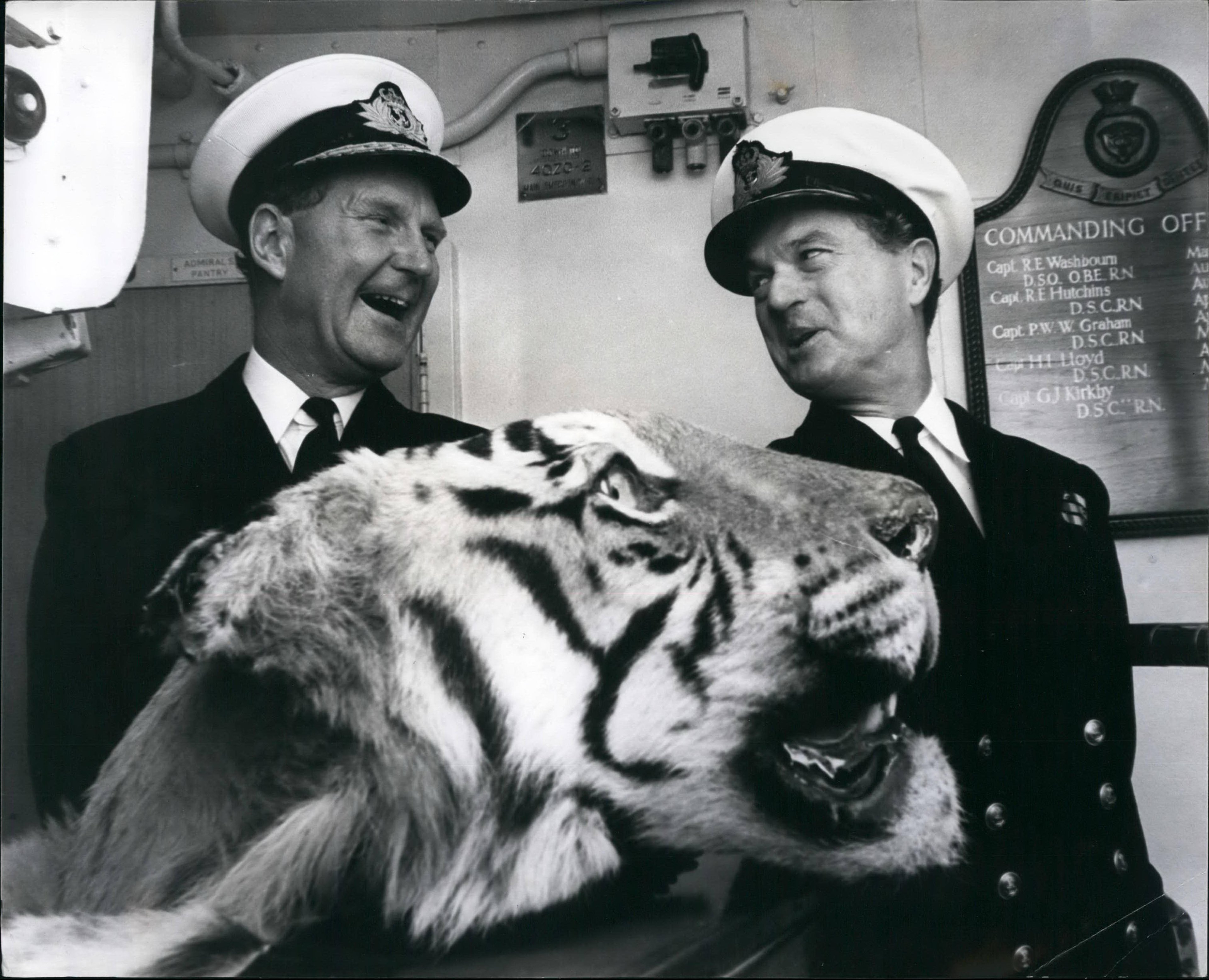
Wilson met Smith aboard HMS Tiger in December 1966
Smith later rejected the terms discussed
Wilson then adopted the policy of 'No Independence Before Majority African Rule' (NIBMAR)
Further talks aboard HMS Fearless in October 1968 also broke down
Smith believed he could rely on support from the Conservative right
He expected Britain to compromise
The dispute continued
Commonwealth governments criticised Britain's failure to end white minority rule
The Labour left also criticised Wilson
Britain could not enforce its authority in Rhodesia
Examiner Tips and Tricks
Keep East of Suez and Rhodesia separate. Withdrawal from East of Suez was a government decision, shaped mainly by defence costs. In Rhodesia, Britain tried to force Ian Smith to accept majority rule but failed.
When explaining why sanctions failed, use three main reasons:
supplies through Mozambique
continued trade with South Africa
the actions of major oil companies
How far did Britain's world role decline, 1964-1970?
Britain's world role changed significantly between 1964 and 1970
Some developments showed a clear loss of power and influence
Others showed that Britain was concentrating on fewer commitments rather than withdrawing from world affairs entirely
Some evidence for each side is outlined below
Evidence of decline
Withdrawal from East of Suez ended Britain's permanent military presence across the Middle East and Asia
Economic weakness played a major part in the decision
Britain could no longer afford its existing commitments
Two failed applications to join the EEC in six years showed that Britain could not determine its own position in Europe
Wilson could not take an independent line over Vietnam
Britain depended on American support for sterling
Britain failed to force Ian Smith's government in Rhodesia to accept majority rule
Economic sanctions were weakened by continued trade through Mozambique and South Africa
Major oil companies also ignored the sanctions
The Commonwealth became a weaker source of British influence
The failure in Rhodesia and limits on Commonwealth immigration alienated many member states
Defence cuts included the cancellation of the TSR-2 (1965) and the F-111 order (1968)
Evidence of a reshaped role
Britain retained its independent nuclear deterrent
The government agreed to upgrade Polaris
In 1967 decided not to buy Poseidon
Britain remained an important member of NATO and continued to support the Atlantic Alliance
Wilson kept British troops out of the Vietnam War
This avoided involvement in a long, expensive and unpopular conflict
Withdrawal from East of Suez was planned to take place by the end of 1971
This can be seen as a gradual reduction in commitments rather than an immediate retreat
Wilson argued that Britain's position on Rhodesia had helped to maintain Commonwealth unity
Applying to the EEC showed that Britain was seeking greater influence in Europe
Examiner Tips and Tricks
For 'how far' questions on Britain's world role, weigh the economic causes of retreat (sterling crises, devaluation and defence costs) against evidence that Britain kept influence through NATO, Polaris and its EEC application. State your judgement at the start and sustain it throughout the answer

Unlock more, it's free!
Join the 100,000+ Students that ❤️ Save My Exams
the (exam) results speak for themselves:

Was this revision note helpful?
