The Wilson & Callaghan Governments, 1974-1977 (AQA A Level History: Component 2: Depth study): Revision Note
Exam code: 7042

Summary
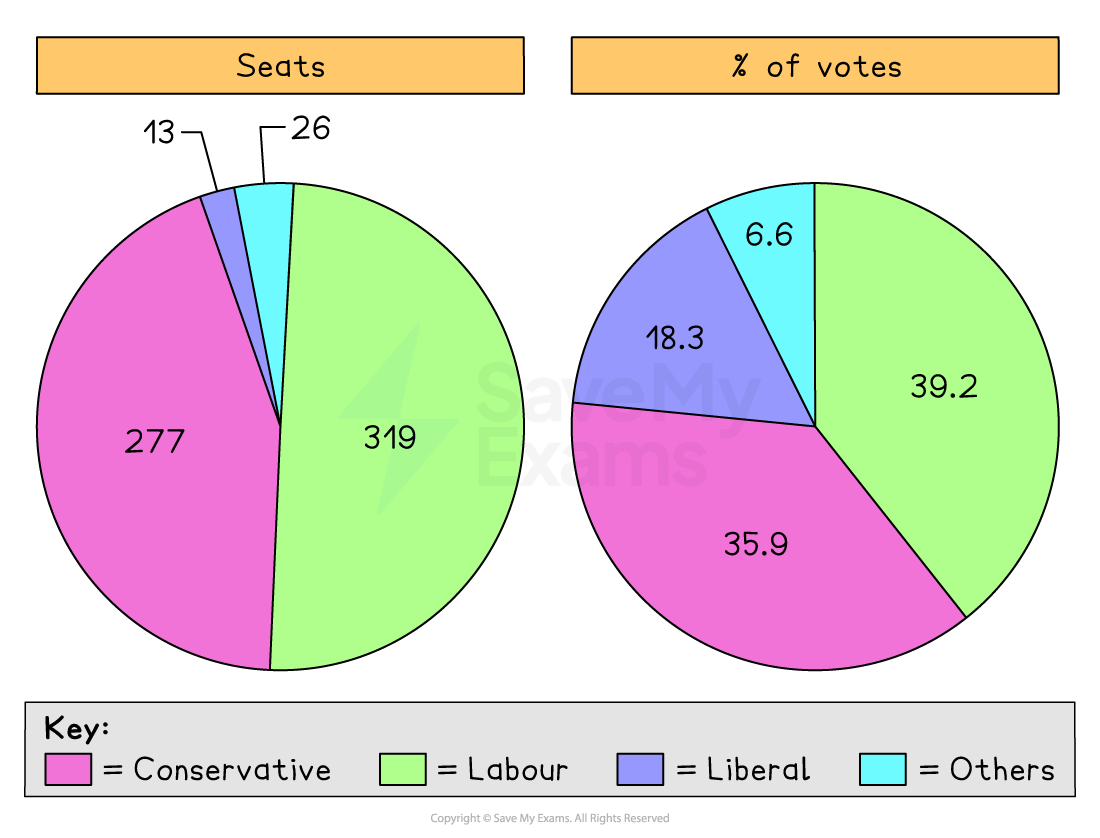
Labour returned to power in March 1974 as a minority government
It won a second election in October 1974 with an overall majority of just three seats
Harold Wilson inherited inflation of 15% and a balance of payments deficit of £3 billion
Both problems had been worsened by the 1973 oil crisis
The 'Social Contract' exchanged voluntary trade union pay restraint for government reforms
In July 1975 this developed into a £6 pay limit
Wilson resigned in March 1976
He was succeeded by James Callaghan, who faced continued pressure on sterling
Britain received an International Monetary Fund (IMF) loan of $3.9 billion (about £2.3 billion) in December 1976 in return for public spending cuts
In Northern Ireland the Ulster Workers' Council strike brought down the power-sharing Executive in May 1974
Direct rule from Westminster was reintroduced
The key question asks whether Labour managed Britain's problems effectively between 1974 and 1977 or failed to address their deeper causes
Wilson's return to power, 1974
Two elections in one year
Labour returned to office in March 1974 without an overall majority
The Conservative prime minister Edward Heath had called the February election around the question 'Who governs Britain?' but the Conservatives lost their majority
Labour became the largest party and formed a minority government
Wilson depended on support from other parties to pass legislation
Wilson called a second election in October 1974
Labour won an overall majority of only three seats
The small majority meant that by-election defeats or rebellions by Labour MPs could threaten the government
Dealing with Heath's immediate legacy
Wilson acted quickly to end the miners' dispute
The government reached an agreement with the National Union of Mineworkers (NUM)
The state of emergency and the three-day week ended
Labour also tried to repair relations with the trade unions
The Industrial Relations Act (1971) was repealed
The government began negotiations over the 'Social Contract'
A more difficult position than in 1964
Wilson returned to office in much worse economic conditions than during his first government (1964–1970)
Inflation stood at 15%
The balance of payments deficit was £3 billion
The 1973 OPEC oil price rises had increased costs across the economy
Labour was also less united than it had been in 1964
Disagreements remained between the party's left and right
The government's narrow majority made these divisions more difficult to manage
"Everyone was free to express his views on the medium-term outlook. I was feeling particularly gloomy: 'Our place in the world is shrinking; our economic comparisons grow worse. The country expects both full employment and an end to inflation. We cannot have both unless people restrain their demands. If the pay guidelines are not observed, we shall end up with wage controls, even a breakdown of democracy. Sometimes when I go to bed at night I think if I were a young man I would emigrate.'"
James Callaghan, recalling a Chequers cabinet meeting held in the winter of 1974, just after the October election, then Foreign Secretary, in his memoirs, Time and Chance (1987)
Approach: Callaghan is recalling this cabinet meeting in memoirs published in 1987, around 13 years after the events. As Foreign Secretary, he was well placed to describe the concerns within the government, particularly over inflation, unemployment and wage restraint. However, the account was written with hindsight, so it may reflect how Callaghan later understood the crisis as well as what he thought at the time
Examiner Tips and Tricks
Do not present the October 1974 election as a clear recovery. Labour won twice in one year but still ended with a majority of only three seats, which limited how freely the government could act
When explaining Labour's difficulties after 1974, begin with its parliamentary weakness before moving to the economy. A government unsure of winning Commons votes could not take major decisions easily
Political, economic and industrial problems
Political problems
Labour remained divided between its left and centre
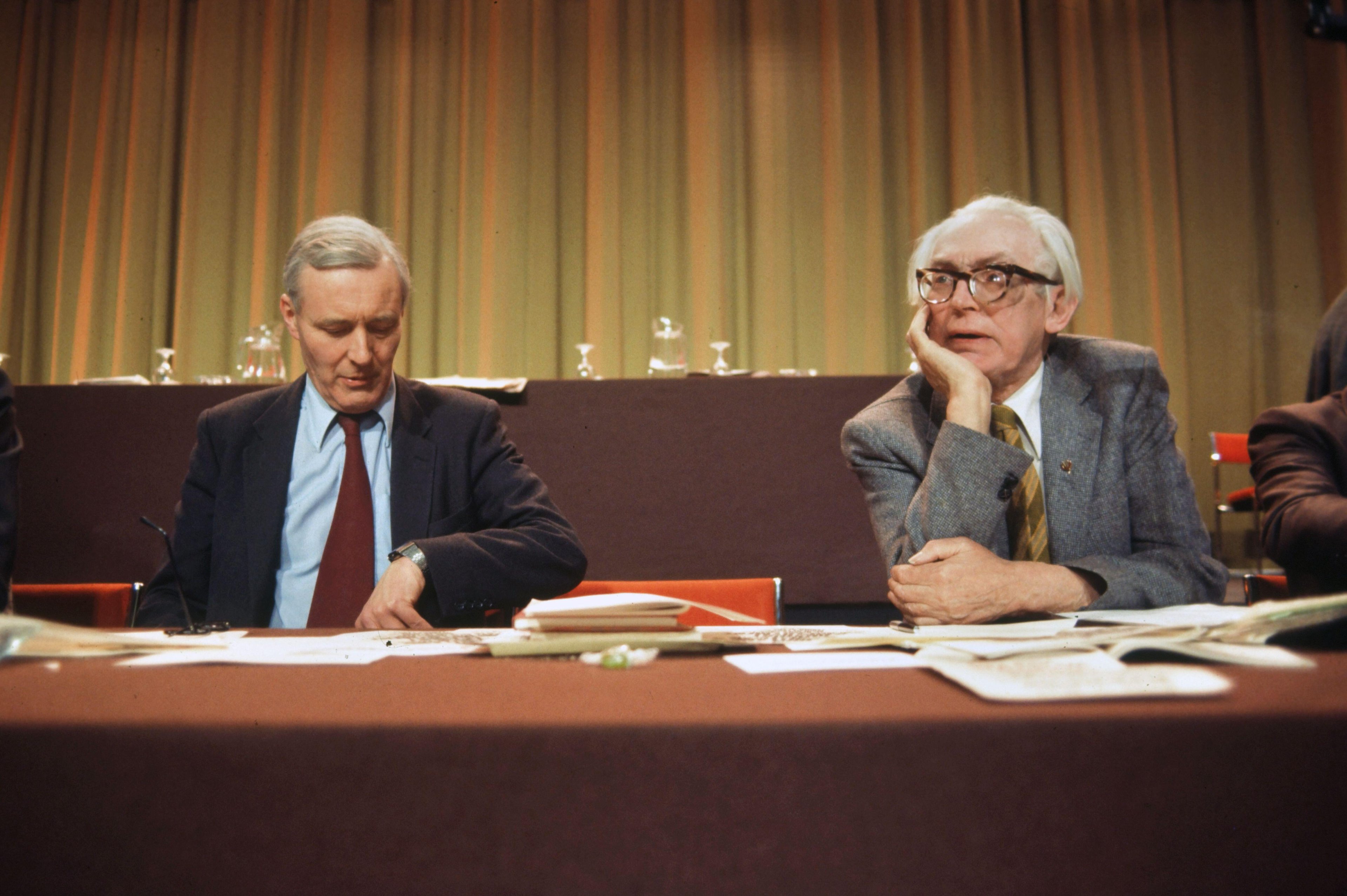
Tony Benn at the Department of Industry and Michael Foot at the Department of Employment argued for greater state intervention
Both Benn and Foot resisted pressure on the trade unions
The Treasury argued for tighter controls on public spending and pay
Membership of the European Economic Community (EEC) divided the party
Wilson suspended collective cabinet responsibility during the 1975 referendum
Ministers were allowed to campaign on either side
Labour's small Commons majority gradually disappeared
By April 1976, the government no longer had an overall majority
Callaghan negotiated the Lib-Lab Pact in 1977
Liberal MPs agreed to support the government in key Commons votes
Labour agreed to proceed with plans for devolution in Scotland and Wales
"To bridge a deep political chasm without splitting a party or provoking dramatic ministerial resignations is sometimes regarded as something approaching political chicanery. The highest aim of leadership is to secure policies adequate to any situation without major confrontations, splits, and resignations. It may be bad for the headlines and news placards, but it has been sought and achieved by our greatest leaders, Conservative as well as Liberal or Labour. Baldwin, Macmillan, Churchill always sought consensus. It is sometimes galling to be criticised for achieving it"
Harold Wilson, commenting on the leadership of the Labour Party for the period 1974 to 1976 in his memoirs, Final Term published in 1979
Approach: Wilson presents compromise and consensus as necessary to prevent Labour's divisions from causing resignations or a split in the government. This makes the source useful for showing how Wilson wanted his leadership between 1974 and 1976 to be understood. However, because he was defending his own record, he had a reason to emphasise successful party management and play down the problems caused by these divisions
Economic problems
Britain continued to suffer from stagflation
Inflation and unemployment rose at the same time
Increasing demand to reduce unemployment risked pushing prices even higher
Inflation rose above 24% in 1975
Chancellor Denis Healey introduced three budgets in 1974, in March, July and November
All three aimed to control the economy
The government extended state involvement in industry
The National Enterprise Board (NEB) was created by the Industry Act 1975 to invest public money in struggling firms
The NEB could also manage government shareholdings in private companies and provide financial assistance
British Leyland received public money in 1975 to keep operating
Industrial problems
Wage demands were an important cause of inflation
Large pay rises had been granted to settle the industrial disputes that contributed to Heath's defeat
In a speech at Leeds in January 1975, Healey warned that wage inflation threatened employment
Wilson tried to rebuild cooperation with the trade unions
The National Industrial Relations Court and the Pay Board were abolished
This reversed the approach taken by Heath's government
Examiner Tips and Tricks
Keep the three areas connected. Labour's weak parliamentary position and internal divisions limited its political choices while inflation and unemployment shaped its economic policy. Its attempt to work with the trade unions through the Social Contract was therefore both an industrial policy and part of its wider response to the economic crisis.
The Social Contract with the unions
What was the Social Contract?
The Social Contract was an agreement between Labour and the Trades Union Congress (TUC)
It was negotiated while Labour was in opposition in 1973
Trade unions agreed to restrain wage demands voluntarily
In return, Labour promised policies that supported trade unions and protected living standards
Labour introduced its side of the agreement after returning to government
Food subsidies were introduced and rents were frozen to protect lower-income households
Employment protection and health and safety legislation were passed
Why voluntary wage restraint broke down
Wage increases continued to rise faster than prices
National union leaders could support restraint, but they could not control every wage negotiation
Local union officials and shop-floor representatives continued to press for larger increases
By 1975, inflation had risen above 24%
Workers were less willing to accept limits that reduced the value of their wages
The move to a formal pay policy
In July 1975, the government replaced open-ended voluntary restraint with a fixed £6 limit agreed with the TUC, though it was still not backed by law
Pay increases were limited to £6 a week
The same cash limit applied to all workers
The flat-rate increase gave a larger proportional rise to lower-paid workers
However, it narrowed pay differences between skilled and unskilled workers
This contributed to demands for higher settlements and later pay rounds
Inflation began to fall
It declined from over 24% in 1975 towards 10% by 1978
The government treated this as evidence that pay restraint was working
"The Government have decided to accept an overriding limit of £6 per week for pay settlements during the next pay round, a figure consistent with the aim of reducing the rate of inflation to 10 per cent. by the late summer of next year. Our policy is based on consent and willing co-operation within our democracy. We reject, for the reasons I have so frequently stated, the idea of statutory policies based on criminal sanctions against workers"
Harold Wilson, Prime Minister, Statement to the House of Commons, 11 July 1975
Approach: Wilson made this statement to the House of Commons on 11 July 1975 while introducing the £6 pay limit. He presented the policy as a temporary measure based on consent and co-operation rather than legal penalties. This makes the source useful for showing how the government justified the move from voluntary restraint to a fixed limit. However, Wilson was defending the policy to Parliament so he had a reason to stress co-operation and play down opposition within the Labour Party and trade unions
Examiner Tips and Tricks
Explain both sides of the Social Contract. The unions offered wage restraint, while the government repealed Conservative industrial relations laws and introduced measures intended to protect employment and living standards
Keep the change in 1975 clear. The original Social Contract relied on voluntary restraint, but the £6 pay limit introduced a fixed national figure
The IMF Crisis, 1976
Why did Britain apply to the IMF?
Wilson resigned suddenly as Labour leader in March 1976
James Callaghan succeeded him as prime minister in April
Sterling remained under pressure during 1976
The balance of payments remained weak
Public borrowing was high
Currency traders doubted whether Britain had enough reserves to support the pound
The value of sterling fell sharply against the dollar
The government applied for an emergency loan from the International Monetary Fund (IMF)
Callaghan used his speech to the Labour Party conference in September 1976 to prepare the party for a change in economic policy
"We used to think that you could spend your way out of a recession and increase employment by cutting taxes and boosting government spending. I tell you in all candour that that option no longer exists"
James Callaghan, Prime Minister, speaking at the Labour Party Conference on 28 September 1976
Approach: Callaghan gave this speech at the Labour Party conference in September 1976 while sterling was under pressure and before the IMF loan had been agreed. He was addressing Labour members, but he also knew that international lenders and the financial markets would hear this message. The source is useful for showing how he prepared the party for spending cuts and signalled that the government would no longer try to reduce unemployment through higher spending. However, it was a public speech intended to reassure more than one audience, so it does not reveal all the disagreements within the government
The IMF loan and its conditions
The loan was agreed in December 1976
Denis Healey, as Chancellor of the Exchequer, secured $3.9 billion (£2.3 billion)
It was the largest loan the IMF had made at that time
In return the government agreed to substantial reductions in public spending
This marked a move away from using higher government spending to reduce unemployment
The decision caused political disagreement
Conservatives described the loan as a national humiliation
Labour's left argued that the government had surrendered control of economic policy to international financiers
The economic outcome
The crisis proved less severe than the government had expected
Later figures showed that the level of borrowing required had been overestimated
North Sea oil production began to increase
This improved the balance of payments from 1977
Inflation began to fall
The number of working days lost through strikes reached a ten-year low
Unemployment remained high
Examiner Tips and Tricks
Separate the seriousness of the crisis at the time from what was discovered later. The government believed that Britain faced a major financial emergency even though later figures showed that the borrowing requirement had been overestimated
Do not describe the IMF loan only as an economic event. It also divided Labour and challenged the party's traditional belief that government spending could maintain employment
Problems in Northern Ireland
The collapse of power-sharing
Labour inherited the Sunningdale Agreement, negotiated under Heath in 1973
It created a power-sharing Executive made up of unionists and nationalists
It proposed a Council of Ireland
Loyalist opposition developed quickly
The Ulster Workers' Council was formed by loyalist trade unionists and received support from loyalist paramilitary organisations
After the Northern Ireland Assembly voted to support Sunningdale on the 14 May, 1974, the council called a general strike
The Ulster Workers' Council strike lasted from 15 to 28 May 1974
Strikers disrupted electricity supplies, blocked roads, and closed industry
Brian Faulkner resigned as head of the Executive
Wilson reintroduced direct rule from Westminster
The Sunningdale Agreement collapsed
Attempts to find a new settlement
Wilson and Northern Ireland Secretary Merlyn Rees looked for a settlement agreed within Northern Ireland
A Constitutional Convention was elected in 1975
It was intended to propose a new system of government
Unionists opposed to power-sharing dominated the convention
The convention was dissolved in 1976
Direct rule became the continuing system of government rather than a temporary measure
Continuing violence and security policy

Violence continued throughout the period
Loyalist car bombs killed 33 people in Dublin and Monaghan on 17 of May, 1974
The Provisional Irish Republican Army continued its campaign and extended attacks to targets in England
After the IRA's Birmingham pub bombings in November 1974, the government passed the Prevention of Terrorism Act (1974), giving the police special powers of arrest and detention
Rees ended internment without trial in 1975
Roy Mason replaced Rees as Northern Ireland Secretary in 1976
He placed greater emphasis on security and policing
Political negotiation became less central
"The Executive fell in May. This is a sober and testing time for the people of Northern Ireland. It is they who must create the circumstances in which progress can be made. Law, order and stability are not brought about by armies or by the police alone. They depend upon the desire, willing cooperation and indeed positive support of the people of Northern Ireland...The government are pursuing a steady and consistent policy of giving the people of Northern Ireland a chance to show through the Convention that they can work together responsibly to devise institutions of government which are fair to all"
Merlyn Rees, Secretary of State for Northern Ireland. Statement to the House of Commons on the aims of the Constitutional Convention, December 1974
Approach: Rees made this statement to the House of Commons in December 1974 after the collapse of the Sunningdale Executive. As Northern Ireland Secretary, he was explaining the government's plan for a constitutional convention and defending the continuation of direct rule
The source is useful for showing that Labour wanted a settlement designed by politicians within Northern Ireland rather than imposed entirely from Westminster. However, Rees was presenting government policy publicly, so he had a reason to sound confident about cooperation even though unionist opposition had already brought down Sunningdale
Examiner Tips and Tricks
Do not describe the Ulster Workers' Council strike only as industrial action. Its aim was political: to destroy the power-sharing executive and prevent the Council of Ireland from operating
How well did Labour respond to Britain's problems, 1974-1977?
Labour inherited serious economic, industrial and political problems in 1974
Labour's policies reduced some immediate pressures, but several underlying problems remained unresolved
Some key evidence for each side is outlined below
Areas of progress
Wilson ended the industrial confrontation inherited from Heath
The miners' dispute was settled
The state of emergency and the three-day week ended
Inflation fell from its 1975 peak of over 24%
It was moving towards 10% by 1978
Industrial relations initially improved under the Social Contract
The number of working days lost through strikes fell to its lowest level for ten years
Callaghan secured the International Monetary Fund loan in 1976 without splitting the government
The cabinet remained together despite disagreement over the conditions attached to the loan
Labour remained in office despite losing its parliamentary majority
The Lib-Lab Pact of 1977 allowed the government to survive important Commons votes
The economy began to improve from 1977
North Sea oil production increased
The balance of payments strengthened
Continuing problems and limits
Voluntary wage restraint under the Social Contract failed
Wage settlements continued to rise faster than prices
The government introduced a formal £6 pay limit in July 1975
Pay restraint caused growing tension with Labour supporters and the trade unions
Many trade unionists regarded free collective bargaining as a basic principle
Flat-rate limits narrowed pay differences between skilled and unskilled workers
The IMF loan damaged the government politically
Britain had to accept conditions on public spending
Labour's left argued that the government had surrendered control of the economy
Spending cuts affected services that Labour had promised to defend
Divisions within Labour were managed rather than resolved
Labour's left opposed pay restraint, spending cuts, and continued membership of the European Economic Community
Unemployment remained high
It stood at around 1.6 million by 1978
Employment did not return to the levels associated with the early post-war period
Pressure over pay differentials continued to build
Skilled workers who had accepted flat-rate increases later demanded larger settlements
“Irrespective of the way that this matter is dressed up, does not this proposal come down to some form of incomes legislation similar, despite the fact that the emphasis is on the employers, to what we have had in the past? Is my right hon. friend aware that many hon. members on this side of the House consider this proposal to be a real U-turn, a move away from our manifesto commitments, and that we shall look at the Bill very closely indeed?”
Eric Heffer, Labour MP. Intervention during the Prime Minister’s statement on the attack on inflation, House of Commons, 11 July 1975
Approach: Eric Heffer was a Labour backbench MP speaking in the House of Commons in July 1975 during the debate over the government incomes policy. As a member of Labour's left, he criticised the proposed pay controls as a return to policies the party had previously opposed
The source is useful for showing opposition to the policy from within the Labour party rather than from the Conservatives. However, Heffer represented the Labour left rather than the party as a whole, so it does not show how all Labour MPs or trade unionists responded
Examiner Tips and Tricks
Decide what standard you are using to judge Labour. Compared with the crisis it inherited in 1974, the government restored greater stability. Compared with its own promises on employment, public spending, and trade union cooperation, its record was more limited

Unlock more, it's free!
Join the 100,000+ Students that ❤️ Save My Exams
the (exam) results speak for themselves:

Was this revision note helpful?