Affluence, Class & Women, 1951-1964 (AQA A Level History: Component 2: Depth study): Revision Note
Exam code: 7042

Summary
Living standards rose significantly during the 1950s
Average male weekly earnings increased from £8.30 in 1951 to £15.35 by 1961
Food rationing ended in 1954
Hire purchase made consumer goods more affordable
Ordinary families could buy televisions, washing machines, refrigerators and cars by paying in instalments
Affluence was uneven
Poverty remained in inner cities and older industrial areas
Many people still rented rather than owned their homes
Deference declined as academics and angry young men criticised the Establishment
But the class system itself remained firmly in place
Women were still expected mainly to be wives and mothers
Only around one in five married women worked in 1951 (about a third of all women)
Equal pay for teachers and civil servants was agreed in 1955 and phased in by 1961
The main debate is whether affluence fundamentally changed British society or whether traditional class and gender divisions remained
Rising living standards and consumerism
Rising wages and the end of austerity
From 1952, most signs showed that Britain's economy and living standards were improving
Average male weekly wages rose from £8.30 in 1951 to £15.35 by 1961
Private savings increased sharply
Food rationing ended completely in 1954
Farmers benefitted from generous government subsidies
These subsidies helped to keep food prices low
This meant that people could buy more with their wages
Housing and the new towns
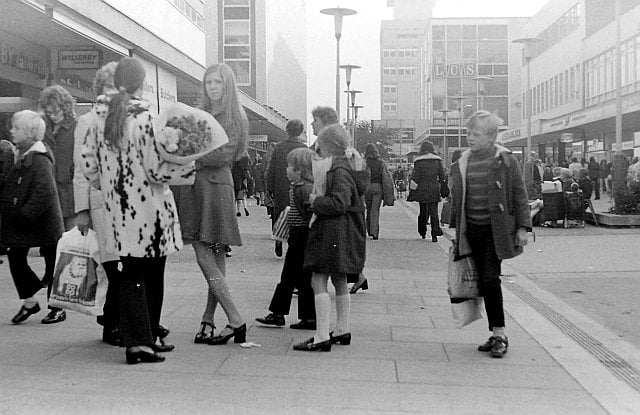
Shoppers in Broad Walk, The High, Harlow by Penny Mayes, CC BY-SA 2.0
Much of Britain's housing was old, overcrowded or damaged by the war in 1951
Pre-war slums were cleared, and new towns were built, including:
Harlow in Essex
Kirkby on Merseyside
Stevenage, Crawley, Corby and Cwmbran had been planned by Labour in the 1940s
Slum clearance also caused social disruption
Long-established working-class communities were broken up
Residents were moved and dispersed across different areas
Home ownership increased, helped by cheap mortgages
However, council and private tenants still greatly outnumbered homeowners throughout the 1950s
The consumer boom
The consumer boom became the clearest sign of growing affluence
Televisions, washing machines, refrigerators and new furniture were often bought through hire purchase
Buyers paid a deposit followed by monthly instalments with interest
This allowed families to use goods before they had finished paying for them
Advertising grew rapidly after ITV launched in 1955
Glossy adverts appeared during and between popular programmes
Car ownership rose by 25% between 1957 and 1959
Motorway construction began with the Preston bypass in 1958
Around 1,200 miles of new or improved main roads were completed between 1957 and 1963
Leisure and holidays
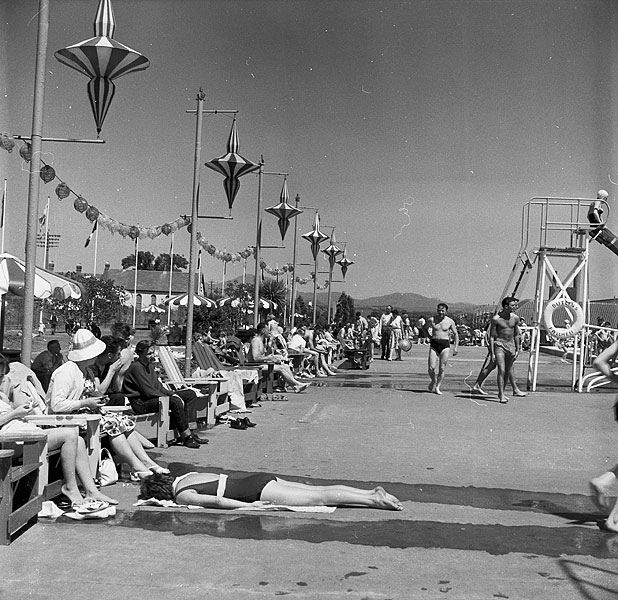
Television changed how families spent their evenings
The number of households owning a television rose by 42% between 1957 and 1959
By 1960, there were ten million television sets in use
The televised coronation of 1953 caused the first major rise in television purchases
Holiday camps reached the height of their popularity
Around 60,000 people holidayed with Butlin's each week
Foreign holidays remained a luxury
Fewer than 2% of the population took them
Home-based hobbies, such as DIY and gardening, also became more popular
Television programmes increasingly reflected these interests
"The old man was happy at last, and deserved to be happy, after all the years before the war on the dole, five kids and the big misery that went with no money and no way of getting any. And now he had a sit-down job at the factory, all the Woodbines he could smoke, money for a pint if he wanted one, a jaunt on the firm's trip to Blackpool, and a television set to look into at home."
Alan Sillitoe, Saturday Night and Sunday Morning (1958)
Approach: This extract comes from Alan Sillitoe’s novel Saturday Night and Sunday Morning, published in 1958. It presents the everyday comforts available to a working-class family, including steady work, cigarettes, leisure spending and television
The source is useful for showing how post-war affluence could feel at household level. However, it is fiction, so it cannot prove how widely these benefits were shared. It should be compared with evidence on wages, housing and consumer ownership
Examiner Tips and Tricks
Avoid claiming that most people owned their homes. Home ownership was increasing, but tenants still outnumbered homeowners throughout the 1950s. Britain had not yet become a fully property-owning democracy
The impact of affluence on society
A more comfortable, more private life
Affluence changed how people used their time as well as how they spent their money
Rising car ownership encouraged new housing to be built further away from towns and cities
This increased commuting, as more people travelled between their homes and workplaces
Leisure became more centred on the home
Families increasingly spent their evenings watching television
Cars gave people greater freedom over holidays and leisure
Families could travel more easily and visit a wider range of places
Many people linked rising prosperity to the Conservative government
This helped the Conservatives present themselves as the party of economic success
Affluence was uneven
Not everyone benefitted equally from the new prosperity
Poverty remained in inner cities and industrial areas
Low-paid workers and council tenants benefitted less from consumer credit
They were less able to afford goods bought on hire purchase
Some critics described the 1950s as materialistic and shallow
They believed people had become too focused on buying possessions
They argued that greater comfort had been achieved at the cost of stronger values or a sense of purpose
Contemporary doubts about the boom
Some people living through the period doubted that the economic boom would last
In Stan Barstow's novel A Kind of Loving (1960), a character describes employment and booming business as "a fool's paradise"
This suggests that the apparent prosperity might be temporary or unstable
These doubts existed alongside genuine improvements in living standards
Criticism of the boom did not mean that rising wages and greater consumer ownership were unreal
"Few tears will be shed for the fifties. Cynical, flashy, selfish, the decade made the rich richer, the poor poorer... They made Britain into a windfall state, a national casino filled with loaded dice."
The New Statesman, a left-wing journal reflecting on the fifties in 1960
Approach: This comment appeared in The New Statesman in 1960, looking back at the 1950s. As a left-wing journal, it presents the decade as unequal and morally shallow
The source is useful for showing that affluence was strongly contested at the time. However, it is a hostile opinion piece, so its language is deliberately sharp. It is stronger as evidence of criticism of the decade than as proof that poverty had worsened
"By the 1950s most houses had running cold water and flushing lavatories in the yard outside. Some even had a bathroom. The tenements, however, did not, and the public wash-houses were still very much in use... Most houses had a wireless, but I did not see a single TV set during my time in the East End."
From Jennifer Worth's memoir of her time working as a midwife in the East End of London in the 1950s (2002)
Approach: Jennifer Worth wrote this memoir long after the 1950s, recalling her work in the East End of London. She describes poor housing conditions, including outside toilets, limited bathrooms and the absence of television
The source is useful for showing that affluence had not reached all parts of Britain. However, it is shaped by hindsight and focuses on one very poor area. It should be compared with wider national evidence
Examiner Tips and Tricks
Affluence was uneven, and strong answers should demonstrate this clearly. Compare the spread of new consumer goods with the experiences of people who remained poor or could not afford them. Contemporary criticism should be treated as useful evidence of how the decade was viewed at the time, rather than as background detail.
In a source question, a hostile source is not automatically a weak source. A left-wing journal attacking the 1950s can reveal how critics viewed affluence.
Class and 'the Establishment'
A deferential society in 1951
Britain in 1951 was largely deferential and conformist
Many people accepted the authority of politicians, employers and social elites
There was strong pressure to follow established social expectations
Social class shaped voting more strongly than any other factor
At the 1951 general election, an estimated 65% of working-class voters supported Labour
An estimated 80% of middle-class voters supported the Conservatives
What was the 'Establishment'?
The Establishment was an informal network linking Britain's social and political elites
It included:
aristocrats
politicians
civil servants
judges
bishops
diplomats
senior military officers
leaders of business
the media
Its members were overwhelmingly male and privileged
Family backgrounds and personal connections often mattered more than wealth
There was a recognised route into positions of power
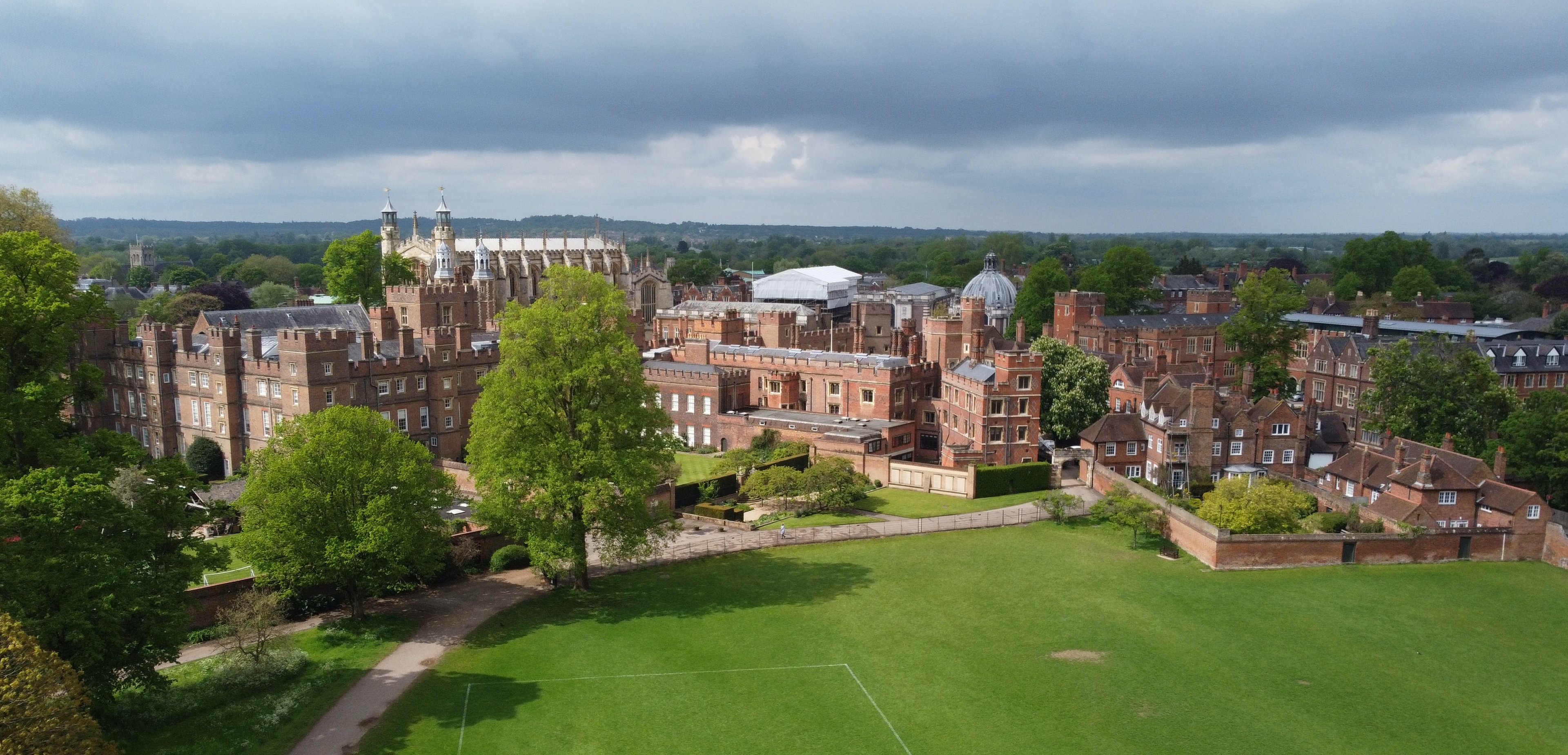
Many members attended the most exclusive public schools, including Eton
Most went to Oxford or Cambridge universities before entering influential careers
Because many had attended the same schools and universities, these connections became known as the 'old boys' network'
Conservative governments appeared closely linked to the Establishment
Harold Macmillan's government included a duke, the heir to a barony, a marquess and three earls
Sir Alec Douglas-Home had been the fourteenth Earl of Home before giving up his peerage
The critics of the Establishment
Social scientists argued that Britain's ruling elite was holding the country back
Richard Hoggart published The Uses of Literacy in 1957
C.P. Snow published The Two Cultures in 1959
Anthony Sampson published The Anatomy of Britain in 1962
They criticised deeply rooted attitudes, Britain's 'class-ridden' society and its lack of social mobility
Critics repeatedly made similar arguments against the elite
They claimed it valued arts education more highly than science
They argued that it prevented talented outsiders from reaching positions of power
They believed that members of the elite protected one another and concealed their mistakes
They wanted Britain to be led by people who had earned their positions through ability and achievement
The angry young men criticised the Establishment through plays and novels
John Osborne's controversial Look Back in Anger appeared in 1956
Other writers included John Braine, Alan Sillitoe and Stan Barstow
They wrote about ordinary life in direct, everyday language
"Colonel: I left England in 1914, and I didn't see much of my own country until we all came back in '47. Oh I knew things had changed of course. People told you all the time the way it was going - going to the dogs...
Alison: You're hurt because everything's changed. Jimmy's hurt because everything's the same. And neither of you can face it. Something's gone wrong somewhere, hasn't it?"
In Look Back in Anger (1956), Jimmy Porter has married Alison, the daughter of Colonel Redfern, a retired army officer who had served in British-ruled India. Redfern represents the older world of empire, privilege and authority, while Jimmy reflects the frustration of a younger generation challenging the Establishment
Approach: This extract comes from John Osborne’s play Look Back in Anger, first performed in 1956. The play reflects frustration with class, social expectations and the limited opportunities available to some younger people
The source is useful for showing the mood associated with the angry young men. However, it was written to provoke an audience, so it does not measure how far society had changed. It is best compared with evidence that class divisions still remained
The decline of deference
Deference began to weaken from the later 1950s
The 1956 Suez Crisis raised suspicions that the government had misled Parliament and the public
This damaged public trust in political leaders
The rise of the Campaign for Nuclear Disarmament (CND) from 1958 encouraged people to challenge authority
The Profumo Affair and the satire boom also weakened respect for the Establishment
However, the class system itself was not broken
Criticism changed attitudes more quickly than it changed the structures of power
The same schools, universities and personal networks continued to supply many of the people at the top
Examiner Tips and Tricks
A play is not automatically weak evidence. It is useful for showing attitudes, frustration and changing values. However, compare it with factual evidence about class voting, education, social mobility and routes into positions of power.
The position of women
The 1950s ideal
Women were still seen mainly as housewives
The ideal woman was expected to be a wife and mother
75% of all women were married
The average age of marriage was 21
Only around one in five married women were in paid work in 1951
The welfare state was based on the idea of the nuclear family
Men were expected to have full-time paid work
Women were expected to depend financially on their husbands
Family allowance was paid to the mother, who was assumed to be at home caring for the children
Mortgages and bank accounts were usually held in men's names
A woman's day in 1951
In 1951, the Mass Observation Survey detailed a day in the life of women based on 700 working-class housewives in London
The survey of the women's day was broken up into morning and afternoon/evening
Morning
Got up; washed
Cooked and ate breakfast
Dressed baby
Cleared breakfast
Tidied and swept nursery
Made children's beds
Put baby out in pram
Got dressed herself
Made own bed; tidied bedroom
Tidied bathroom; cleaned basin; polished floor
Cleaned out fire grate; tidied living room
Tidied kitchen; washed up breakfast
Laundry: hung out washing
Took out rubbish
Brought in coal
Went out to shop
More laundry
Afternoon/evening
Started to cook lunch; cleaned hall while lunch cooked
Ate lunch; washed up lunch
Ironing
Brought in washing
Tidied self and baby
Fetched child from school
Tea
Wrote letter
Went to post
Cleared tea
Bathed children and put them to bed
Washed up tea
Cooked supper
Supper
Sat and knitted
Read evening paper
Went to bed
Women and paid work
Paid employment remained uncommon among married women, especially mothers
Trade unions often opposed women entering paid work
They feared that a larger supply of workers would allow employers to lower men's wages
Many people believed that working mothers harmed their children's development
The number of women in paid work had increased by 1964
However, expectations about women's main role as wives and mothers remained largely unchanged
Equal pay was introduced only in a small number of mainly middle-class professions
Civil servants gained equal pay from 1955, phased in by 1961
Teachers followed on the same phased timetable
Affluence in the home
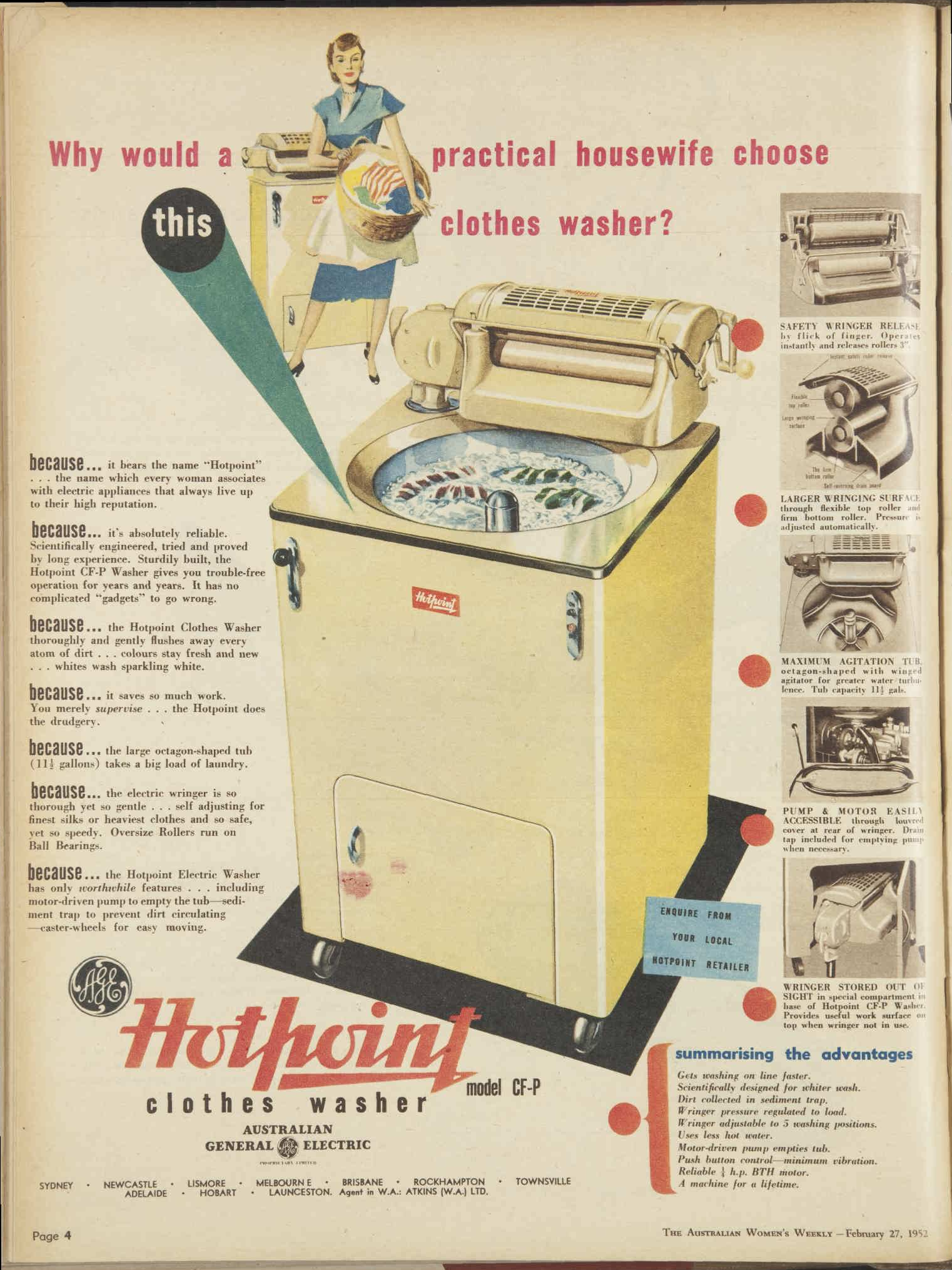
Australian Women's Weekly, 27th February 1952, p. 4. Advertisement for Hotpoint model CF-P clothes washer, Australian General Electric.
Labour-saving appliances changed the nature of domestic work
Between 1957 and 1959, the number of households with a washing machine rose by 54% and refrigerators by 58%
One Hotpoint washing machine was advertised as 'the Liberator'
Without these appliances:
washing could take an entire day
food often had to be bought fresh each day
These appliances saved time, but they did not change women's expected role
Women were still usually responsible for housework
Some women reported feeling increasingly unfulfilled by lives centred on the home
Second-wave feminism was beginning in the United States
It argued that women were restricted by the traditional homemaker role
It reached Britain in the later 1960s
Examiner Tips and Tricks
Handle labour-saving appliances carefully. They reduced the time needed for domestic tasks, but they did not change who was expected to complete them. This shows the difference between:
material change, which made everyday life easier
structural change, which would have altered women's social position and expectations
How far did affluence transform British society?
This question compares the clear improvements in living standards during the 1950s with the social structures that remained largely unchanged
Affluence transformed British society
Average male weekly wages nearly doubled between 1951 and 1961
Food rationing also ended in 1954
Hire purchase allowed working-class families to buy more consumer goods
These included televisions, washing machines, refrigerators and cars
For many families, these goods became affordable for the first time
Slum clearance, new towns and rising home ownership changed where and how people lived
Television, cars and holiday camps created a new mass leisure culture
More people shared similar forms of entertainment and leisure
Deference declined
Social scientists and the angry young men openly criticised the Establishment
Labour-saving appliances reduced the time needed for domestic work
Change was limited
Affluence was uneven
Poverty remained in inner cities and older industrial areas
Most people still rented rather than owned their homes
Class continued to shape voting, education and opportunities
Social mobility remained limited
The Establishment remained powerful
It continued to dominate politics, the civil service, the legal system and the media
Women's position changed very little
The ideal of the housewife remained strong
Equal pay reached only a small number of professions
Some contemporary critics argued that Britain had become richer without changing its underlying class and gender divisions
Examiner Tips and Tricks
Consider both sides before reaching a clear judgement. The evidence shows the contrast between material and structural change. The strongest answers make this distinction clear and use it to support their overall judgement.

Unlock more, it's free!
Join the 100,000+ Students that ❤️ Save My Exams
the (exam) results speak for themselves:

Was this revision note helpful?
