Cold War Relations & the Nuclear Deterrent, 1951-1964 (AQA A Level History: Component 2: Depth study): Revision Note
Exam code: 7042

Summary
Britain fought in the Korean War (1950–1953) alongside the United States in a sign of Cold War solidarity with Washington
The 'special relationship' with the USA was the centre of British foreign policy
This was rebuilt by Harold Macmillan after Suez and sealed by the 1962 Nassau deal on Polaris missiles
Britain became a nuclear power with the atomic bomb in 1952 and the H-bomb in 1957, aiming to hold onto great-power status
The cancellation of Blue Streak in 1960 and Skybolt in 1962 left Britain's deterrent dependent on American missiles
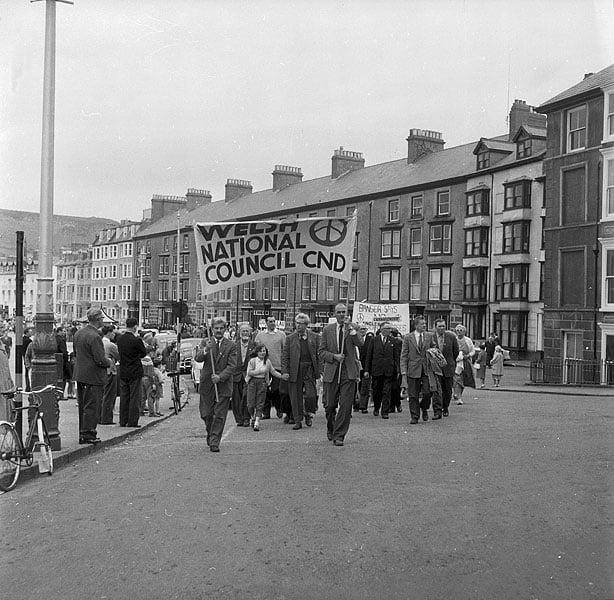
Campaign for Nuclear Disarmament (CND), founded in 1958, built a national campaign for unilateral nuclear disarmament
Its supporters marched each Easter between the Aldermaston weapons base and London
The key question is whether Britain remained a genuine power in the Cold War or had become a junior partner dependent on the United States
Relations with the USA
President John F. Kennedy with Prime Minister Harold Macmillan, Bermuda, 22nd December 1961. Cecil Stoughton, White House Photographs, John F. Kennedy Presidential Library and Museum, Boston. Public domain.
The roots of the special relationship
Britain and the United States emerged from the Second World War as close allies
Their wartime partnership continued into the Cold War
Both countries opposed the Soviet Union
Both helped to create the North Atlantic Treaty Organisation (NATO) in 1949
NATO became the main Western military alliance
Britain saw its relationship with Washington as central to its global influence
Intelligence sharing and nuclear cooperation were especially important
British leaders wanted Britain to remain the United States' closest and most trusted ally
They hoped this would preserve Britain's influence in world affairs
Nuclear cooperation: broken and restored
The United States ended nuclear cooperation with Britain in 1946
The McMahon Act stopped the sharing of nuclear information
Britain then had to develop its own nuclear bomb
This led Britain to become a nuclear power in its own right
Nuclear cooperation was restored through the 1958 US-UK Mutual Defence Agreement
Britain regained access to American nuclear technology
However, this also made Britain more dependent on the United States
Britain's nuclear deterrent became more closely tied to American support
Macmillan, Eisenhower and Kennedy
The 1956 Suez Crisis badly damaged relations between Britain and the United States
Macmillan made repairing the relationship a major priority
Macmillan developed a strong personal relationship with President Eisenhower
They had worked together in North Africa during the Second World War
From 1961, Macmillan also built a close working relationship with President Kennedy
Kennedy kept Macmillan informed during the 1962 Cuban Missile Crisis
The 1962 Nassau Agreement gave Britain access to American Polaris missiles
This allowed Britain to continue its nuclear deterrent
However, it also increased Britain's dependence on the United States
"The core of our policy is the Atlantic Alliance. Our main task in the next decade will be to maintain, and to make even closer, the association between North America, the United Kingdom and the continental countries of Western Europe. We must therefore work to ensure the continuation of the United States' presence in Europe and the development of an economic and political community of interests embracing both the United States and Western Europe."
The Future Policy Study, presented to Harold Macmillan's Cabinet in 1960
Approach: This was a confidential government policy paper presented to Macmillan’s Cabinet in 1960
It is valuable because it shows what ministers privately believed about Britain’s role in the world. However, it reflects the government’s priorities rather than public opinion.
Examiner Tips and Tricks
A confidential government source can be especially useful because it was not written for the public.
Use the provenance carefully:
it shows what ministers believed in private
it was not designed to win votes
it may therefore be more honest about Britain’s aims and weaknesses
However, compare its confidence in the Atlantic Alliance with harder evidence of British weakness:
the cost of maintaining the nuclear deterrent
Britain’s reliance on American missiles
Britain’s growing dependence on the United States
Relations with the USSR
PA Images/Alamy Stock Photo
Cold War rivalry
Britain remained closely aligned with the United States against the Soviet bloc throughout the period
The Cold War divided Europe into:
a Western camp led by the United States
a Soviet camp led by the USSR
Britain developed atomic and hydrogen bombs because of the Soviet threat
Nuclear weapons were intended to protect Britain and maintain its status as a major power
Seeking a thaw
After Stalin's death in 1953, Churchill called for summit talks with Moscow
He hoped that direct talks between leaders could reduce Cold War tension
Britain took part in the Geneva Summit of 1955
The meeting brought together the main wartime powers
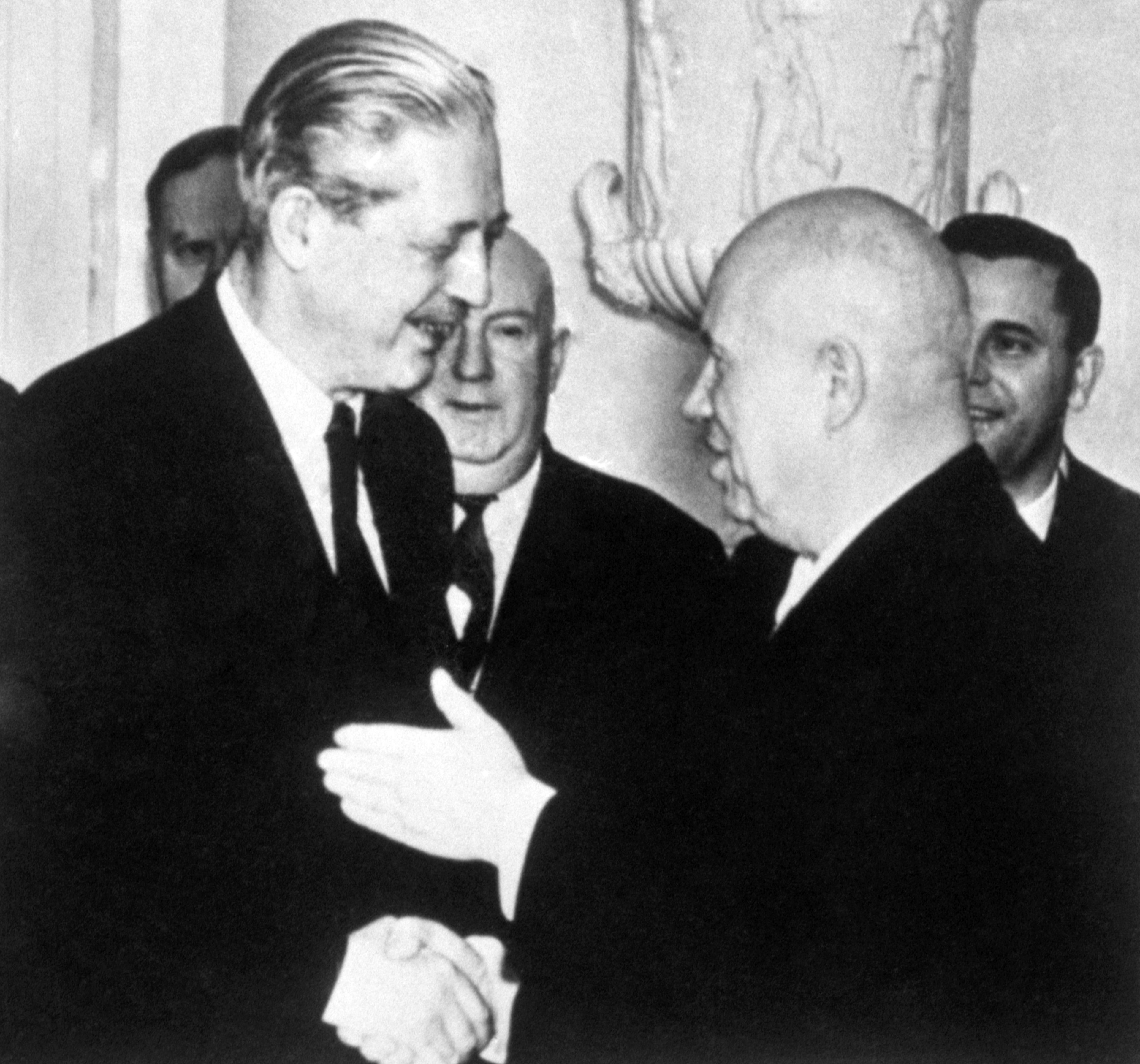
Macmillan visited Moscow in 1959
He met the Soviet leader Nikita Khrushchev
Macmillan presented Britain as a possible bridge between the two superpowers
Flashpoints and a first step
Britain played only a limited role in the most serious Cold War crises
It was largely a bystander during:
the Berlin Crisis of 1961
the Cuban Missile Crisis of 1962
Macmillan pressed both superpowers to agree the Partial Test Ban Treaty of 1963
Britain signed the treaty with the United States and the Soviet Union
The treaty banned nuclear tests:
in the atmosphere
in space
under water
Examiner Tips and Tricks
Keep Britain’s role in perspective. In major superpower crises, such as the Cuban Missile Crisis, Britain had little direct influence, so do not exaggerate its importance.
The stronger argument is that Macmillan used summit diplomacy, his visit to Moscow and the Partial Test Ban Treaty to keep Britain involved in Cold War diplomacy. However, the United States and the Soviet Union still made the most important decisions.
Debates over the nuclear deterrent
Why did Britain build the bomb?
British governments wanted an independent nuclear deterrent
Nuclear weapons were seen as proof that Britain remained a great power
They also gave Britain a place in major international discussions
The deterrent was also meant to strengthen Britain's relationship with the United States
British leaders believed nuclear weapons would help preserve British influence in Washington
Britain tested its first atomic bomb in 1952
It tested its first hydrogen bomb in 1957
Britain became the third country in the world to develop nuclear weapons
The 1957 Sandys Defence White Paper made nuclear deterrence the centre of British defence
It cut conventional forces and planned the end of National Service to save money
Independent or dependent?
Developing British missile systems was extremely expensive
The Blue Streak missile was cancelled in 1960
The American Skybolt missile was then intended to replace it
However, the United States cancelled Skybolt in 1962
The Nassau Agreement of 1962 gave Britain American Polaris missiles
The nuclear warheads remained British
The missiles used to deliver them were American
Critics argued that Britain's deterrent was no longer fully independent
Britain still controlled its own warheads
However, it depended on American missile technology
The campaign against the bomb
The Campaign for Nuclear Disarmament (CND) was founded in 1958
It called for Britain to give up its nuclear weapons on its own
This policy was known as unilateral nuclear disarmament
CND became one of Britain's largest protest movements
Thousands of people joined the annual Aldermaston marches
The debate divided supporters of unilateral and multilateral disarmament
Unilateralists wanted Britain to give up the bomb without waiting for other countries
Supporters of multilateral disarmament wanted nuclear powers to reduce their weapons through international agreement
In 1960 the Labour Party conference voted for unilateral disarmament against Gaitskell's wishes
Gaitskell won the vote back at the 1961 conference
"We may lose the vote today, and the result may deal this party a grave blow. It may not be possible to prevent this, but there are some of us, I think many of us, who will not accept that this blow need be mortal: who will not believe that such an end is inevitable. There are some of us, Mr Chairman, who will fight, and fight, and fight again, to save the party we love. We will fight, and fight, and fight again to bring back sanity and honesty and dignity, so that our party — with its great past — may retain its glory and its greatness."
Hugh Gaitskell, leader of the Labour Party, speaking at the Labour Party Conference in Scarborough, 1960
Approach: Gaitskell was defending his leadership against members of his own party who supported unilateral nuclear disarmament. The speech is useful for showing the strength of the disagreement inside Labour. However, it reflects Gaitskell’s own position rather than providing a neutral account of defence policy. Compare it with evidence produced by CND
Examiner Tips and Tricks
The key distinction is between an independent and a dependent deterrent. Britain produced its own nuclear warheads but eventually relied on American missiles. Strong answers explain why the deterrent remained British but was no longer fully independent. Use Blue Streak, Skybolt and the Nassau Agreement as a clear chain of evidence.
The Korean War
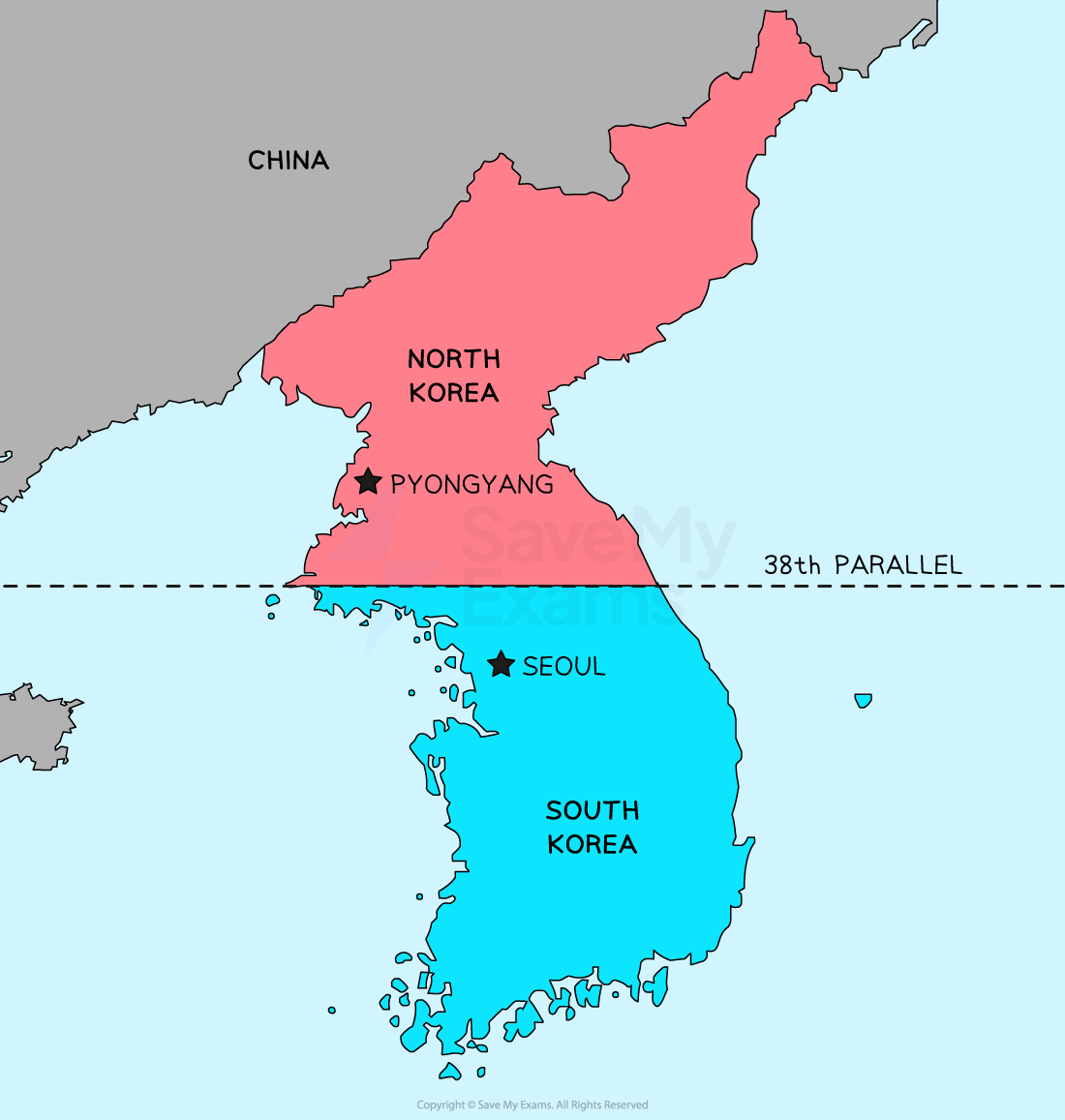
Why Korea was divided
Korea had been controlled by Japan until the end of the Second World War
After Japan's defeat in 1945, Korea was divided at the 38th parallel
The Soviet Union occupied the north of the parallel
The United States occupied the south of the parallel
Rival governments were established in 1948
North Korea became communist
South Korea became anti-communist
The outbreak of war
North Korea invaded South Korea in June 1950
North Korean troops crossed the 38th parallel, beginning the Korean War
China later entered the war on the side of North Korea
Chinese forces intervened after United Nations (UN) troops advanced close to the Chinese border
The conflict became the first major armed clash of the Cold War
Britain joined the war
Britain supported the United Nations response to the invasion
It sent troops as part of a UN force led by the United States
Clement Attlee's Labour government committed British forces in 1950
Churchill continued Britain's involvement after returning to power in 1951
British troops fought at the Imjin River in 1951
They helped to slow a major Chinese advance
The battle became one of the best-known British actions of the war
What the war showed
Britain followed the American lead in resisting communism
This strengthened the Cold War partnership between Britain and the United States
The war led to a costly rearmament programme
Higher defence spending increased pressure on Britain's economy
Britain fought under a United Nations banner
In practice, the war was directed mainly by the United States
Fighting ended with an armistice in 1953
The border remained close to the 38th parallel
This was roughly where the war had begun
Examiner Tips and Tricks
The Korean War is most useful as evidence that Britain followed the American lead during the Cold War. Use it in a wider argument about Britain’s international position rather than treating it as an isolated event.
How far did Britain remain a great power in the Cold War?
This question compares the evidence that Britain still had major international influence with the evidence that its power was declining
It also considers Britain's growing dependence on the United States
Some key evidence for each side is detailed below
The case that Britain remained a great power
Britain had its own nuclear deterrent
It had developed both atomic and hydrogen bombs
This allowed Britain to claim a place among the world's leading military powers
Britain kept a permanent seat on the United Nations Security Council
This gave it an important role in international decision-making
The special relationship gave Britain influence in Washington
British leaders had close links with American presidents
Intelligence and nuclear cooperation strengthened the relationship
Britain still had worldwide military commitments
It also remained at the centre of a large empire and Commonwealth
Britain continued to take part in major international diplomacy
Summit diplomacy helped Britain remain involved in Cold War negotiations
The 1963 Partial Test Ban Treaty showed Britain helping to shape an international agreement
The case that Britain was a declining power
Britain's nuclear deterrent became increasingly dependent on the United States
Blue Streak and Skybolt were cancelled
Britain then relied on American Polaris missiles
The 1956 Suez Crisis exposed the limits of British power
Britain could not continue military action without American support
Economic weakness made Britain's worldwide commitments difficult to afford
Defence spending placed heavy pressure on the economy
In Korea, Britain fought under American leadership
This showed that Washington, rather than London, now led the Western alliance
The United States and the Soviet Union had become two superpowers
Their military and economic strength overshadowed older powers such as Britain
Examiner Tips and Tricks
For an essay question such as this, weigh both sides before reaching a clear conclusion. A strong structure here separates what Britain still possessed, such as nuclear weapons and a Security Council seat, from what it had lost, such as full freedom of action and an independent nuclear delivery system.

Unlock more, it's free!
Join the 100,000+ Students that ❤️ Save My Exams
the (exam) results speak for themselves:

Was this revision note helpful?
