New Labour Foreign Policy: Europe & the USA (AQA A Level History: Component 2: Depth study): Revision Note
Exam code: 7042

Summary
New Labour promised a more positive approach to Europe
Britain signed the Social Chapter in 1997 and backed further EU enlargement
Britain still stayed outside the euro after Gordon Brown introduced five economic tests
Blair kept the special relationship with the USA at the centre of foreign policy
He worked closely first with Bill Clinton and later with George W. Bush
The Blair Doctrine of 1999 argued that military intervention could be justified to stop oppression and prevent humanitarian disaster
British forces took part in operations in Kosovo in 1999 and Sierra Leone in 2000
Foreign Secretary Robin Cook promised an ethical foreign policy
Arms sales and Britain's alliances made that principle difficult to apply consistently
By 2007, Britain remained a leading member of the North Atlantic Treaty Organization (NATO), the EU and the UN Security Council (UNSC)
The Iraq War had also strained relations with some European partners
The key question asks whether New Labour reshaped Britain's place in the world or whether it largely continued Britain's existing role as a major power closely tied to both Europe and the United States
Attitudes to Europe and the euro
A more positive approach to Europe
Blair wanted Britain to play a more active role in the European Union
He argued that Britain should help shape Europe rather than remain on the sidelines
Britain signed the Social Chapter in 1997
Major had secured an opt-out from it at Maastricht
It set minimum EU standards for workers' rights
Britain also supported changes to prepare the EU for enlargement
The Treaty of Amsterdam (1997) and Treaty of Nice (2001) updated EU rules and institutions
Blair strongly backed EU enlargement
Ten new states joined in May 2004, many from Central and Eastern Europe
Bulgaria and Romania also joined in 2007, taking the EU to 27 members
Britain and France also signed the St Malo Declaration in 1998
It called for the EU to have the ability to take military action where NATO as a whole was not involved
The euro
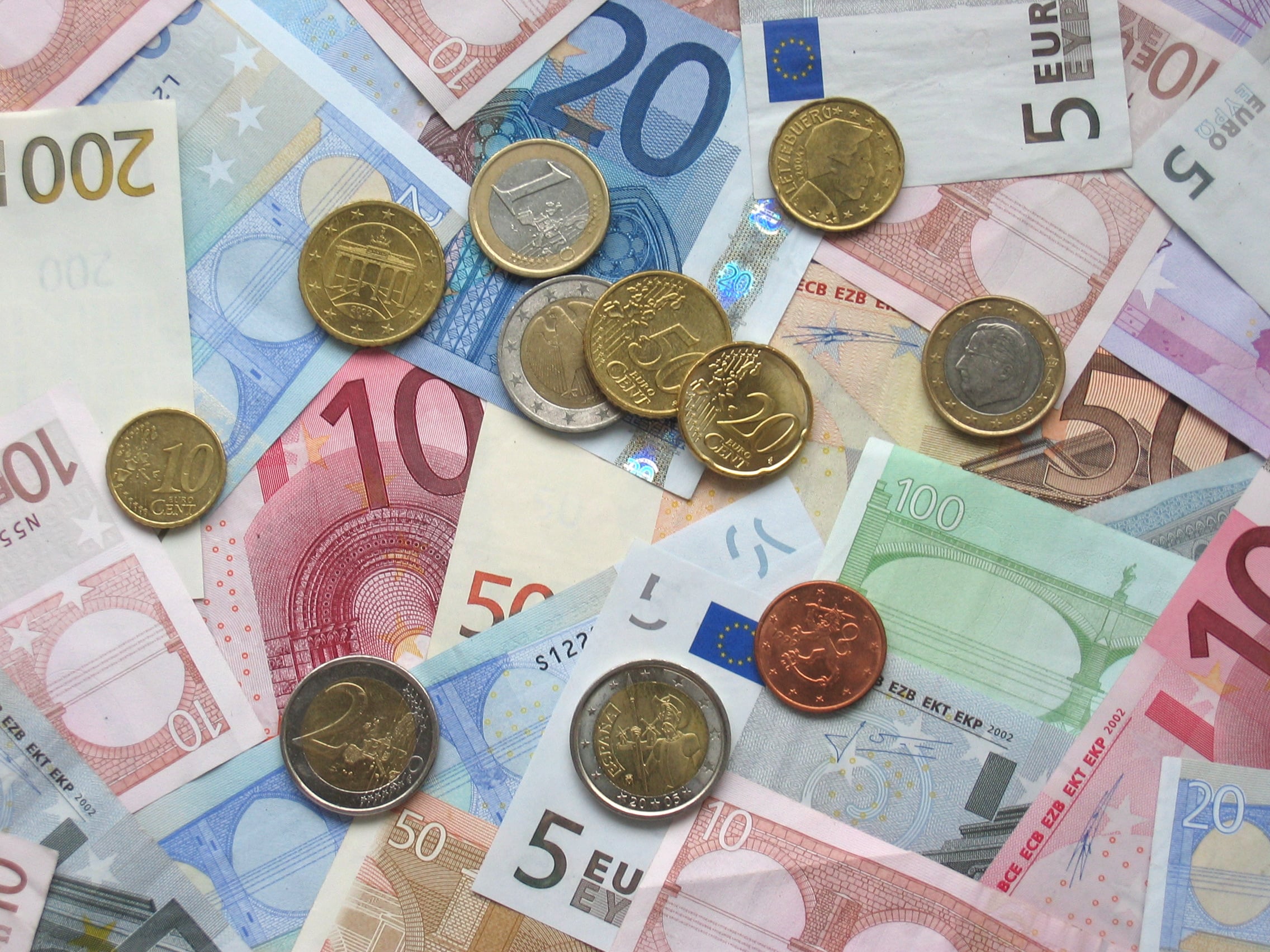
The euro was launched on 1 January 1999 by 11 EU states
Notes and coins entered circulation in 2002
Britain kept the Maastricht opt-out and did not join
Blair was broadly in favour of membership, but Gordon Brown controlled the timing of the decision
In October 1997, Brown introduced five economic tests
These covered:
convergence with eurozone economies
flexibility
investment
financial services
employment
Joining would also require a referendum
In June 2003, the Treasury judged that only the financial-services test had been met
The government still supported joining in principle
No referendum was held before Blair left office in 2007
Public opinion and much of the press remained strongly opposed to joining the euro
“Provided the crucial tests are met concerning the British economy, it is our intention to join. If on the basis of the tests we can make a clear and unambiguous case, this Government’s view is that it is in the national interest to recommend to the British people to vote yes in a referendum to join the single currency. In short, if the economics are right for Britain, we should join. ... So we conclude that the financial services test is met. We have still to meet the two tests of sustainable convergence and flexibility”
Gordon Brown, Chancellor of the Exchequer, statement to the House of Commons on the Treasury’s assessment of the five economic tests, 9 June 2003
Approach: The source is useful because it shows the government’s official position: Britain could join the euro if the economic case was strong enough, but the tests had not yet been met
Brown was also defending a major government decision to Parliament, so the source should be read alongside the detailed Treasury assessment and wider public opposition to the euro
“Is it not clear from any objective reading of the evidence, including the 18 volumes that we have been given today, that joining the euro would damage our prosperity, destroy jobs and lead to an irreversible, the Chancellor’s word, loss of control over our economic policy? That is certainly our view; it is also the view of the clear majority of the people of this country”
Michael Howard, Shadow Chancellor of the Exchequer, reply for the Opposition to the Chancellor’s statement, 9 June 2003
Approach: The source is useful because it sets out the Conservative case against joining the euro and argues that membership would damage British economic control
As an opposition front-bencher, Howard had a clear political reason to attack the government’s position. His claim that most voters opposed joining can be checked against contemporary opinion polls
Continuing tensions over Europe
Blair supported a proposed EU constitution in 2004
He promised a referendum in Britain
After voters in France and the Netherlands rejected the constitution in 2005, the British referendum was dropped
The constitution was later replaced by the Lisbon Treaty, signed in December 2007 after Blair had left office
Blair also agreed a change to Britain's EU budget rebate in December 2005
Britain gave up around £7 billion of the rebate over 2007-13
In return, the EU agreed to review its spending, including the Common Agricultural Policy (CAP)
Critics argued that Blair had given away too much for too little
Euroscepticism remained strong outside Parliament
The United Kingdom Independence Party (UKIP) won 12 seats in the 2004 European Parliament elections
Examiner Tips and Tricks
Avoid describing Blair as simply pro-European. New Labour signed the Social Chapter, backed enlargement and wanted Britain to play a leading role in the EU, but it kept Britain outside the euro
Be precise about who controlled the euro decision. Brown’s five tests gave the Treasury a central role and tied the issue to the relationship between Blair and Brown as well as to wider European policy
The 'special relationship' with the USA
Blair and Clinton
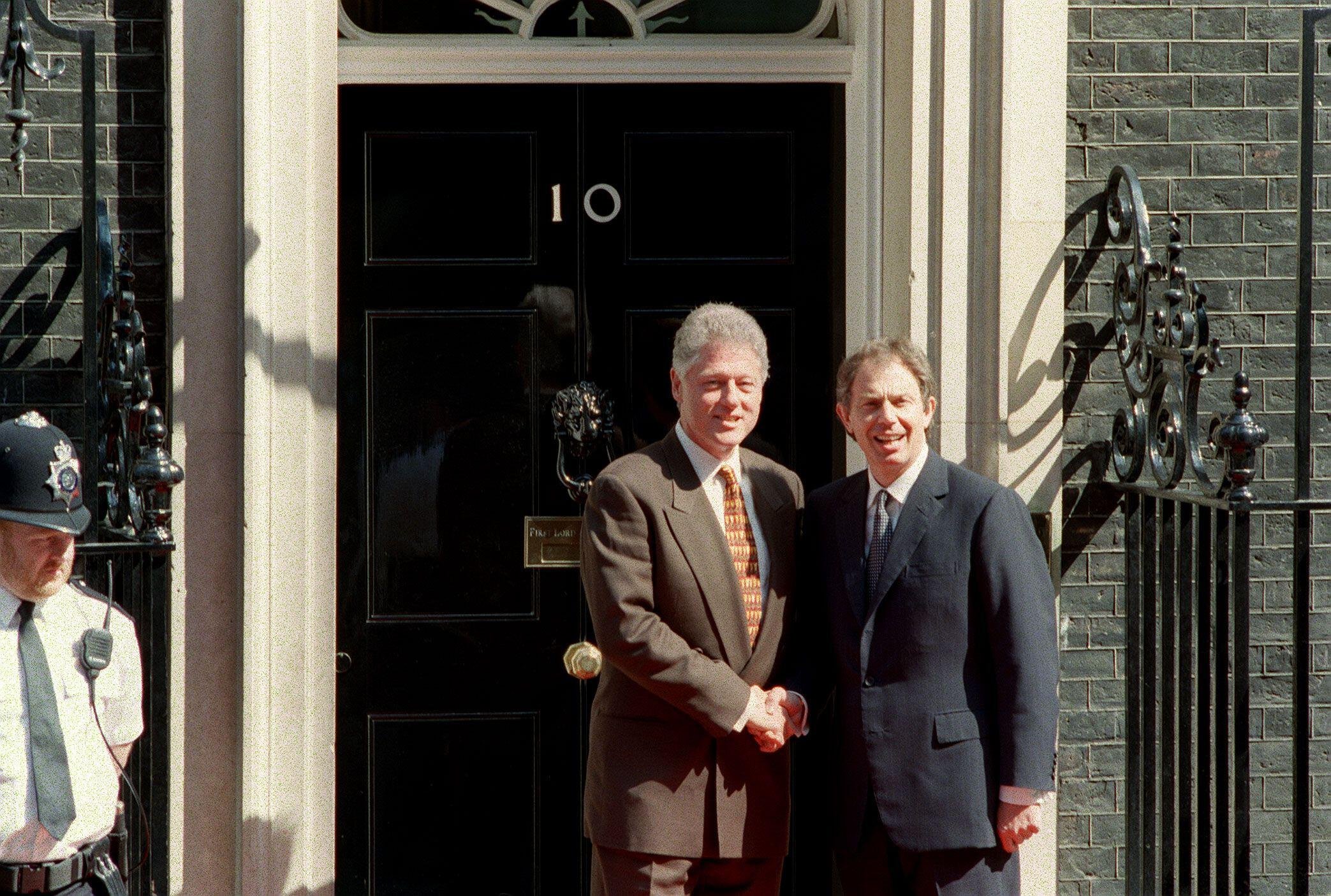
Blair saw the special relationship as central to Britain's influence in the world
He described Britain as a bridge between the USA and Europe
He also believed the United States needed to remain closely involved in European security after the Cold War
Blair and Bill Clinton developed a close working relationship
They shared similar Third Way ideas
Clinton also played an important role in the Northern Ireland peace process
Kosovo, 1999
In 1998 and 1999, Serbian forces attacked the ethnic Albanian majority in Kosovo
Hundreds of thousands of Kosovo Albanians were driven from their homes
NATO began bombing Serbia on 24 March 1999
Britain took part in the campaign
The USA led the operation and supplied most of the aircraft
Blair pushed strongly for a firm response
He pressed Clinton to keep open the option of sending ground troops if air strikes failed
Clinton was more reluctant to commit ground forces
Serbian leader Slobodan Milošević agreed to withdraw his forces in June 1999
A NATO-led force then entered Kosovo
During the campaign, Blair gave a speech in Chicago setting out the case for humanitarian intervention
This later became known as the Blair Doctrine
“Many of our problems have been caused by two dangerous and ruthless men, Saddam Hussein and Slobodan Milosevic [leader of Serbia]. Both have been prepared to wage vicious campaigns against sections of their own community. As a result of these destructive policies both have brought calamity on their own peoples. Instead of enjoying its oil wealth Iraq has been reduced to poverty, with political life stultified through fear. Milosevic took over a substantial, ethnically diverse state, well placed to take advantage of new economic opportunities. His drive for ethnic concentration has left him with something much smaller, a ruined economy and soon a totally ruined military machine
One of the reasons why it is now so important to win the conflict is to ensure that others do not make the same mistake in the future. That in itself will be a major step to ensuring that the next decade and the next century will not be as difficult as the past. If NATO fails in Kosovo, the next dictator to be threatened with military force may well not believe our resolve to carry the threat through”
Tony Blair, Prime Minister, speech to the Economic Club of Chicago during NATO’s bombing of Serbia, later known as the Blair Doctrine speech, 22 April 1999
Approach: The source is useful because it explains his case for intervention: dictators should not be allowed to attack their own populations without consequences
Blair was speaking in the United States to an American audience while trying to maintain support for the campaign, so the speech is also designed to persuade. It is strongest as evidence of Blair’s beliefs and aims, rather than as a neutral account of Kosovo
Blair and Bush
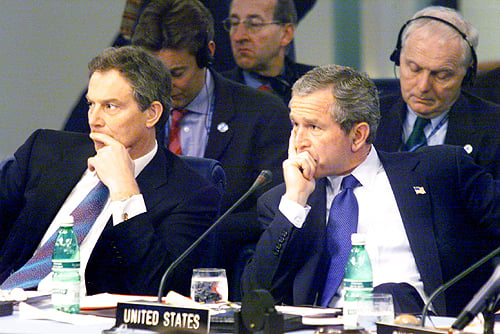
George W. Bush became US President in January 2001
Blair had less in common politically with Bush than with Clinton
Even so, Blair chose to keep the relationship close
Blair and Bush first met at Camp David in February 2001
The attacks on 11 September 2001 transformed the relationship
Blair pledged to stand "shoulder to shoulder" with the USA
Britain joined the US-led wars in Afghanistan (2001) and Iraq (2003)
The relationship became increasingly controversial
Critics argued that Britain offered strong support to Washington but gained little influence over US decisions
Supporters argued that staying close to the USA gave Britain the best chance of influencing American policy
How equal was the relationship?
Kosovo suggests that Britain was not simply following Washington
Blair pushed for a stronger line than Clinton at key moments
Under Bush, the balance became more difficult to judge
Britain remained one of America's closest allies
Critics increasingly saw Britain as the junior partner and mocked Blair as Bush's 'poodle'
Blair continued to argue that Britain could use its close ties to both Europe and the USA to increase its international influence
Examiner Tips and Tricks
Do not describe Britain as simply following the USA throughout the whole period. Kosovo is a useful counter-example because Blair sometimes pushed a more interventionist line than Clinton
Britain's position in the world by 2007
An ethical foreign policy
In May 1997, Foreign Secretary Robin Cook promised an ethical foreign policy
Human rights were meant to play a greater role in British foreign policy
Arms sales quickly tested that promise
In 1997, the government allowed Hawk jets licensed under the Conservatives to be delivered to Indonesia
Indonesia was accused of serious human rights abuses in East Timor
Critics argued that strategic and economic interests still sometimes came before human rights
Liberal interventionism
Blair's foreign policy was strongly shaped by liberal interventionism
He argued that outside powers could sometimes use force to stop oppression, ethnic cleansing or humanitarian disaster
Britain intervened in Sierra Leone in May 2000
British troops were sent to evacuate British and other foreign nationals as rebel forces advanced on Freetown
They then stayed to support the government and UN peacekeepers
The civil war was declared over in January 2002
The success of Kosovo and Sierra Leone strengthened Blair's belief that military intervention could work
In December 2003, Libya agreed to give up its weapons of mass destruction (WMD) after secret talks with Britain and the USA
Supporters saw this as a success for Blair's tough line on states seeking WMD
Britain as a global power
Britain kept the main formal features of a major power:
a permanent seat on the UN Security Council
an independent nuclear deterrent
a leading role in NATO
Blair also tried to use Britain's international position to influence wider global issues
Britain held the presidency of the Group of Eight (G8)presidency in 2005
At the Gleneagles summit, leaders agreed to increase aid to Africa and support debt cancellation for some of the poorest countries
The Make Poverty History campaign and Live 8 concerts put public pressure on the summit
Progress on climate change was more limited
The USA would not agree to binding targets
Growing strains by 2007
The Iraq War of 2003 damaged some of Britain's international relationships
France and Germany had opposed the invasion
Blair's claim that Britain could act as a bridge between Europe and the USA became harder to sustain
Blair also tried to help the Israeli-Palestinian peace process
Critics argued that his closeness to President Bush made Britain look less neutral in the Middle East
By 2007, Britain still had high international status, but its ability to influence events was more open to question
“The true division in foreign policy today is between those who want the shop ‘open’ against those who want it ‘closed’; between those who believe that the long-term interests of a country lie in its being out there, engaged and interactive, as opposed to those who think the short-term pain of such a policy is too great. In the era of globalisation, where nations depend on each other and our security is held in common or not at all, the outcome of the struggle between extremism and progress will be what determines our future here in Britain. We can no more opt out of this struggle than we can opt out of the climate changing around us. Inaction, pushing the responsibility onto America, deluding ourselves that the problem would go away, this too is a policy, and it’s a policy that is profoundly, fundamentally wrong”
Tony Blair, Prime Minister, speech on foreign policy to the Foreign Policy Centre in London, three years after the invasion of Iraq, 21st March 2006
Approach: The source is useful because it shows how he defended the principles behind his foreign policy, especially intervention and international cooperation
Its timing matters. Iraq had made Blair’s approach deeply controversial, so the speech is also an attempt to justify his record. It is strongest as evidence of how Blair explained his foreign policy, rather than proof that intervention had succeeded
Examiner Tips and Tricks
When judging Britain’s position in the world, separate status from influence
Britain still had a permanent UN Security Council seat, nuclear weapons and a leading NATO role. The harder question is how far it could actually shape international events
Use Sierra Leone as a useful contrast with Kosovo. It was smaller, quicker and more clearly led by Britain, so it shows what British forces could achieve without depending as heavily on the USA
How far did New Labour reshape Britain's place in the world?
This question asks whether New Labour changed Britain's role and priorities abroad, or whether the main features of British foreign policy stayed much the same
Some key evidence for each side is outlined below
Evidence that New Labour reshaped Britain's place in the world
New Labour set out a different tone in 1997
Robin Cook promised an ethical foreign policy
Blair wanted Britain to play a more positive role in Europe
Britain became more willing to support liberal interventionism
The Blair Doctrine argued that force could sometimes be used to stop oppression and humanitarian disaster
Kosovo and Sierra Leone became early examples
Britain became more closely involved in European cooperation
It signed the Social Chapter
It backed EU enlargement
The St Malo Declaration supported a greater European defence role
Blair also used Britain's international position to push wider global issues
The G8 summit at Gleneagles in 2005 focused on aid, debt relief and climate change
Evidence that Britain's world role largely continued
The special relationship with the USA remained central
Blair worked closely first with Clinton and then with Bush
Britain still kept some distance from deeper European integration
It stayed outside the euro
It continued to favour a wider rather than more federal Europe
Britain kept the same main signs of major-power status:
permanent membership of the UN Security Council
nuclear weapons
a leading role in NATO
Some of New Labour's new language did not always produce a clear break in practice
Arms sales still conflicted with the idea of an ethical foreign policy
By 2007, relations with some European partners had worsened
The Iraq War had divided Britain from France and Germany
“Today, I set out the strategic aims of our foreign strategy by which we can measure its success over a full, five-year parliament. We aim: to make the United Kingdom a leading player in Europe; to strengthen the Commonwealth; to secure reform for a more effective UN. The Labour government also sets as one of its benchmarks a commitment to foster a people’s diplomacy to increase respect, understanding and goodwill for Britain among nations as well as governments. Today’s Mission Statement sets out new directions in foreign policy. It makes the business of the Foreign and Commonwealth Office delivery of a long-term strategy, not just managing crisis intervention. It supplies an ethical content to foreign policy and recognises that the national interest cannot be defined only by narrow realpolitik. It aims to make Britain a leading partner in a world community of nations, and reverses the Tory trend towards not so splendid isolation”
Robin Cook, Foreign Secretary, speech to diplomats and journalists launching the Foreign Office mission statement, less than two weeks after the general election, 12th May 1997
Approach: The source is useful because it sets out New Labour’s intended foreign-policy priorities, including a stronger role in Europe, reform of international institutions and a more ethical approach
It is a statement of aims rather than results, so its value comes from comparing those promises with what had actually happened by 2007
Examiner Tips and Tricks
Decide what “reshape” means before you start. You could judge change in:
aims
methods
Britain’s actual status and influence
That distinction helps avoid a list of examples. New Labour changed some aims and methods, but Britain’s basic position as a major power tied closely to the USA remained much more continuous

Unlock more, it's free!
Join the 100,000+ Students that ❤️ Save My Exams
the (exam) results speak for themselves:

Was this revision note helpful?