The Realignment of the Labour Party, 1987-1997 (AQA A Level History: Component 2: Depth study): Revision Note
Exam code: 7042

Summary
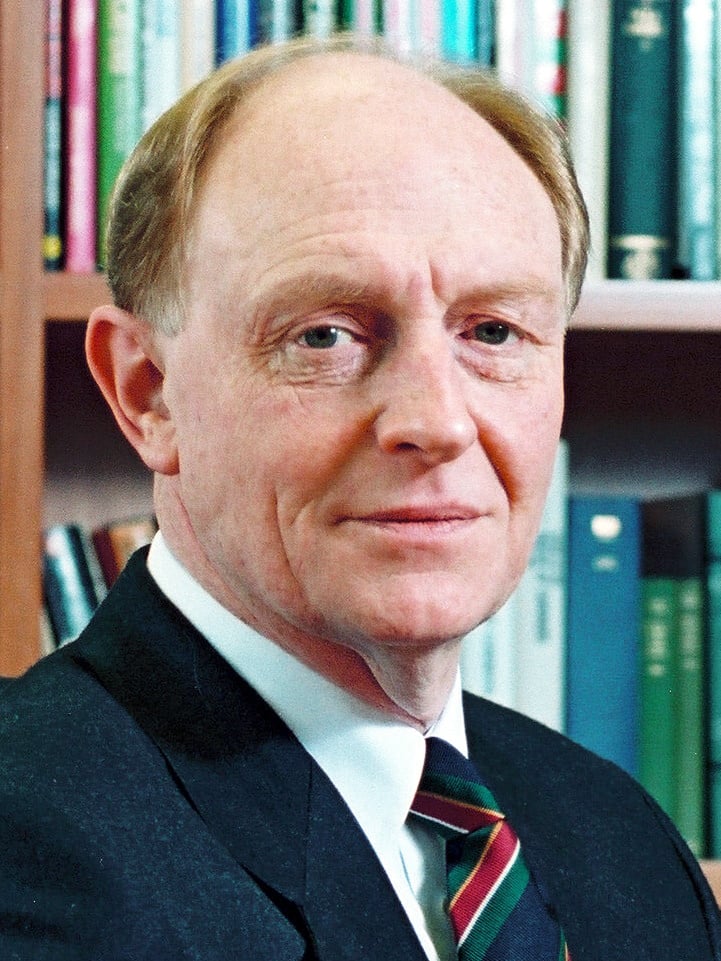
Labour lost a third successive general election in 1987, and Neil Kinnock responded with a major policy review
Labour moved away from unilateral nuclear disarmament, withdrawal from the European Economic Community (EEC) and higher taxes on top incomes
Kinnock also modernised Labour's organisation and presentation
Peter Mandelson helped professionalise communications and campaigning
Labour still lost the 1992 general election, with Kinnock resigning four days later
John Smith led Labour from 1992 to 1994
He introduced One Member, One Vote, reducing the influence of the trade union block vote
Tony Blair became leader in 1994, promoting the idea of New Labour
In 1995, Clause IV was rewritten, ending Labour's formal commitment to common ownership
Labour won a landslide victory in 1997
It secured 418 seats with a majority of 179
The Conservatives fell to 165 seats, their lowest total since 1906
The key question asks whether Labour won due to its own transformation or whether Conservative division, sleaze and 18 years in office were more important
Labour under Neil Kinnock
The scale of the problem after 1987
Labour lost its third successive general election in June 1987
The Conservatives won 376 seats, with a majority of 102
Labour increased its total to 229 seats but remained well short of government
Kinnock had already begun reforming the party after becoming leader in 1983
The 1987 defeat showed that organisational change alone had not been enough
Labour also needed to reconsider policies that had continued to deter some voters
Taking on the hard left
After becoming leader in 1983, Kinnock confronted the Militant Tendency, a Trotskyist group working inside Labour that dominated Liverpool City Council
At the 1985 Labour Party conference, he publicly attacked Militant's handling of Liverpool, where deputy council leader Derek Hatton was its best-known figure, showing voters he was willing to take on the hard left
From 1986, leading Militant members were expelled from the party, the clearest sign that Labour was moving back towards the centre
Changing Labour's policies, 1987–1989
Kinnock launched a major policy review within weeks of the 1987 defeat
Every major area of Labour policy was reassessed over the next two years
By 1989, much of the programme associated with the 1983 manifesto had been abandoned
Labour moved away from several policies that had proved difficult to sell electorally
Support for unilateral nuclear disarmament was dropped
Labour abandoned its commitment to withdraw Britain from the EEC
Plans for higher income tax on top earners were reduced
The party also moved towards accepting the market economy
Labour no longer promised to reverse most Conservative privatisations
Instead, it argued that markets should be managed more fairly
These changes did not mean Kinnock accepted Thatcherism
At the 1988 Labour Party conference, he argued that Labour could accept markets and competition without accepting Conservative ideas more broadly
“When we make those arguments about individuals and consumers and competitiveness it is not long before we hear people saying that we are proposing ‘to run the capitalist economy better than the Tories’. ... There is no ‘slide to the right’ in that. There is no ‘concession to Thatcherism’ in any of that. In any case, let me tell this party what so many in this party tell me: the greatest concession to Thatcherism is to let it win again. That is the ultimate concession”
Neil Kinnock, Leader of the Labour Party, Labour Party conference, 1988
Approach: The source is useful because it shows how he defended reform to Labour members. He rejects the claim that accepting markets and competition meant a “concession to Thatcherism”, showing that he wanted to modernise Labour without presenting the changes as an abandonment of its values
However, this was a speech aimed partly at reassuring internal critics, so his language should be compared with the actual policy changes being approved
Professionalising the party
Kinnock also changed the way Labour organised and presented itself
Peter Mandelson, Director of Communications from 1985, played a major role
The Shadow Communications Agency helped reshape Labour's campaigning and public image
The red rose replaced the traditional red flag as the party emblem
Labour's public presentation became more tightly controlled
Party conference appearances and broadcasts were increasingly stage-managed
The aim was to present Labour as more disciplined, modern and capable of government
Critics argued that Labour was changing its image more quickly than its underlying beliefs
This remained a problem when voters judged whether the party had changed enough to govern
Reducing trade union influence
Kinnock also moved Labour away from its traditional dependence on the trade unions
In 1989, Labour ended its support for closed shop agreements
Union influence over policy was reduced
However, the trade union block vote at the party conferences remained in place
Reducing it further was left to Kinnock's successor, John Smith
Why Labour still lost in 1992
Labour's reforms made the party more competitive
It led the Conservatives in opinion polls for much of 1990 and 1991
Labour remained ahead for a period even after John Major replaced Margaret Thatcher
However, many voters were still not fully convinced that Labour was ready to govern
Major's campaigning presented him as a more moderate Conservative leader
Labour's own campaign also faced criticism
The Sheffield rally shortly before polling day was later portrayed as overconfident
Some voters still had doubts about Kinnock personally as a future prime minister
The Conservatives therefore won again in April 1992
They secured a majority of 21
Labour won 271 seats
Kinnock resigned four days after the defeat
He left behind a party that was significantly more moderate, professional and electorally competitive than the one he inherited in 1983
Kinnock's record
Strengths |
|
|---|---|
Weaknesses |
|
Examiner Tips and Tricks
Do not present Kinnock either as a man who completely transformed Labour or simply as someone who lost two elections. A stronger argument is that Kinnock made Labour more electable without actually making it electable enough to win in 1992. He changed policy, weakened the left (expelling Militant from 1986) and professionalised the party, but important doubts remained about both Labour's credibility and Kinnock himself.
John Smith and party reform
Smith as leader
John Smith became Labour leader in July 1992, after Kinnock resigned following the general election defeat
He had been Shadow Chancellor since 1987
He was widely seen as a serious and reliable figure, particularly on the economy
Smith also benefited from problems facing the Conservative government
After Black Wednesday in September 1992, Conservative claims to economic competence were badly weakened
Smith was well placed to challenge the government from the opposition benches
Modernisers criticised his cautious approach as a "one more heave" strategy
Figures such as Tony Blair and Gordon Brown believed Labour still needed more substantial reform
One Member, One Vote, 1993
Smith's most important reform was to reduce the formal power of the trade unions inside the Labour Party
Trade union block votes had long influenced both party decisions and the selection of parliamentary candidates
At the 1993 Labour Party conference, Smith secured the introduction of One Member, One Vote (OMOV)
Individual party members gained a direct vote in selecting Labour parliamentary candidates
This reduced the influence of trade union block voting
The reform was difficult to achieve
Smith faced opposition from several major unions
It passed by only a narrow margin
Smith did not remove union influence entirely
He rejected attempts to extend OMOV to all conference votes on party policy
Some modernisers therefore believed the reform had not gone far enough
“New Labour was born of the courage of one man. We would not be here, proud and confident today, but for that man, Neil Kinnock. And then it grew under the wisdom of John Smith, who guided us through the revolution in our party democracy and whose memory we honour. In this last year we have transformed our party, our constitution rewritten, our relations with the trade unions changed and better defined for today’s world, our party organisation improved, new policy breaking new ground”
Adapted from Tony Blair, Leader of the Labour Party, Labour Party conference, 1995
Approach: Blair was speaking at the 1995 Labour Party conference, after becoming leader and while pushing Labour reform further.
The source is useful because he gives both Kinnock and Smith credit for laying the foundations of New Labour. He presents Labour’s transformation as a gradual process rather than something that began only with his own leadership.
However, Blair also had a reason to stress continuity. By praising his predecessors, he could present his own reforms as the next stage of an accepted process rather than a complete break with Labour’s past.
Smith's sudden death
Smith died suddenly from a heart attack in May 1994, aged 55
Labour was leading strongly in the opinion polls at the time
His death left an unanswered question about how far he would have taken Labour reform
One view is that Labour may already have been capable of winning the next election under Smith
Another is that his cautious approach would have slowed further reform and left Labour more vulnerable to Conservative attacks
Examiner Tips and Tricks
Do not underestimate Smith simply because he led Labour for less than two years. His importance lies less in the length of his leadership than in the structural reform he achieved.
Use OMOV as the key evidence. Kinnock had already changed policy and weakened the Labour left, but Smith went further by reducing trade union influence over candidate selection.
The emergence of Tony Blair and 'New Labour'
The 1994 succession
Tony Blair became Labour leader in July 1994, after John Smith's sudden death
His main potential rival within Labour was Gordon Brown
Brown agreed not to stand against Blair after a private agreement
Brown remained Shadow Chancellor, a post he had held since 1992, and took a leading role in shaping Labour's economic policy
Blair and Brown had both entered Parliament in 1983 and belonged to Labour's modernising wing
Both believed that Labour needed to change further if it was to win back voters who had rejected the party in 1987 and 1992
Blair therefore inherited a party that had already changed substantially under Kinnock and Smith
His aim was to make those changes more visible and push them further
Rewriting Clause IV, 1995
Blair wanted a clear symbol that Labour had moved away from some of its traditional socialist policies
Clause IV of the Labour Party constitution committed the party to the common ownership of industry
Although it had not dictated Labour policy for many years, it remained strongly associated with the party's socialist tradition
Blair announced his intention to rewrite Clause IV at the October 1994 Labour Party conference
He secured approval for the new wording at a special conference in April 1995
The revised clause dropped the commitment to common ownership
Instead, it stressed spreading power, wealth and opportunity more widely
The change had considerable symbolic importance
Hugh Gaitskell had unsuccessfully tried to remove Clause IV after Labour's 1959 election defeat
Blair's success showed how far Labour's internal balance had shifted by the mid-1990s
What 'New Labour' meant
The term New Labour was used from 1994 to emphasise that the party had changed
It was particularly aimed at voters who had been unwilling to support Labour in the previous elections
Economic policy was central to this change in image
Labour wanted to weaken the Conservative claim that it was a "tax and spend" party
Gordon Brown promised that Labour would follow Conservative spending plans for the first two years after taking office
Labour also promised no increase in the basic or top rates of income tax
New Labour therefore accepted more of the existing market economy
It did not propose returning most privatised industries to state ownership
Business was presented as a partner rather than an opponent
Labour also retained legal restrictions on trade unions introduced under the Conservatives
Modernising Labour's image
Blair placed much greater emphasis on how Labour communicated with voters
Alastair Campbell became his press secretary in 1994
Labour worked to improve its relationship with newspapers and respond quickly to hostile stories
Party communications were tightly controlled
Spokespeople were expected to stay "on message"
Peter Mandelson remained important in shaping Labour's presentation and campaign strategy
Blair also tried to broaden Labour's appeal beyond its traditional working-class and trade union base
The party increasingly presented itself as attractive to middle-class voters, women and younger voters
Blair himself was promoted as a younger, modern political leader
“In each area of policy a new and distinctive approach has been mapped out, one that differs from the old left and the Conservative right. This is why new Labour is new. New Labour is a party of ideas and ideals but not of outdated ideology. What counts is what works. ... The old left would have sought state control of industry. The Conservative right is content to leave all to the market. We reject both approaches”
The Labour Party general election manifesto, 1997
Approach: This was Labour’s 1997 election manifesto, so it was written to persuade voters that New Labour represented genuine change
The source is useful because it clearly sets out how Labour wanted to distinguish itself from both Old Labour and the Conservatives. It accepts the market economy but rejects both state control of industry and a completely free-market approach
However, as an election manifesto, it shows how Labour wanted to be seen rather than proving how differently it would govern once in office
Blair's position by 1997
Strengths |
|
|---|---|
Weaknesses |
|
Examiner Tips and Tricks
Do not argue that Blair created Labour’s transformation from nothing. Kinnock changed policy and organisation, Smith reduced trade union power, and Blair pushed the process further through Clause IV, economic policy and the New Labour brand
Reasons for the Labour victory of 1997
Labour's own transformation
Labour entered the 1997 election after around a decade of reform
Policies that had damaged the party in the 1980s had been dropped
Unilateral nuclear disarmament
Withdrawal from the EEC
Higher income tax on top earners
Labour no longer promised to reverse most Conservative privatisations or restore extensive state ownership
This made it harder for the Conservatives to use older attacks against Labour
Claims that Labour would sharply raise taxes or spending had less supporting evidence
The Conservatives also claimed that Labour had simply copied their policies, which undercut their other claim that Labour was dangerously left-wing
Blair also broadened Labour's appeal
New Labour targeted middle-class, female and younger voters as well as the party's traditional supporters
The party presented itself as moderate, business-friendly and economically cautious
Organisation, message and the media
Labour's election campaign was tightly organised
Peter Mandelson coordinated public statements and campaign strategy
Alastair Campbell worked closely with the press and responded quickly to hostile stories
Labour spokespeople were expected to remain "on message"
The party used a pledge card to promote five clear promises:
cut class sizes to 30 or under for 5, 6 and 7-year olds
introduce faster punishment for persistent young offenders
cut NHS waiting lists
help 250,000 under-25s into work
avoid rises in income tax rates
Each promise was linked to an identified source of funding
Press attitudes had also changed
Newspapers that had attacked Kinnock in 1992 were more supportive of Blair or remained neutral
This reduced one of the disadvantages Labour had faced in earlier elections
“Labour had won an extraordinary victory. Most satisfying for me, 1.8 million Conservative voters in 1992 were estimated to have switched to Labour in 1997. This scale of direct switching was at the heart of New Labour’s election strategy. Labour, a party almost dead in 1983, was now reborn. Labour did not win in 1997; New Labour did. ... New Labour was the last line of defence against people’s fears and memories of Old Labour, their images of extremism and failure. It was a line that held”
Philip Gould, electoral strategist and polling adviser to the Labour Party, and a close colleague of Tony Blair, from The Unfinished Revolution (1998)
Approach: Philip Gould was a Labour strategist and adviser to Tony Blair, writing in 1998, shortly after the election victory
The source is useful because he had direct knowledge of Labour’s campaign strategy and explains the importance of changing voters’ long-standing fears about the party
However, Gould had a strong interest in presenting the strategy he helped design as successful. His claim that New Labour had created a complete break with Labour’s earlier image should therefore be compared with the reforms already made under Kinnock and Smith
Conservative weakness
Labour also benefited from serious problems inside the Conservative Party
The Conservatives had been in government for 18 years
Some voters increasingly felt that it was time for a change
Divisions over Europe remained visible throughout Major's premiership
They weakened party discipline and repeatedly produced public disagreements
Sleaze allegations also damaged the government's reputation
Scandals involving MPs and ministers continued into the election period
In Tatton, Neil Hamilton lost his seat to the independent anti-sleaze candidate Martin Bell
The Conservatives had still not fully recovered from the political impact of Black Wednesday
Even though the economy later improved, their reputation for economic competence had been badly weakened
The Referendum Party, founded by James Goldsmith, also fought the election on the issue of Europe
It won no seats
However, it may have taken enough votes from Conservative candidates to affect some marginal constituencies
Why Labour's campaign was effective
Labour's strategy worked partly because it reduced the number of issues on which the Conservatives could attack
Tax and spending commitments were tightly controlled
Policies were presented in a simple, memorable way
The party also benefited from the contrast between Blair and Major
Blair was presented as younger and more modern
Major led a tired government plagued by years of infighting
The Conservatives' 'New Labour, New Danger' campaign, including the 1996 'demon eyes' poster of Blair, failed to revive voters' fears of Labour
Labour, therefore, entered the campaign with both fewer weaknesses of its own and more Conservative weaknesses to exploit
The result
Labour won a landslide victory, taking 418 seats, a majority of 179, and 43.2% of the vote
This was Labour's largest-ever number of seats
In 1983, the Conservatives had won a majority of 144, so Labour reversed one of its worst defeats in only 14 years
The Conservatives fell to 165 seats on 30.7% of the vote
This was their lowest seat total since 1906 and their lowest vote share since 1832
They also failed to win a single seat in Scotland or Wales
Michael Portillo's defeat in Enfield Southgate became one of the symbolic moments of election night
The Liberal Democrats won 46 seats with 16.8% of the vote
Tactical voting helped both Labour and the Liberal Democrats in some constituencies
Turnout fell to 71.4%, while around 120 women MPs were elected
This was roughly double the number elected in 1992
Examiner Tips and Tricks
Do not explain 1997 using only one side. Labour made itself much harder to attack, but Conservative division, sleaze and loss of economic credibility also created the conditions in which that strategy worked
Why did Labour win the 1997 election?
This question weighs Labour's own transformation against the collapse of Conservative support
Some key evidence is outlined for each side below
Labour had transformed its electoral appeal
Ten years of reform under Kinnock, Smith and Blair had removed many of the policies that had previously cost Labour support
Unilateral nuclear disarmament and withdrawal from the EEC had been abandoned
OMOV reduced trade union influence
Blair's rewriting of Clause IV provided a visible break with Labour's traditional commitment to common ownership
Labour also reduced Conservative attacks over economic policy
Gordon Brown promised to follow Conservative spending plans for the first two years
Labour promised no increase in the basic or top rates of income tax
This made the traditional accusation that Labour would simply "tax and spend" harder to sustain
The party's organisation and presentation were also much stronger
Peter Mandelson helped coordinate Labour's campaigning and public message
Alastair Campbell developed a more effective relationship with the press
The pledge card reduced Labour's programme to five clear and costed promises
These changes helped Labour win voters it had struggled to reach in previous elections
Around 1.8 million people who had voted Conservative in 1992 switched directly to Labour in 1997, according to Labour strategist Philip Gould
Blair made significant gains among voters in Middle England, which had been central to Conservative election victories since 1979
Conservative support had collapsed
The Conservatives had also accumulated serious political problems by 1997
They had been in government for 18 years, increasing the appeal of a change of government
Black Wednesday had damaged their reputation for economic competence
Divisions over Europe repeatedly exposed disagreements within the party
Allegations of sleaze gave Labour another line of attack
Conservative divisions were still visible during the election campaign
The Referendum Party challenged the Conservatives from a more Eurosceptic position
Some voters who might previously have supported the Conservatives therefore had another option
Labour also led the Conservatives in the opinion polls for much of Major's premiership
This suggests Conservative weakness began before Blair became Labour leader
However, Labour had also led in 1990 and 1991 under Kinnock and still lost in 1992
Conservative unpopularity alone was therefore not enough to guarantee a Labour victory
“John Major became the Conservative Party leader in 1990 because he was the ideal compromise candidate. ... But, when it mattered, Major was a Euro-enthusiast who was prepared to divide and discipline his party to the point of bitter conflict. The Conservative Party became, behind the facade of unity, totally split from top to bottom over Europe. ... Formerly diehard party workers departed in droves. Donations and subscriptions collapsed. Ultimately, Major’s European policy contributed mightily to his election defeat”
The Bruges Group, a Eurosceptic organisation based in the UK (1997)
Approach: The Bruges Group was a Eurosceptic campaigning organisation, set up in 1989 with Thatcher as its president, writing after the 1997 election, so it had a clear reason to explain Conservative defeat through Major’s European policy
The source is useful because it shows how Eurosceptics interpreted the collapse of Conservative support, particularly the impact of party division and dissatisfaction among traditional activists
However, its focus on Europe is narrow. It should be compared with other explanations such as Black Wednesday, sleaze and Labour’s own transformation before accepting Europe as the main cause
“‘You never stood a chance.’ ‘It was always inevitable.’ ‘Nothing more you could have done.’ After the election was over, these were the common refrains. ... The longer you’ve been around, the longer the list of failures which attaches to you. ... All they heard was the daily message on sleaze and Europe. All they saw were the exotic follies of a handful of MPs. And they knew that we had made our fair share of policy mistakes. But in one respect Labour did indeed create their victory. The party managed not to seem frightening any more”
John Major, published in John Major: The Autobiography (1999)
Approach: Major wrote this account in his 1999 autobiography, two years after losing the election
As the defeated Conservative leader, he had an obvious reason to emphasise long-term problems such as sleaze, Europe and earlier policy mistakes rather than his own leadership
However, his admission that Labour had “managed not to seem frightening any more” is particularly useful. It acknowledges that Labour’s own transformation contributed to the result, even within an account largely explaining Conservative failure
Examiner Tips and Tricks
The strongest explanation combines the two: Labour became much harder to attack at the same time as the Conservatives became easier to defeat
A very useful comparison is 1992 against 1997. Conservative problems existed in both periods, but Labour lost in 1992 and won heavily in 1997. That allows you to test how important Labour’s own transformation had been

Unlock more, it's free!
Join the 100,000+ Students that ❤️ Save My Exams
the (exam) results speak for themselves:

Was this revision note helpful?
