Thatcherism & Social Conflict (AQA A Level History: Component 2: Depth study): Revision Note
Exam code: 7042

Summary
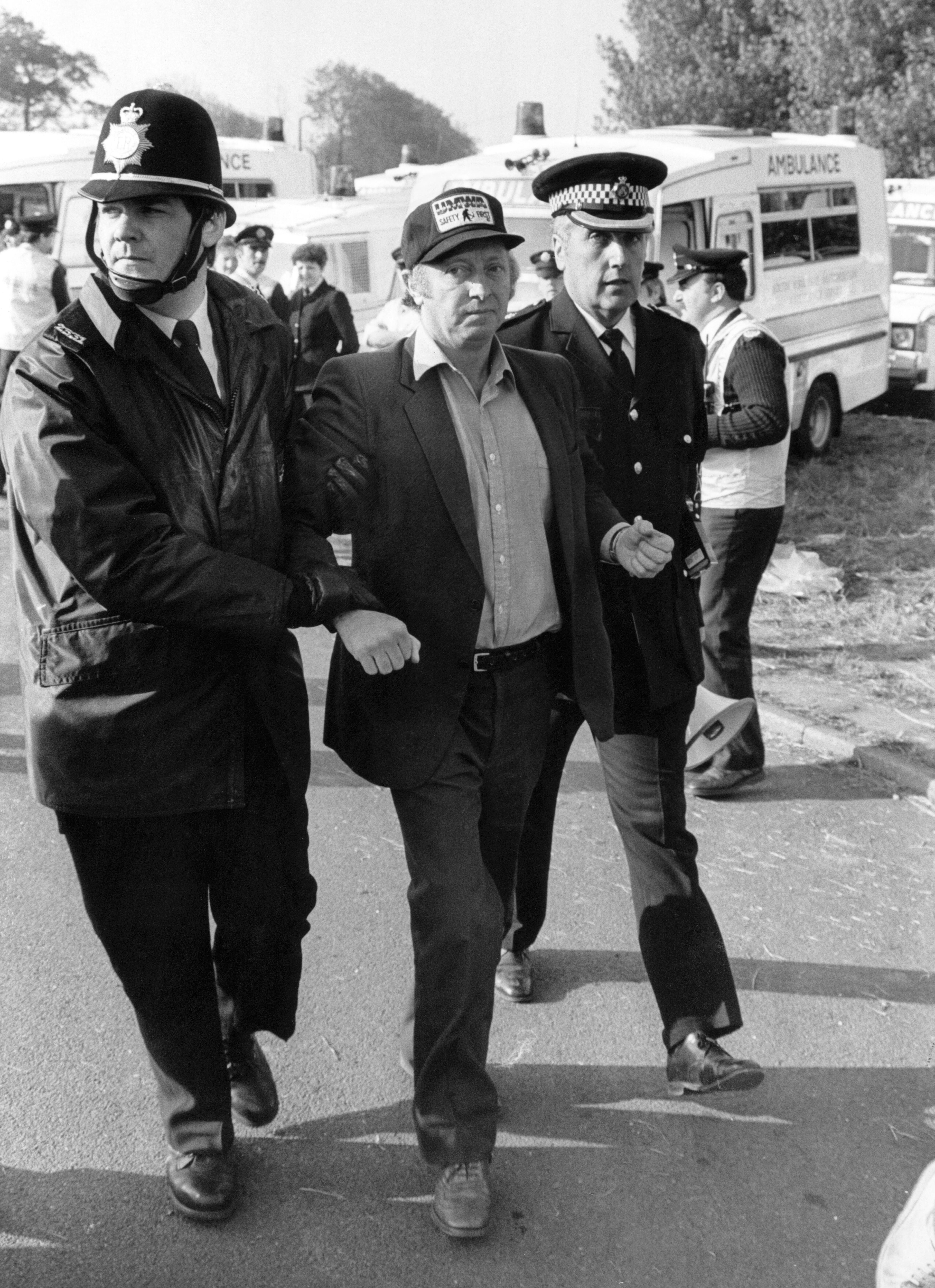
The miners' strike of March 1984 to March 1985 was the longest and most bitter industrial dispute of the period
It ended in defeat for the National Union of Mineworkers (NUM)
The government had prepared for major industrial conflict
Coal stocks were built up
Secondary picketing was outlawed in 1980
From 1984, unions were required to hold ballots before strike action
Other disputes also showed the weakening of trade union power
In the Wapping Dispute of 1986, print unions failed to stop Rupert Murdoch's newspapers being produced
The Community Charge, also known as the poll tax, replaced domestic rates with a flat-rate charge on almost every adult
It faced organised opposition before the tax had even been collected
With parliamentary opposition weak, criticism also came from outside Westminster
The Church, universities, the arts and pressure groups all challenged Thatcherite policies
Riots in Brixton, Toxteth and Handsworth also exposed deep tensions over race, policing and deprivation
The key question asks whether Thatcherism created new divisions in British society, or whether it mainly sharpened divisions that already existed before 1979
The miners' strike, 1984–1985
Why did the strike happen?
The dispute grew out of a long-running argument over the closure of uneconomic pits
In 1981, the National Coal Board (NCB) warned that 23 pits would need to close
The government backed down rather than risk a repeat of the industrial defeats of 1972 and 1974
By March 1984, the position had changed
The NCB announced the closure of 20 pits
This would have led to a loss of at least 20,000 jobs
In response, more than three-quarters of the country's 187,000 miners went on strike
The strike began at Cortonwood Colliery in South Yorkshire
Arthur Scargill, president of the National Union of Mineworkers (NUM), claimed the government had a secret plan to close 70 pits
Cabinet papers released under the thirty-year rule in 2014 later showed a strategy to close 75 pits over three years
The government was much better prepared than in earlier industrial disputes
Coal stocks had been built up at power stations over the previous 18 months
North Sea oil made an energy crisis less likely than in 1973
Ian MacGregor had been appointed chairman of the NCB with government backing to take a tougher approach
How was the strike fought?
The NUM was divided from the beginning
Scargill refused to hold a national ballot, which weakened the union's legal position
It also damaged support for the strike among some miners and the wider public
Most Nottinghamshire miners crossed the picket lines to continue working
Striking miners condemned them as 'scabs' and 'traitors'
They later formed the breakaway Union of Democratic Mineworkers (UDM)
The UDM accused Scargill of putting hard-left politics ahead of miners' interests
The government presented the dispute as a test of democratic authority
Ministers argued that an unballoted strike should not be able to force policy on an elected government
Thatcher compared the dispute with the Falklands conflict and referred to the strike's leaders as the 'enemy within'
“The National Union of Mineworkers has sought to impose upon the nation an industrial settlement that the nation cannot afford and will not accept. This government will not intervene to settle a strike that one part of the trade union movement has imposed without a ballot”
Margaret Thatcher, Prime Minister, Speech to the 1922 Committee of Conservative backbench MPs, reported in The Times, 19th July 1984
Approach: Thatcher gave this speech to Conservative backbench MPs on 19th July 1984, while the strike was still under way
The source is useful for showing how the government wanted the dispute to be understood. Thatcher presents the NUM as trying to impose its will without a ballot and frames the strike as a question of law, democracy and government authority
However, she was speaking to her own political supporters during the dispute. The source is therefore much stronger for showing the government’s argument than for giving a balanced account of what was happening in the coalfields
Policing
Policing became one of the most controversial parts of the dispute
Forces were coordinated nationally through the National Reporting Centre
Police were sent across the country to different pits
The police used several methods:
The officers were equipped with batons to deal with striking miners
The mounted police were a common presence at picket lines
They taunted striking miners by waving banknotes at them
The most famous violent confrontation was the Battle of Orgreave on the 18th June 1984
Case Study
Battle of Orgreave, 18 June 1984
The Battle of Orgreave was a violent confrontation between the pickets and the police at the coking plant at Orgreave in Rotherham, South Yorkshire
6,000 police officers drawn from multiple forces (including the South Yorkshire Police and the Metropolitan Police) faced thousands of pickets at the coking plant
BBC News edited its footage out of chronological order, showing the miners throwing stones at the police first
In 1991, South Yorkshire Police settled claims from 39 pickets, and the BBC later acknowledged that its footage had reversed the order of events; who started the violence remains disputed
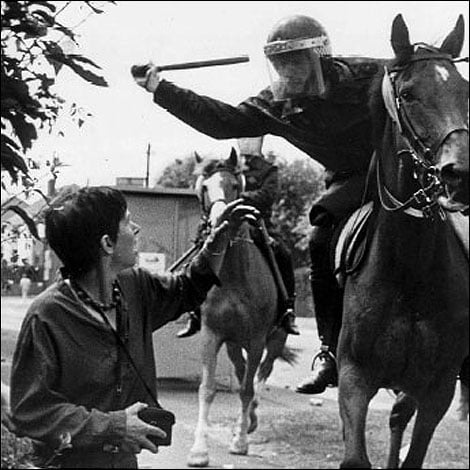
A famous image of Lesley Boulton, a member of the Sheffield branch of Women Against Pit Closures, became one of the defining images of the strike
Boulton, unarmed and holding a camera, was photographed by John Harris cowering to avoid being struck on the head by a mounted police officer holding a baton
Official figures recorded 95 miners charged with riot, with 72 police officers injured
Prosecutions collapsed in court with the South Yorkshire Police agreeing to pay £425,000 in compensation and £100,000 in legal costs to 39 pickets in an out-of-court settlement
No officers were disciplined for misconduct, the inquiry is still ongoing
Why did the strike fail?
The government was better prepared than in earlier industrial disputes
Coal stocks meant power stations could continue operating
North Sea oil reduced dependence on coal
The NUM remained divided
Nottinghamshire miners and others continued working, crossing the pickets
More miners gradually returned to work during the winter to support their families
The government refused to settle on the NUM's terms
The strike ended in March 1985
The NUM returned to work without an agreement
Pit closures continued
The consequences
The strike was a major defeat for the NUM
Coal industry employment fell from around 235,000 in 1979 to around 60,000 by 1990
Trade union power also declined
By 1990, total union membership had fallen to around three-quarters of its 1979 level
The defeat affected other industries
British Steel and British Airways also shed large numbers of jobs in the early 1980s with limited union resistance
Thatcher presented the outcome as proof that the government would no longer retreat before union pressure
She contrasted her approach with a defeat suffered by Edward Heath in 1974 and James Callaghan in 1979
“The mineworkers’ defeat has been prepared for three years. Coal stocks have been built up. Oil-fired power stations have been commissioned. Non-union contractors have been used to move coal from Nottinghamshire. The National Reporting Centre at Scotland Yard has coordinated police movements across force areas in a way that previous strikes never saw. We are not watching a neutral state keeping the peace; we are watching the state systematically preparing for, and winning, an industrial confrontation with the largest union in the country”
An industrial correspondent's comment article, The Guardian, 10 December 1984
Approach: This article appeared in The Guardian on 10 December 1984, while the strike was still continuing. It argues that the government had prepared for the dispute over several years by building coal stocks, using oil-fired power stations and coordinating policing
The source is useful because it shows how critics of the government understood the strike while it was still happening. It presents the dispute as a planned confrontation rather than an unexpected industrial crisis
However, it is an opinion piece from a newspaper critical of the government. Its claims about government strategy should therefore be tested against other evidence, including the preparations made before 1984
Examiner Tips and Tricks
Do not narrate the strike. Instead, organise an answer around why the NUM lost:
government preparation
the lack of a national ballot
division among miners
policing
the financial strain of a year-long strike
Remember that the coal industry was nationalised in 1946 by Attlee's Labour government, not by Thatcher. The NCB was a state body in 1984 and coal was not privatised until 1994. Examiners have penalised answers that confuse this.
Other industrial disputes
The legal squeeze on the unions
The government reduced trade union power through legislation before confronting unions directly
Secondary picketing was outlawed in 1980
Unions could no longer picket workplaces that were not directly involved in a dispute
From 1984, unions were required to hold ballots before calling industrial action
The closed shop was also restricted
Workers could no longer be forced to join a union as a condition of employment
These changes limited several of the tactics that had helped unions during the disputes of 1972 and 1974
By the time of the miners' strike and the later disputes, unions were operating under much tighter legal controls
“More and more, the nationalised industries are run for the benefit of those who work in them. Their aim is jobs for the boys, and more money for each boy, rather than satisfaction for the customer. As a long term policy, government should find a way of breaking up nationalised industries into smaller, independent units, which could eventually be denationalised, and of ending its vulnerability to powerful unions in vital industries. ... There is no doubt, however, that at some point the enemies of the next Tory government will try and destroy this policy. The most likely is the miners. We should prepare for this ...”
A Conservative Party strategy group chaired by Nicholas Ridley MP, internal policy document, 1977, known as the Ridley Report
Approach: This extract comes from a Conservative Party strategy document written in 1977 by a group chaired by Nicholas Ridley. It was intended for internal party use rather than publication
The source is useful because it shows that senior Conservatives were thinking about how to reduce union power before Thatcher entered government. It also identifies the miners as a likely source of future confrontation
However, it was a planning document written in opposition. It shows what some Conservatives hoped to do, not what would definitely happen once they were in government
Disputes in the public sector
Public sector unions became more militant as pay disputes increased in the early 1980s
High inflation meant that many disputes were about pay rather than job losses
COHSE (Confederation of Health Service Employees) and NUPE (National Union of Public Employees) represented health service workers
Their disputes often attracted public sympathy
Teachers had rarely taken major industrial action before
A prolonged dispute over pay and conditions developed in the mid-1980s
The government did not respond to every dispute in the same way
Ministers sometimes made concessions when public support clearly favoured the workers
This contrasts with a much firmer approach taken towards the miners
The Wapping Dispute, 1986
By the mid-1980s, some employers were more willing to challenge union power directly
The newspaper industry became a major example
Rupert Murdoch was the most prominent employer involved
In January 1986, Murdoch moved production of his newspapers to a new plant at Wapping
New printing technology reduced the need for many traditional print jobs
The move also weakened the bargaining position of the print unions
The print unions tried to stop production and distribution
They failed to prevent the publication of a single title
The dispute ended after 13 months
The unions failed to recover their previous bargaining power
Wapping became another important example of declining trade union influence
Examiner Tips and Tricks
Look for the pattern. In many cases the government changed the legal framework first, and later disputes took place under those new rules. That is more useful than simply listing strikes
Keep the differences between disputes clear: The miners' strike was a direct confrontation with the government, while Wapping involved a private employer using new technology and the changed legal environment to defeat union resistance
The poll tax and extra-parliamentary opposition
Why was the Community Charge (poll tax) introduced?
The Community Charge, better known as the poll tax, was designed to replace domestic rates and reform local government finance
Under the rates system, tax was based on the rental value of property
Only householders received a bill
The Community Charge was a flat-rate payment made by almost every adult
Ministers argued that the new system would make local government more accountable
More people who voted for local services would contribute directly towards their cost
If councils increased spending, local voters would see the effect in their own bills
The government hoped this would put pressure on councils to control spending
The legislation passed through Parliament in 1987 and 1988
The Local Government Finance Bill received its second reading on 16th December 1987
The Community Charge was introduced in Scotland in 1989
It followed in England and Wales in 1990
“The objectives of the Bill are, first, to abolish the inequities of the present domestic rating system; secondly, to make local councils more responsive and accountable to their electors; and, thirdly, to provide badly needed protection for business ratepayers. It will achieve those objectives first by replacing domestic rates with a fairer community charge ... It is fair because it provides that nearly all adults will pay a flat rate local charge for local services which broadly reflect their use of local services”
Nicholas Ridley, Secretary of State for the Environment, moving the second reading of the Local Government Finance Bill, 16th December 1987
Approach: Nicholas Ridley was Secretary of State for the Environment when he defended the Local Government Finance Bill in the House of Commons on 16th December 1987
The source is useful for showing the government’s reasons for replacing rates. Ridley stresses fairness and accountability, arguing that almost all adults should contribute towards the local services they used
However, Ridley was the minister responsible for the Bill, so he was making the government’s case for the reform. The source should be tested against criticism of the flat-rate system, especially over ability to pay
Why was the poll tax opposed?
The main criticism concerned ability to pay
A pensioner on a low income could face the same basic charge as a millionaire living in the same area
Rebates of up to 80% were available to the poorest
Critics argued that people just above the rebate threshold could still struggle to pay
Labour attacked the lack of any direct link between the charge and income
Opposition also came from within the Conservative Party
Some Conservative backbenchers favoured a band linked to income
The Tory Reform Group argued that the scheme could increase central government control rather than strengthen local accountability
Ministers also recognised practical difficulties
The charge would be more complicated to collect than domestic rates because councils had to identify and bill individual adults
“The Bill contains proposals of the most profound importance for all the people of Britain. The consequences of a flat-rate personal poll tax will be much greater than those of any Finance Bill this century. ... This is not just another Local Government Finance Bill. It envisages the abandonment of the principle of fairness in personal taxation”
John Cunningham MP, moving the Opposition’s reasoned amendment against the Bill, 16 December 1987
Approach: John Cunningham was a Labour frontbench MP speaking during the same Commons debate on 16 December 1987. He attacked the Community Charge as unfair because everyone in an area would pay the same basic amount regardless of income
The source is useful for showing the central Labour argument against the policy: fairness should be linked to ability to pay. Used alongside Ridley, it also shows that the two sides disagreed over the meaning of fairness itself
However, Cunningham was speaking for the opposition against the Bill. His speech is therefore evidence of Labour’s case against the policy rather than proof by itself that the tax would operate unfairly
Opposition outside Parliament
Resistance began to organise before the Community Charge had even been collected
Anti-Poll Tax Unions appeared across the country
They encouraged people not to register and, later, not to pay
Large-scale non-payment created a practical problem for councils
Councils and courts would have to pursue large numbers of individuals separately
The poll tax became one example of a wider pattern during the Thatcher years
Parliamentary opposition was often weak and divided
Critics therefore used:
pressure groups
protest campaigns
churches
universities
the arts
Universities and the arts
Some criticism came from institutions that were not normally part of party politics
Oxford University voted against giving Thatcher an honorary degree
The decision was a protest against cuts to higher education
Previous Oxford-educated post-war prime ministers had received the honour
Writers and performers also criticised Thatcherism
Playwrights including Caryl Churchill, David Hare and Alan Ayckbourn wrote works that satirised or criticised aspects of the period
Red Wedge brought together musicians, including Billy Bragg and Paul Weller, to campaign against the government
Television dramas such as Boys from the Blackstuff reached large audiences with stories about unemployment and its effects
Pressure groups and protest
Pressure groups challenged the social effects of government policy
Shelter campaigned on homelessness
Age Concern campaigned on pensioner poverty
Opposition to nuclear weapons also became a major protest movement
The Campaign for Nuclear Disarmament (CND) revived after the 1979 decision to base American Cruise missiles in Britain
Women established a peace camp outside Greenham Common in September 1981
The camp opposed the deployment of Cruise missiles
In April 1983, around 70,000 protesters formed a human chain from Greenham Common to Aldermaston
The camp continued after the missiles were removed in 1991
It finally closed in 2000
The Church
The Church of England also became a prominent source of criticism
Bishops, including David Jenkins in Durham and David Sheppard in Liverpool, spoke publicly about poverty and deprivation
In 1985, the Church published Faith in the City
The report called for greater action to help deprived urban communities
It questioned the social consequences of economic policies that placed a heavy burden on poorer areas
Examiner Tips and Tricks
Do not simply list examples of protest. Explain why extra-parliamentary opposition became important. With Labour divided and the Conservatives holding large Commons majorities, critics often looked to pressure groups, cultural institutions, churches, and public campaigns instead
Social divisions under Thatcherism
The uneven impact of economic change
The effects of economic change were concentrated in particular parts of Britain
Coal, steel and shipbuilding areas, predominantly in the North, lost a large number of jobs
Service industries grew fastest in the South
This widened the existing north-south divide
Two people could experience the 1980s very differently depending on where they lived
Former industrial areas were more likely to experience unemployment and deprivation
Urban decline became more visible in some inner cities
Poor health, depression, alcohol dependency and drug use increased in some of the most deprived areas
Young people could no longer assume that they would find the same local work as their parents
Many moved away in search of employment, weakening communities further
Riots and the policing of race
A series of serious riots broke out in English cities between April and July 1981
The worst of these occurred in:
Brixton, London
Toxteth, Liverpool
Handsworth, Birmingham
Chapeltown, Leeds
These areas also had high unemployment and severe deprivation
Further riots took place in Brixton, Handsworth and Tottenham in 1985
Relations between the police and some Black communities were already tense
The Sus Law allowed police to stop and search people they suspected might commit an offence
Many Black and Asian young people believed it was being used disproportionately against them
The law was repealed in 1981
Critics argued that racial prejudice had become institutionalised within the police, although the Scarman Report rejected that view
Operation Swamp intensified tensions in Brixton shortly before the April 1981 riot
Police stopped around 1,000 people in six days
The Scarman Report was commissioned to investigate the 1981 disturbances
It identified deprivation and racial disadvantage as important causes
It also examined a breakdown of trust between police and local communities
Later changes in policing followed the unrest
Greater attention was given to police-community relations
The riots made race, policing, and inner-city deprivation major national political issues
“The main assumption on which present economic policies are based is that prosperity can be restored if individuals are set free to pursue their own economic salvation. The appeal is to economic self-interest and individualism, and freeing market mechanisms through the removal of ‘unnecessary’ governmental interference and restrictive trade union practice. Individual responsibility and self-reliance are excellent objectives. But pursuit of them must not damage a collective obligation and provision for those who have no choice, or whose choices are at best forced ones. ... A degree of hardship may be needed but it is unacceptable that the costs of transition should fall hardest on those least able to bear them.”
The Archbishop of Canterbury’s Commission on Urban Priority Areas. Adapted from Faith in the City, 1985
Approach: Faith in the City was published in 1985 by the Archbishop of Canterbury’s Commission on Urban Priority Areas. It examined conditions in deprived inner-city communities
The source is useful because it criticises the social effects of government economic policy while accepting some of its stated aims, including self-reliance and economic freedom. Its criticism focuses on who carried the costs of change, especially people with little choice over their circumstances
However, it was a commissioned Church report concerned specifically with deprived areas. It therefore gives strong evidence for conditions in those communities, but not for the experience of Britain as a whole
The legacy in the coalfields
Mining communities continued to feel the effects of the 1984 - 1985 miners' strike long after it ended
Many families had survived for a year on:
child benefit
food donations
collective support
The division between striking and working miners did not disappear when the strike ended
Villages and families could remain divided for years
Pit closures created a longer-term problem
In many mining areas, the colliery had been the main local employer
Once it closed, there were often few available jobs
The social effects, therefore, continued after the industrial dispute itself had ended
Employment loss affected community life as well as individual incomes
“I worked as a canteen assistant in Killoch Colliery. It worried me going in through these picket lines. ... We lived a lot on sausages and spam. One old woman was in every week with £1, £2 or £3, other folk gave in baking, scones, pancakes. It wasn’t charity, you wouldn’t have wanted that, it was a means of survival. As a ‘striking miner’ with two children I got £17.95 per week in child benefit. ... Today we have a generation of young people who have never seen their parents working and we have all the ills of society, they were not here twenty years ago”
Liz Marshall, colliery canteen assistant in Scotland who stayed on strike throughout, memories recorded in 2005 for a National Union of Mineworkers exhibition marking the twentieth anniversary
Approach: The source is useful for showing the everyday experience of a mining family during the strike. Marshall describes reliance on small donations, cheap food and benefits, and also remembers the effect of pit closures on the next generation
However, it is a retrospective personal memory. Her account was recorded long after the strike and for an exhibition organised by the NUM, so it should be compared with other evidence. It remains valuable for showing how the dispute was remembered inside mining communities
Divisions in local government and the press
Several Labour-run councils openly challenged Conservative government policy
Conflict was particularly strong in London and some northern cities
Parts of the national press attacked these councils over:
spending
local taxation
equality policies
Critics in the press sometimes grouped these councils together under the label 'loony left'
This was a hostile political label rather than a neutral description
It simplified major differences between councils and individual policies
The dispute showed how local government had become another area of political conflict
Labour councils could present themselves as resisting Thatcherism
Conservative ministers and supportive newspapers could present the same councils as wasteful or extreme
Examiner Tips and Tricks
Use the coalfields as evidence of the longer-term social effects of industrial decline. The strike ended in 1985, but unemployment, pit closures and divisions inside mining communities continued well beyond it
How divisive was Thatcherism for British society?
This question is about whether Thatcherism created new divisions, or whether it mainly deepened divisions that already existed before 1979
Some key evidence for each side is highlighted below
Evidence that Thatcherism increased social division
The miners' strike of 1984–1985 created particularly bitter divisions
Mining communities split between strikers and those who continued working
The creation of the UDM made the split more permanent
Divisions continued after the strike itself had ended
Changes to trade union law and defeats such as the miners' strike and Wapping shifted power towards employers
Unions had fewer legal options
Some workforces lost bargaining power that they had held during the 1970s
Economic change affected different parts of Britain very unevenly
Former industrial areas suffered unemployment, pit closures and urban decline
The South benefited more from the growth of services and finance
Existing regional differences, therefore, became more visible
The Community Charge (poll tax) also created conflict over fairness
Almost every adult would pay a flat-rate charge
Critics argued that people on very different incomes could face the same basic charge
Organised resistance had begun before the tax was actually collected
Riots in Brixton, Toxteth and Handsworth exposed tensions over:
deprivation
race
policing
Opposition also spread beyond Parliament
The Church of England, universities and figures in the arts publicly criticised aspects of Thatcherite policy
Evidence that many divisions already existed
Many of Britain's economic problems were already developing before 1979
Traditional industry was declining
Unemployment was rising
Some inner cities were already experiencing deprivation and urban decay
Trade union conflict also had a much longer history
Major industrial disputes had already challenged governments in 1972, 1974 and 1978–1979
The NUM itself was divided by Scargill's refusal to hold a national ballot in 1984
Racial tension and urban disorder also predated Thatcher
Earlier examples included the Notting Hill disturbances of 1958
Thatcherism, therefore, did not create racial division from nothing
The government continued to win substantial electoral support
The Conservatives won general elections in 1979, 1983 and 1987
Thatcher's policies, therefore, divided opinion, but they were also supported by millions of voters
Some policies widened opportunities for sections of the working class
Council-house sales increased home ownership
Wider share ownership allowed more people to hold financial assets
The government did not confront every group in the same way
Some disputes, especially in the health service, ended with concessions
Conflict was, therefore, not the government's only response
Examiner Tips and Tricks
Build the judgement around created, deepened or exposed. Those three words give you a useful way to organise the argument without treating every example in the same way

Unlock more, it's free!
Join the 100,000+ Students that ❤️ Save My Exams
the (exam) results speak for themselves:

Was this revision note helpful?