Gordon Brown & the New Labour Economy (AQA A Level History: Component 2: Depth study): Revision Note
Exam code: 7042

Summary
Gordon Brown served as Chancellor of the Exchequer from 1997 to 2007
He controlled New Labour's economic policy from the Treasury
In May 1997, Brown gave the Bank of England control over interest rates
His first Budget also introduced strict rules on government borrowing
Labour initially kept to Conservative spending plans
From 2000, spending on the NHS and education rose sharply
Brown raised revenue through measures such as the windfall tax and other less visible tax changes
From 2003, a 1% rise in National Insurance helped fund the NHS
Britain experienced steady growth, low inflation and rising employment for much of 1997-2007
The key question asks whether New Labour's economic policy was primarily a success or whether the period of stability stored up problems for the future
Gordon Brown as Chancellor
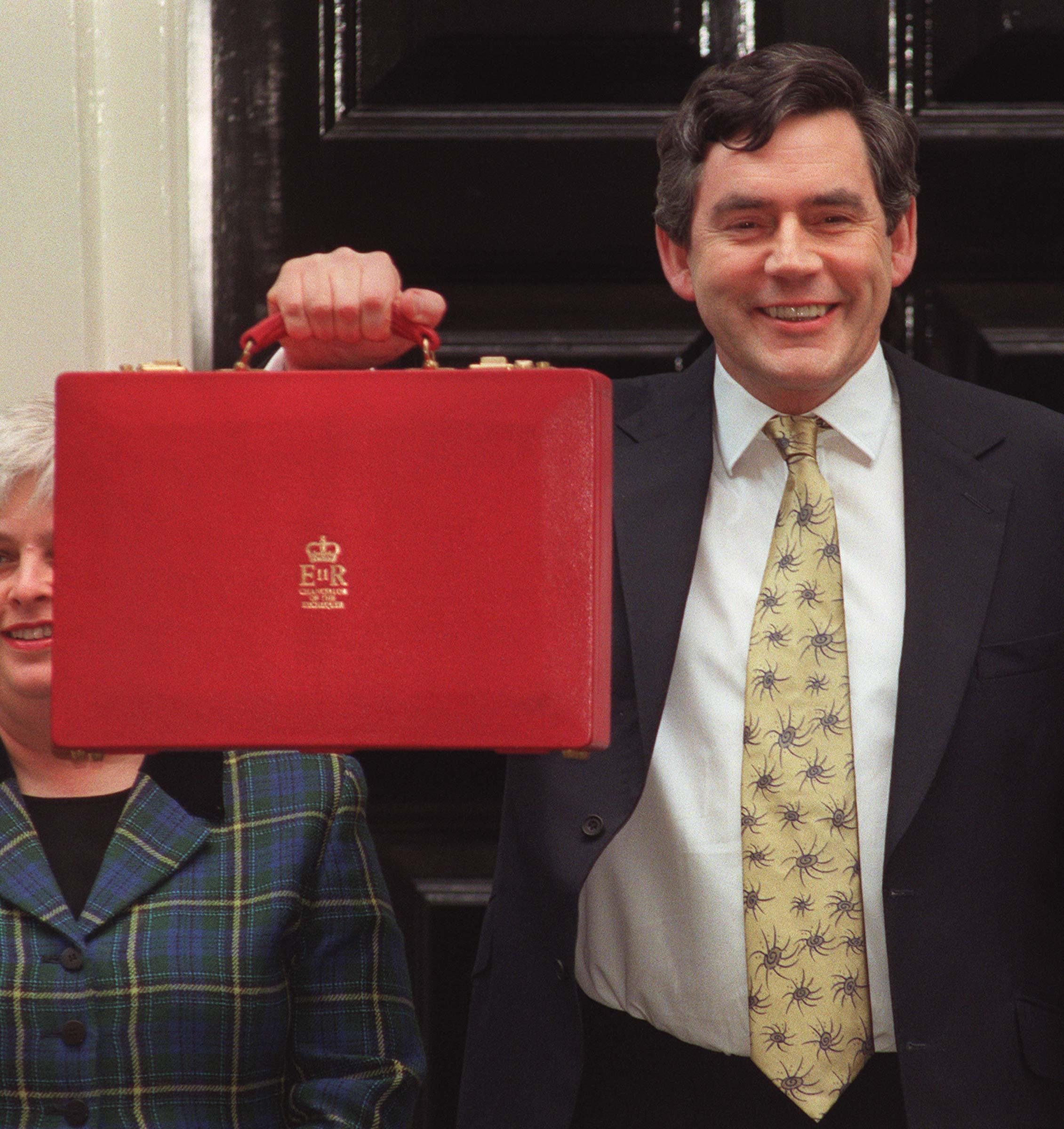
Gordon Brown as Chancellor, 1997–2007
Gordon Brown was Chancellor of the Exchequer from 1997 to 2007
He remained Chancellor for ten years without a break, the longest unbroken spell since the 1820s
He became Prime Minister when Blair stepped down in June 2007
Brown had already spent several years preparing for government as Shadow Chancellor
Brown worked closely with Blair in building New Labour
Their partnership was important to the government's domestic programme
Their later rivalry created tension between Downing Street and the Treasury
Brown's approach as Chancellor
Prudent
Brown wanted Labour to look careful and responsible with the economy
This helped reassure business and financial markets
It also strengthened Labour's reputation for economic competence
Dominant
Brown built a powerful base inside the Treasury
He exercised strong control over economic policy
Critics sometimes described his style as secretive and controlling
Long-term
Brown introduced rules designed to make economic policy more predictable
The Bank of England was given control over interest rates
Brown also introduced rules governing borrowing and public spending
Politically influential
Brown's control of the Treasury gave him a veto over much domestic spending
He used the five economic tests to keep the decision on the euro in Treasury hands
Brown's strengths and weaknesses
Strengths |
|
|---|---|
Weaknesses |
|
Examiner Tips and Tricks
Strong answers link Brown’s reputation for prudence to the wider record. It helps explain why Labour could later increase spending without immediately losing economic credibility. Criticisms of hidden tax rises and the gold sale provide useful counter-evidence when judging his record
Economic policy and stability
Brown's aims
Brown wanted to prove that Labour could be trusted to run the economy
Earlier Labour governments had faced major currency problems, including devaluation in 1967 and an IMF loan in 1976
Brown also wanted to avoid the boom and bust associated with the 1980s and early 1990s
Black Wednesday in 1992 had badly damaged the Conservatives' reputation for economic management
New Labour aimed for steady growth and low inflation
Independence for the Bank of England
On the 6th May 1997, four days after Labour's election victory, Brown gave the Bank of England responsibility for setting interest rates
The government set an inflation target of 2.5%
A new Monetary Policy Committee (MPC) met each month to decide interest rates
The Bank of England Act (1998) put the new system into law
Ministers no longer set interest rates themselves
This reduced the risk of rates being changed for short-term political reasons before an election
In December 2003, the inflation target changed to 2%, measured using the Consumer Prices Index
“In May, the Government established a wholly new framework for monetary stability, open and accountable, based on clearly established rules and discipline, the Government setting the inflation target, and the Bank of England setting interest rates to meet that target. That reform signified our determination to break from the short-termism of the past and to establish long-term confidence. ... My first rule, the golden rule, ensures that over the economic cycle the Government will borrow only to invest, and that current spending will be met from taxation. My second rule is that, as a proportion of national income, public debt will be held at a prudent and stable level over the economic cycle”
Gordon Brown, Chancellor of the Exchequer, Budget statement to the House of Commons, his first Budget, 2nd July 1997
Approach: Brown made this statement in his first Budget in July 1997, only weeks after Labour entered government
The source is useful because it clearly sets out his plans for monetary stability, borrowing and public debt
However, it is a statement of intention rather than proof of success, so it should be compared with the record of inflation, growth and borrowing later in the period
The fiscal rules
Brown introduced two rules for government borrowing in his first Budget
Golden rule: over the economic cycle, the government would borrow only to invest, not to pay for everyday spending
Sustainable investment rule: public debt would be kept below 40% of national income
Brown described his approach as "prudence with a purpose"
Careful management in the early years was intended to make higher spending on public services possible later
Brown also controlled the decision on whether Britain should join the euro (European single currency)
In October 1997, he introduced five economic tests for joining
In June 2003, he judged that the tests had not been met
Britain therefore stayed outside the euro
Examiner Tips and Tricks
Make sure you do not confuse monetary policy with fiscal policy:
Monetary policy means interest rates and inflation, which were handled by the Bank of England
Fiscal policy means taxation, spending and borrowing, which stayed with Brown and the Treasury
Public spending and taxation
Two years of restraint, 1997–1999
Labour promised to keep to the Conservatives' spending plans for its first two years in office
It also promised not to increase the basic or top rates of income tax
Brown used this period to cut government borrowing
Many Labour MPs and trade unions were frustrated by the tight limits on spending
Raising money
Brown introduced a windfall tax on the excess profits of privatised utility companies
It raised around £5.2 billion
The money helped to fund the New Deal, which offered training and jobs to young people who had been out of work for six months or more
Brown also cut some income tax rates
A new 10p starting rate was introduced in 1999
The basic rate fell from 23p to 22p in 2000
Brown raised revenue through several less visible tax changes, which critics called ‘stealth taxes’
Tax relief on pension fund dividends was removed in 1997
The married couple’s allowance was abolished in 2000
Stamp duty on house purchases increased
Critics argued that these changes hit pensioners, married couples and savers hardest
Brown also used the tax system to support working families
Tax credits increased the incomes of low-paid working households
Spending on public services
From 2000, spending on health and education rose sharply
Funding paid for new schools and hospitals
It also supported higher pay for doctors, nurses and teachers
In April 2002, Brown announced a 1% rise in National Insurance
The increase came into effect from April 2003
The money was intended to help fund the NHS
The decision followed the Wanless Report, which examined how much funding the NHS would need in the long term
Many new hospital and school building projects were funded through the Private Finance Initiative (PFI)
Private companies financed and built the facilities, with the government making payments over 25 to 30 years
This reduced the need for large upfront government spending but created long-term repayment costs
“From April next year, there will be an additional 1 per cent. national insurance contribution from employers, employees and the self-employed on all earnings above £4,615. ... But I believe it is right that when everyone, employees and employers, benefits from the insurance provided by the national health service, everyone who can should make a fair contribution”
Gordon Brown, Chancellor of the Exchequer, Budget statement to the House of Commons, 17th April 2002
Approach: Brown made this statement in the April 2002 Budget, when announcing the rise in National Insurance
The source is useful because it shows how Brown justified the tax rise, linking it directly to higher NHS spending and presenting it as a shared contribution
However, Brown was defending an unpopular tax increase, so his explanation should be tested against what happened to NHS spending and performance afterwards
“To listen to the Chancellor, one would think that this is the first time he has ever raised taxes. In fact, he has spent the past five years and six Budgets raising taxes, yet all the time public services are getting worse. He has simply opened people’s wallets, while closing his own mind to change and reform. British people and British businesses are already paying £100 billion more a year in tax than they were in 1997, when Labour took over”
Iain Duncan Smith, Leader of the Opposition, speech replying to the Budget statement in the House of Commons, 17th April 2002
Approach: The source is useful because it sets out the Conservative criticism that taxes had already risen while public services had not improved enough
As opposition leader, he had a clear reason to attack the Budget, but the source is useful for showing the political argument over whether higher taxation was producing better services
Examiner Tips and Tricks
Use specific examples of taxation rather than simply writing that “Labour raised taxes”. The windfall tax of 1997, changes to income tax and the National Insurance rise from 2003 show different ways Brown raised or changed revenue
How successful was New Labour's economic policy?
This question asks whether New Labour's economic policy was primarily a success, or whether the period of stability stored up problems for the future
Some key evidence for each side is outlined below
Evidence that the policies were successful
The economy remained stable for most of 1997-2007
Growth was steady
Inflation stayed low and close to target
Interest rates were generally lower and more stable than in the 1980s and early 1990s
Employment also remained strong
Record numbers of people were in work
This supported Labour's claim that economic growth and social policy could work together
Brown's early caution helped strengthen Labour's economic reputation
Government debt fell as a share of national income in the first term
Labour was then able to increase spending on health and education
The wider political record also suggests confidence in Labour's economic management
The party won again in 2001 and 2005
“With a Labour Government economic progress and social justice are not in conflict. With a Labour Government economic progress and social justice can advance together. These reforms show that our economic strength didn’t just happen, we made it happen. Labour values made it happen. Don’t ever let people tell you this happened because we were lucky, it happened because we are Labour. It’s because we understood a Labour truth, that recessions hit pensioners, the low paid, small businesses; it’s because we recognised a Labour reality, that high and volatile inflation may help the speculator but hurts the poor; it’s because we were driven forward by a Labour cause, rooted in our beliefs, that economic stability matters most to hard working families; it’s because we never forgot where we come from and where we want to take Britain. And what our economic policy is proving is that you do not defeat the Tories by imitation or just by better presentation but by Labour policies and Labour reforms grounded in Labour values”
Gordon Brown, Chancellor of the Exchequer, speech to the Labour Party conference, Bournemouth, 29th September 2003
Approach: The source is useful because it shows how he explained the government’s economic record: stability and social justice were presented as the result of Labour policy rather than luck
However, Brown was defending his own record to his own party, so his claims should be tested against evidence of rising debt, consumer borrowing and later financial problems
Evidence that the policies stored up problems
Growth depended heavily on consumer spending, rising house prices and borrowing
Household debt increased
Some economists warned that this made the boom less secure
Not all parts of the economy performed equally well
Manufacturing continued to decline as a share of the economy
Britain continued to import more goods than it exported
Public finances also became less secure later in the period
The government returned to running a deficit
PFI created long-term repayment commitments
Critics argued that some extra public spending went into higher costs rather than better services
Labour also benefited from a growing economy, falling unemployment and low inflation inherited from the Major government in 1997
By 2007, signs of financial weakness were beginning to appear
The run on Northern Rock showed growing problems in the banking system
Examiner Tips and Tricks
Avoid using the 2008 financial crisis as if it falls inside the period. You can use evidence from 2007, such as Northern Rock, to show that weaknesses were emerging, but keep the main judgement focused on what was visible by the end of New Labour’s first ten years

Unlock more, it's free!
Join the 100,000+ Students that ❤️ Save My Exams
the (exam) results speak for themselves:

Was this revision note helpful?
