Economic Influences on Confectionery Businesses (Edexcel A Level Business): Revision Note
Exam code: 9BS0

Inflation and confectionery businesses
Inflation is the situation when prices rise over time, reducing the value of money
Inflation affects confectionery and biscuit firms in two key ways
It raises household living costs, which changes demand
It increases business costs, which squeezes profit margins
Higher inflation
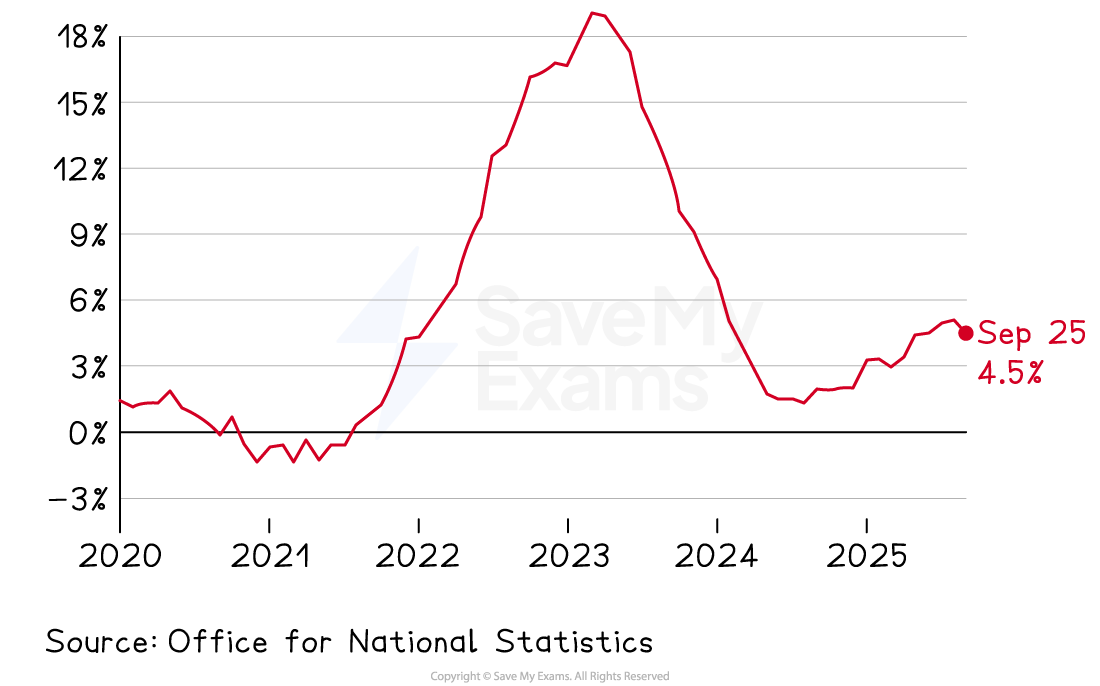
UK CPI inflation was 3.2% in the year to November 2025, which helps explain why many households remain price conscious
During the inflation peak, ONS data shows food inflation was extremely high - more than 19%% in March 2023 - which affected consumers' spending choices on snacks and treats
Food inflation in the UK
Input cost inflation
Input cost inflation affects the amount confectionery and biscuit businesses pay for ingredients, packaging, energy and transport
Commodity prices
Confectionery is especially exposed to global commodity prices (cocoa, sugar, dairy)
UK chocolate prices rose 15.4% in the year to August 2025, with cocoa prices having roughly doubled over two years and cocoa around $7,800 per tonne at the time
The average price per kg of chocolate rose 27% over two years, while consumption fell 2%, showing firms cannot always pass on all cost rises without losing sales
Fuel prices
Rising fuel prices have also increased transport and distribution costs
Higher diesel and fuel costs raise the cost of moving raw materials to factories and finished products to retailers
These higher logistics costs further squeeze profit margins, especially for small firms that lack efficient, large-scale distribution systems
How high inflation changes consumer behaviour
When inflation is high and prices rise quickly, consumers do not usually stop buying confectionery and biscuits altogether
Instead, they change how they buy, as these products are seen as small, affordable treats rather than essential items
Consumers respond by:
buying smaller pack sizes to keep the upfront price low
switching brands or waiting for promotions
reducing how often they buy treats rather than stopping completely
This change in behaviour encourages businesses to adjust their strategies
Selling smaller packs and affordable treat formats at lower price points
Making greater use of price-marked packs and short-term promotions to reassure value-conscious shoppers
Expanding premium product lines for higher-income consumers who are less affected by rising living costs
Exchange rates and confectionery businesses
The exchange rate is the value of one currency in terms of another
Exchange rates matter because many key inputs (especially cocoa) are traded globally and priced in foreign currencies, often US dollars
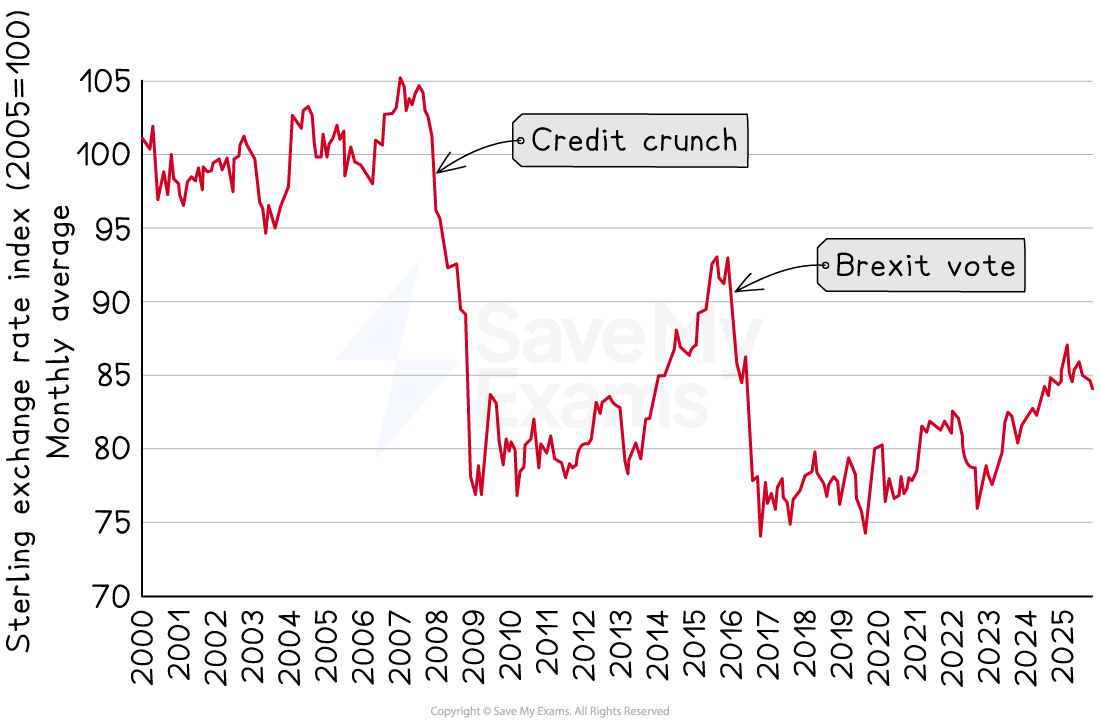
When sterling depreciates, imported ingredients and packaging become more expensivefor UK-based confectionery and business manufacturers
Sterling depreciation increases costs
After the 2016 Brexit referendum, sterling experienced a sharp depreciation and increased volatility, which raised the cost base for import-reliant sectors
For confectionery firms importing cocoa, a weaker pound can increase costs even if global cocoa prices stay the same
Sterling appreciation can ease pressure
If sterling strengthens, import costs can fall, giving firms more room to avoid price rises or rebuild margins
How businesses respond
Larger multinationals are more likely to use financial hedging and global sourcing to manage currency risk
Smaller firms may have fewer options, so they often respond by:
changing pack sizes
adjusting the product mix towards higher profit margin lines
making selective price rises (often easier in gifting/premium than in value market segments)
Interest rates and confectionery businesses
Interest rates are the percentage charged on money borrowed or earned on savings, set by banks and determined by the base rate
Interest rates influence confectionery and biscuit businesses mainly through consumer spending and business finance costs
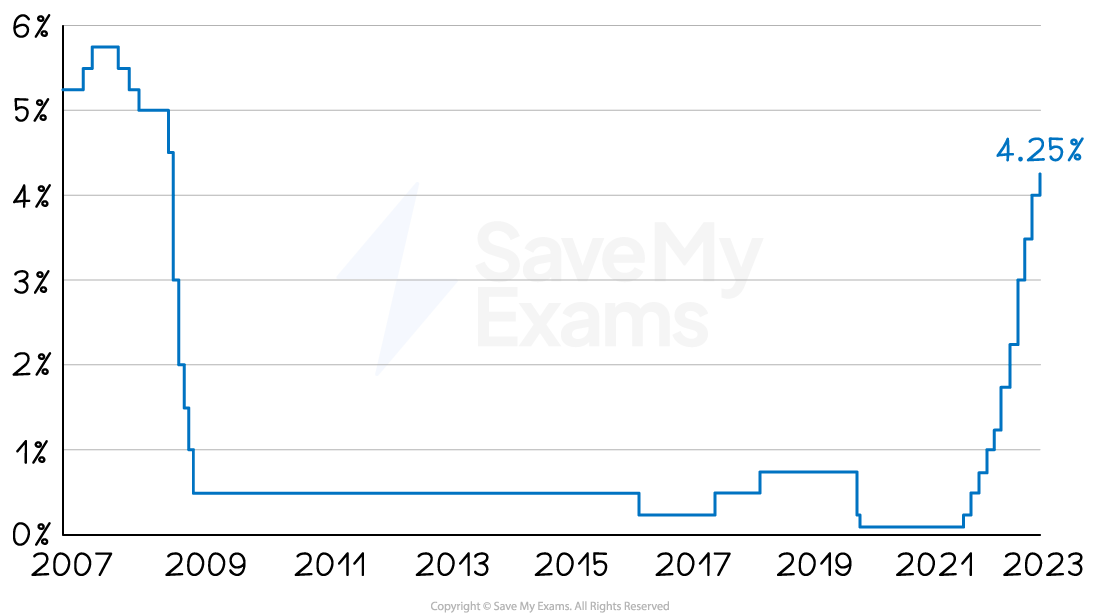
The Base Rate was increased sharply to tackle inflation, peaking at 5.25% (August 2023) before falling over 2024–2025 to 3.75% (December 2025)
Impact on demand
As interest rates rose sharply in 2022–2023, many UK households faced higher mortgage repayments and borrowing costs
This reduced disposable income and led consumers to become more price-conscious when buying everyday items, including biscuits and confectionery
Shoppers increasingly traded down to supermarket own-label biscuits, which are significantly cheaper than branded alternatives
Consumers relied more on promotions and price-marked packs for branded products
Supermarkets such as Tesco and Sainsbury’s expanded and promoted their own-label biscuit ranges during this period
Branded producers such as pladis (McVitie’s) faced stronger price competition and pressure on sales volumes
Impact on business strategy
When the Bank of England raised interest rates sharply in 2022–2023, borrowing became significantly more expensive
For small confectionery and biscuit businesses operating on tight profit margins, this meant that planned investment was often delayed or scaled back
As a result, some small producers have:
postponed investment in new baking machinery that would increase capacity or efficiency
delayed new product development, as recipe testing and small production runs require upfront funding
reduced spending on marketing and brand awareness, instead relying more on word-of-mouth and social media
Taxation, government spending and confectionery businesses
Taxation is system where a government collects money from people and businesses
Examples include income tax, corporation tax and VAT
Government spending is money used to fund public services
Examples include healthcare, education, and transport or supporting the economy
VAT and pricing
VAT has a direct impact on prices and profitability in the confectionery and biscuit market
Most basic foods are zero-rated, but confectionery is standard-rated at 20%, while biscuits are generally zero-rated unless they are chocolate-covered
This distinction matters because VAT can:
increase final retail prices
reduce demand for VAT-rated products
squeeze profit margins if firms absorb some of the tax
Income tax and consumer demand
Income tax affects the industry indirectly by influencing disposable income
Since 2021, income tax thresholds have been frozen, causing fiscal drag and reducing real household incomes during periods of high inflation
Consumers have become more price-sensitive
Demand has shifted towards own-label products and promotions, reducing demand for branded products
Spending on premium confectionery has become more polarised
Corporation tax and investment
Corporation tax affects profits and reinvestment
The main UK rate rose from 19% to 25% in April 2023, while the Small Profits Rate of 19% applies to firms earning under £50,000
Higher corporation tax reduces retained profit for investment, which limits spending on machinery, product development and marketing
Large multinationals are better able to absorb these costs, while small confectionery and biscuit businesses face greater financial pressure, which can slow growth
Government spending and support schemes
Business energy support
During the 2023 energy price crisis, the government introduced support schemes such as the Energy Bills Discount Scheme, which helped firms manage rising energy costs
This was particularly important for energy intensive confectionery and biscuit manufacturers because production involves baking, cooling, refrigeration, wrapping and storage
Public spending on health and education
Increased funding for public health campaigns can reduce long-term demand for sugary snacks by promoting healthier diets
School food standards and public-sector catering rules can limit where confectionery and biscuits are sold
Infrastructure and transport spending
Investment in roads, ports and logistics infrastructure can lower distribution costs and improve supply reliability
This benefits firms with national supply chains, particularly large manufacturers distributing to supermarkets
Business support and innovation funding
Government grants and schemes for skills, apprenticeships and productivity can support investment in new machinery or training
Smaller firms benefit most where access is straightforward, though many lack awareness or capacity to apply
The business cycle and confectionery businesses
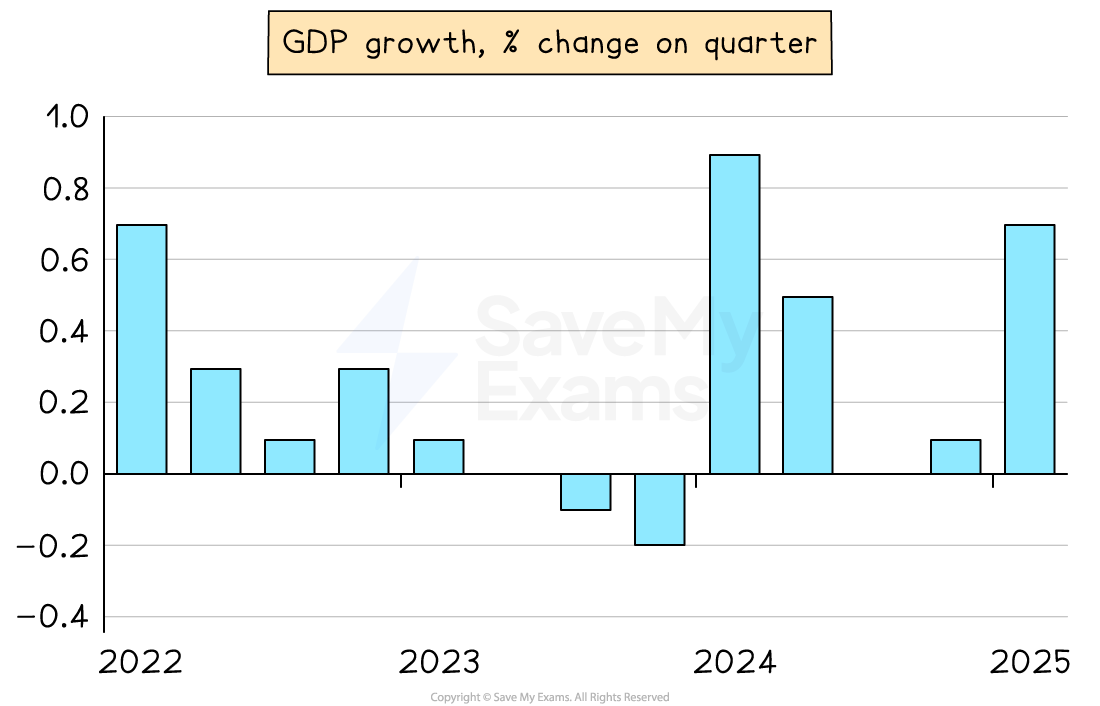
The business cycle is the regular pattern of growth and decline in an economy over time, including periods of boom, slowdown, recession and recovery
Resilience, but not immunity
Confectionery and biscuit markets tend to be more resilient than many other sectors over the business cycle because these products are often seen as small, affordable treats
During periods of economic slowdown or recession, consumers are more likely to cut back on big-ticket items such as holidays, cars or home improvements
They continue, however, to buy low-cost indulgences
This resilience does not mean immunity
As the economy moves from growth into slowdown or contraction, consumer behaviour changes
Instead of maintaining previous buying habits, consumers:
reduce how often they buy treats
switch to cheaper brands or own-label products
rely more heavily on promotions and price-marked packs
Premium demand also becomes more polarised during downturns
Some higher-income consumers continue to trade up to premium or ethical products
Others trade down to value options, increasing pressure on mid-priced brands
Impact on small businesses
Small confectionery and biscuit firms typically feel economic pressures more sharply because they have less scale and less financial cushion
Impact | Explanation |
|---|---|
Inflation hits small firms harder |
|
Exchange rate volatility is a bigger problem |
|
Higher interest rates squeeze investment |
|
Tax and compliance can be costly |
|
Small firms can still find opportunities |
|

Unlock more, it's free!
Join the 100,000+ Students that ❤️ Save My Exams
the (exam) results speak for themselves:

Was this revision note helpful?