Global Marketing by Confectionery Businesses (Edexcel A Level Business): Revision Note
Exam code: 9BS0

What is global marketing?
Global marketing refers to how businesses sell their products in multiple countries, adapting or standardising their marketing mix to suit different markets
Confectionery and biscuit businesses often operate internationally because growth in individual countries, such as the UK, is limited
Businesses must decide whether to:
use a standardised approach, keeping products and marketing similar worldwide
use an adapted approach, changing products and strategies for local markets
or use a mixed approach, combining global brands with local adaptation
Product strategies
Many confectionery and biscuit businesses sell global brands, but adapt their products to suit local tastes, cultures and consumption habits
This allows firms to benefit from strong global brand recognition while still appealing to consumers in different countries
A common approach is to keep the core product and brand identity the same, while making selective adaptations to improve local appeal
How products are adapted for different markets
Global businesses often keep:
the same brand name and logo
the same basic product format, such as a chocolate bar or biscuit
However, they may adapt specific features, including:
flavours, to reflect local preferences
sweetness levels, as tastes vary between regions
portion sizes, to match income levels and consumption habits
ingredients, to meet local regulations or dietary expectations
Examples
KitKat flavours vary by country, with unique flavours in Japan that reflect local tastes
Oreo uses the same core biscuit worldwide, but adapts flavours and fillings for different markets
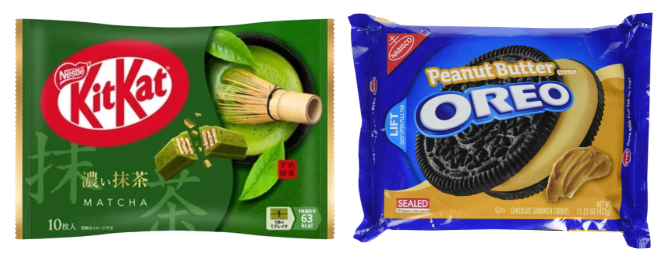
This allows firms to benefit from brand recognition while appealing to local consumers.
Pricing strategies
Pricing in global confectionery and biscuit markets varies significantly between countries
Businesses respond to local economic and competitive conditions rather than charge a single global price
Prices differ because of:
Income levels, as consumers in higher-income countries can afford higher-priced branded treats
Exchange rates, which affect the cost of importing ingredients and finished products
Taxes, including import duties, which increase prices in some markets
Local competition, including strong domestic brands and own-label products
Strategies in different markets
Type of market | Examples | Explanation |
|---|---|---|
Developed markets |
|
|
Emerging markets |
|
|
By varying prices and pack sizes:
businesses can maximise revenue in high-income markets
remain competitive and accessible in lower-income markets
avoid pricing themselves out of local markets
Distribution (place) strategies
Confectionery and biscuits are fast-moving consumer goods that rely on wide availability and frequent purchase
A product is unlikely to succeed internationally if it is not easy for consumers to find and buy
Businesses must decide:
which retailers to supply, depending on the structure of each market
whether to sell through supermarkets, convenience stores or online
how to manage international supply chains, including transport, storage and reliability
Strategies in different markets
Type of market | Examples | Explanation |
|---|---|---|
Developed markets |
|
|
Emerging markets |
|
|
Promotion strategies
Promotion is often the most visible part of global marketing, but it is closely linked to the other elements of the marketing mix.
Approaches include:
Global advertising campaigns using the same brand message
Localised campaigns that reflect culture, language and values
Standardised global promotion
Many global confectionery and biscuit brands use standardised advertising campaigns that communicate the same core message worldwide
It reinforces a strong global brand identity
It reduces marketing costs
Businesses can ensure consistent messaging across markets
Examples
Brands such as Mars, Snickers and Oreo use similar logos, packaging and slogans in many countries
Oreo’s playful tone and visual identity are recognisable worldwide
Localised promotion
Other businesses adapt promotion to reflect local culture, language and values
This seen when
advertising uses local languages and humour
campaigns link to national festivals or traditions
products are promoted differently depending on how they are consumed locally
Examples
Chocolate brands adapt advertising around Christmas, Easter or Valentine’s Day in different countries
Promotional messages vary to reflect gifting traditions or family-focused occasions

The role of social media and digital promotion
Social media has transformed global promotion by making it easier to run global campaigns with local targeting
Businesses can
use the same campaign idea worldwide
tailor content to specific countries or age groups
respond quickly to local trends
Examples
Confectionery brands use TikTok and Instagram to launch limited editions aimed at younger consumers
E.g. Mondelēz launched Oreo biscuits featuring Pokémon characters by promoting them heavily with short videos and challenges on TikTok and Instagram
Approaches to global marketing
Case Study
Mars – largely standardised global marketing
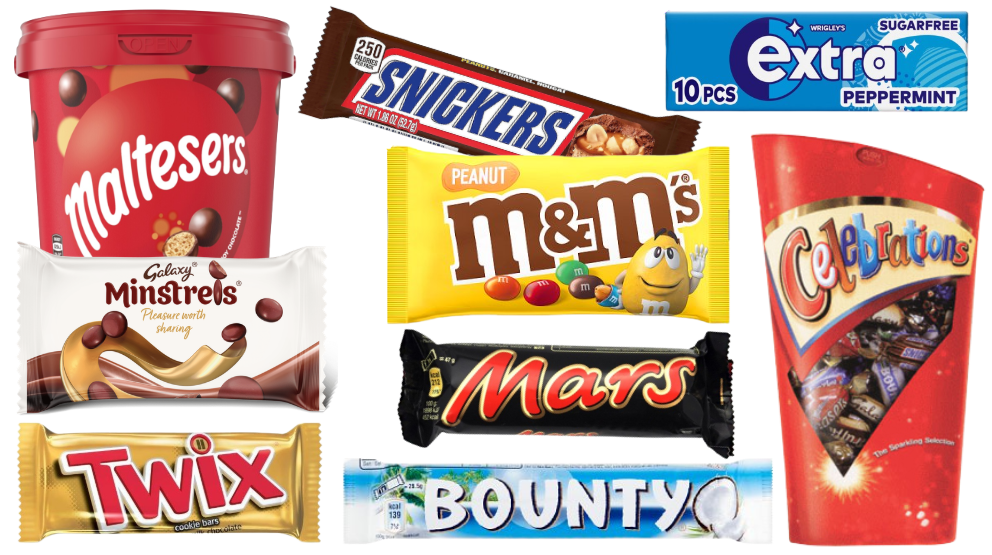
Mars, one of the world’s largest confectionery businesses, uses a largely standardised global marketing strategy, especially for its core chocolate brands
Product | Price |
|---|---|
|
|
Place | Promotion |
|
|
Advantages of Mars' approach
Mars’s global marketing approach helps it to benefit from economies of scale
Producing the same products in large volumes across many countries helps to reduce average production costs
This allows Mars to price its products competitively while maintaining profit margins
The company also benefits from strong global brand consistency, with familiar branding and messaging
These reinforce recognition and trust in different markets
Disadvantages of Mars' approach
This largely standardised approach may make Mars less responsive to local tastes and cultural differences
Competitors that adapt flavours, formats or marketing more closely to local preferences may be better placed to meet consumer needs
Case Study
Ferrero – adapted and premium global marketing
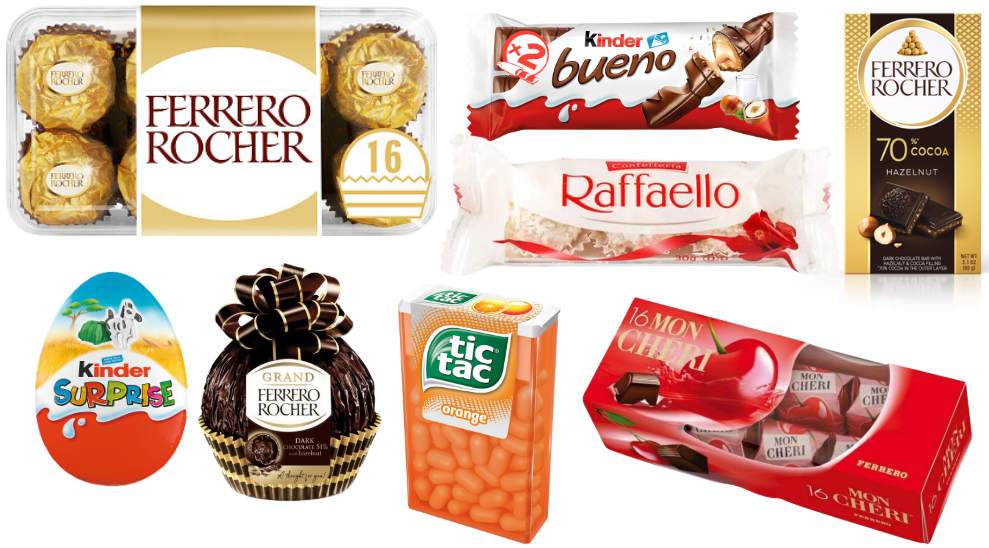
Ferrero uses an adapted global marketing strategy, focusing on premium positioning and tailoring products to specific occasions and cultures
Product | Price |
|---|---|
|
|
Place | Promotion |
|
|
Advantages of Ferrero’s approach
Ferrero’s premium global marketing strategy clearly differentiates its brands from mass-market competitors
This is especially improtant for its gifting and quality positioning
It allows Ferrero to avoid direct price competition and achieve higher profit margins, particularly in higher-income markets
Disadvantages of Ferrero’s approach
Premium pricing limits Ferrero’s appeal in price-sensitive markets
This makes it more vulnerable during economic downturns, when consumers are more likely to switch to cheaper alternatives
Case Study
Oreo's mixed approach to global biscuit marketing
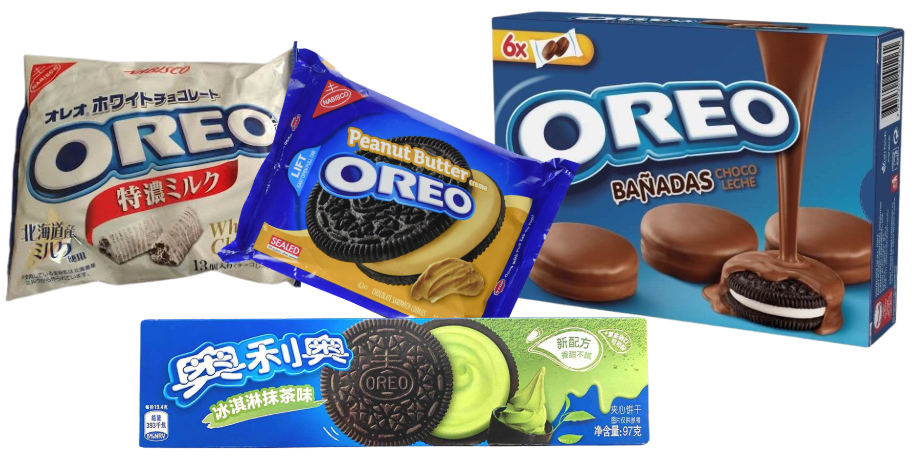
Oreo uses a mixed global marketing strategy, combining a highly standardised global brand with local adaptation to suit different markets, cultures and income levels
Product | Price |
|---|---|
|
|
Place | Promotion |
|
|
Advantages of Oreo’s approach
Oreo’s global marketing strategy benefits from strong brand recognition and consistency, which supports rapid international expansion
At the same time, flexible product adaptation allows Oreo to respond to local tastes, helping it compete effectively in diverse markets
Its mainstream pricing and wide distribution also support high sales volumes
Disadvantages of Oreo’s approach
However, Oreo faces intense competition from supermarket own-label biscuits and established local brands, particularly in price-sensitive markets
The brand also relies heavily on frequent promotions and innovation, which can increase costs and pressure profit margins

Unlock more, it's free!
Join the 100,000+ Students that ❤️ Save My Exams
the (exam) results speak for themselves:

Was this revision note helpful?