Annihilation in PET Scanning (Cambridge (CIE) A Level Physics): Revision Note
Exam code: 9702

The process of annihilation
When a positron is emitted from a tracer in the body, it travels less than a millimetre before it collides with an electron
The positron and the electron will annihilate, which means
their mass is converted into energy
two gamma rays are produced and move apart in opposite directions
Annihilation doesn’t just happen with electrons and positrons, it can occur between any particle and its antimatter counterpart
Annihilation is defined as:
When a particle meets its equivalent antiparticle they are both destroyed and their mass is converted into energy
As with any collision, mass, energy and momentum are always conserved
Annihilation between an electron and positron
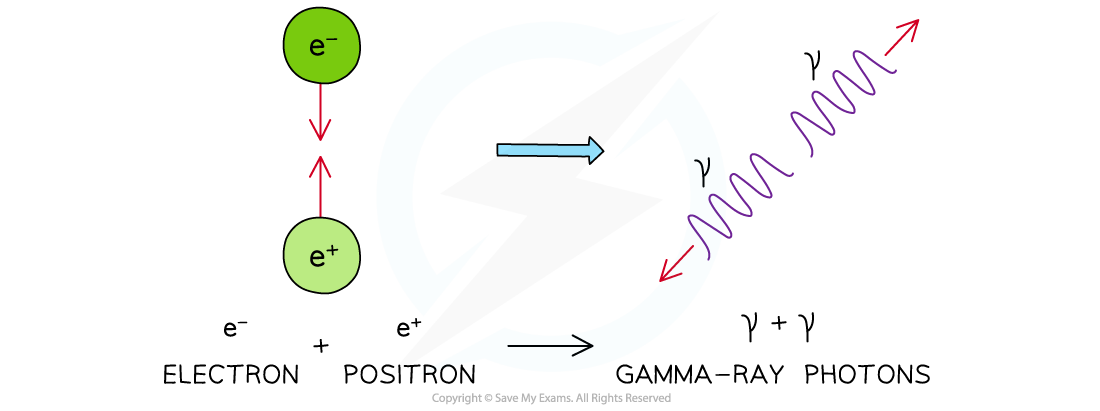
When a positron and electron annihilate, their mass is converted into two gamma-ray photons
Positron emission tomography (PET) scanning
Once the tracer is introduced to the body it has a short half-life, so, it begins emitting positrons (β+) immediately
This allows for a short exposure time to the radiation
A short half-life does mean the patient needs to be scanned quickly and not all hospitals have access to expensive PET scanners
In PET scanning:
Positrons are emitted by the decay of the tracer
They travel a small distance and annihilate when they interact with electrons in the tissue
This annihilation produces a pair of gamma-ray photons which travel in opposite directions
PET scan
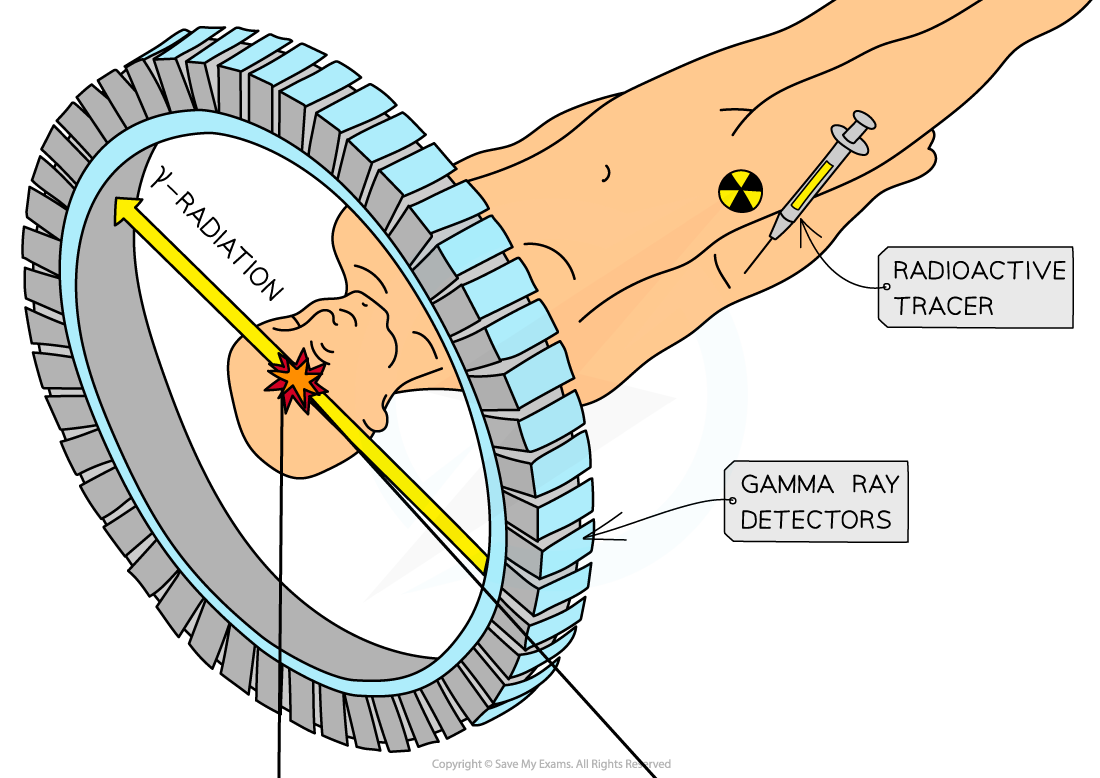
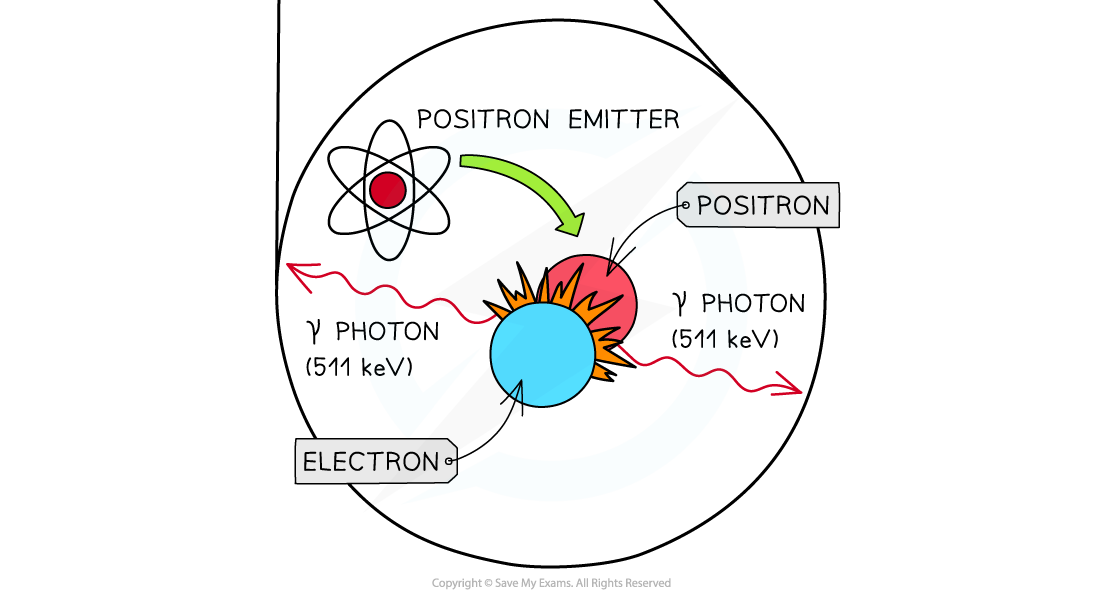
Annihilation of a positron and an electron is the basis of PET Scanning

Unlock more, it's free!
Join the 100,000+ Students that ❤️ Save My Exams
the (exam) results speak for themselves:

Was this revision note helpful?
Build on this topic
