Radiation & Risk (AQA GCSE Combined Science: Synergy: Life & Environmental Sciences): Exam Questions

Exam code: 8465

1 hour8 questions
1
1 mark

Alpha particles can be used to investigate the structure of atoms.

Alpha particles have a relative mass of 4.

What is an alpha particle?

  • Two electrons and two neutrons

  • Two neutrons and two protons

  • Two protons and two electrons

2a
1 mark

Carbon is an element with several isotopes.

Complete the sentence.

Choose the answer from the box.

A horizontal box showing the three subatomic particles listed left to right: electrons, neutrons and protons

Each isotope of carbon has a different number of .

2b
1 mark

Carbon-14 is radioactive.

Carbon-14 nuclei emit beta particles.

A beta particle is an electron.

Which symbol represents a beta particle?

Tick (✓) one box.

  • e10

  • He24

  • H11

2c
2 marks

Which two of the following substances would beta particles not be able to penetrate?

Tick (✓) two boxes.

  • 1 metre of concrete

  • 10 centimetres of lead

  • 1 centimetre of air

  • 1 millimetre of aluminium

  • 0.1 millimetre sheet of paper

2d
Sme Calculator
1 mark

The percentage of carbon-14 in an organism decreases after death.

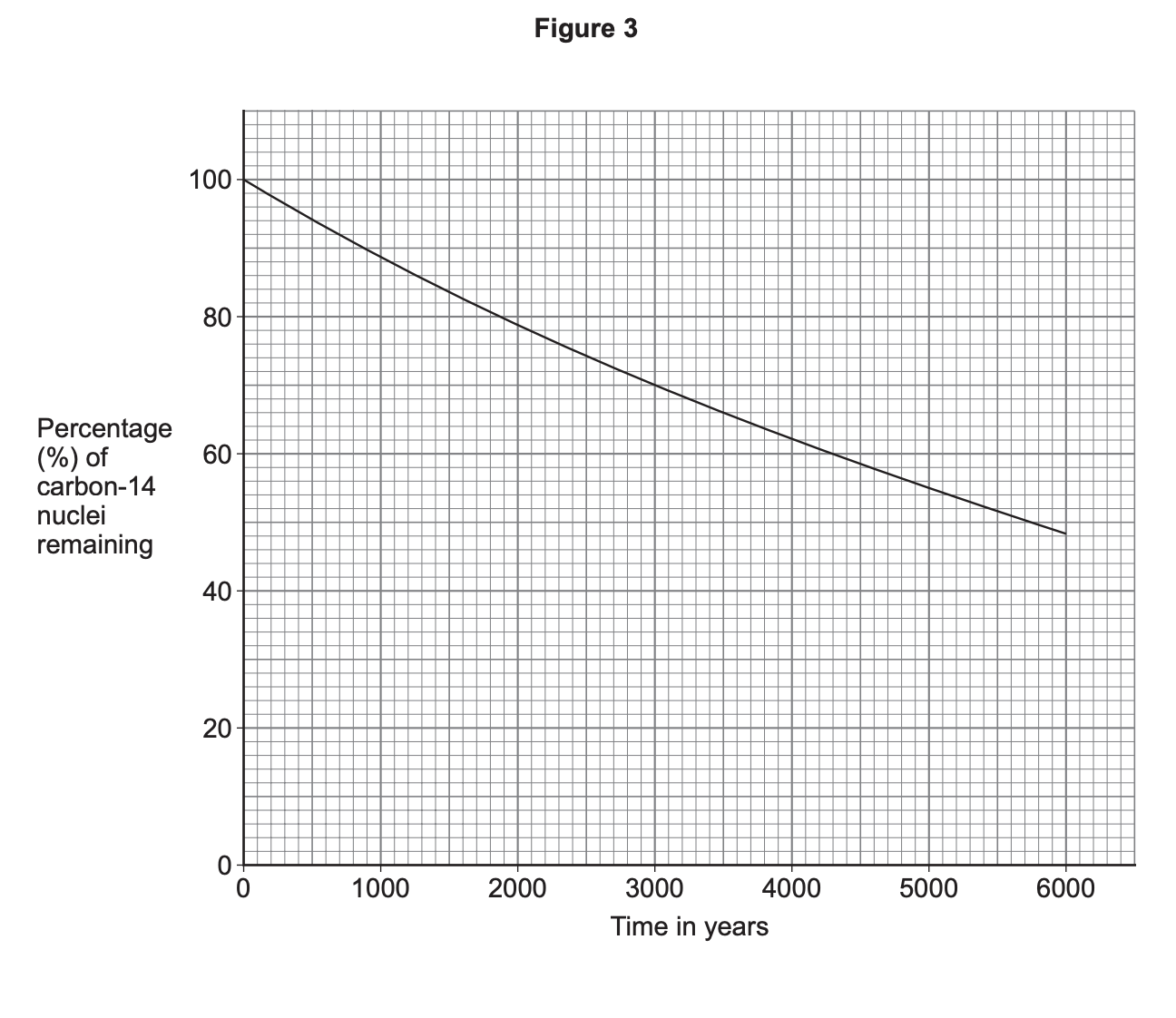
Figure 3 shows how the percentage of carbon-14 nuclei remaining varies with time.

Graph of exponential decay showing percentage of carbon‑14 nuclei falling from 100% to about 50% over 0 to 6000 years on a time axis.

Determine the percentage of carbon-14 nuclei remaining in an organism after 3000 years.

Use Figure 3.

Percentage remaining = __________ %

2e
Sme Calculator
1 mark

The half-life of carbon-14 is the average time taken for the number of carbon-14 nuclei in a sample to halve.

Determine the half-life of carbon-14

Use Figure 3.

Half-life = _________years

2f
1 mark

Only a very small proportion of the carbon in an organism is carbon-14.

Scientists studying the body from the glacier were not concerned about the risk from beta radiation emitted by the body.

Why was the risk to the scientists low?

Tick (✓) one box.

  • The beta radiation emitted by the body was a type of ionising radiation.

  • The carbon-14 nuclei in the body had all decayed.

  • The radiation dose absorbed by the scientists was low.

3a
3 marks

Carbon-14 emits beta radiation.

Complete the nuclear equation to show the radioactive decay of carbon-14

Use the periodic table.

614Ce+

3b
1 mark

The amount of carbon-14 in the body had decreased by 47%.

What is the half-life of carbon-14?

Tick (✓) one box.

  • < 5400 years

  • = 5400 years

  • > 5400 years

3c
3 marks

A student made a statement about a sample of a different radioactive substance.

The student stated:

> ‘If the half-life of the radioactive substance is 30 years, a sample of the substance will not be radioactive after 60 years.’

Explain why the student’s statement is not correct.

4a
1 mark

Nuclear radiation is dangerous to humans.

Nuclear radiation can change atoms into ions.

Which type of particle is lost when an atom changes into an ion?

  • Electron

  • Neutron

  • Proton

4b
1 mark

A nucleus of uranium238(U92238) emits an alpha particle (He24) and decays into thorium (Th90234).

Which nuclear equation shows this decay?

  • (Th90234)   +  (U92238)    (He24)

  •   (U92238)    (Th90234)   + (He24)

  •   (U92238)  +  (He24)    (Th90234)

4c
1 mark

How does the penetrating power of alpha particles compare with the penetrating power of beta particles?

  • Alpha particles are less penetrating than beta particles.

  • Alpha particles have the same penetrating power as beta particles.

  • Alpha particles are more penetrating than beta particles.

4d
2 marks

Uranium is dug out of the ground in a process called mining.

Uranium mining is hazardous because uranium is radioactive.

The radioactive decay of uranium produces radon gas which is also radioactive.

Table 1 compares the properties of uranium and radon.

Table 1

Uranium

Radon

State of matter

Solid

Gas

Type of radiation emitted

Alpha

Alpha

Colour

Grey

Colourless

People who work in uranium mines are more at risk of harm from radon gas than from uranium.

Give two reasons why.

Use Table 1.

4e
2 marks

Scientists collected data about lung diseases in the population of one country.

The scientists used the data to predict the number of people with lung diseases who worked in uranium mines.

Table 2 shows the predicted data and the actual data for people who worked in uranium mines.

Table 2

Predicted number of people

Actual number of people

Lung cancer

74

405

Other lung diseases

41

142

Give two conclusions that can be made from the data in Table 2.

4f
1 mark

Suggest one reason why people who work in uranium mines should be told that uranium is a hazard.

5a
1 mark

Ionising radiation is dangerous to humans because it causes mutations which can cause cancer.

Which of the following can be mutated by ionising radiation?

Tick (✓) one box.

  • Atoms

  • Genes

  • Red blood cells

5b
2 marks

A nucleus of uranium-238 (U) emits an alpha particle (He) and decays into thorium-234 (Th).

Complete the nuclear equation to show the decay of a uranium-238 nucleus by emitting an alpha particle.

U92238Th234+He2

5c
Sme Calculator
5 marks

Rocks from a uranium mine contain uranium and several other radioactive isotopes.

Table 4 shows information about two isotopes in a sample of rock from a uranium mine.

Table 4

Bismuth-210

Lead-214

Half-life

5.0 days

30 minutes

The initial number of nuclei of each isotope in the sample was the same.

Explain the difference in the number of nuclei of each isotope in the sample after 5.0 days.

Your answer should include calculations.

5d
Sme Calculator
1 mark

Scientists collected data about lung cancer in the population of one country. They used the data to predict the number of cases of lung cancer in people who work in uranium mines.

Table 5 shows the predicted number and the actual number of cases.

Table 5

Predicted number

Actual number

Lung cancer

75

405

What was the percentage increase in the actual number of cases compared with the predicted number of cases?

Tick (✓) one box.

  • 185%

  • 440%

  • 540%

5e
3 marks

Radon is an odourless, colourless gas that builds up in uranium mines.

Radon nuclei emit alpha radiation.

Explain why the actual number of cases of lung cancer in Table 5 is greater than the predicted number.

6a
3 marks

This question is about radioactive decay.

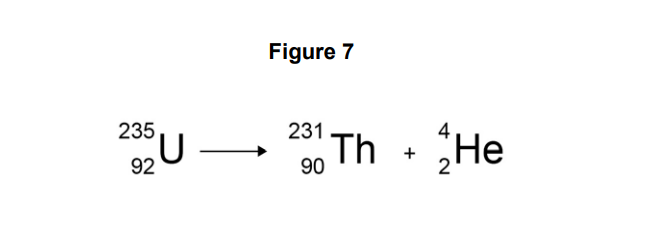
Figure 7 shows a nuclear equation for the decay of an atom of uranium:

Nuclear equation showing uranium-235 decaying to thorium-231 and a helium-4 nucleus, illustrating alpha decay with atomic and mass numbers labelled

Use information from Figure 7 to complete Table 1.

Table 1

U

Th

Mass number

235

Number of protons

90

Number of neutrons

143

6b
2 marks

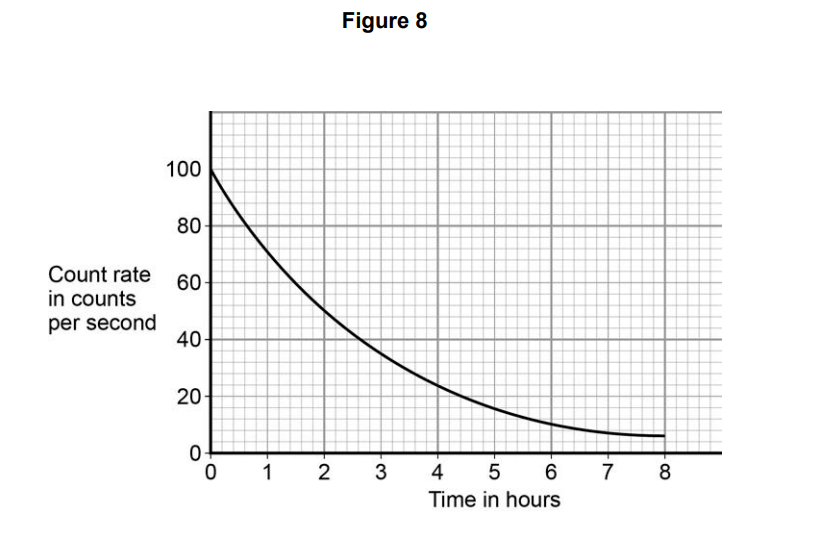
Figure 8 shows how the count rate from a radioactive isotope changes with time.

Line graph titled “Figure 8” showing radioactive count rate falling exponentially from 100 to near 0 counts per second over 8 hours.

What is the half-life of the radioactive isotope?

Explain why you chose that value.

Half-life = _______________________________ hours

Explanation: _____________________________

6c
1 mark

When a radioactive isotope decays it can produce beta particles.

What is a beta particle?

Tick one box.

  • A high-speed electron

  • A neutron and an electron

  • A neutron and a proton

  • A helium nucleus

6d
2 marks

Beta particles can cause cancer.

Complete the sentences. Use words from the box.

White box showing six tumour-related terms in black text: benign, controlled, differentiated, malignant, slow, uncontrolled

Tumours form when cell division is _____________________________ .

Tumours that do not invade other tissues are called ________________ .

7a
2 marks

Alpha, beta and gamma are types of nuclear radiation.

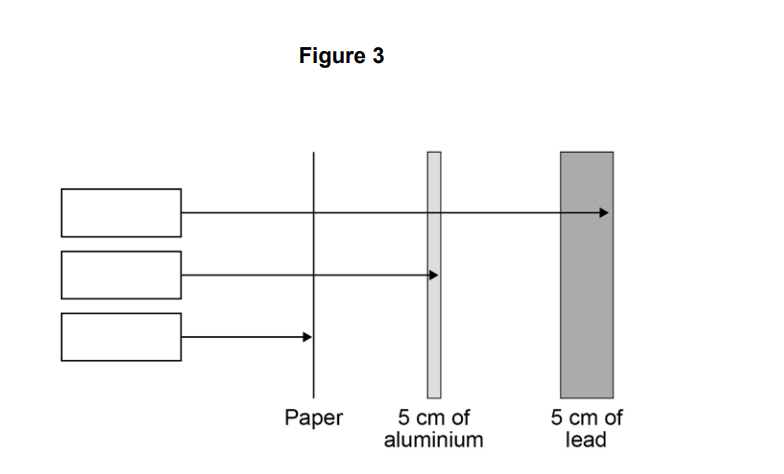
A teacher sets up a demonstration of the penetration properties of alpha, beta and gamma radiation.

Figure 3 shows the demonstration.

Diagram showing three radiation beams meeting barriers: paper blocking one, 5 cm aluminium blocking another, and 5 cm lead partly stopping the third

Complete Figure 3 by writing the name of the radiation in each box.

7b
2 marks

Give two safety precautions the teacher should take in the demonstration.

7c
2 marks

Table 2 shows how the count rate of a radioactive source changes with time.

Time in seconds

0

40

80

120

160

Count rate in counts/second

600

463

300

221

150

Describe the relationship shown in Table 2.

7d
Sme Calculator
2 marks

Use Table 2 to predict the count rate after 200 seconds.

Count rate = _______________counts/second

7e
1 mark

The half-life of the radioactive source is very short.

Give one reason why the source would be much less hazardous after 800 seconds.

8a
Sme Calculator
2 marks

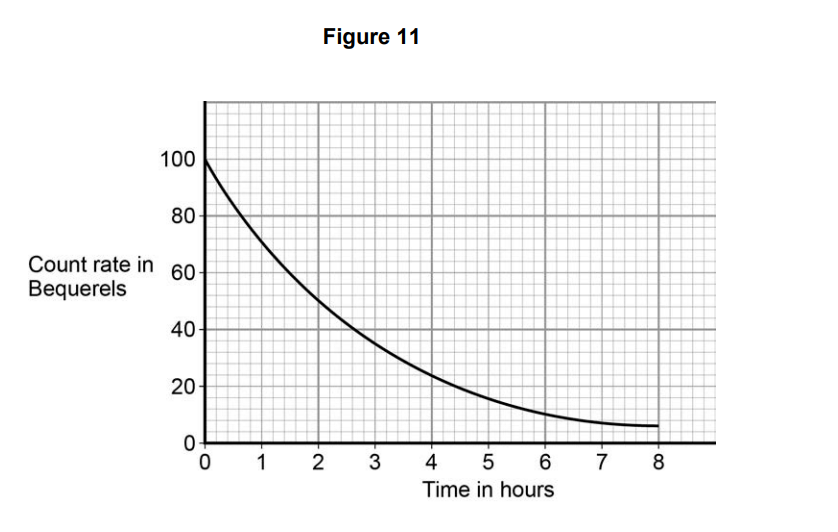
Figure 11 shows how the activity of a radioactive isotope changes over an 8-hour period.

Graph titled Figure 11 showing radioactive count rate in Becquerels decreasing exponentially from 100 to near zero over eight hours.

Predict how long it will take for the count rate to fall from 100 to 1.56 Becquerels.

Time = ___________________ hours

8b
3 marks

Lead-210 is a radioactive isotope that decays to an isotope of mercury by alpha decay.

Complete the nuclear equation to show the alpha decay of lead-210:

Pb ?210Hg80?+ ???

8c
5 marks

Explain how ionising radiation can have hazardous effects on the human body.