Stretches of Graphs (Edexcel IGCSE Maths A (Modular): Higher Unit 2): Revision Note
Exam code: 4XMAF/4XMAH

Stretches of graphs
What are stretches of graphs?
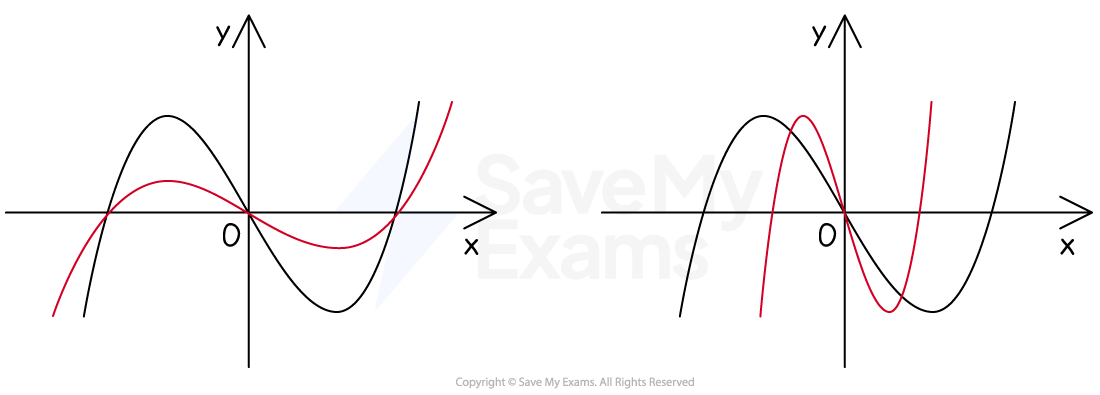
Stretches of graphs are a type of transformation that pushes points away from, or towards, the -axis or -axis
Graphs look like they have been stretched or squashed
either horizontally or vertically
How do I stretch graphs?
Let be the equation of the original graph
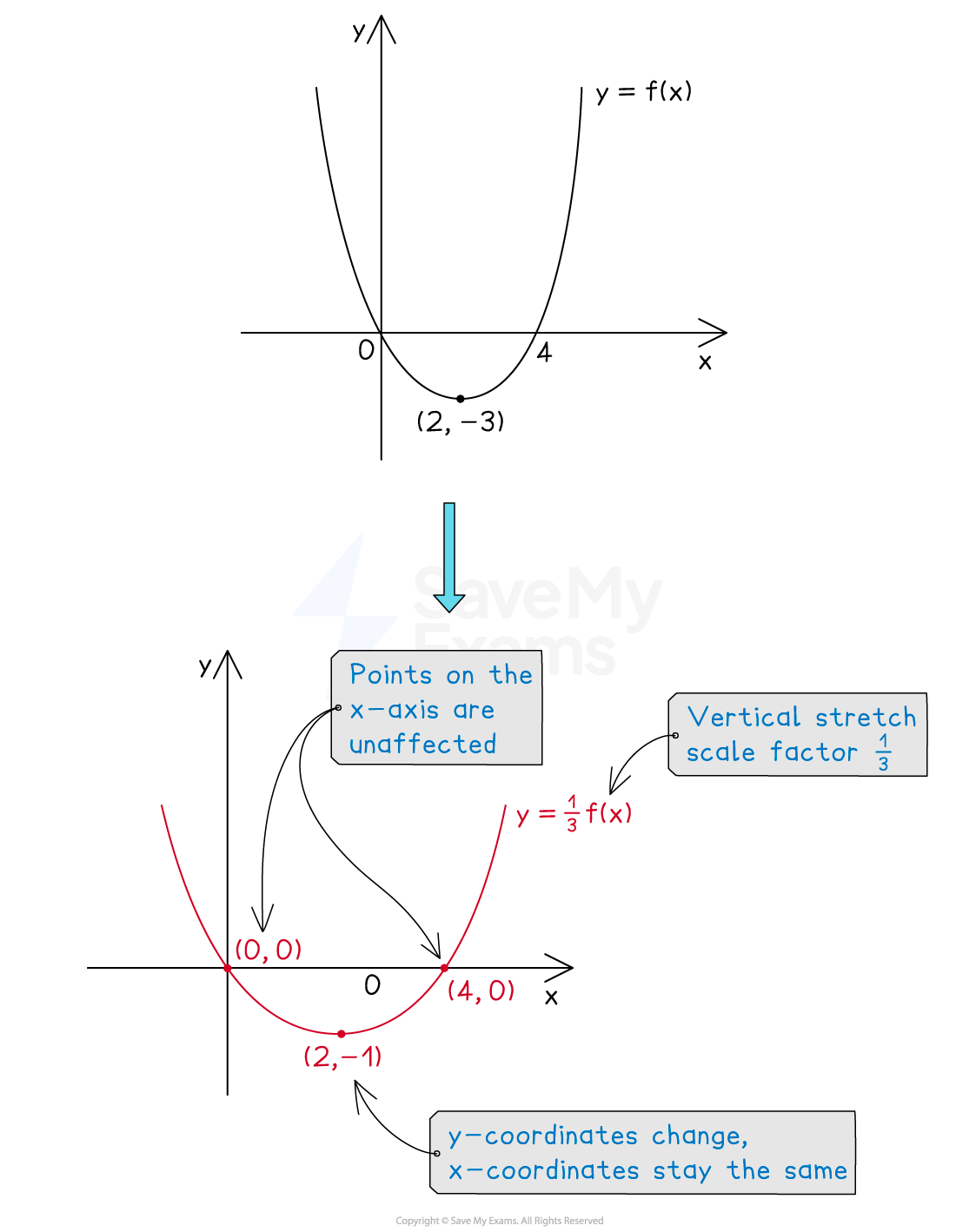
Vertical stretches: y=af(x)
is a vertical stretch (in the -direction) of scale factor
The -coordinates stay the same but the coordinates are multiplied by
Points appear to move parallel to the -axis
either stretching vertically away from the -axis if
or squashing vertically towards the -axis if
Points on the -axis stay where they are
Horizontal stretches: y=f(ax)
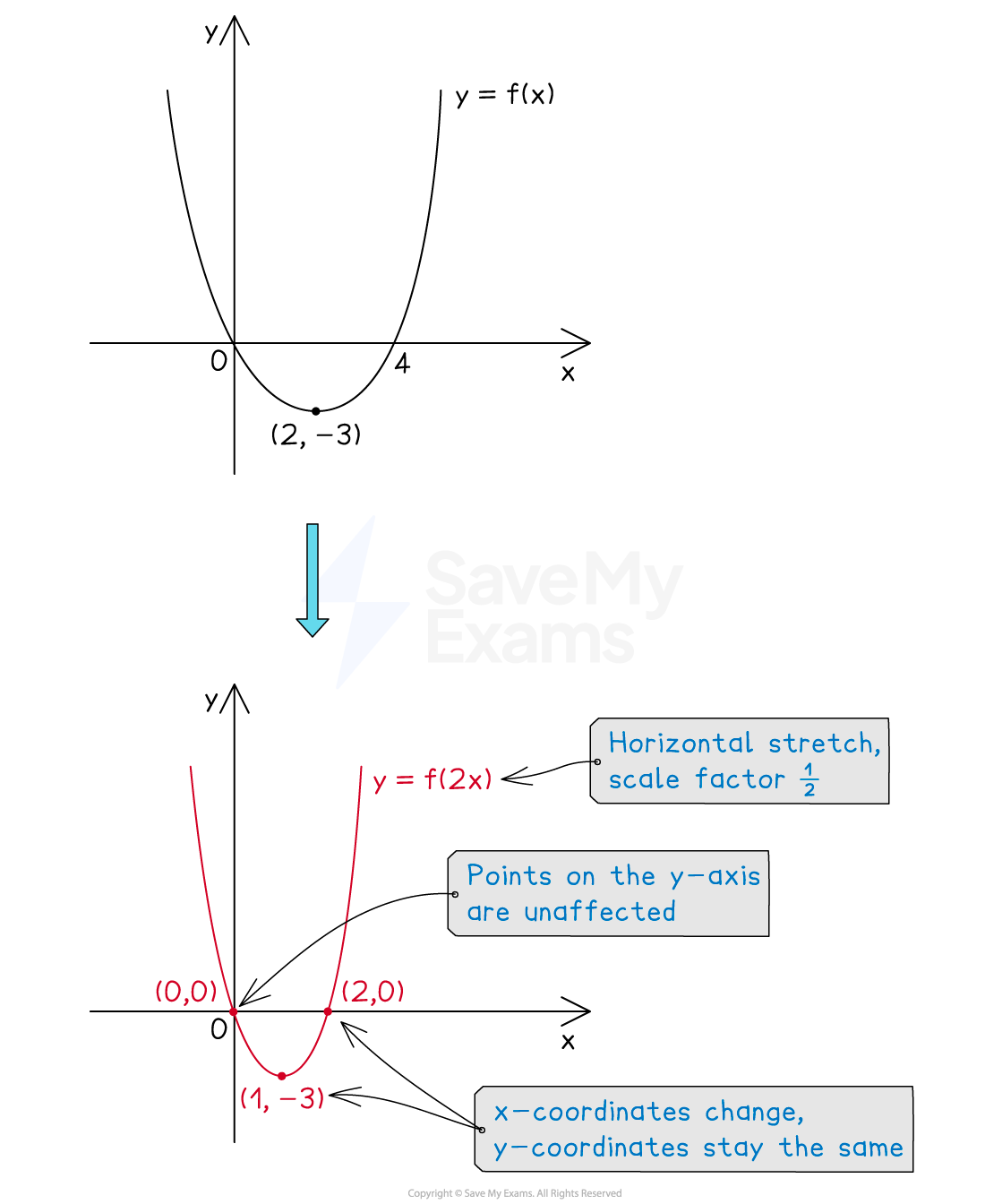
is a horizontal stretch (in the -direction) of scale factor (not )
The -coordinates stay the same but the coordinates are multiplied by (divided by )
Points appear to move parallel to the -axis
either squashing horizontally towards the -axis if
or stretching horizontally away from the -axis if
Points on the -axis stay where they are
This means is more like a horizontal squash of scale factor 2
though the correct way to say this is a horizontal stretch of scale factor
This also means that is a horizontal stretch of scale factor 2
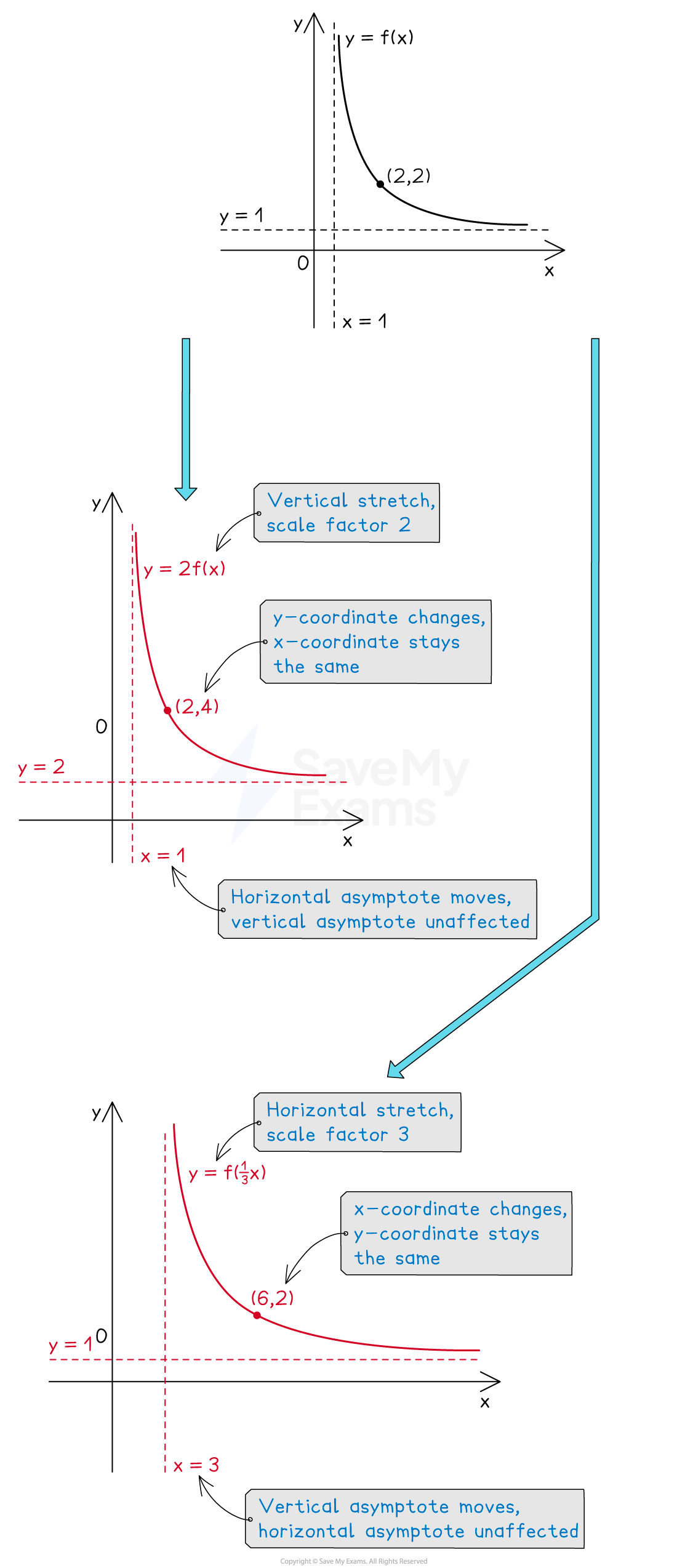
What happens to asymptotes when a graph is stretched?
Any asymptotes of are also stretched
How does a stretch affect the equation of the graph?
When a graph is stretched, you can change its equation algebraically
There is no need to sketch the graph
Stretching vertically by a scale factor of 3 puts a 3 in front of the whole equation
For example, becomes
This simplifies to
Stretching horizontally by a scale factor of ("squashing horizontally" by a scale factor of 3) replaces any with in the equation
For example, becomes
This simplifies to
How do I apply a combined stretch?
The graph of is a combined stretch, both horizontally and vertically
It does not matter which order you apply these in
For example, a horizontal stretch of scale factor followed by a vertical stretch of scale factor
Worked Example
The diagram below shows the graph of .

Sketch the graph of .
Answer:
represents a horizontal stretch of scale factor
And represents a vertical stretch of scale factor 2
Apply these in any order, e.g. start with the horizontal stretch, scale factor 3
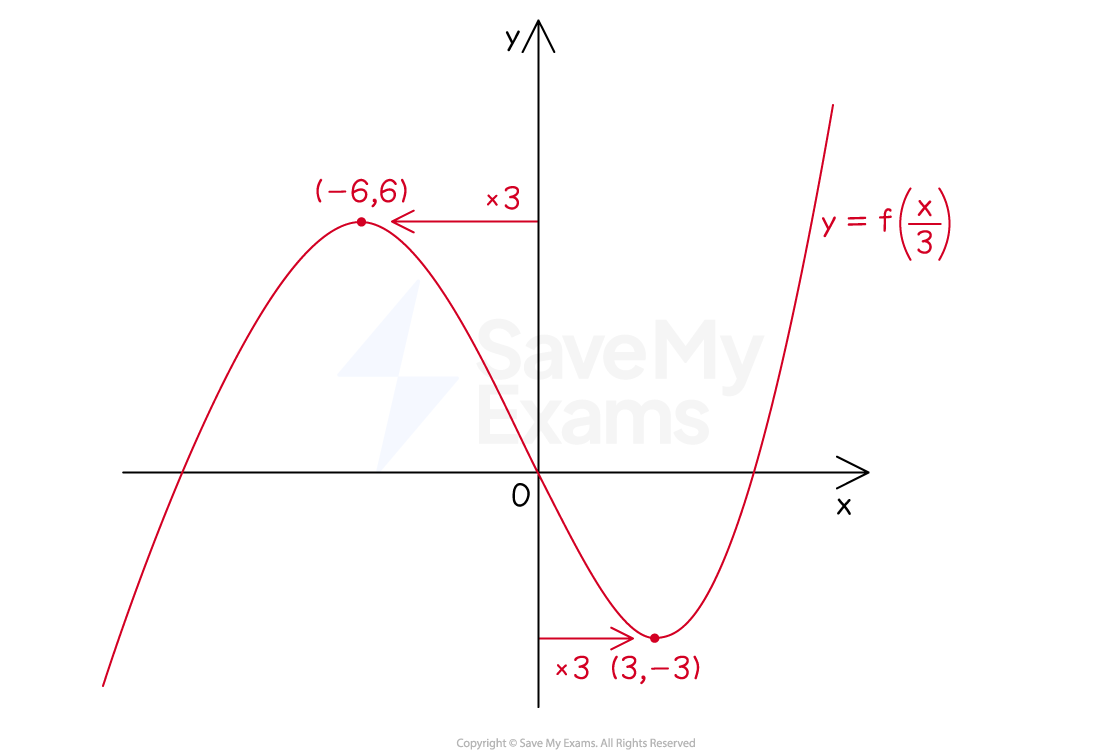
Now apply a vertical stretch of scale factor 2
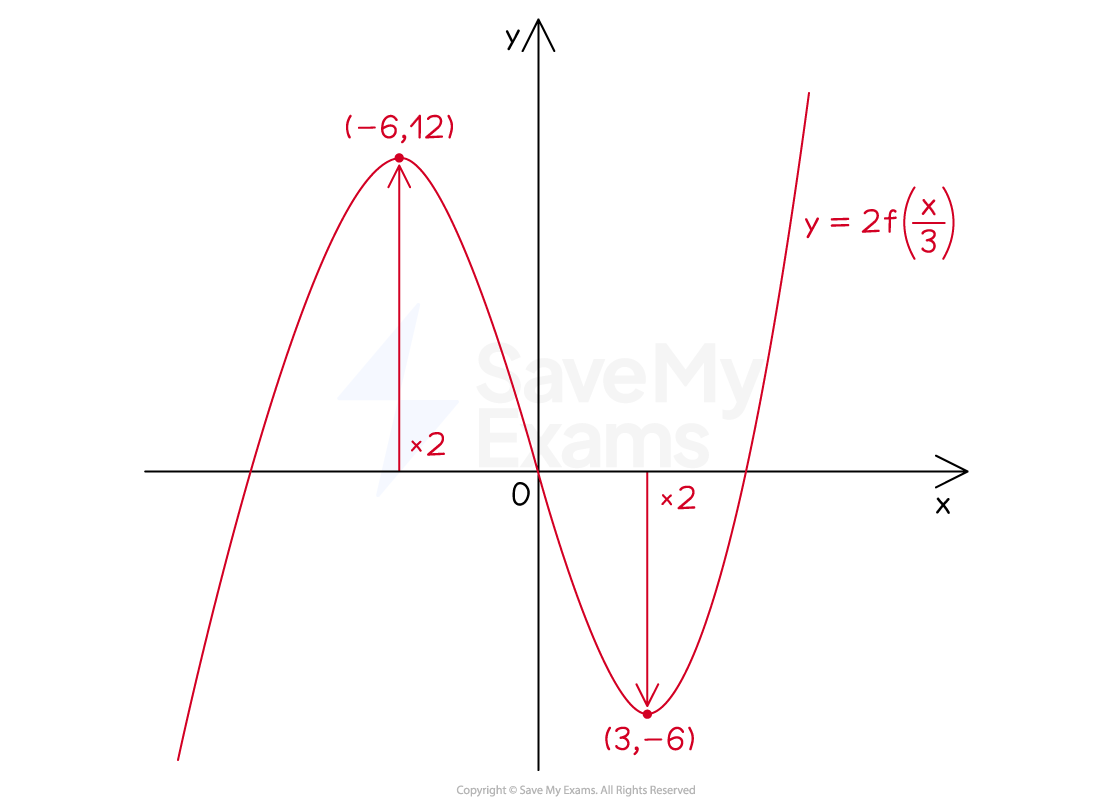
Show the coordinates of the new points clearly


Unlock more, it's free!
Join the 100,000+ Students that ❤️ Save My Exams
the (exam) results speak for themselves:

Was this revision note helpful?
Build on this topic
