Speed, Density & Pressure (Edexcel IGCSE Maths B): Revision Note
Exam code: 4MB1

Speed, density & pressure
What are speed, density and pressure?
Speed, density and pressure are frequently used compound measures
Speed is equal to distance divided by time
Density is equal to mass divided by volume
Pressure is equal to force divided by area
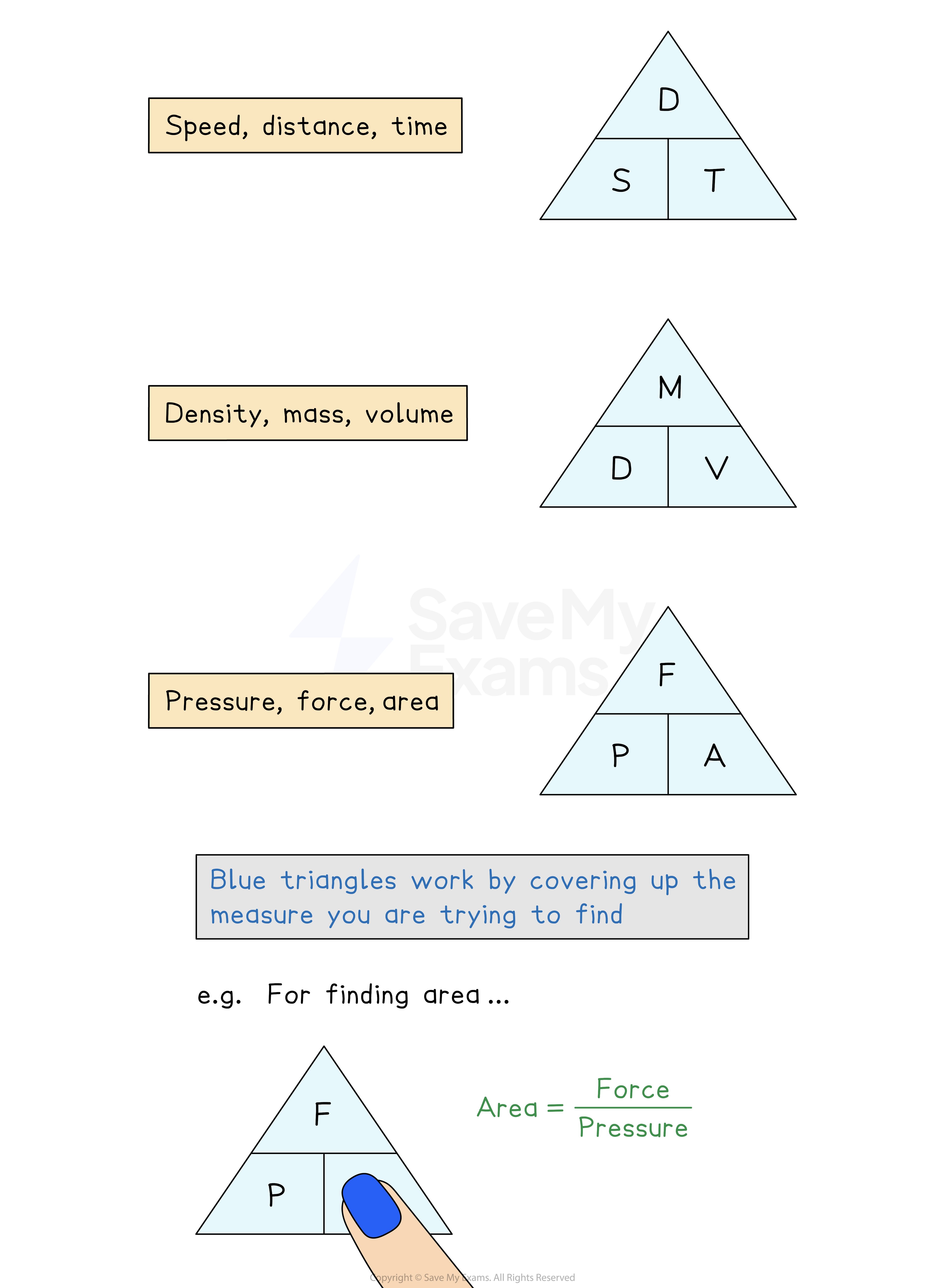
What should I know about speed, distance and time?
Speed is commonly measured in metres per second (m/s) or kilometres per hour (km/h)
The units indicate speed is distance per time
'Speed' (in this formula) means 'average speed'
In harder problems there are often two journeys or two parts to one longer journey
What should I know about density, mass and volume?
Density is usually measured in grams per centimetre cubed (g/cm3) or kilograms per metre cubed (kg/m3)
The units indicate that density is mass per volume
You may need to use a volume formula to find the volume of an object first
What should I know about pressure, force and area?
Pressure is usually measured in Newtons per square metre (N/m2)
The units of pressure are often called Pascals (Pa) rather than N/m2
The units indicate that pressure is force per area
Remember that weight is a force
It is different to mass
Examiner Tips and Tricks
Look out for a mixture of units
Time can be given as minutes but common phrases like 'half an hour' (30 minutes) could also be used in the same question
Any mixed units should be those in common use and easy to convert, e.g., g to kg or m to km etc
Worked Example
A box exerts a force of 140 newtons on a table.
The pressure on the table is 35 newtons/m2.
Calculate the area of the box that is in contact with the table.
Answer:
Method 1
Substitute the numbers you know into the formula
Solve the equation for A
First multiply both sides by A to get A out of the denominator
Then divide by 35 to find the value of A
The units will be m2, matching the units seen in newtons/m2
4 m2
Method 2
Use the given formula to create a formula triangle for pressure, force and area
A is on the bottom of the triangle, so this tells us to divide F by P
4 m2
Worked Example
The density of pure gold is 19.3 g/cm3.
What is the volume of a gold bar that has a mass of 0.454 kg?
Answer:
Begin by checking that all of the units are consistent
Density is given in g/cm3
Convert the mass of the gold bar into grams to match the units for density
0.454 kg = (0.454 × 1000) g = 454 g
The units of density are g/cm3, so divide the mass (g) by the volume (cm3)
Or, write out the formula triangle
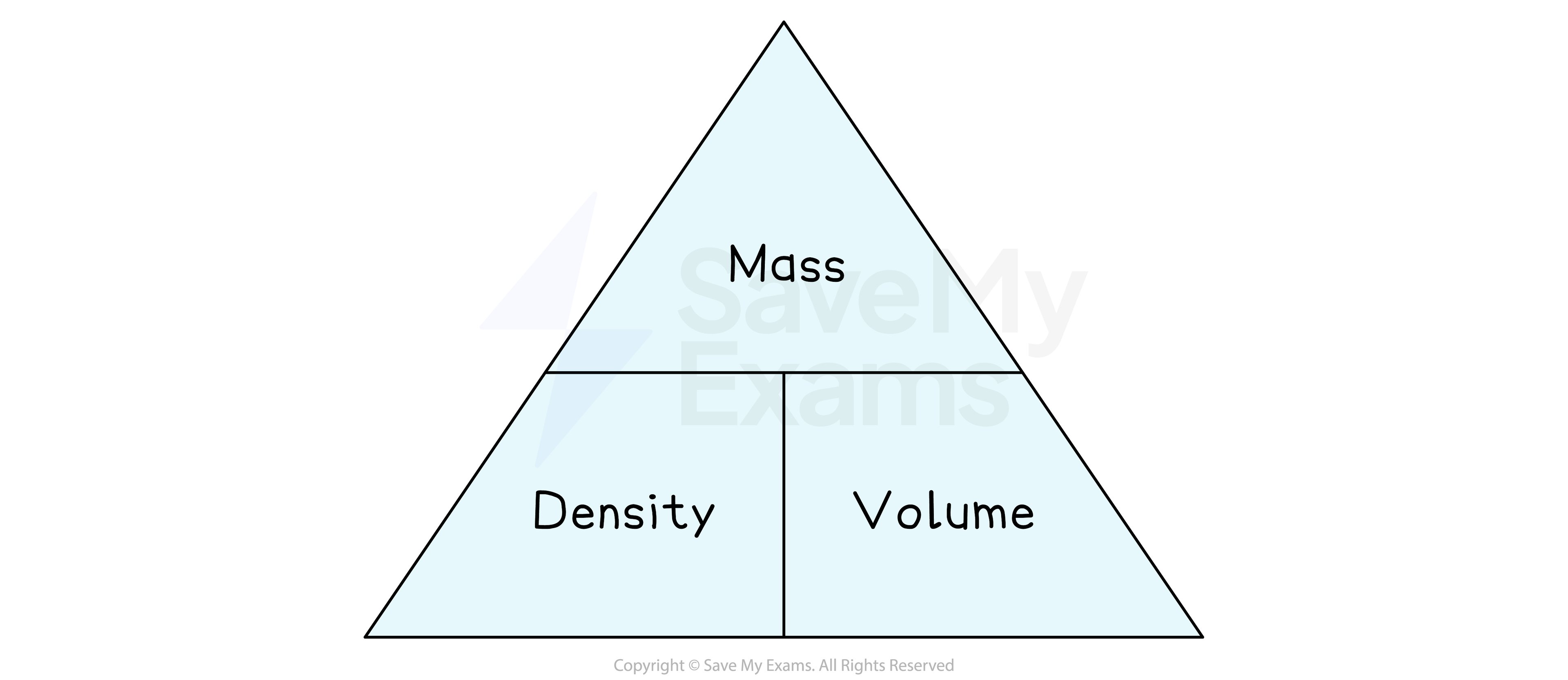
Write out the formula that you will need
Substitute the given values for the mass and the density
Make sure you give the correct units with your final answer
The density is given in g/cm3, so the volume should be cm3
Volume = 23.5 cm3 (1 d.p.)

Unlock more, it's free!
Join the 100,000+ Students that ❤️ Save My Exams
the (exam) results speak for themselves:

Was this revision note helpful?
Build on this topic
