Britain & the French Wars, 1793-1815 (Edexcel A Level History: Paper 3 Options): Revision Note
Exam code: 9HI0

Summary
Under the Duke of Wellington's leadership, the British Army won a series of victories against Napoleon's forces in Portugal and Spain
Once Napoleon returned from exile, it also played a key role in defeating him at the Battle of Waterloo
At sea, Britain was even more successful in the fight against Napoleon
Under Nelson's command, the Royal Navy won spectacular victories at the Battle of the Nile, the Battle of Copenhagen and, most importantly, the Battle of Trafalgar
Britain was able to wage such a prolonged and effective campaign against Napoleon because of its very successful economy
The Industrial Revolution meant that Britain's economy grew steadily throughout the period
It was also able to secure large loans quickly and easily to help both its own armies and those of its allies
Facing the French threat on land: the role of Wellington
The land war before Wellington, 1793–1807
Britain’s early land campaigns were mostly unsuccessful
In the Flanders campaign (1793–95), a British army under the Duke of York failed to take Dunkirk and was forced into a winter retreat, before being evacuated in 1795
An Anglo-Russian invasion of Holland, the Helder expedition (1799), also ended in withdrawal
There were some successes
Sir Ralph Abercromby defeated the French army left in Egypt in 1801
These failures showed the army needed reform
As commander-in-chief, the Duke of York improved training and officer appointments, and Sir John Moore trained new light infantry regiments at Shorncliffe from 1803
This helped make Wellington’s later army more effective
The Peninsular War
The Peninsular War took place on the Iberian Peninsula, which makes up modern-day Spain and Portugal
Napoleon's forces occupied Portugal in late 1807 and Spain in 1808
The Portuguese royal family fled to Brazil
Napoleon installed his brother Joseph as King of Spain
The Spanish and Portuguese rose in revolt against their new French rulers
Sir Arthur Wellesley, the future Duke of Wellington, was given command of a 15,000-strong army and sent to Portugal in 1808 to aid in the fight against the French
He defeated a French army at the Battle of Vimeiro but was then replaced as commander
Sir John Moore became the new commander of the British forces in Portugal, and he took his troops across the border into Spain
However, Napoleon sent an enormous army of 200,000 men into Spain to crush the uprising and confront Moore's forces
Moore retreated and was killed in battle, but 26,000 British troops were able to escape safely
Sir Arthur Wellesley returned to Portugal in April 1809 with a 20,000-strong army
In July 1809, he crossed into Spain and defeated a 50,000-strong French army at Talavera before retreating back to Portugal
Wellesley was then made Viscount Wellington
Torres Vedras
In 1810, Napoleon's forces advanced into Portugal with an army of 65,000 men
Wellington fought a series of defensive battles whilst retreating towards Lisbon
Napoleon's forces pursued until they reached the Lines of Torres Vedras
These were a formidable series of defences that Wellington had ordered to be secretly constructed in 1809
In 1810, a French army of 65,000 men under Marshal Masséna advanced into Portugal
Unable to break through the Lines, Masséna's army spent the winter outside them, losing around 25,000 men to starvation and disease, and retreated into Spain in March 1811
In 1812, Wellington's troops went on the attack, capturing Ciudad Rodrigo and Badajoz and winning the Battle of Salamanca
In August 1812, after victory at Salamanca (22 July), Wellington entered the Spanish capital Madrid in triumph
The invasion of France and Napoleon's abdication
In June 1813, Wellington's forces defeated a 66,000-strong French army at Vitoria before winning a series of battles across the Pyrenees mountains in July
By November 1813, Wellington was fighting in France and advancing north
At the same time, Austrian, Prussian and Russian forces were advancing on France from the east
On 31 March 1814, they entered Paris, and in April Napoleon abdicated
He was exiled to the Mediterranean island of Elba
The role of Wellington
Wellington was an inspirational and talented leader who never lost a battle
He was aided in this by having dedicated and highly motivated Spanish and Portuguese troops under his command
He was kept well supplied by the Royal Navy, which also helped transport his troops
Planning and strategy
Wellington planned carefully and avoided battles he could not win
In 1809–10 he had the Lines of Torres Vedras built in secret to protect Lisbon
Before falling back behind them in 1810, he ordered a scorched-earth policy, so the French army found no food
He used intelligence well, including captured French dispatches and information from Spanish guerrillas
Supply and logistics
Wellington prioritised supply
The Royal Navy brought supplies to Lisbon and moved troops along the coast
He purchased food for his troops, while the French soldiers lived off the land
This helped keep Spanish and Portuguese civilians on Britain’s side
It also meant the French soldiers were often short of food
Discipline and training
Wellington enforced strict discipline, including flogging, and punished looting
He retrained the Portuguese army, which became a reliable part of his force
Tactics
At Waterloo he placed his infantry on the reverse slope of a ridge, out of sight of enemy artillery until the French attack came close
His infantry fought in a two-deep line, so every musket could fire at the narrow French attacking columns
He turned the farms of Hougoumont and La Haye Sainte into strongpoints in front of his line
About 2,600 men held Hougoumont all day against far larger French forces
La Haye Sainte held out until early evening, when its defenders ran out of ammunition
His infantry formed squares to resist the French cavalry charges led by Marshal Ney
Co-operation with Blücher
Wellington chose to fight at Waterloo because Blücher promised to bring the Prussian army to support him
His army held on until the Prussians attacked the French flank in the afternoon, which decided the battle
Limits to Wellington’s role
Wellington did not defeat the French alone
Spanish guerrillas and armies tied down large French forces across Spain
Napoleon withdrew troops from Spain for the invasion of Russia in 1812
Wellington failed to take Burgos in 1812 and had to retreat
At Waterloo, only about a third of his army was British, and victory depended on the Prussians
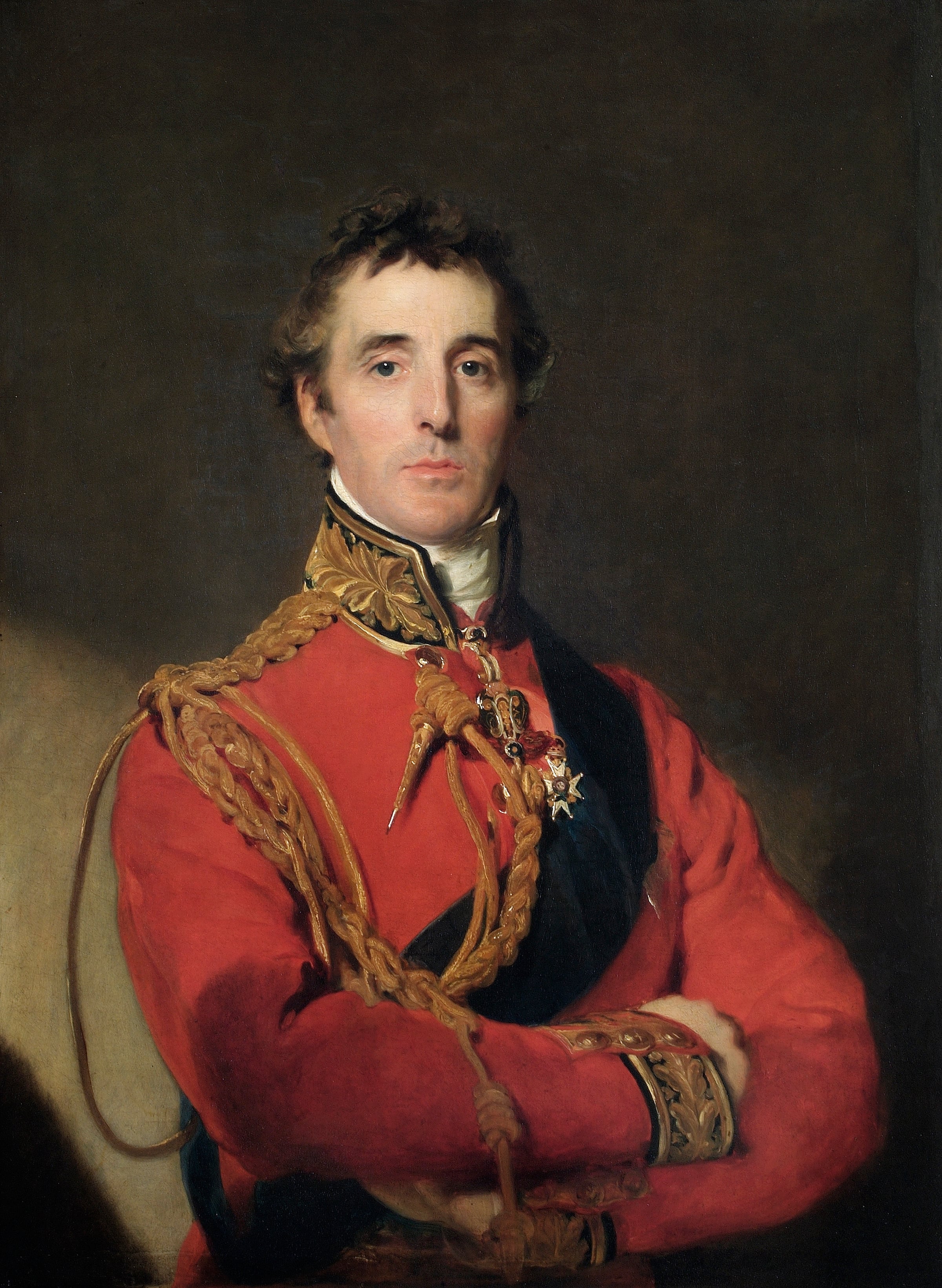
Waterloo
In 1815, Napoleon escaped from exile and staged a dramatic return to power in France
Britain joined an alliance with Prussia, Russia and Austria and declared war on France
Napoleon assembled an army of 120,000 men and immediately set out to crush the allied forces
He marched north into modern-day Belgium and defeated the Prussian army at Ligny
Believing the Prussians to have been completely crushed, Napoleon marched on towards Wellington at Waterloo
The Prussians, however, although defeated, had retreated and remained a formidable fighting force
On 18 June 1815, Napoleon attacked Wellington's forces, which had been positioned on a low ridge near Waterloo
Wellington's troops withstood the attack for long enough for the Prussian army to arrive on the battlefield
The Prussian arrival led to Napoleon's defeat, although it was very close-run
Wellington's Allied Army suffered about 15,000 casualties, the Prussians 7,000 and the French about 25,000
Facing the French threat at sea: the role of Nelson
Early naval victories, 1793–97
The Royal Navy won important victories before the Nile
At the Glorious First of June (1794), Admiral Howe captured six French ships, although the grain convoy the French fleet was protecting reached France
At Cape St Vincent (1797), Admiral Jervis defeated a larger Spanish fleet
Nelson left the line of battle without orders to block the Spanish escape, and captured two ships himself
At Camperdown (1797), Admiral Duncan destroyed the Dutch fleet
The navy was not trouble-free
In 1797, sailors mutinied at Spithead and the Nore over pay and conditions
Nelson lost his right arm in a failed attack on Santa Cruz de Tenerife the same year
The role of Nelson
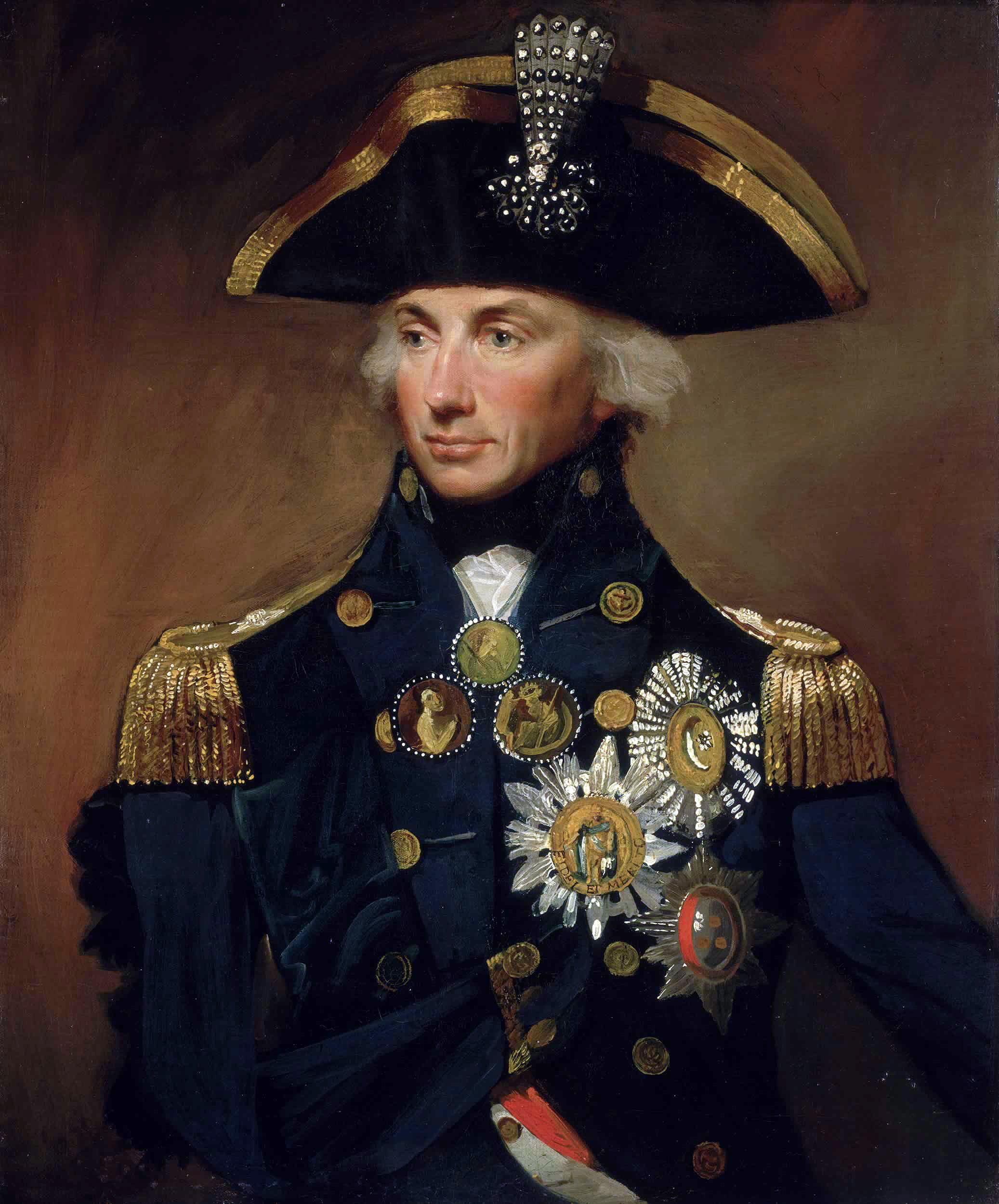
Horatio Nelson was an inspirational leader and naval officer and was the key figure in Britain's struggle against France at sea
Leadership and tactics
He briefed his captains fully before battle, so they could act on their own initiative
He relied on close-range gunnery and fast, well-drilled crews
Limits to Nelson's role
Middleton's reforms had improved the navy's administration before Nelson's major victories
Copper-bottomed hulls and carronades gave British ships advantages that did not depend on Nelson
French mistakes and poorly trained crews, and Villeneuve's lack of Napoleon's trust, also helped
Collingwood led the second column at Trafalgar
Breaking the enemy line was not new, because Rodney had done it before
The Battle of the Nile, 1798
In 1798, Napoleon invaded Egypt with nearly 38,000 soldiers who were carried there aboard 13 battleships and 280 transport vessels
Nelson was tasked with destroying this French fleet, and he discovered it anchored at the mouth of the River Nile on 1 August 1798
The French and the British fleets were similar in size and strength
But Nelson's ships launched a devastating attack that destroyed all but two of the French ships
The victory at the Nile left Napoleon and his troops stranded in Egypt
It also gave the Royal Navy complete control of the Mediterranean
This ended the French threat to British interests in India
The Battle of Copenhagen, 1801
In 1801, there were concerns in Britain over the threat posed by Denmark's fleet to Britain's access to the Baltic Sea
This led to the Royal Navy being ordered to launch an attack on the Danish capital, Copenhagen
The commander of the Royal Navy's Baltic Fleet was Admiral Parker, and he gave the task of leading the attack on Copenhagen to Nelson
On 2 April 1801, Nelson sailed his ships through a narrow strip of water that was heavily defended by Danish warships and gun batteries placed on floating rafts and in forts on the shore
Nelson's ships came under heavy fire, and Parker signalled him to discontinue the attack
Nelson ignored the signal from his superior officer
He went on to sink three Danish ships, capture 12 and force the Danish to agree to a truce
The Battle of Trafalgar, 1805
From 1803 onwards, Napoleon began planning to invade Britain
To do this, his navy needed to gain control of the English Channel so that his thousands of troops could be safely transported across it
In 1803, Nelson was given control of the Mediterranean Fleet, with his main task to keep the French fleet out of the Channel
After France allied with Spain in 1804, they had a combined fleet of 33 battleships
Nelson had 27 battleships
Napoleon's plan was for his fleet to escape to the Caribbean, draw Nelson after it, then return to seize control of the Channel
Although Nelson pursued the French fleet across the Atlantic, it was intercepted by another British fleet as it returned, removing the immediate threat of invasion
Instead, the French made for the Spanish port of Cadiz
When it left Cadiz on 19 October 1805, Nelson was lying in wait and gave chase
His fleet caught up with the Franco-Spanish ships two days later, off the Cape of Trafalgar, on 21 October 1805
The Nelson Touch
Rather than fight traditionally and sail in parallel lines to the French ships whilst firing broadsides, Nelson decided to try and force a decisive victory
His plan became known as the 'Nelson Touch'
It involved splitting his fleet into two divisions or columns and sailing directly towards the enemy lines at right angles
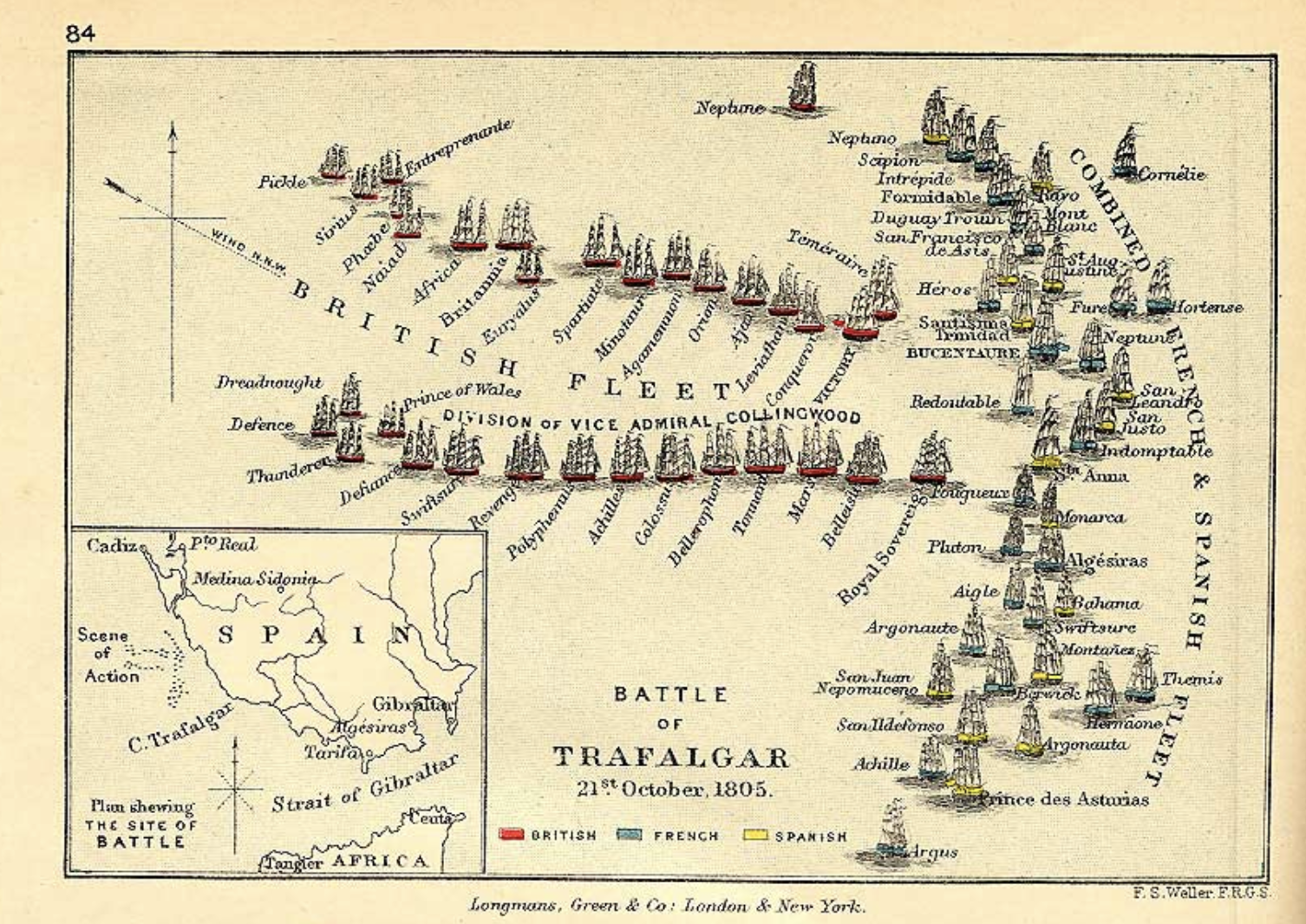
Nelson's ship, HMS Victory, was at the head of one column, and HMS Royal Sovereign was at the head of the other
As guns on 19th-century battleships fired sideways out from the hulls, Nelson's fleet was unable to return the fierce fire that came from the French and Spanish ships
However, once they broke through the lines, they were able to fire broadsides from all of their cannons at once
Victory fired through the stern of the French flagship Bucentaure as she broke the line, raking the whole length of the ship
The Nelson Touch allowed the British to use their superior gunnery and secure a massive victory
A total of 18 enemy ships were captured or sunk
No British ships were lost
However, Nelson was shot by a French marksman early in the battle and died of his wounds that afternoon, as the battle ended
The consequences of victory at Trafalgar
Victory at Trafalgar gave Britain almost complete dominance of the seas
British ships stopped and searched any ships they suspected of trading with France
Troops and supplies were transported to Spain and Portugal to help fight against the French
Britain seized overseas French and Dutch colonies that were left without protection
The Royal Navy attacked ports and towns on European coasts
During the war of 1812 with the USA (1812 to 1815) the Royal Navy also blockaded most American ports
The impact of the wars on the British economy, industry, commerce and agriculture
Britain was greatly helped in fighting these wars by its very strong economy
The wars stimulated some industries and damaged others
Britain's economy grew steadily, at around 1.5–2% a year, while overseas trade grew much faster
This meant it was able to both spend and borrow large sums of money
War demand for cannon, shot and muskets pushed up iron output
About a sixth of the male workforce served in the forces, and wages stagnated while food prices rose
Industry
It was industrial growth that drove the British economy at this time
The production of cotton cloth tripled between 1793 and 1815
This was exported and sold for huge profits all over the world
Pig iron production tripled between 1793 and 1815
This was key in the production of steam engines
Steam became an increasingly important and reliable source of power during this period
Iron was also key in the production of weapons such as cannons and muskets
The canal network was built during this time
This greatly reduced both the time and cost of transporting heavy goods such as coal and iron
Agriculture
Corn was vital for the production of bread, which was the staple food of most British people in the period
Corn production increased by over 20% between 1790 and 1810 through cultivating unused land and more efficient methods
However, Britain had to import corn throughout the war and corn shortages drove prices up
This was welcomed by British farmers and landowners, who enjoyed increased profits
Some of these profits were invested into the farms and led to improvements
Commerce
Alongside the Industrial Revolution, Britain developed a strong and sophisticated financial system
Often referred to as the City of London, this financial system played a key role in enabling the British government to access funds when they needed them
Financiers arranged large loans to both the British government and its allies such as Russia and Austria in the fight against France
Although this greatly assisted Britain's Army and Navy, it added heavily to the National Debt
The length of the conflict
Britain was at war with France almost continuously for 22 years (1793–1815), with only a short peace in 1802–03
A war this long put a heavy strain on Britain’s finances, trade and population
Wartime taxation
To pay for the war, Pitt introduced Britain’s first income tax, which was announced in 1798 and came into force in 1799
Incomes over £200 a year were taxed at 10%, and lower incomes paid less
Even so, the government still had to borrow heavily, and the National Debt rose from £292 million in 1793 to £862 million by 1815
Income tax was abolished in 1816, and the government relied on taxes on everyday goods instead
These hit poorer people hardest
The Continental System
In 1806, Napoleon’s Berlin Decree banned countries under French control from trading with Britain
Britain responded with the Orders in Council (1807), which blockaded trade with France and its allies
British exports fell sharply in 1808 and 1811, which caused unemployment and hardship in manufacturing areas
Distress among textile workers contributed to the Luddite machine-breaking of 1811–12
However, the system was hard to enforce
Britain found new markets in South America and the empire, and smuggling was widespread
When Russia left the system in 1810, Napoleon invaded Russia in 1812
Agriculture and the Corn Laws
High prices encouraged enclosure and the farming of poorer land
When peace came, prices fell, and landowners in Parliament passed the Corn Law (1815)
It banned foreign wheat imports until the British price reached 80 shillings a quarter
This kept bread prices high for ordinary people
Post-war distress
After 1815, around 300,000 soldiers and sailors were demobilised into a weak jobs market
Unemployment, high bread prices and taxes on everyday goods led to unrest, such as the Spa Fields riots (1816) and Peterloo (1819)
How successfully did Britain meet the French threat
The length of the war came at a high cost:
A much larger National Debt
The Continental System’s disruption of trade
Post-war distress
Industry and finance, however, emerged stronger
Judgement on the impact of the conflict
The argument that Britain met the threat successfully
It is undeniable that Britain avoided invasion, won a series of spectacular victories against France at sea and defeated Napoleon at Waterloo
The Battle of the Nile, the Battle of Copenhagen, and the crushing victory at Trafalgar severely disrupted Napoleon's plans and ended the threat of invasion
Britain used its strong economy to finance the armies of other nations, such as Russia and Austria, who fought against Napoleon
The British Army became increasingly effective under Wellington
It won a series of key victories in the Peninsular War and played a key role in the defeat of Napoleon at Waterloo
The argument that Britain was less successful than it appears
The coalitions of allies that it constructed and paid for repeatedly collapsed and were defeated by Napoleon on the battlefield
Trafalgar may have removed the threat of invasion, but it did not defeat Napoleon
Napoleon's Grande Armée was severely weakened by the disastrous invasion of Russia in 1812
The victory at Waterloo depended on the arrival of the Prussian army and would have likely ended in British defeat if they had not arrived
Judgement
Britain met the threat of Napoleon successfully, but was more successful at fighting defensively than offensively
For most of the period, it relied on other nations to fight Napoleon on land and greatly benefited from his defeat in Russia in 1812
But Britain did not merely survive, and its armed forces became more effective as the war went on
Examiner Tips and Tricks
Don’t rely on Trafalgar and Waterloo alone. To judge Nelson’s or Wellington’s importance, you need examples from across 1793–1815. For Nelson, use Cape St Vincent, the Nile and Copenhagen as well as Trafalgar. For Wellington, use Torres Vedras, Salamanca and Vitoria as well as Waterloo. A wider range of evidence lets you show how their leadership developed and makes your judgement more convincing.

Unlock more, it's free!
Join the 100,000+ Students that ❤️ Save My Exams
the (exam) results speak for themselves:

Was this revision note helpful?