Haig's Offensives & the British Public, 1916-18 (Edexcel A Level History: Paper 3 Options): Revision Note
Exam code: 9HI0

Summary
Field Marshal Douglas Haig was Commander-in-Chief of the British Expeditionary Force (BEF) from December 1915 to the end of the war
He oversaw the offensives at the Somme in 1916 and Passchendaele in 1917 that resulted in the deaths of enormous numbers of British troops
He also oversaw the Hundred Days' Offensive that saw Britain break through the German lines in 1918 and make significant territorial gains
It was at the end of this offensive that the German leaders agreed to the Allied terms and signed the Armistice
Haig's leadership has been a divisive topic for many years
However, during the course of the war, strict government control over what was reported by newspapers meant that this debate only started after the fighting stopped
Haig's major offensives: the Somme, 1916
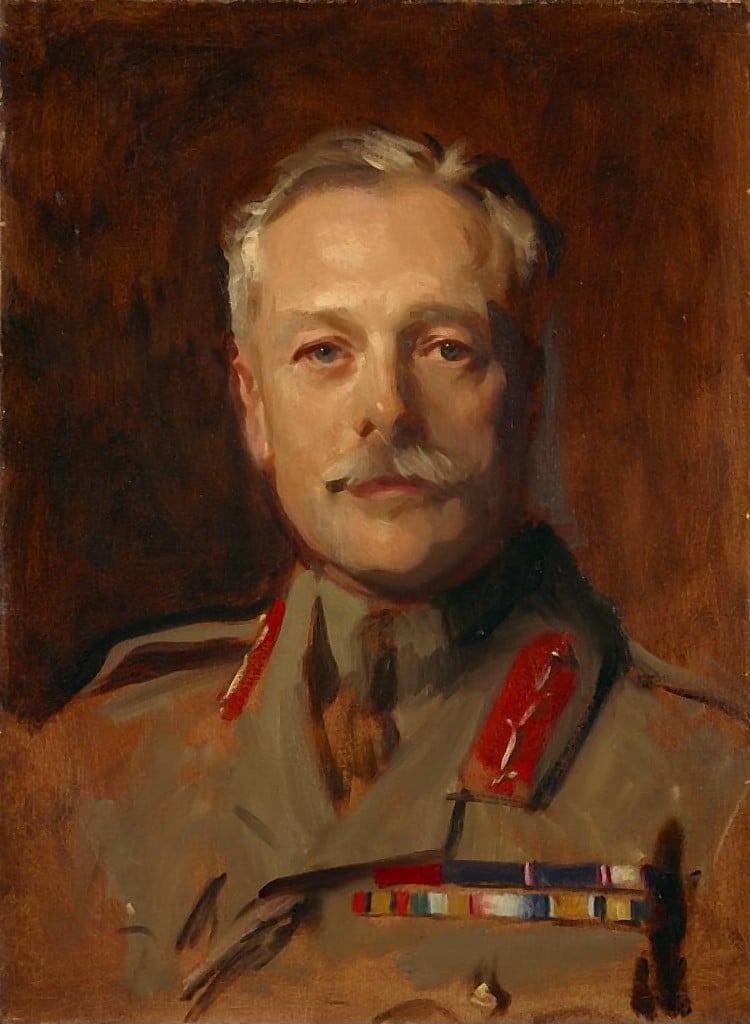
Haig believed in adopting an offensive strategy rather than defending occupied ground
When large numbers of fresh volunteer troops arrived in France in 1916, Haig agreed to launch a major assault on the German positions near the River Somme
This was partially motivated by attempting to draw German forces away from the fierce fighting taking place with France at Verdun
Ineffective artillery
A week-long artillery bombardment of German positions commenced in late June 1916
More than 1,500 guns fired over 1.5 million shells across the week
However, the type of shells used, and the lack of heavy artillery, meant that this enormous barrage left both the reinforced German positions and the barbed wire intact
Infantry charge
An attack involving 13 British and five French divisions commenced at 7:30 am on 1 July
The gap between the artillery barrage ending and the infantry charge beginning enabled the Germans to return to their machine guns
This led to the deaths of 19,000 British troops as they crossed no man's land
1 July 1916 saw the greatest loss of troops in a single day in the history of the British Army
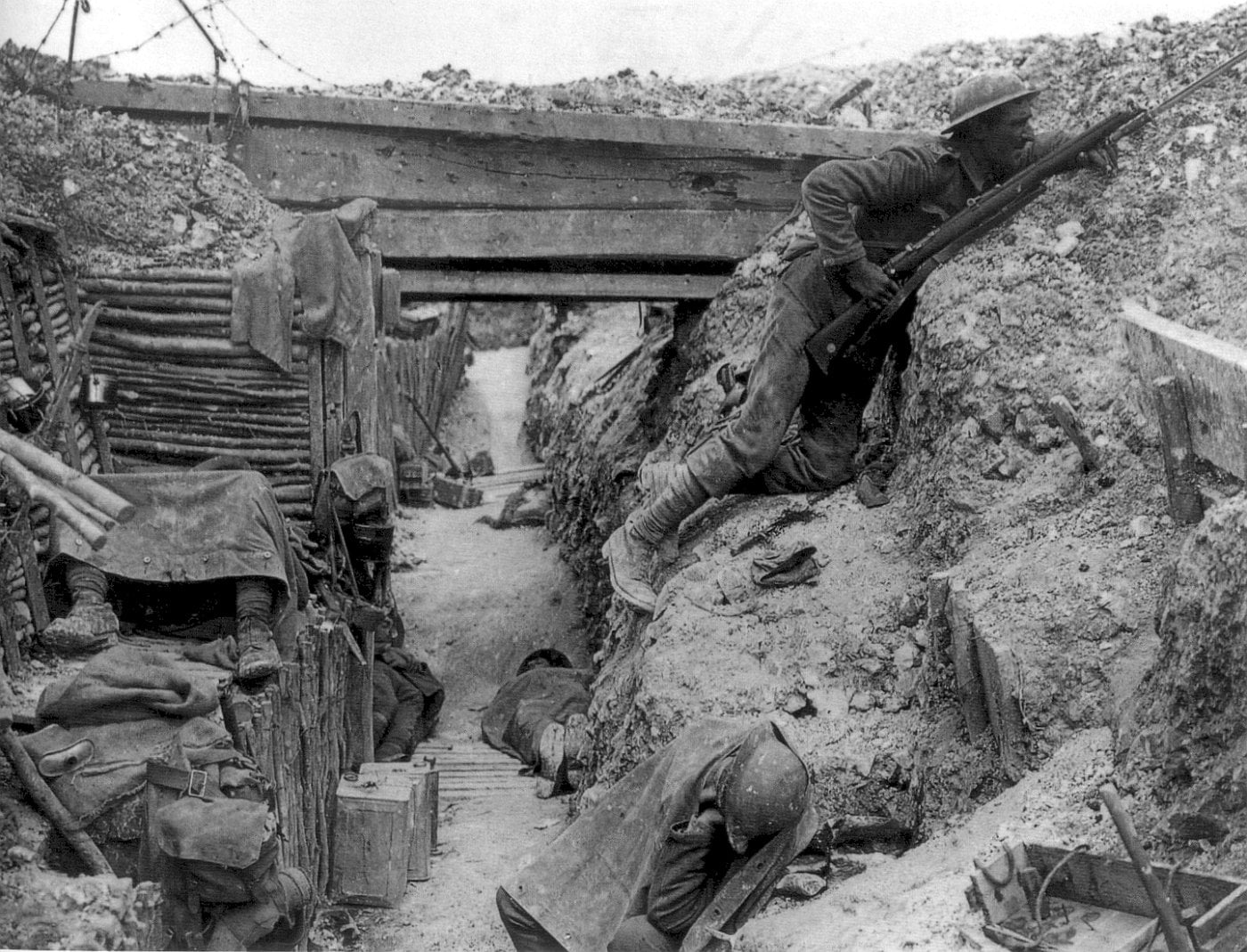
Despite German counterattacks and the enormous casualties, the Somme offensive continued until 18 November 1916
The British and French armies had advanced seven miles
The British Army had suffered over 420,000 casualties and France 194,000
Germany had suffered 465,000
The Somme brought the first tanks and creeping barrages, and later changes to infantry tactics
Losses among Pals battalions brought grief to whole communities at home
In the first place, the military situation compelled us, particularly during the first portion of the war, to make great efforts before we had developed our full strength in the field or properly equipped and trained our armies. These efforts were wasteful of men, but in the circumstances they could not be avoided. The only alternative was to do nothing and see our French Allies overwhelmed by the enemy’s superior numbers.
An extract from a despatch by Sir Douglas Haig dated 21 March 1919 and published in the London Gazette newspaper in April 1919
Approach
Haig's despatch is valuable because, as Commander-in-Chief of the BEF, he possessed exceptional knowledge of Britain's strategic situation and his acknowledgement that British offensives were “wasteful of men” is highly significant. His explanation also demonstrates the impact of coalition warfare and the need to support France, which encouraged Britain to continue costly offensive operations like the Somme. However, the source was published after victory in 1919, and Haig would have been motivated to justify operations for which he was responsible. His claim that these losses “could not be avoided” is not a statement of fact but an argument in defence of his leadership.
Passchendaele, 1917 and the Hundred Days' Offensive, 1918
Passchendaele, 1917
Passchendaele, or the Third Battle of Ypres, began with a two-week artillery bombardment from mid-July
The infantry attack opened on 31 July 1917
Although the bombardment successfully destroyed much of the German artillery, it also destroyed the drainage system
This created swamp-like conditions and made it very difficult for the British to advance
Unusually heavy rain in August made this worse
Many of the German machine guns had survived the barrage and were used to halt the British troops
When the Passchendaele offensive was called to an end in November 1917, less than 6 miles of land had been gained at a cost of 70,000 British dead and 170,000 wounded
Passchendaele is also significant as it saw the switch from Gough's mass attacks in July and August to Plumer's "bite and hold" attacks from 20 September, such as Polygon Wood
This involved capturing specific and limited objectives and then digging in to hold on to them
Once German counterattacks had been defeated, new limited attacks would be launched from the captured ground
The mud and losses made Passchendaele a symbol of the war's futility and deepened Lloyd George's distrust of Haig
The Hundred Days' Offensive, 1918
On 21 March 1918, the Germans launched an enormous surprise attack on the Somme known as the Ludendorff Spring Offensive
Specialist stormtroopers attacked weak spots in the British trenches and then continued to advance deep behind British lines
The panic and confusion this caused led to British troops retreating over 40 miles
Reinforcements from around the British Empire and the arrival of hundreds of thousands of American troops halted the German attacks on the British front by the end of April
By July, the Germans were running short of both men and supplies, and Haig counterattacked
At Amiens on 8 August, Britain retook eight miles of land and continued to press forward
Highly coordinated attacks involving artillery, infantry, aircraft, and tanks proved extremely effective
Switching the focus of the attacks made it difficult for the Germans to reinforce in the right areas
Techniques such as the creeping barrage had been perfected by 1918
Amiens was an all-arms attack (over 400 tanks, aircraft, surprise bombardment) led by Canadian and Australian corps
The Hundred Days' Offensive, from 8 August to 11 November 1918, saw the British Army make enormous territorial gains
On 29 September, British troops breached what had been believed to be the impenetrable Hindenburg Line
The German defences were pounded with almost a million shells fired by 1,600 guns in just 24 hours
The Germans defended ferociously, and Britain still lost an average of 3,645 men a day during the offensive
Armistice
By November, Germany's troops were in full retreat, and it no longer had the resources to keep fighting
The German people rose up in revolt, and their Kaiser was forced to abdicate
The leaders of the new German government accepted the Allies' terms for the Armistice
On 11 November 1918, fighting on the Western Front came to an end
British public perception and government control of reportage
From the very start of the war in 1914, the British government was concerned about newspapers
They thought they might negatively influence public opinion
They feared they could print information that would be useful to the enemy
As a result, it passed the Defence of the Realm Act (DORA) in August 1914
This meant newspapers could be prosecuted for publishing information that might harm the war effort
Editors were not legally required to submit stories first, but most sent sensitive items to the Press Bureau to avoid prosecution
Unlike the Boer War, correspondents were not allowed to follow the army to France in 1914
Five correspondents were given access to the Army's General Headquarters (GHQ) in 1915
Until 1915, journalists were banned from the front; after that, a few accredited correspondents visited it under escort, and every report was censored
The publication of photographs of the Western Front was controlled
To coordinate with the newspapers, the government established the Press Bureau
This distributed official GHQ and government communications to newspapers
From 1915, many papers began to publish casualty lists and name those who had been killed in action
However, this was discontinued in 1917 over fears of the impacts the lists were having on public morale
The government did not ban them, but this was an example of self-censorship from a supportive and compliant press
The government also established the War Propaganda Bureau at Wellington House in August 1914
This was intended to influence people's attitudes towards the war both at home and abroad
It used books, pamphlets and articles by well-known writers and prominent public figures
It attempted to portray Britain as fighting for justice and civilisation
Germany was portrayed as being aggressive and committing atrocities
In August 1916, whilst the battle was taking place, a documentary film called The Battle of the Somme was released in British cinemas
Over 20 million tickets to see the film were sold in its first six weeks of release
It exposed audiences to a much more realistic depiction of fighting on the Western Front than they had previously seen
Responses were very mixed
Some people were shocked and horrified by the kind of fighting that was taking place
Others were very proud of the efforts of the soldiers, and it renewed their determination to win the war
Changing public attitudes
Despite the restrictions of DORA and the efforts of the War Propaganda Bureau, attitudes towards the war gradually changed
In 1914, there was an initial wave of patriotism and enthusiasm
In 1915 and 1916, the enormous casualties meant large numbers of people were bereaved
The introduction of conscription also affected people's views
By 1917, there was an increasing level of war weariness
High casualties, apparently endless stalemate and shortages impacted people's enthusiasm for the war
The changing attitudes were famously reflected in the Lansdowne Letter, which was published in the Daily Telegraph newspaper in November 1917
Lord Lansdowne was a former Foreign Secretary, and he argued in his letter that Britain should explore the possibility of negotiating with Germany
He argued that the war should not be allowed to drag on indefinitely and that it was causing too much harm to European civilisation
The letter was highly controversial and was strongly criticised but showed that opposition to the war was no longer confined to extreme sections of society
How far was Haig responsible for the outcome of the war on the Western Front?
Argument that Haig was responsible for the enormous British casualties on the Western Front
It was under Haig's command that British troops fought at both the Somme and Passchendaele
Both of these battles saw Britain suffer enormous losses for very limited territorial gains
The fact that the same disaster was repeated indicates that Haig was willing to accept enormous casualties in the hope that Germany would also lose large numbers of men
It also indicates a weakness in Haig's approach
The intense artillery barrages that preceded the infantry charges failed to destroy the German machine gun nests, barbed wire or artillery
Critics such as Lloyd George saw him as a "butcher", while later historians describe a "learning curve" that produced victory in 1918
Argument that Haig was responsible for Allied victory on the Western Front
Haig was faced with near-impossible circumstances and weapons that no other commander had faced before
Not fighting or attacking the Germans was not an option, and the French armies needed to be supported
Although the first day of the Somme witnessed the highest number of British deaths in a single day, the French were not defeated at Verdun
A German victory at Verdun would have been a strategic disaster and might have occurred if Haig's attack on the Somme had not diverted German men and resources
It can also be argued that the British Army improved enormously under Haig's leadership
Haig was receptive to new technology, supporting tanks and Trenchard's Royal Flying Corps, and he worked effectively with Foch in 1918
By 1918, there was a high degree of coordination between artillery, infantry, aircraft, tanks, machine guns and engineers
This led to the Hundred Days' Offensive that saw Britain make huge and rapid advances
German leaders agreed to sign the Armistice shortly after
Judgement
Haig was significantly responsible for both the outcome and the losses on the Western Front
He shaped British strategy during the crucial years of 1916–18 and commanded the BEF through both its costly attritional battles in 1916 and 1917 and its decisive victories of 1918
However, his importance should not be exaggerated
Allied victory ultimately resulted from the development of the British Army and the growing exhaustion of Germany
Haig was therefore an important contributor to victory rather than being solely responsible
At the same time, he was not merely an incompetent “butcher”
Examiner Tips and Tricks
When you judge Haig, avoid calling him a "butcher" without evidence. Top answers weigh the losses of 1916–17 against the all-arms victories of 1918 and use precise figures.

Unlock more, it's free!
Join the 100,000+ Students that ❤️ Save My Exams
the (exam) results speak for themselves:

Was this revision note helpful?