The War in the Air, 1914-18 (Edexcel A Level History: Paper 3 Options): Revision Note
Exam code: 9HI0

Summary
Although still a very new technology in 1914, aircraft were utilised by all sides in the First World War
Their primary purpose was reconnaissance, and this remained the case throughout the war
However, armed planes known as fighters were developed to shoot down enemy reconnaissance planes
Advances in technology led to air superiority switching between sides as new planes were introduced
The Royal Flying Corps (RFC) expanded enormously over the course of the war
Its most successful pilots were known as aces and became famous
By 1918, the RFC had achieved air superiority over the British section of the Western Front
More advanced aircraft were also able to carry out ground attacks on enemy positions
British cities and civilians also came under attack from German aircraft
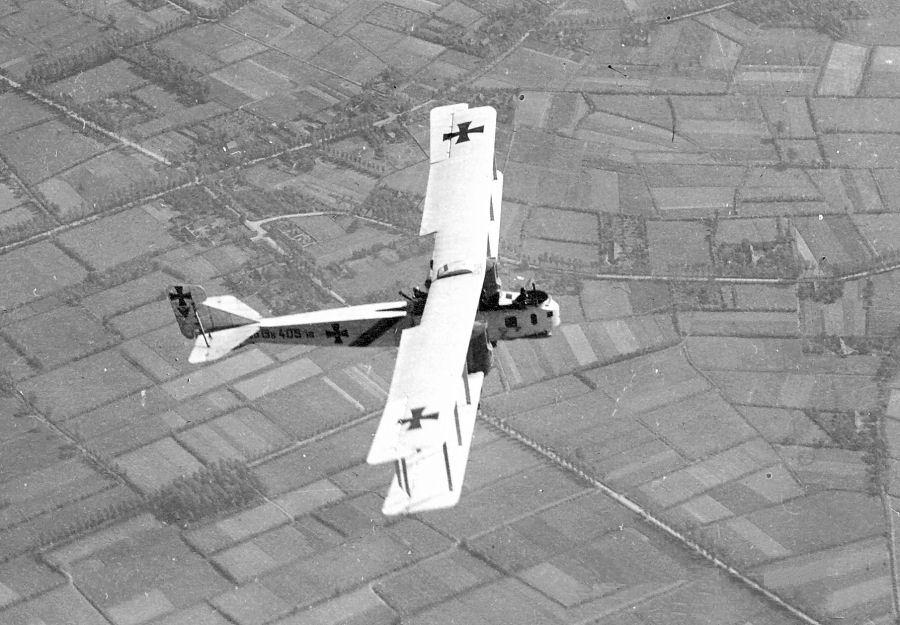
Enormous airships called Zeppelins and bomber aircraft called Gotha attempted to disrupt the production of weapons and equipment British troops needed
They also attempted to damage the morale of the British population
The impact of aerial reconnaissance
The first powered flight took place in 1903, and the military implications of aeroplanes were immediately recognised
The impact of aircraft on reconnaissance would be enormous
Planes would enable generals to learn the location, size and equipment of enemy forces that were located over the horizon
When the First World War began in 1914, Britain had 113 aircraft compared to Germany's 246
All of these planes were very basic
The RFC's main reconnaissance aircraft, the BE2, had a top speed of only about 70 mph
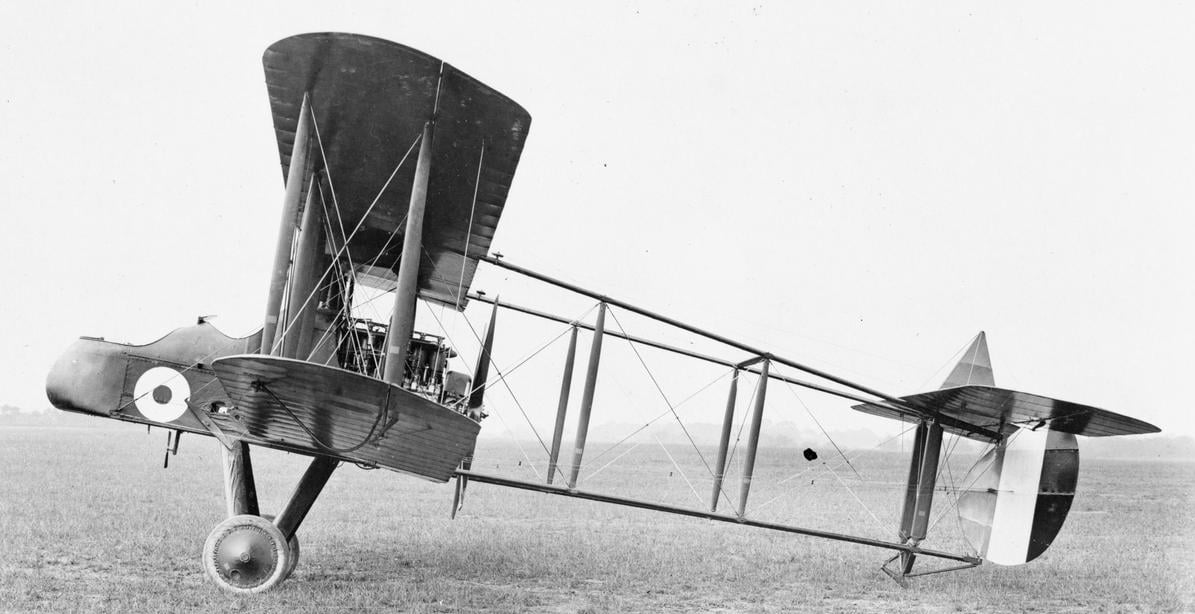
Planes soon became increasingly sophisticated, faster and able to fly higher
Purpose-built cameras were fitted to fuselages instead of being dangled over the side
Radios were used to deliver reports rather than having to land to deliver them in person
This enabled accurate maps of enemy trench systems to be made
It also enabled up-to-date information on enemy numbers to be gathered
Observation
In September 1914, RFC and French aircraft spotted the German First Army turning south-east, east of Paris
This exposed the German flank, and the Allies counter-attacked at the Marne on 6 September 1914
Once trench warfare began, aircraft mainly spotted for the artillery
Observers watched where shells landed and sent corrections to the gunners by wireless Morse code
This made artillery fire far more accurate
Photographic
From 1915, aircraft photographed enemy trenches
The photographs were used to draw trench maps, first at Neuve Chapelle in March 1915
By 1918, gunners could hit targets found on photographs without firing ranging shots first, which allowed surprise attacks such as Amiens
Communication
From the Somme in 1916, aircraft flew “contact patrols” over attacking troops
Infantry lit flares to mark how far they had advanced
Observers reported this to headquarters by wireless or dropped messages
The development of the Royal Flying Corps
Fighter planes
As more and more reconnaissance planes took to the skies, it led to the development of armed planes
These were used both to shoot down enemy reconnaissance planes and to protect their own
The difficulty with fitting machine guns to aeroplanes was that most First World War era planes were powered by propellers that were placed at the front
This initially prevented forward-facing machine guns from being fitted, as they would shoot and damage the propellers
In 1915, Germany fitted the Fokker Eindecker with an interrupter (synchronisation) gear, which let machine guns fire through spinning propellers without hitting them
This gave German pilots a huge advantage
This led British commanders to expand the Royal Flying Corps (RFC) and improve the quality of the planes and the training its pilots received
By mid-1916, when the Battle of the Somme began, Britain had caught up with Germany in terms of both the number and quality of its aircraft
Planes such as the DH2 and the Sopwith Strutter gave Britain air superiority over the Somme in 1916
From the autumn, German squadrons flying the faster Albatros fighter won it back, and in "Bloody April" 1917 the RFC lost about 250 aircraft
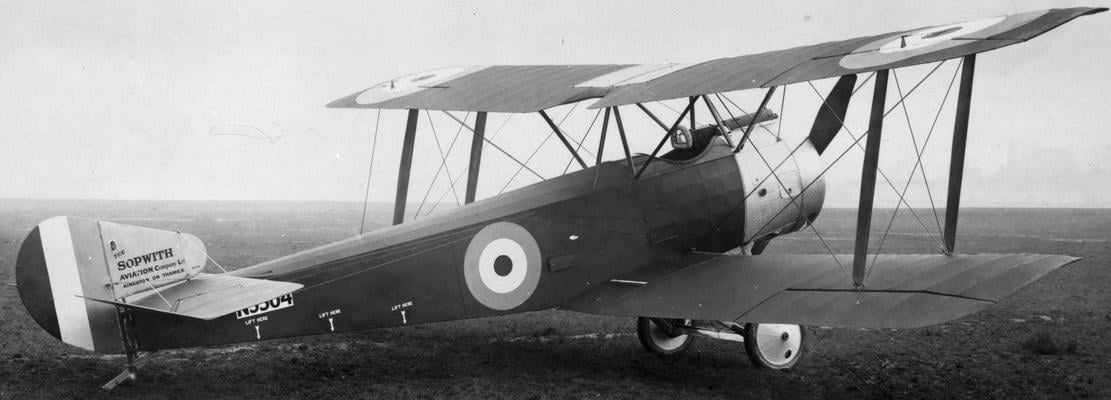
The RFC in 1917 and 1918
Aircraft technology continued to develop rapidly throughout the war
Air superiority depended on who had the fastest, most manoeuvrable and best-armed aircraft
As a result, air superiority continued to switch between Britain and Germany as new machines were introduced
The Sopwith F1 Camel was the first British plane to be fitted with two synchronised machine guns
It was introduced in 1917 and went on to shoot down 1,294 enemy planes
Creation of the Royal Air Force
On 1st April 1918, the Royal Flying Corps (RFC) and the Royal Naval Air Service (RNAS) were combined to become the Royal Air Force (RAF)
Britain was the first country to establish an independent air force
This was the result of the Smuts Report of 1917
The Smuts Report was commissioned after German bombing raids on Britain and made a series of recommendations
These included:
Creating a single, unified air service
Establishing an Air Ministry that was separate from the Army and Royal Navy
Recognising that an air force could operate independently and not just serve a supporting role to the Army and Navy
The creation of the RAF was also influenced by the conduct and beliefs of Hugh Trenchard, who was the RFC commander
He believed that aircraft should be used offensively and aggressively, rather than just defending British airspace
He showed the potential of an air force through attacking enemy aircraft and airfields
This aggressive approach helped establish air superiority, which greatly aided Britain's troops
Haig strongly backed Trenchard and the RFC
The air service grew from 113 aircraft in 1914 to about 22,000 by the end of the war
Aces
Pilots who shot down five or more enemy planes became known as 'aces'
Aces on all sides of the war became celebrated figures and household names
Compared to fighting in trenches and in the mud, fighting in the skies seemed gallant, chivalrous and romantic
The reality was that being a fighter pilot was incredibly dangerous
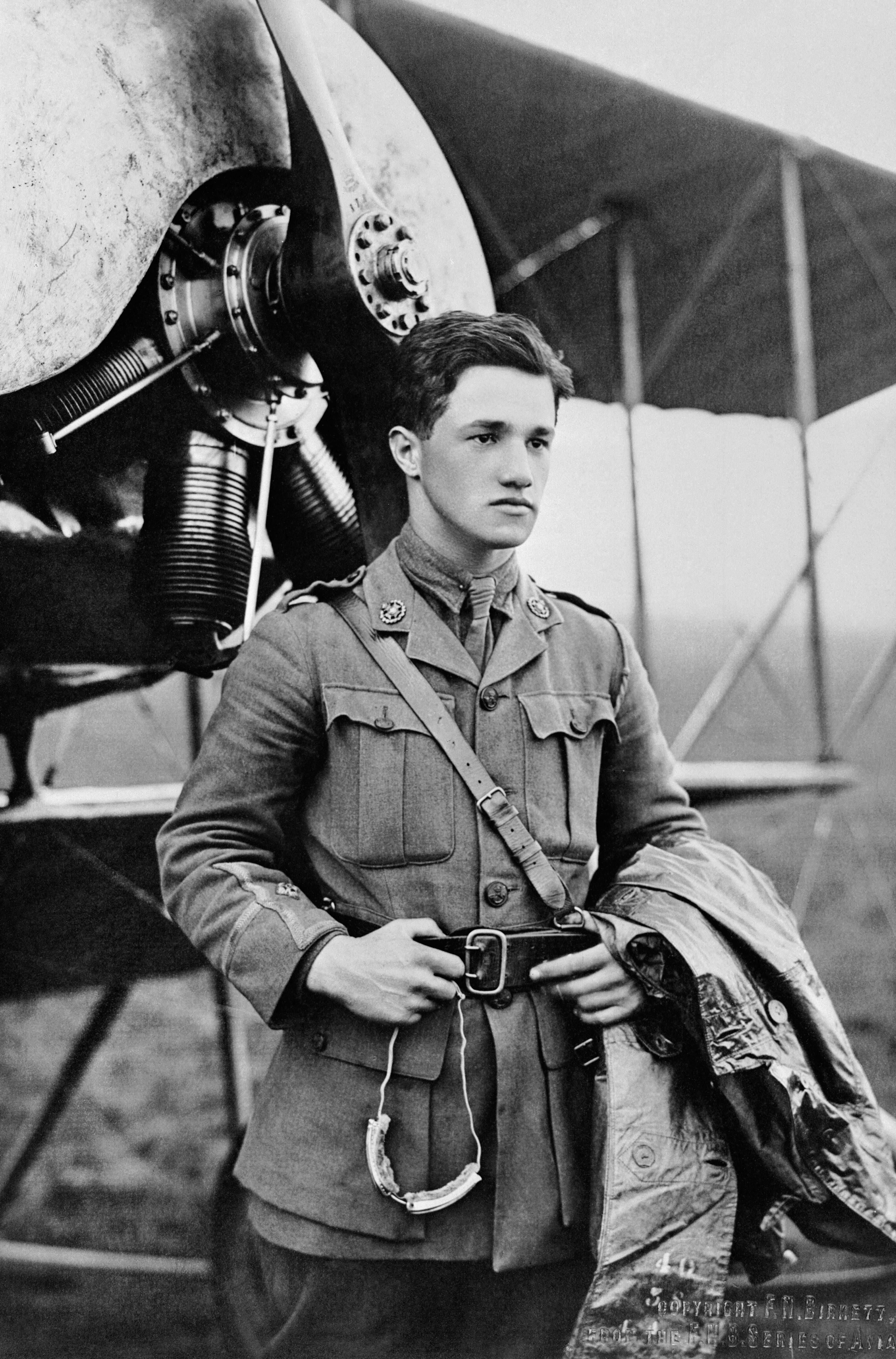
Britain's most famous ace, Albert Ball, was killed aged just 20 in 1917
Ground attack
Although there were attempts to use aircraft to attack enemy troops, their impact was very limited
Dropping bombs accurately proved to be very difficult
Swooping low to shoot or strafe enemy positions with machine guns left the very delicate aircraft vulnerable to fire from the ground
Throughout the entire war, reconnaissance remained the aircraft's most important role
Britain's control of the skies in 1918 meant it had a far better picture of Germany's forces
This meant British troops could be deployed far more effectively
The main target of fighter planes was always reconnaissance planes
Zeppelin and Gotha raids on British towns
Zeppelin raids
As entire societies and economies had been mobilised to help win the war, civilians and the factories in which they worked were viewed as targets for aerial bombing
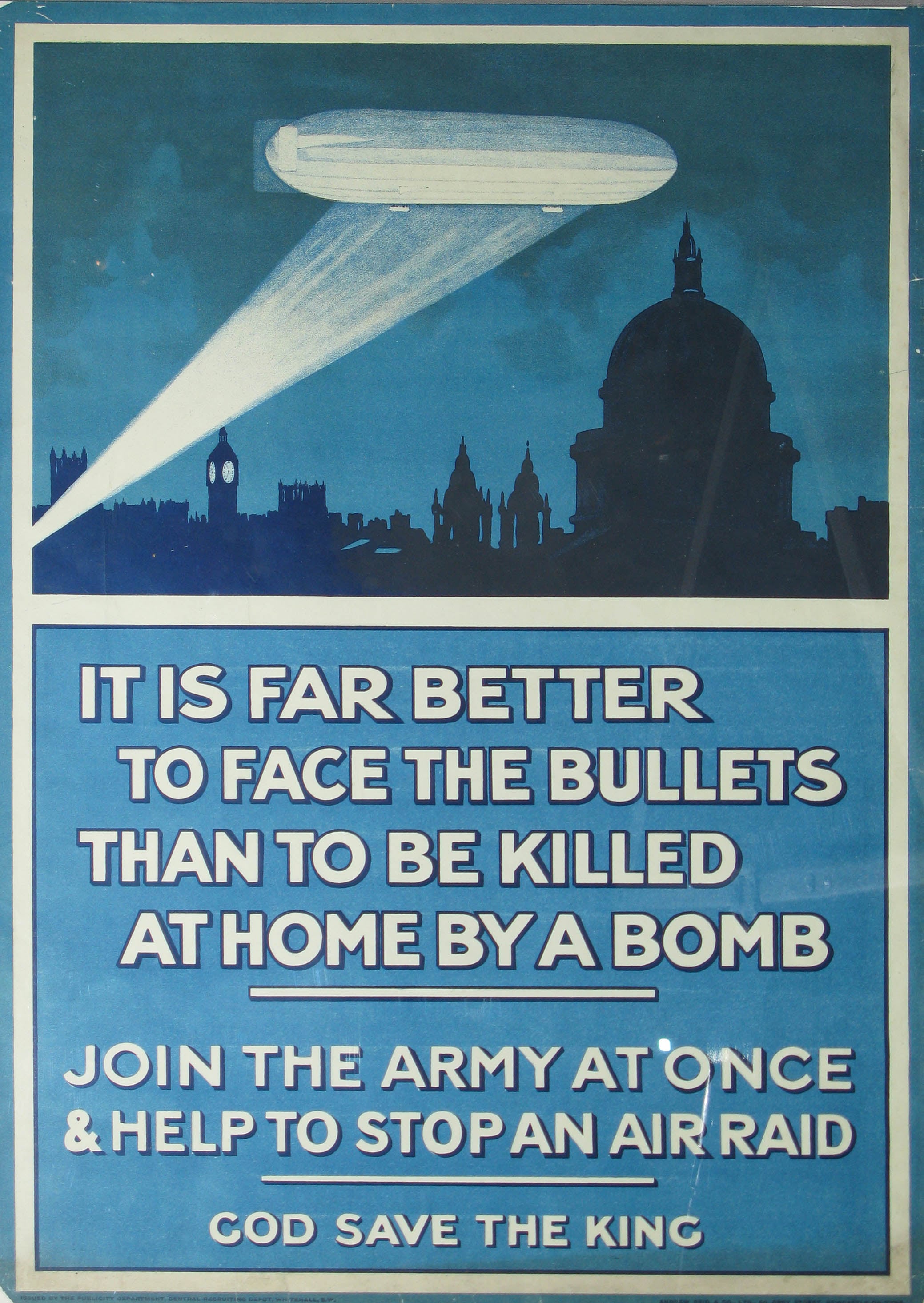
Germany had a fleet of lighter-than-air vehicles known as airships or Zeppelins
These were capable of flying long distances and reaching Britain after taking off from Germany
In January 1915, four people were killed in the first Zeppelin raids on Britain, which targeted the coastal towns of Great Yarmouth and King's Lynn
The raids continued throughout the war and across the country
A total of 556 British civilians were killed in Zeppelin raids, which caused great alarm
On Wednesday night at quarter to eleven I was woken up by my mother who said: “Don't be frightened; the Germans are here”. I jumped out of bed (and my brother fell out) and ran into the front room where my mother was dressing. She said to me Go and get your clothes on, but as I was, a big light like lightning rose before my eyes, and before I knew where I was, a mighty explosion and a huge flame leapt in front of me. I ran into the street and saw many people pointing towards the sky. I ran to see what was the matter, and in the sky there was a silvery coloured thing in the shape of a cigar. Two powerful searchlights shone on it from end to end. It stood there for about five minutes, dropping bombs and going in a circle for about two times and suddenly disappeared into the air. The searchlights looked for it, but in vain it could not be found.
An account of a Zeppelin raid written by J. Marriage, a London schoolboy on 8 September 1915. The boy's teacher instructed the whole class to record their experiences of the raid.
Approach
This account is particularly useful for understanding the psychological impact of Zeppelin raids because it was written by an ordinary London civilian immediately after experiencing an attack. His description of being woken at night, hearing a “mighty explosion” and watching the Zeppelin above London illustrates how aerial warfare brought the German threat directly into civilian life. However, as the account of a schoolboy describing a single raid, its use is limited to individual experience rather than the overall effectiveness of the German bombing campaign.
Gotha raids
In 1917, Germany began a new bombing campaign of British cities that they hoped would disrupt Britain's war industry
This time, the bombs were dropped by larger, specially developed bomber aircraft known as Gothas
Gothas could fly higher than many British planes, so they were hard to intercept
The first raid, on 25 May 1917, was turned back by cloud and hit Folkestone instead
London was first bombed on 13 June 1917, when 162 people were killed
Heavy losses to anti-aircraft defences then caused a switch to night-time raids
This made it more difficult for the German pilots to find their targets, but civilians continued to be killed
The final Gotha raids occurred in May 1918
A total of 850 British civilians were killed, and a further 2,000 were injured by bombs dropped by Gothas
Public opinion
The raids brought the war directly to civilians and caused fear and shock
The daylight Gotha raids on London in June and July 1917 caused public anger at the government's failure to defend the city
This pressure led to the Smuts Report
Censors restricted reporting of raids to prevent alarm
Defending Britain
At first, British towns had few defences: there were few anti-aircraft guns and no air-raid sirens
These attacks led to Britain developing air defence systems
This included powerful searchlights that swept the night sky, attempting to locate enemy aircraft
Searchlights helped fighter pilots and anti-aircraft gunners find and attack their targets
It also included increasing numbers of anti-aircraft guns
These fired shells that exploded at set altitudes, scattering fragments in the air
Home defence squadrons flew over British cities to intercept German raiders before they reached their targets
Flying at night and without radar, it was very difficult for them to locate the raiders
Explosive and incendiary bullets were developed to use against the hydrogen-filled Zeppelins
The explosive bullets would burst the Zeppelins, and the incendiary bullets would set the escaping hydrogen alight
Propaganda
The air raids on Britain were also highly significant from a propaganda perspective
Attacks on British civilians led to Zeppelin and Gotha pilots being branded as 'baby killers'
The attacks were used to try to motivate British men to join the armed forces
The shooting down of enemy aircraft was also celebrated as a great success
When Lieutenant William Leefe Robinson shot down the German airship SL11 in September 1916, it was witnessed by large numbers of people
Leefe Robinson was awarded the Victoria Cross and became a household name
The destruction of SL11 with incendiary ammunition was a major boost for the British people's morale
How significant was air power to the British war effort by 1918?
The argument that air power became highly significant by 1918
The RFC completely transformed British commanders' knowledge and understanding of the battlefield
By understanding the location and strength of the enemy's trenches, artillery, troops and supplies, they could fight far more effectively
The RFC, in effect, became the eyes of the Army and made artillery attacks much more accurate and effective
This meant gaining air superiority became essential on the Western Front
In addition to this, aircraft were increasingly used to attack enemy troops and supply lines
In the Hundred Days of 1918, the RAF supported all-arms attacks, working with tanks at Amiens and bombing German airfields and railway hubs
The argument that air power was still not decisive by 1918
The First World War was ultimately won by soldiers on the ground, supported by machine guns, artillery and tanks
Although aircraft could help identify enemy locations, they could not hold ground or occupy trenches
Air power had a fraction of the destructive capability of artillery
Bombs dropped from aircraft were also not as accurate as artillery
When aircraft did attack ground targets, they were highly vulnerable to ground fire and were greatly dependent on good weather
The bombing of British cities by German aircraft did not significantly affect Britain's ability to arm and supply its troops
Neither did it break the morale of the British people
Judgement
Although air power had become highly significant by 1918, it was not yet independently decisive
It revolutionised reconnaissance, and its observation of artillery strikes made them much more accurate and effective
However, its role remained a supporting one
Unlike aircraft of the future, those in 1918 lacked the range, accuracy and ability to carry enough bombs to defeat Germany independently
Examiner Tips and Tricks
Questions on air power often ask you to explain why a technical development mattered. Don't just name aircraft: link each one to what it let the army do, such as accurate artillery fire in 1918.

Unlock more, it's free!
Join the 100,000+ Students that ❤️ Save My Exams
the (exam) results speak for themselves:

Was this revision note helpful?