Calculating Work Done (College Board AP® Physics 1: Algebra-Based): Revision Note

Work done equation
When an applied force displaces an object over a distance, work is done
If a force is applied but the object is not displaced, then no work is done
For a constant force applied parallel to the displacement of the object, work is calculated using the equation:
Where:
= work, measured in
= applied force parallel to displacement, measured in
= distance, measured in
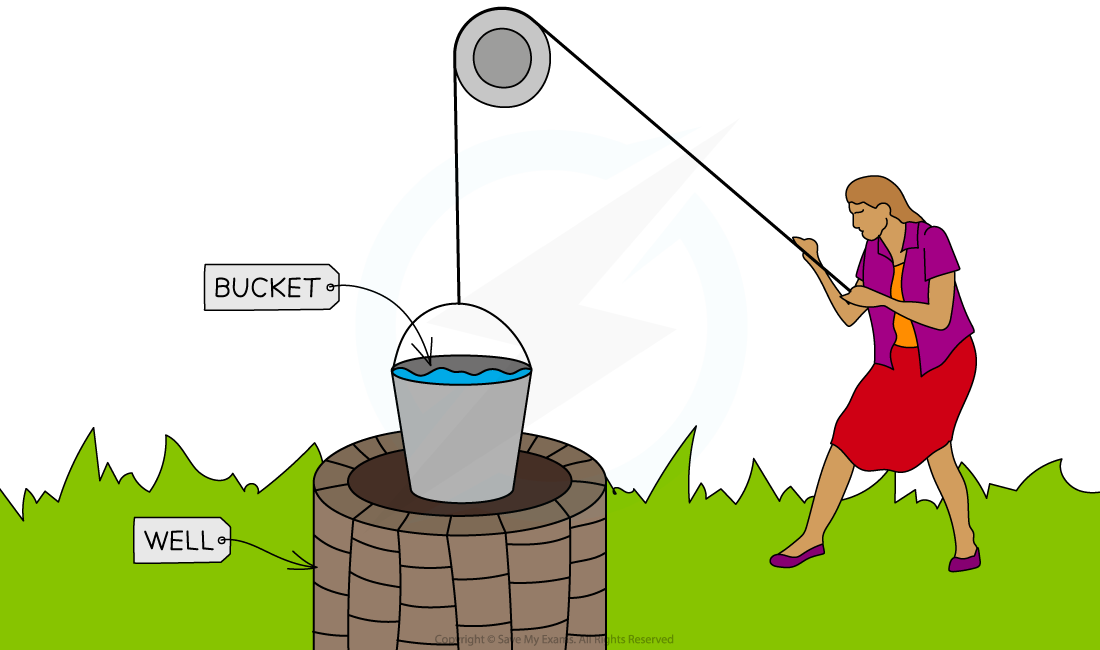
For example, if a bucket of water is raised from a well by pulling a rope with a force of through a height of , then the work done is:
Work done at an angle
Only the components of the applied force that are parallel to the displacement contribute to the work done
When a constant force is applied at an angle to the displacement of the object, work can be calculated using:
Where:
= work, measured in
= component of the force that is parallel to the displacement of the object, measured in
= distance, measured in
= angle at which the force is applied, measured in from the displacement vector
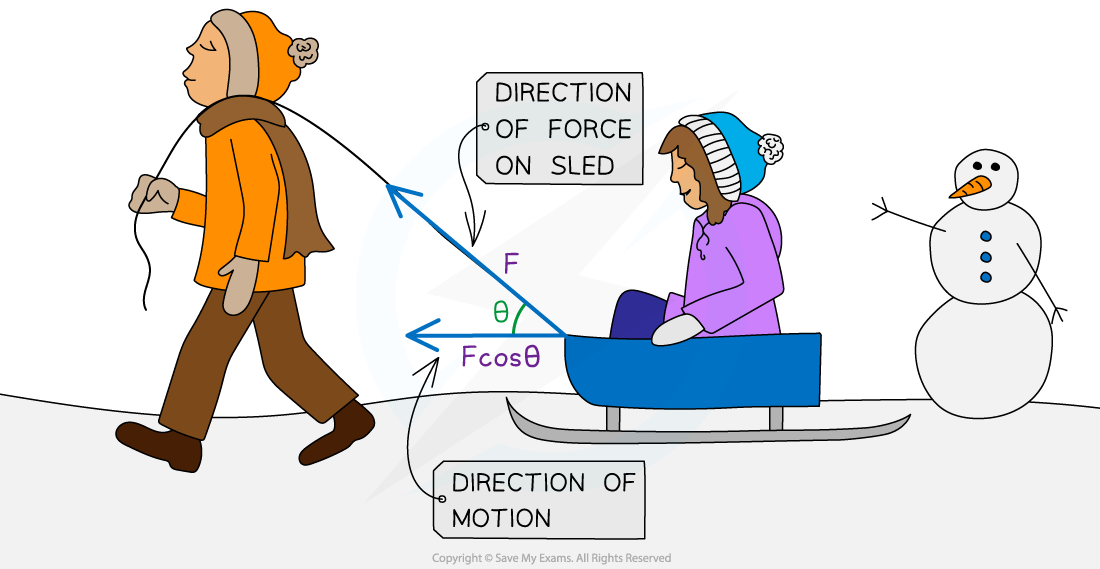
The point of application of the force will determine the system's total energy
When the angle of the applied force is :
is positive
work done is positive
the speed of the object increases
the kinetic energy of the object increases
When the angle of the applied force is perpendicular to the displacement,
is zero
work done is zero
the speed of the object does not change
the kinetic energy of the object does not change
When the angle of the applied force is :
is negative
work done is negative
the speed of the object decreases
the kinetic energy of the object decreases
When a force is applied perpendicularly to the direction of the displacement of the object, it is possible for the object to change direction without changing the kinetic energy of the object
Examples include:
elastic collisions (detailed in the study guide on Elastic and inelastic collisions)
circular motion (detailed in the study guide on Uniform circular motion)
Force-versus-displacement graph
If the force applied on an object is not constant, then a force-versus-displacement graph can be used to determine the work done
The force applied to an object may not always be constant
This is more representative of real-world scenarios
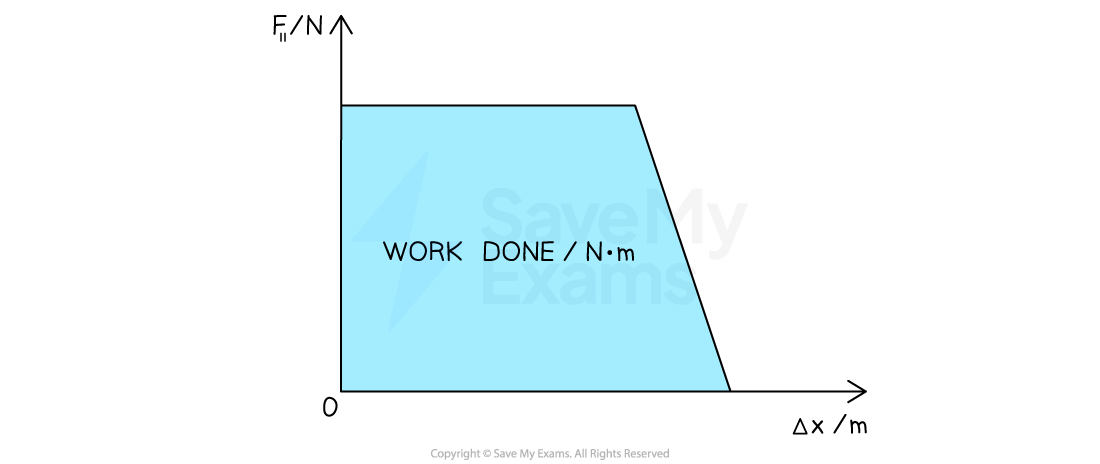
In this case, the parallel component of the variable force can be plotted as a function of the displacement of the object and the work done is then equal to the area under the graph
The work done is equivalent to the area under the graph, whether there is:
a small force applied over a large displacement
a large force applied over a small displacement
Worked Example
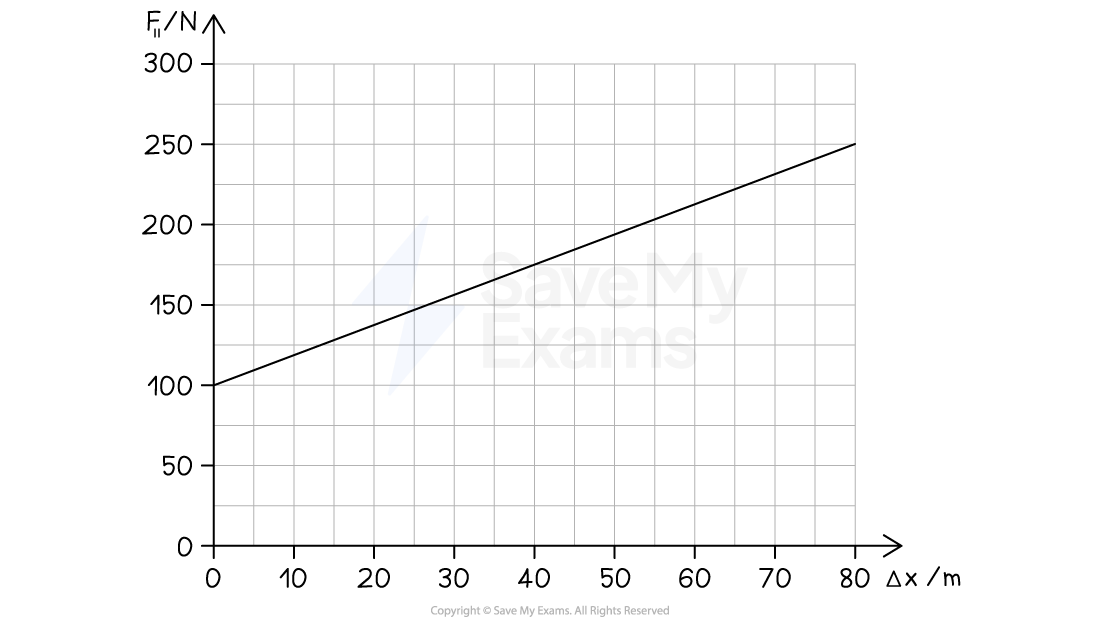
The graph above shows the parallel component of a variable force exerted on an object as a function of displacement. Which of the following is the correct value for the work done on the object?
A:
B:
C:
D:
The correct answer is D
Step 1: Split the area into sections
The area below the curve of a force-versus-displacement graph is equal to the work done
The total area is the sum of the areas of sections A and B
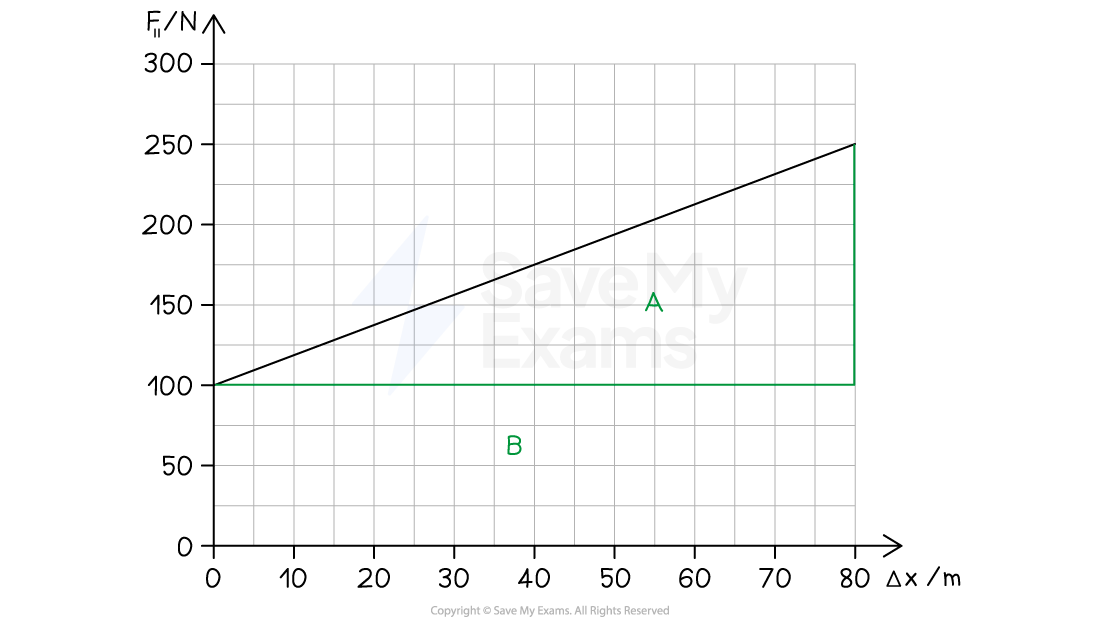
Step 2: Calculate the area of section A
Step 3: Calculate the area of section B
Step 4: Calculate the total work done
The answer is therefore D

Unlock more, it's free!
Join the 100,000+ Students that ❤️ Save My Exams
the (exam) results speak for themselves:

Was this revision note helpful?
Build on this topic