Gravitational Potential Energy Near a Surface (College Board AP® Physics 1: Algebra-Based): Revision Note

Gravitational potential energy near a surface
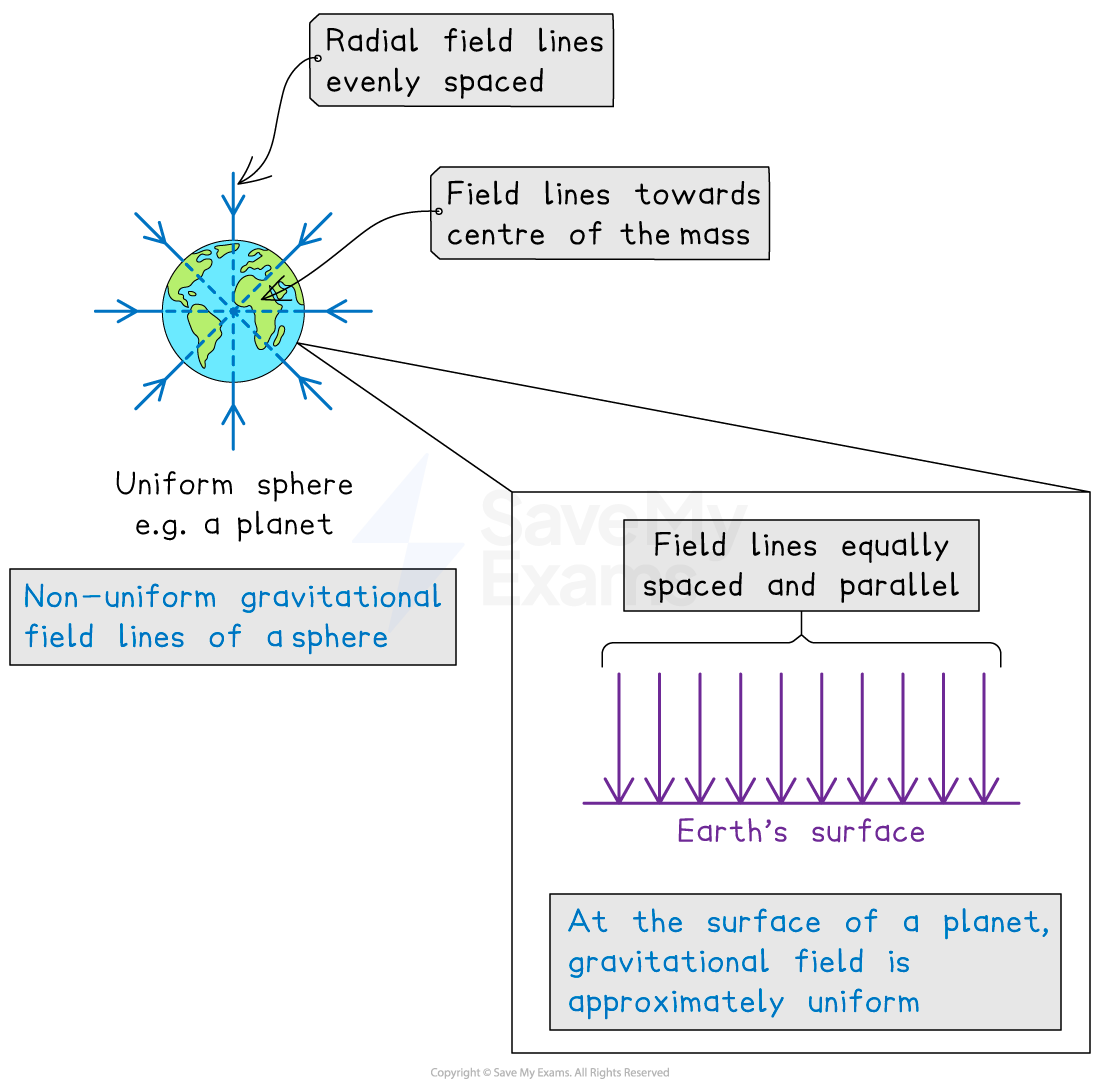
The gravitational field near the surface of a planet is nearly constant
Therefore, it can be approximated to be constant
The change in gravitational potential energy in a system consisting of an object near the surface of a planet and a planet, can be approximated by the equation:
Where:
= change in gravitational potential energy, measured in
= mass of object moving through a gravitational field, measured in
= gravitational field strength of planet, measured in
= vertical distance moved by object through a gravitational field, measured in
This equation assumes that the gravitational field through which the object moves is constant
The gravitational potential energy and the height through which the object is moved are relative
The zero points of potential energy and displacement are adjusted based on the situation (this is covered in greater detail in the study guide on potential energy)
This is shown by the (delta) symbol, meaning change in
When an object is lifted through a gravitational field, the system gains gravitational potential energy
When an object is lowered through a gravitational field, the system loses gravitational potential energy
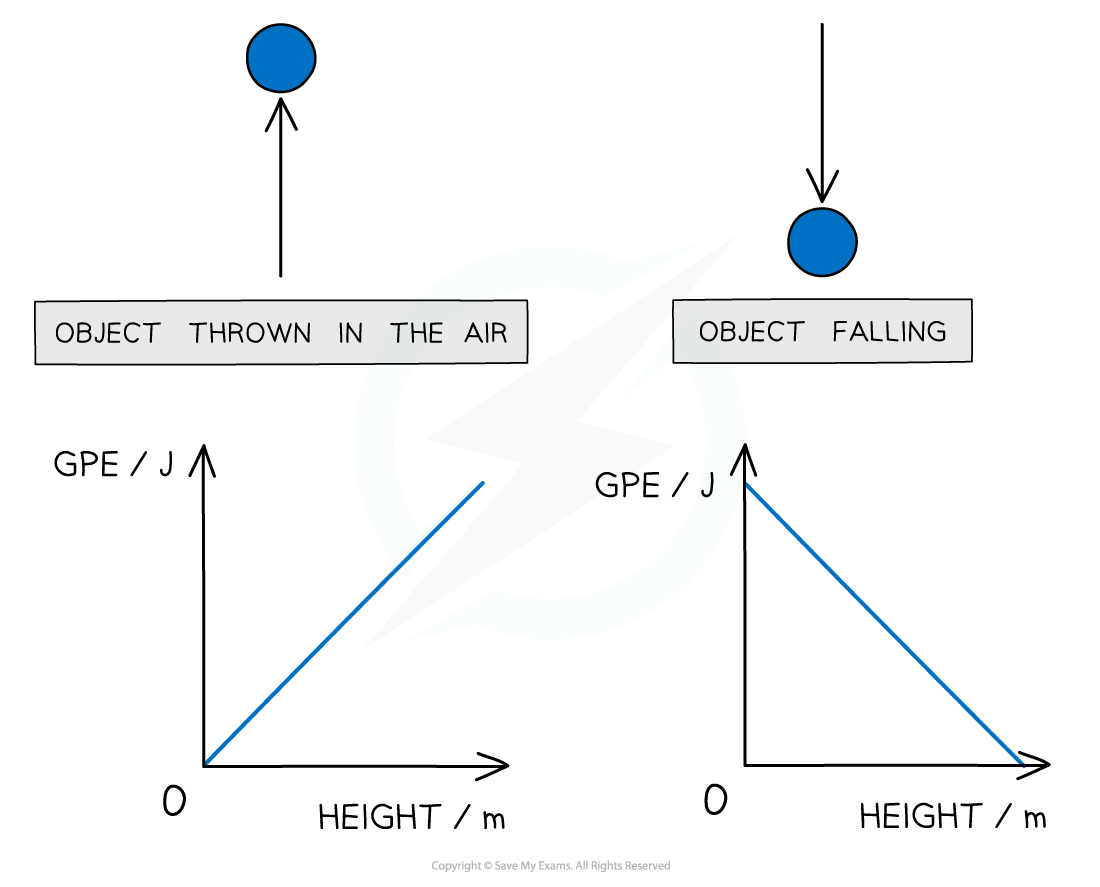
The gravitational force is a conservative force; therefore, gravitational potential energy is path-independent
This is covered in greater detail in the study guide, Potential Energy
Gravitational potential energy is a scalar quantity with magnitude only
Worked Example
A rock of mass is dropped from a cliff into the water below. The person that drops the rock releases it from a height of above the ground. Which of the following values is correct for the speed of the rock just before it hits the water?
A:
B:
C:
D:
The correct answer is D
Step 1: Analyze the scenario
The cliff is above the water, but the rock is dropped from a height of above the ground; therefore, the total vertical distance the rock travels is
Air resistance is always assumed to be negligible unless otherwise stated
Therefore, it can be assumed that the gravitational potential energy is transformed into kinetic energy with 100% efficiency
Step 2: List the known quantities
Mass of rock,
Vertical distance traveled by rock,
Magnitude of the gravitational field strength at the Earth's surface,
Step 3: Calculate the change in gravitational potential energy as the rock falls to the surface of the water
Step 4: Equate the change in gravitational potential energy to the gain in kinetic energy
Step 5: Rearrange to make speed the subject and substitute in the known values to calculate
Examiner Tips and Tricks
You could also solve this problem by equating the expressions for gravitational potential energy and translational kinetic energy:

Unlock more, it's free!
Join the 100,000+ Students that ❤️ Save My Exams
the (exam) results speak for themselves:

Was this revision note helpful?
Build on this topic
