Parallel Axis Theorem (College Board AP® Physics 1: Algebra-Based): Revision Note

Parallel axis theorem
The rotational inertia of a rigid system can change depending on the orientation of its rotational axis
The minimum rotational inertia in any plane is always about the axis which passes through the system's center of mass
A rigid system may not always rotate about an axis passing through its center of mass
As a result, the rotational inertia will always be greater than if the axis passed through the system's center of mass
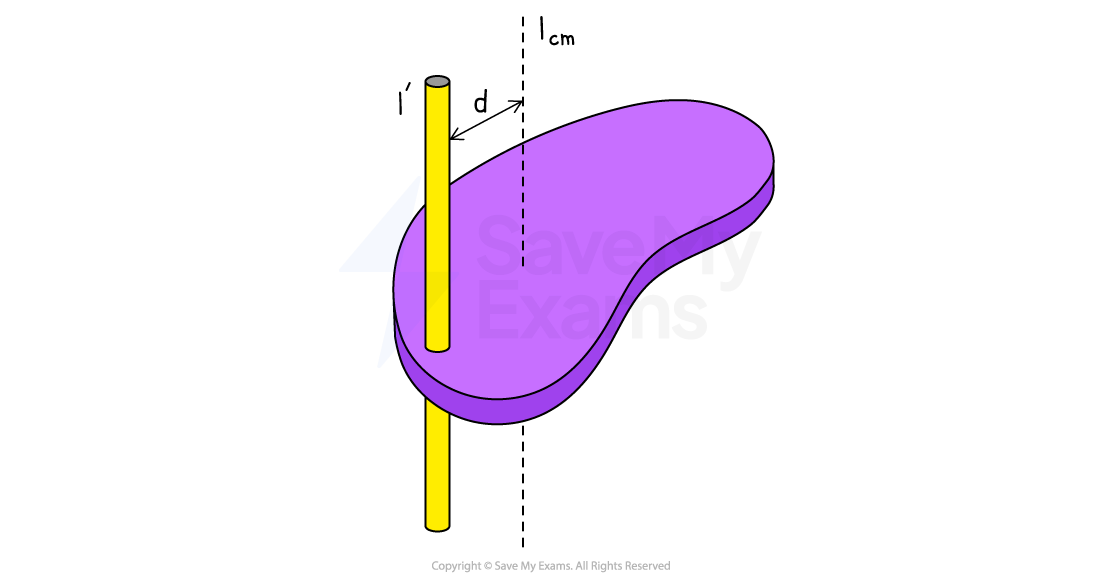
The rotational inertia about an axis that is parallel to an axis passing through the center of mass can be calculated using the parallel axis theorem
Where:
= rotational inertia about an axis passing through the system’s center of mass
= rotational inertia about an axis parallel to
= mass of the system, in
= distance between the rotational axis and the system’s center of mass
This means that the rotational inertia of a system will be the same when rotating about any parallel axis at an equal distance from the center of mass
Rotational inertia around a parallel axis
Worked Example
The rotational inertia of a rod of mass and length rotating about its center of mass is . Which of the following describes the rotational inertia of the rod rotating about one of its ends?
A
B
C
D
The correct answer is B
Answer:
Step 1: Determine the distance between the center of mass and the parallel axis
Step 2: Apply the parallel axis theorem to the rod
Worked Example
Two solid spheres form a dumbbell when attached to each end of a thin uniform rod. The dumbbell rotates with the center of mass of each sphere at a distance of 22 cm from the axis of rotation, as shown in the diagram.
The rod has a mass of 150 g. Each sphere has a radius of 4 cm and a mass of 750 g.

Rotational inertia of a thin rod about its center =
Rotational inertia of a solid sphere about its center =
(A) Calculate the total rotational inertia of the dumbbell arrangement
(B) Determine the proportion of rotational inertia the thin rod contributes to the dumbbell arrangement
Answer:
Part (A)
Step 1: Analyze the scenario
The total rotational inertia of the dumbbell is the sum of
the rotational inertia of each solid sphere about the center of the rod
the rotational inertia of the thin rod about its center
Step 2: Calculate the rotational inertia of each sphere
The rotational inertia of a solid sphere about its own center of mass is
The rotational inertia of each sphere about the center of the rod can be found using the parallel axis theorem
The mass of each sphere is
The radius of each sphere is
The distance between the rotational axis and each sphere is
Step 3: Calculate the rotational inertia of the rod
The mass of the rod is
The length of the rod is
Step 4: Calculate the total rotational inertia of the system
Part (B)
Step 1: Analyze the scenario
The proportion of rotational inertia contributed by the thin rod is given by
Step 2: Calculate the ratio of the rotational inertias
This means the rod contributes about 2% of the overall rotational inertia of the dumbbell

Unlock more, it's free!
Join the 100,000+ Students that ❤️ Save My Exams
the (exam) results speak for themselves:

Was this revision note helpful?
Build on this topic
