Media Production (WJEC Eduqas GCSE Media Studies): Revision Note
Exam code: C680

Media industries
What are media industries?
Media industries are the organisations and businesses that create, produce, distribute, and sell media products
Products include films, TV programmes, newspapers, magazines, video games, music, websites, and social media content
Media industries exist for multiple reasons, including:
Inform audiences
Entertain audiences
Educate audiences
Make profit
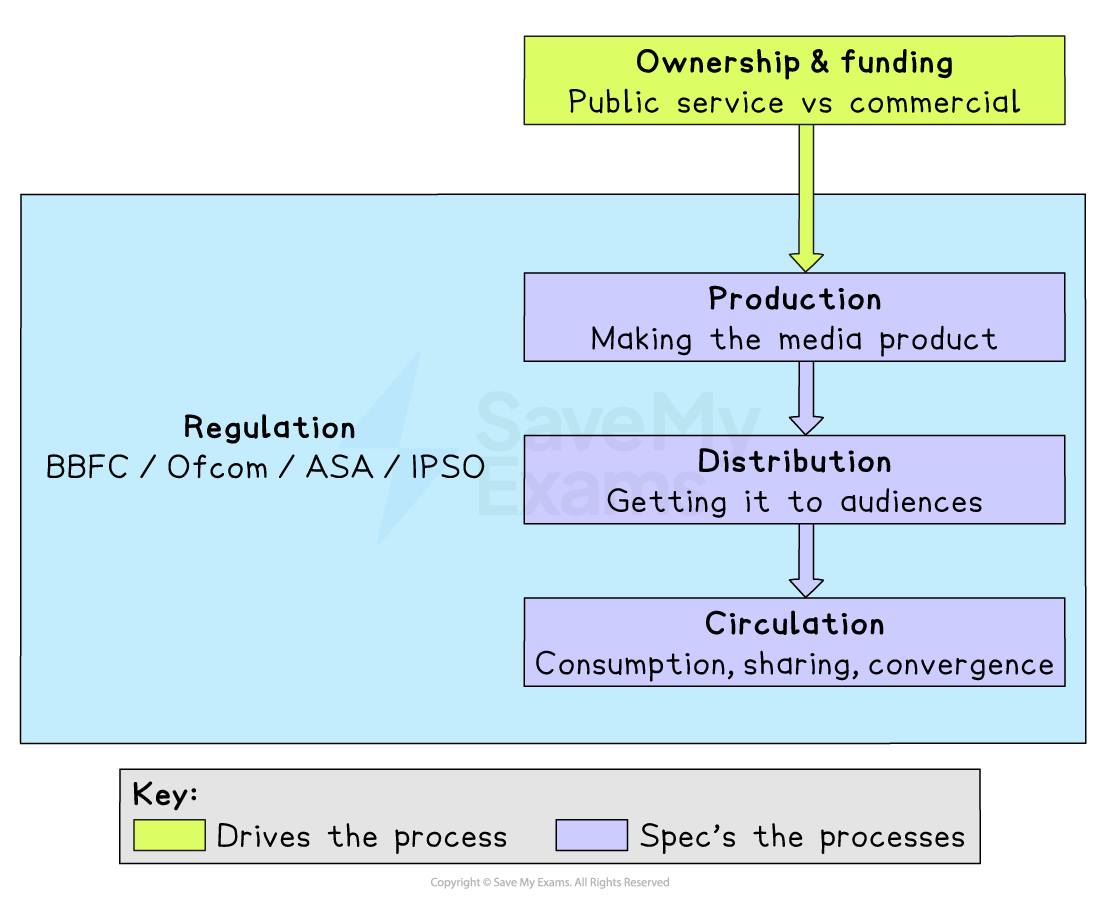
Media industries are built through a set of key stages and structures
These consist of production processes, ownership structures, distribution systems, technology, regulation, and funding models
Each stage and structure must be navigated carefully to ensure success of the final products and to maximise profit for the organisations
Production
Production is the stage of planning and creating media products
Some media products are made by large media organisations such as Disney, BBC or Netflix
Large organisations usually have bigger budgets, more staff, and better technology, which affects quality and reach
Products made by individuals and small groups include YouTubers or independent filmmakers
Smaller producers often have less money but more creative freedom
Distribution & Circulation
Distribution is how media products are shared with audiences, for example
Cinema
TV
Streaming
Social media
Circulation is how media moves across platforms and reaches different audiences
Measuring circulation means totalling the average number of copies or views of a media product that are distributed to an audience
It can be measured over different time periods, such as daily, weekly, or annually
Circulation does not always mean the number of sales, as some media products are free for audiences to access
Industry relies on distribution and circulation to fulfil the intentions of their product (profit or awareness)
Technology
Media industries grow by using new technologies, such as streaming services, social media, and digital editing
Technology changes how media is produced, distributed, and consumed
Digital technology and platforms like Netflix, YouTube, TikTok make it easier to reach global audiences quickly
New technologies also have a big impact on media products, helping companies create exciting and modern content that attracts audiences
Example: CGI and special effects make music videos and TV shows more visually impressive, while video games use augmented reality and other interactive techniques to keep players engaged

Unlock more, it's free!
Join the 100,000+ Students that ❤️ Save My Exams
the (exam) results speak for themselves:

Was this revision note helpful?