Semiotics (WJEC Eduqas GCSE Media Studies): Revision Note
Exam code: C680

Semiotics
What is semiotics?
Roland Barthes expanded the study of semiotics during the 1950s and 1960s
Barthes’ Semiotic Theory is the study of signs and symbols
It outlines how meaning is constructed and communicated
Signs exist within:
language
images
sounds
Semiotics involves "decoding" messages by analysing the relationship between signs and the deeper cultural systems they represent
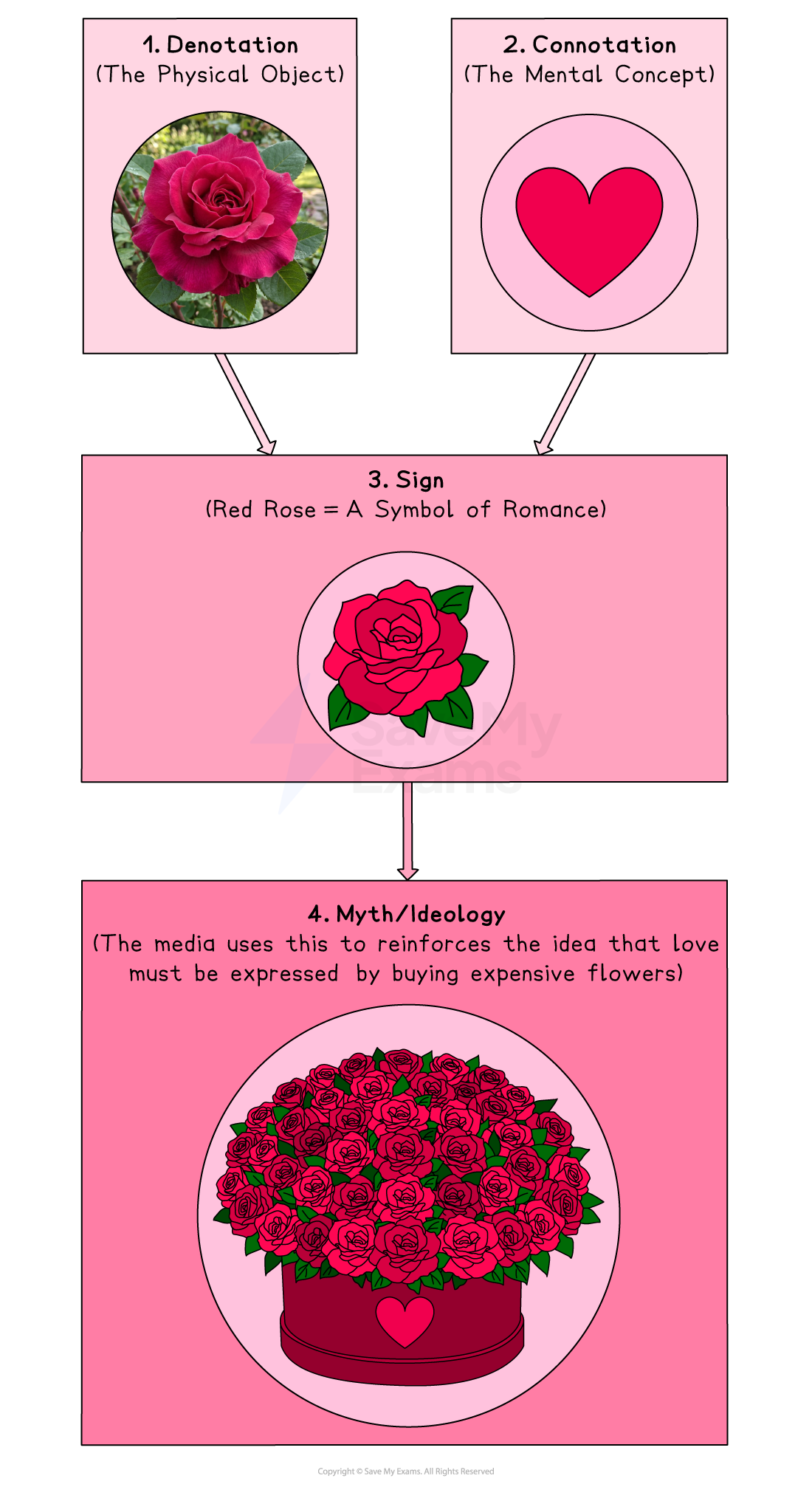
This relationship can be studied on a denotational and connotational level
Denotation and connotation
Denotation is the literal, surface-level meaning of a sign (what you can see/hear directly)
A red rose is an example of something you can see directly
Connotation is the deeper, associated meaning created culturally or emotionally.
Red roses are associated with love or romance
Barthes argues that meaning is constructed through these layers, influencing how audiences interpret media texts
Examiner Tips and Tricks
Phrases like ‘This connotes’ or ‘The connotation of this is…’ show the examiner you are confident in your terminology. Using an academic tone helps you sound assured and reach higher marks.
Further examples are:
This reinforces…
This subverts…
This positions the audience to…
Selection, combination and exclusion
Barthes suggests that meaning is shaped by what creators include, combine and exclude
Selection | Producers choose specific elements (images, words, colours, sounds) to communicate particular meanings |
Combination | These selected elements are arranged together to create an overall message (e.g., layout, editing, montage) |
Exclusion | Elements that could suggest alternative meanings are left out to keep the intended message clear and focused |

Unlock more, it's free!
Join the 100,000+ Students that ❤️ Save My Exams
the (exam) results speak for themselves:

Was this revision note helpful?