Gender (WJEC Eduqas GCSE Media Studies): Revision Note
Exam code: C680

Gender representation
Gender representation is about how males, females, and non-binary people are shown in the media
It is also about what messages these portrayals communicate to the audience about gender roles, behaviour, and identity
The representation of gender roles has evolved
This reflects wider social and cultural changes, such as feminism, civil rights, and shifting family roles
How has gender representation evolved?
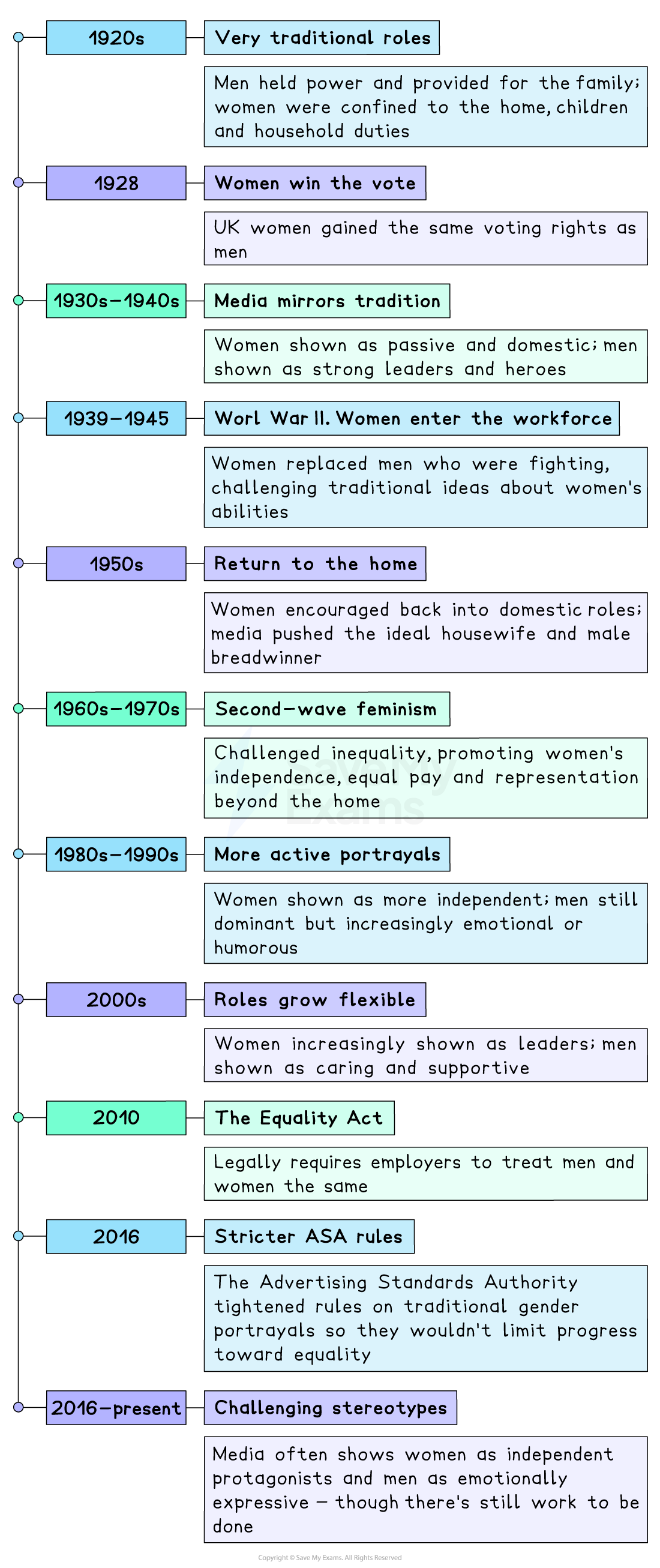
Gender representation has evolved from passive women and dominant men in early media to independent, complex female characters and emotionally expressive males today
Whilst some media strongly represent this shift in culture, there is still inequality
Raising awareness that this inequality still exists in society is a strong message in itself in the media
Example 1: The # MeToo movement
Example 2: The main message of Stormzy’s ‘Superheroes’ music video is intended to empower Black people who have historically been under-represented or misrepresented
Example 3: Taylor Swift’s music video for ‘The Man’ highlights gender bias within society
Gender representation has also evolved as society has acknowledged that gender is not simply about men and women
Society has a greater acceptance of gender fluidity and self-expression
New terms have evolved to help represent and identify this, such as:
Metrosexual — heterosexual men represented as well-groomed, fashionable, and appearance-focused
Spornosexual — men who are athletic, muscular, physically “perfect” and often represented in a sexualised way
Feminism
Feminism is a social and political movement that stands up for gender equality between men and women
The movement challenges patriarchy and traditional gender roles
Feminists seek to remove discrimination in places like work, education, and social life and promote positive representation of women in all areas of life, including media
Laura Mulvey - Male gaze theory
Laura Mulvey is a feminist theorist
She argues that women are shown as objects to be looked at, rather than for audiences to consider their personalities
Mulvey theorises that media is often created from a male point of view
The ‘male gaze’ emphasises media language such as camera shots, clothing and poses that focus on women’s bodies and appearance
Mulvey argues this reinforces patriarchal power and gender inequality

Unlock more, it's free!
Join the 100,000+ Students that ❤️ Save My Exams
the (exam) results speak for themselves:

Was this revision note helpful?