Forced & Voluntary Migration (College Board AP® Human Geography): Revision Note

Forced migration
Migration is characterized as either forced or voluntary based on the cause of the movement
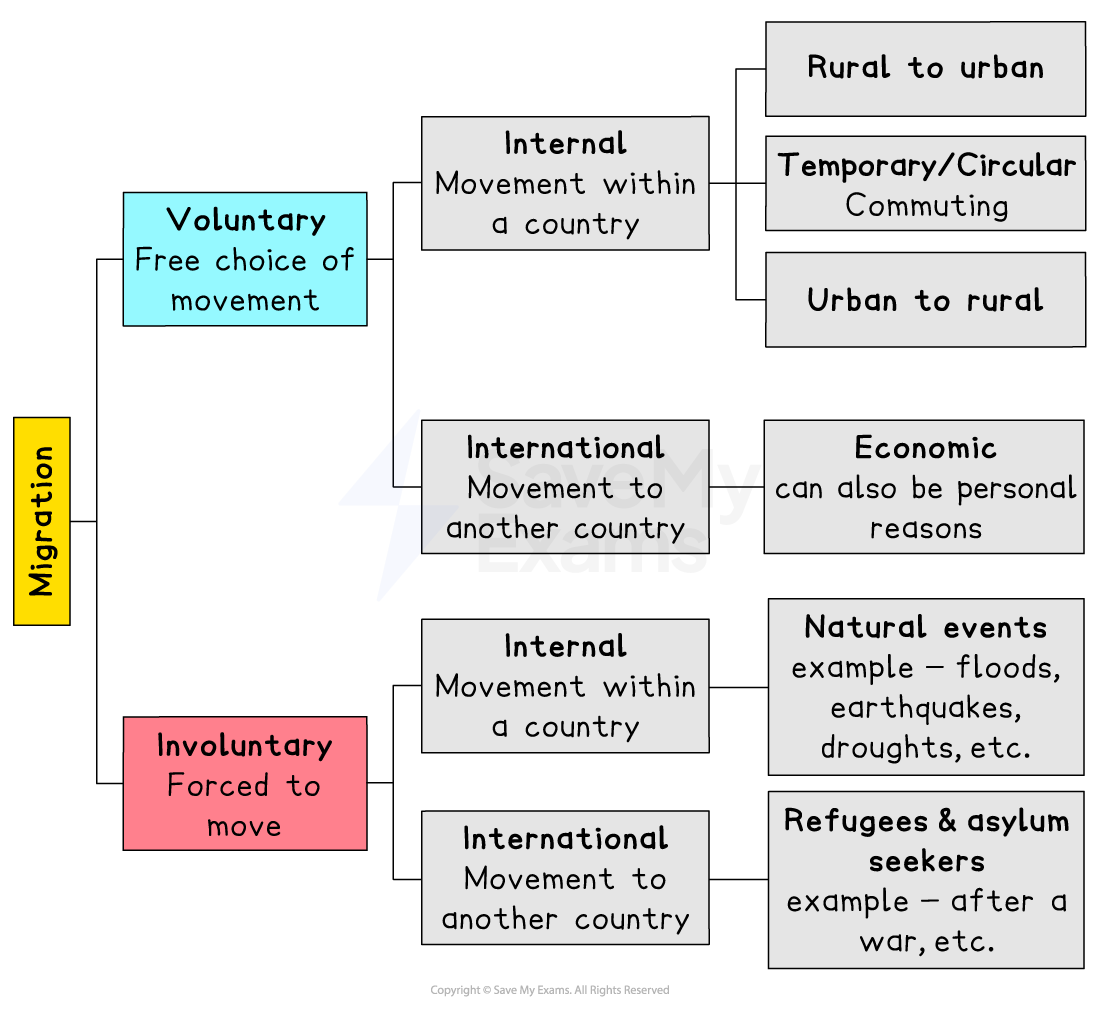
Forced migration refers to the movement of migrants due to external causes, when people migrate not because they want to but because they have no other choice
Forced migrants may be fleeing unstable political situations, wars, famines, natural disasters or cultural issues
Refugees and internally displaced persons (IDPs) are examples of forced migrants
They generally migrate due to political or environmental crises
A refugee is a migrant who leaves their country with the intent to return and crosses international borders
An IDP is an individual forced to flee their home but they remain within the same country
An asylum seeker is a person who migrates to another country hoping to be recognized as a refugee. An asylum seeker attempts to find residence in a country outside of their own because they are fleeing political persecution or human rights violations
Slavery is a form of forced migration in which people are moved against their will and held as the property of others
The transatlantic slave trade forcibly moved millions of enslaved Africans to the Americas between the 16th and 19th centuries
Its effects can still be seen today in the ethnic composition of populations across the Americas
Voluntary migration
Voluntary migration refers to people choosing to move to a new location without being forced
Transnational migration refers to movement from one country to another across an international border
Internal migration refers to movement within the same country
New immigrants often move to places where family members and friends from their home country have already migrated, resulting in chain migration
Step migration refers to migration to a final destination that takes place in stages
A guest worker is a legal immigrant who is allowed into the country to work, usually for a specified amount of time
Brain drain refers to the process whereby highly skilled and educated migrants leave one country for another
Generally, these migrants move from less-developed to more-developed countries
This leaves their country of origin with fewer skilled workers
Remittances are the money and goods immigrants send back to their families and communities in their country of origin
Transhumance refers to the seasonal movement of humans and their livestock to access grazing areas
Rural-to-urban migration is the movement of people from the countryside into towns and cities
People move in search of work, education, healthcare, and better services
It is the main driver of rapid urbanization in less developed countries
Examiner Tips and Tricks
Questions about migration on the AP Exam will often ask you to analyze real-world scenarios. For example, refugee populations from particular areas of the world, such as Afghanistan, Iraq, Syria, and Central Africa flee political instability. Movement of populations from eastern to western Europe or south and southeast Asia to west Asia tends to be in pursuit of economic opportunities.

Unlock more, it's free!
Join the 100,000+ Students that ❤️ Save My Exams
the (exam) results speak for themselves:

Was this revision note helpful?
Build on this topic
