Differences in Inspired & Expired Air (Cambridge (CIE) IGCSE Co-ordinated Sciences (Double Award): Biology): Revision Note
Exam code: 0654 & 0973

Differences in Inspired & Expired Air
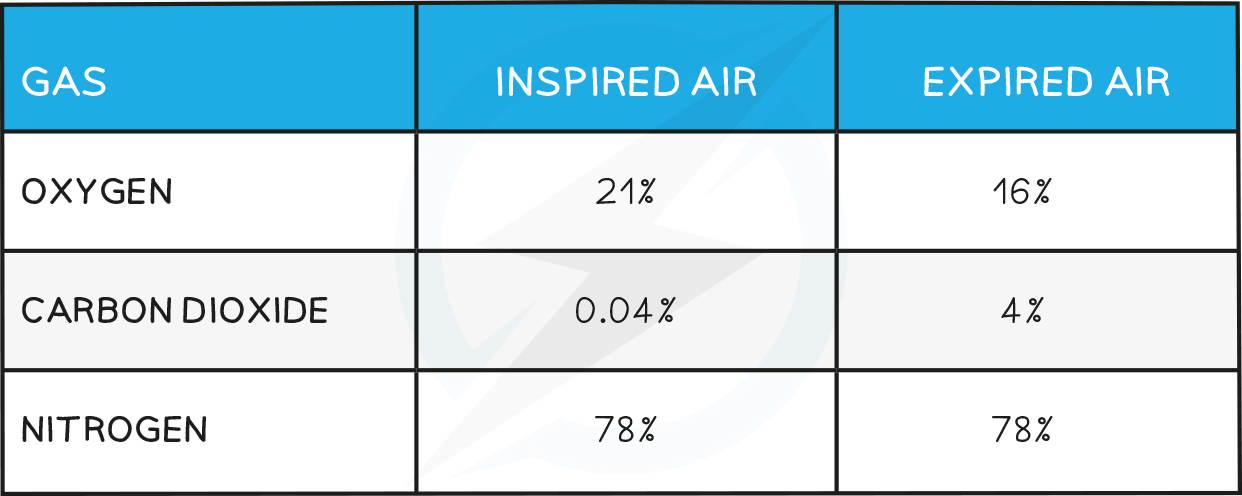
Air that is breathed in and air that is breathed out has different amounts of gases in it due to exchanges that take place in the alveoli
Atmospheric air contains around 20 – 21% oxygen, of which we only absorb around 4 – 5%, expired air contains around 16% oxygen
Normal carbon dioxide content of air is around 0.04% and, as carbon dioxide diffuses into the alveoli from the blood, we expire air containing around 4% carbon dioxide
The air we breathe out contains more water vapour (around 1%) than when we breathe it in which is variable
The temperature of exhaled air is higher than inhaled air due to heat energy released from respiration
Composition of Air Table
Examiner Tips and Tricks
For those of you studying the extended syllabus you can read the explanation as to why inspired and expired differ here.

Unlock more, it's free!
Join the 100,000+ Students that ❤️ Save My Exams
the (exam) results speak for themselves:

Was this revision note helpful?
Build on this topic